

Explore evidence-informed insights on longevity, nutrition, exercise, sleep, and disease prevention from Dr. Peter Attia to optimize your healthspan and lifespan
'Sleep should be prescribed': what those late nights out could be costing you
Leading neuroscientist Matthew Walker on why sleep deprivation is increasing our risk of cancer, heart attack and Alzheimer’s – and what you can do about it

What Are COVID-19’s Long-Term Medical Effects?
Fascinating email from TPM Reader JO, whose personal bio is tailor-made for...

Four Red Flags and One Truth Amid the Peptide Hype - KFF Health News
Experimental peptides are all the rage on longevity and “optimization” podcasts, but a lot of the chatter is misleading.

Dr Peter WG Tennant | School of Medicine | University of Leeds
Profile for Dr Peter WG Tennant, School of Medicine, University of Leeds
Scientists Like Me Knew There Was Something Amiss With Andrew Huberman’s Wildly Popular Podcast
He recommends supplements. He’s iffy on the flu shot. And more.

The 17th Century Guide to Sleep
Despite the modern obsession with a good night’s rest, more of us are sleeping less. Perhaps we should pay attention to the advice of early modern doctors.

A Single Exercise Session May Slow Cancer Cell Growth, Study Finds - Slashdot
The Washington Post notes that past research "indicates that exercise helps some cancer survivors avoid recurrence of their disease." But a new study "offers an explanation of how, showing that exercise changes the inner workings of our muscles and cells, although more study is still needed..." T...
Nikhil Krishnan on Twitter / X
yeah there used to be a company called Eureka that powered these types of observational, more lifestyle style studies (here's an example looking at coffee's effect on different biomarkers/conditions)https://t.co/urQRvTVTb7I think it can work if you have enough people in…— Nikhil Krishnan (@nikillinit) September 14, 2025
Over nearly 80 years, Harvard study has been showing how to live a healthy and happy life
For nearly 80 years, the Harvard Study of Adult Development has been producing data and lessons on how to live longer, happier, and healthier lives.

Examine.com
Examine simplifies nutrition and supplementation — through meticulous analysis of the latest scientific research — to help answer your questions on how to be healthier.
Can you be obese and healthy? Maybe, but not for long | Aeon Essays
The medical evidence is overwhelming – obesity is bad for you and it would be a major mistake to give up fighting it

Amaranth Foundation - Longevity and Neuroscience
Amaranth Foundation funds groundbreaking work in longevity and neuroscience. Learn more about our grants, projects, and team .

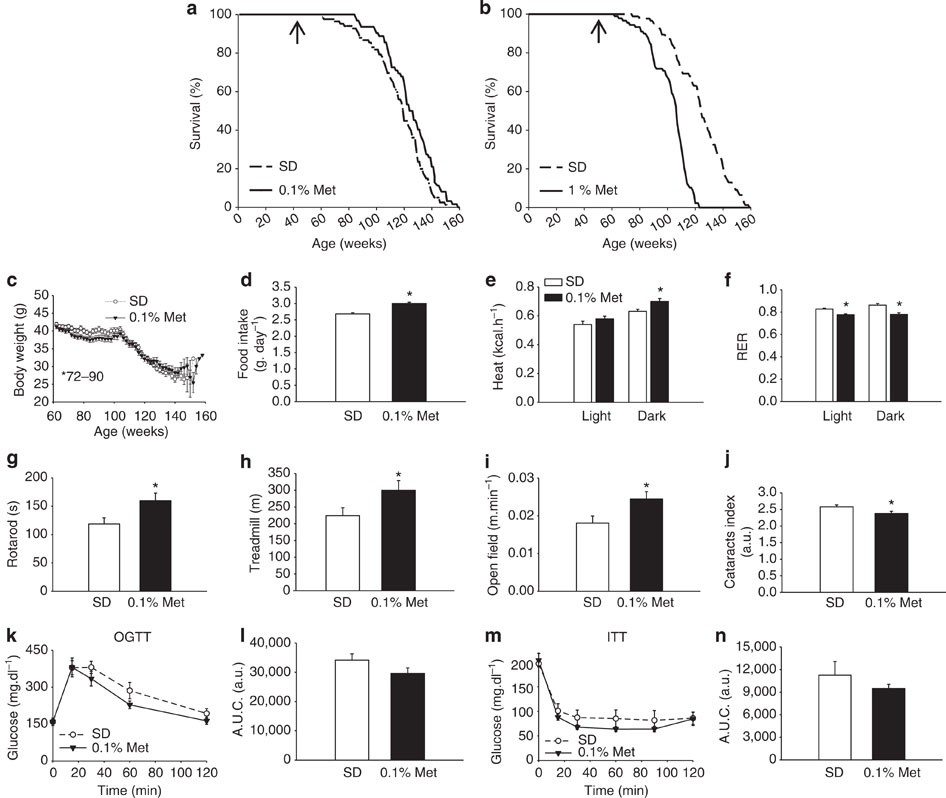
Metformin improves healthspan and lifespan in mice
Metformin is a drug commonly prescribed to treat patients with type 2 diabetes. Here we show that long-term treatment with metformin (0.1% w/w in diet) starting at middle age extends healthspan and lifespan in male mice, while a higher dose (1% w/w) was toxic. Treatment with metformin mimics some of the benefits of calorie restriction, such as improved physical performance, increased insulin sensitivity, and reduced low-density lipoprotein and cholesterol levels without a decrease in caloric intake. At a molecular level, metformin increases AMP-activated protein kinase activity and increases antioxidant protection, resulting in reductions in both oxidative damage accumulation and chronic inflammation. Our results indicate that these actions may contribute to the beneficial effects of metformin on healthspan and lifespan. These findings are in agreement with current epidemiological data and raise the possibility of metformin-based interventions to promote healthy aging.
How Exercise Can Keep Aging Muscles and Immune Systems ‘Young’ (Published 2018)
Older cyclists are not like most of the rest of us. They are healthier. They are, biologically, younger.

Why Do Americans Have Shorter Life Expectancy and Worse Health Than Do People in Other High-Income Countries?
Americans lead shorter and less healthy lives than do people in other high-income countries. We review the evidence and explanations for these variations in longevity and health. Our overview suggests that the US health disadvantage applies to multiple mortality and morbidity outcomes. The American health disadvantage begins at birth and extends across the life course, and it is particularly marked for American women and for regions in the US South and Midwest. Proposed explanations include differences in health care, individual behaviors, socioeconomic inequalities, and the built physical environment. Although these factors may contribute to poorer health in America, a focus on proximal causes fails to adequately account for the ubiquity of the US health disadvantage across the life course. We discuss the role of specific public policies and conclude that while multiple causes are implicated, crucial differences in social policy might underlie an important part of the US health disadvantage.

Brains of overweight people ‘ten years older’ than lean counterparts at middle-age
Our brains naturally shrink with age, but scientists are increasingly recognising that obesity – already linked to conditions such as diabetes, cancer and heart disease – may also affect the onset and progression of brain ageing; however, direct studies to support this link are lacking.
