

What will an effective solution look like?
Why Big Tech's Privacy Promises Are Lies
Three schemes for shared-private storage - Paul's Leaflets
Data Minimisation: a Language-Based Approach (Long Version)
Data minimisation is a privacy-enhancing principle considered as one of the pillars of personal data regulations. This principle dictates that personal data collected should be no more than...

How do we pay for privacy?
If you haven’t read Julia Angwin’s excellent profile of GnuPG’s lead developer Werner Koch, now would be a great time to check it out. Koch, who single-handedly wrote GnuPG in 1…

Playing with Parlances - Permissioned Data & AT Protocol - AT-WayFinding
Community privacy is one of our top priorities at @transrights.northsky.social which isn't possible out of the box with any ATproto implementation today that doesn't just hide an entire PDS. We're developing in the open and so I've published a proposal on it, feedback as always is we
[Proposal] Shared private Data for social posting
seconding a sidecar private PDS endpoint attached to the DID document as a good approach in the general case (in an implementation of private data I did which never saw the light of day, this was the approach I took), though obviously it imposes additional constraints on a first mover building this out.

Nonrivalry and the Economics of Data
(September 2020) - Data is nonrival: a person's location history, medical records, and driving data can be used by many firms simultaneously. Nonrivalry leads to increasing returns. As a result, there may be social gains to data being used broadly across firms, even in the presence of privacy considerations. Fearing creative destruction, firms may choose to hoard their data, leading to the inefficient use of nonrival data. Giving data property rights to consumers can generate allocations that are close to optimal. Consumers balance their concerns for privacy against the economic gains that come from selling data broadly.


How (Not) to Write a Privacy Law
After many years of failed starts, proposed information privacy legislation has begun moving forward in both houses of Congress. The docket in the recently ended 116th Congress was crowded, with a number of different proposals jostling for attention and no agreement on which deserved to be the front runner. Even so, as the 117th Congress begins, there is growing inside-the-Beltway consensus on the list of features that a successful bill will need to include. This paper critically assesses those zones of emerging consensus.

A Duty of Loyalty for Privacy Law
Data privacy law fails to stop companies from engaging in self-serving, opportunistic behavior at the expense of those who trust them with their data. This is a

Rashid Aziz: Extending ATproto for private data - ATProto Community
Research | Tiles Book
Progressive experiments exploring decentralized software technologies for privacy adoption at scale.
privacy - bad examples

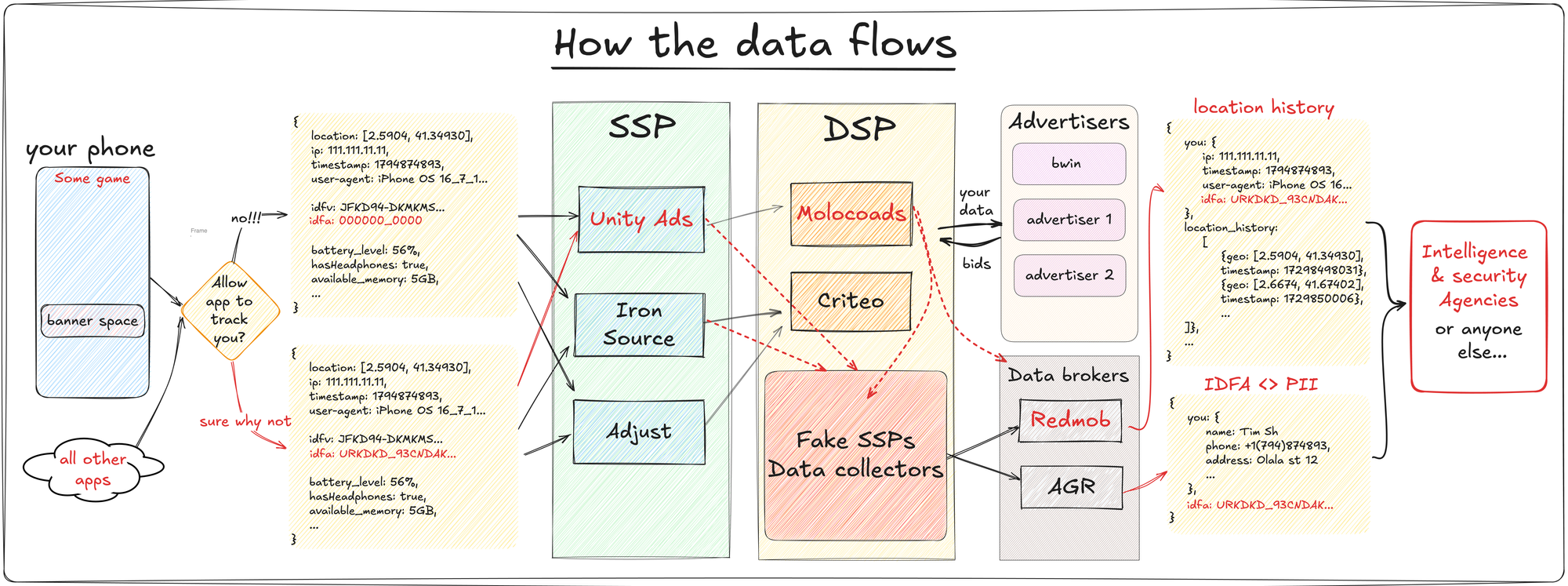
Everyone knows your location
