


Let's experiment with making news products so relevant that people pull them into their lives
Early returns on creator journalism make clear – it's a poly-platform path forward
No single platform can carry a journalism business. These creators are building ecosystems instead.


Blendle: A radical experiment with micropayments in journalism, 365 days later
One year of journalism without subscriptions, without ads and without clickbait

Independent journalists are mission-driven, but financially strained, a new report says
"Journalism isn't immune to the larger trend of the gig-ification of labor."

Artificial Intelligence in the News: How AI Retools, Rationalizes, and Reshapes Journalism and the Public Arena
<p>Download the pdf here. Executive Summary Despite growing interest, the effects of AI on the news industry and our information environment — the public arena — remain poorly understood. Insufficient attention has also been paid to the implications of the news industry’s dependence on technology companies for AI. Drawing on 134 interviews with news workers […]</p>

Show your work: The new terms for trust in journalism - PressThink
The transparency movement has finally come of age. Power has shifted to the users. Their trust has to be earned in different ways now.


Still Manufacturing Consent: An Interview with Noam Chomsky | Hacker News
The marking out of the symbiotic relationship between reliable information producers and journalists is also vital to understanding the media system. A reliable, centralised stream of new information content is the life blood of journalism organisations, with a strong emphasis on _reliable_ and _centralised_. This particular need that journalists have sees them often becoming dependent on state institutions and corporations at the expense of minority groups and labor. An example being the journalists 'on the beat' that used to hang out around the local courthouse because that's where the 'feeding trough' is. Or the reports so nicely formatted and condensed produced by the state departments such that journos merely have to copy-paste the information straight into their papers. Easy-peasy.
Beating the drums for independent press, publishers, and writers
Whose news? Whose story? Who gets to tell it?

Ground News
The biggest source for breaking news around the world. Compare headlines across the political spectrum using media bias ratings driven by data.

What can news publishers learn from creators? Interview with Simon Owens
Don't leave money on the table and think outside the box about business models

A serious problem the news industry does not talk about
Ask anyone working in a newsroom what they think of their audience, and you’ll hear a variety of answers. Over the past couple of years…

About — Crackdown Podcast
Garth Mullins—Crackdown’s Host and Executive Producer—is a longtime activist and drug user as well as a member of the Vancouver Area Network of Drug Users and the BC Association of People on Methadone. Crackdown was born out of the idea that journalism can be rigorous, fair, and meet the expectations enumerated in the Canadian Association of Journalists, while also containing a clear and transparently-stated point of view. We believe that journalism can and should seek to serve the public good. We believe that journalism need not be produced by people who are distant from the topics and communities they are covering. And we believe that - rather than hiding behind a mask of “objectivity” - journalism is most truthful when it clearly communicates its point of view to the audience.
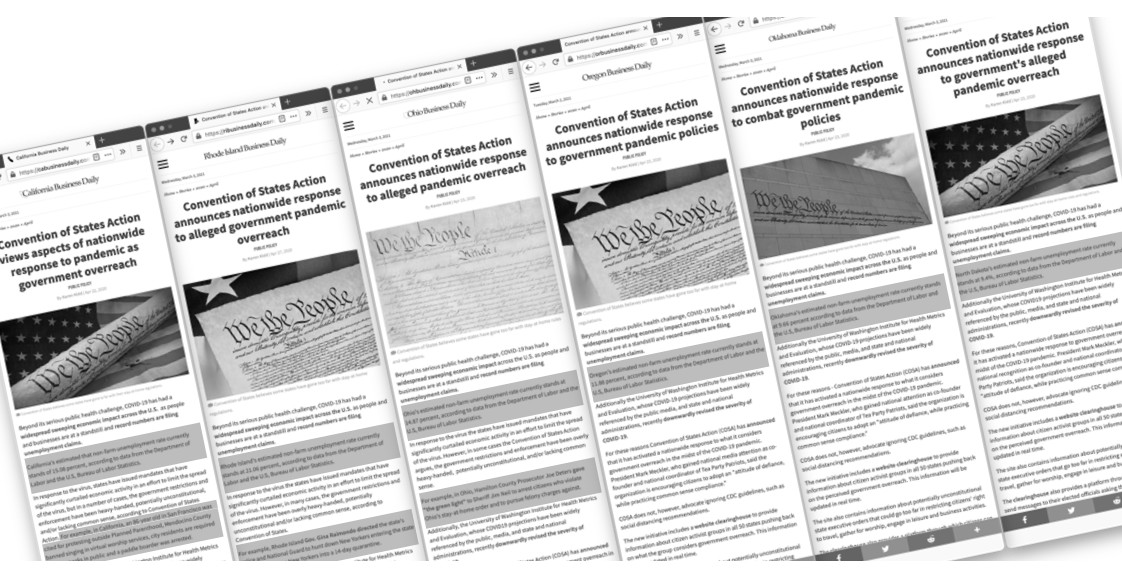
Advocacy groups and Metric Media collaborate on local ‘community news’
<p>This is the second part of a two-part investigation. The first piece can be found here. Metric Media launched “Community Newsmaker” in 2020 using the language of citizen journalism. However, what appeared to be grassroots news is part of a sprawling network that promotes political agendas and corporate interests, without disclosing those ties to the […]</p>
Opinion: Losing the Local Journalism Initiative leaves communities in the dark
With more outlets vying for federal funding, why are national outlets opening up new bureaus in communities with healthy media ecosystems?
