


This book brings together for the first time an updated, revised collection of influential essays and articles that capture some of the most exciting scientific and scholarly contributions to the topic ...
It’s Not Polarization; It’s the Radicalization of the Political Right
Polarization has become the master concept for diagnosing contemporary democratic crises. The notion denotes three features: symmetry between parties, politics as an opinion space where positions diverge, and mutual repulsion between opposing camps. Yet none of these capture current realities. Across democracies, the central dynamic is not two poles drifting apart but the transformation of the political right into authoritarianism, norm breaking, and openness to political violence. Social democratic and center-right parties tend to respond in the opposite way from what “polarization” implies: by accommodating rightward. Attempts to salvage the polarization frame with modifiers (“asymmetric,” “affective,” “sectarian,” “pernicious”) concede these realities but risk hollowing out the concept’s definitional core. These limitations reveal a deeper misdiagnosis: when one party turns antidemocratic and illiberal, incivility and conflict are inevitable—but they are symptoms, not the root problem. Misdiagnosing them as the central issue leads to viewing civility and compromise as remedies, thereby risking the legitimation of authoritarian actors. This article proposes an alternative lens: the radicalization of the political right. Developed in the study of extremism, the radicalization framework better captures asymmetric change, identity-driven politics, and the mainstreaming of illiberalism. It foregrounds identity fusion, threat narratives, elite entrepreneurship, and escalation. Concepts are never politically innocent and persisting with “polarization” risks both misdiagnosing and normalizing authoritarian threats.
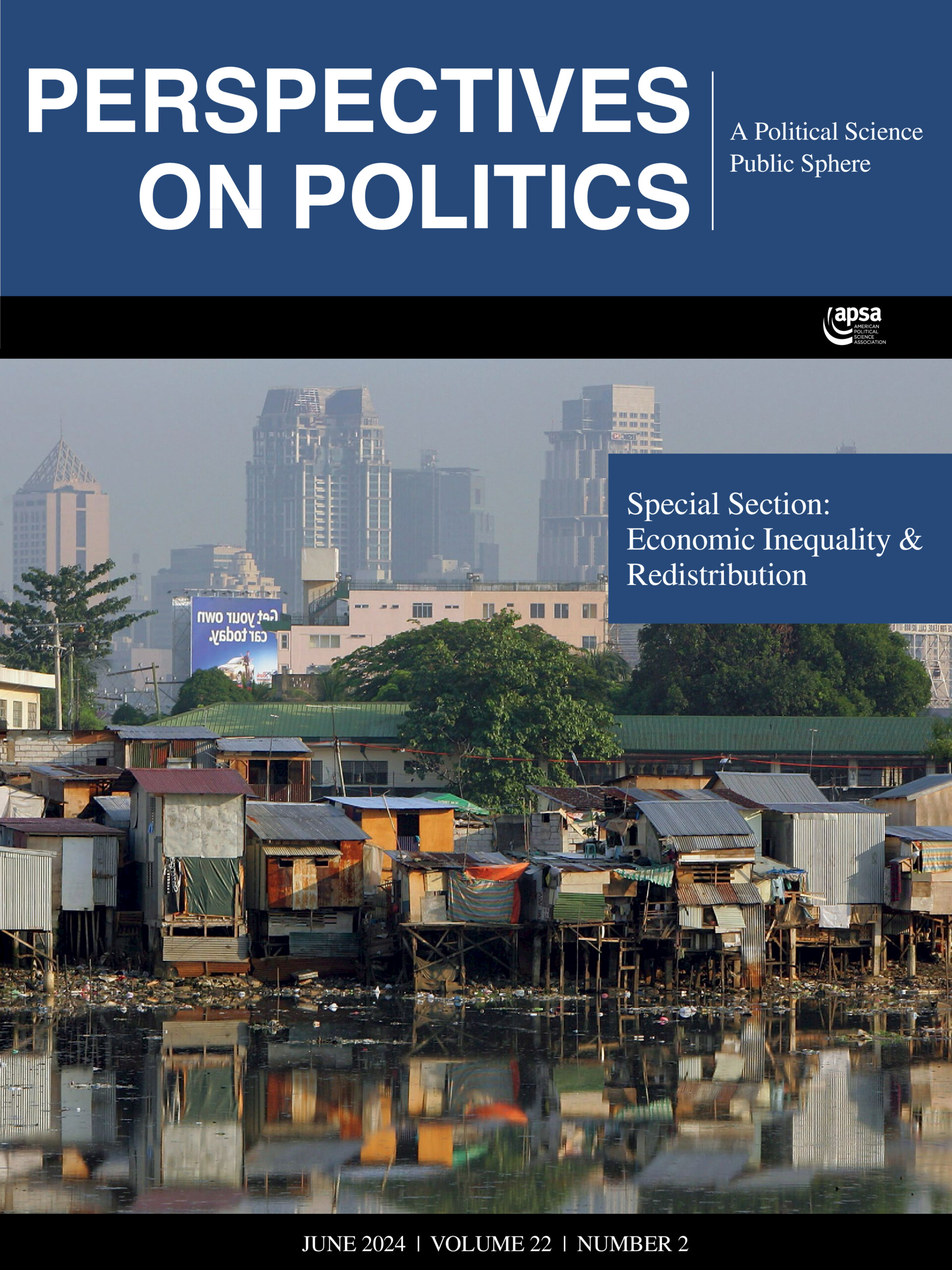
It’s Not Polarization; It’s the Radicalization of the Political Right
Polarization has become the master concept for diagnosing contemporary democratic crises. The notion denotes three features: symmetry between parties, politics as an opinion space where positions diverge, and mutual repulsion between opposing camps. Yet none of these capture current realities. Across democracies, the central dynamic is not two poles drifting apart but the transformation of the political right into authoritarianism, norm breaking, and openness to political violence. Social democratic and center-right parties tend to respond in the opposite way from what “polarization” implies: by accommodating rightward. Attempts to salvage the polarization frame with modifiers (“asymmetric,” “affective,” “sectarian,” “pernicious”) concede these realities but risk hollowing out the concept’s definitional core. These limitations reveal a deeper misdiagnosis: when one party turns antidemocratic and illiberal, incivility and conflict are inevitable—but they are symptoms, not the root problem. Misdiagnosing them as the central issue leads to viewing civility and compromise as remedies, thereby risking the legitimation of authoritarian actors. This article proposes an alternative lens: the radicalization of the political right. Developed in the study of extremism, the radicalization framework better captures asymmetric change, identity-driven politics, and the mainstreaming of illiberalism. It foregrounds identity fusion, threat narratives, elite entrepreneurship, and escalation. Concepts are never politically innocent and persisting with “polarization” risks both misdiagnosing and normalizing authoritarian threats.
Pluralistic: Post-political (09 Jul 2026) – Pluralistic: Daily links from Cory Doctorow
There's plenty of reasons to be skeptical of centrists who bemoan "political polarization" and call for a politics that abandons the "tribalism of left and right."
Book and Journals Publisher – 2025 - Lawrence Wishart
Lawrence Wishart have been publishing critical left ideas on politics and culture since 1936. Through books, journals and events, we foster a space where people can think together, challenge political ‘common sense’ and explore new possibilities.

Prejudice on the Left | The Paper Pilot
The Paper Pilot's digital garden of thoughts on philosophy, politics, and sociology
Leftism | The Paper Pilot
The Paper Pilot's digital garden of thoughts on philosophy, politics, and sociology
Anti-democratic attitudes are highly contagious, new psychology study finds
The rise of anti-democratic sentiments might be driven by social contagion. Researchers have discovered that citizens often adapt their personal support for authoritarian rule to align with the political views of those around them.
LiberationValues
LibertationValues is a political quiz aimed at anti-authoritarian leftists

LiberationValues
LibertationValues is a political quiz aimed at anti-authoritarian leftists
How the Cases You Choose Affect the Answers You Get: Selection Bias in Comparative Politics
This article demonstrates how the selection of cases for study on the basis of outcomes on the dependent variable biases conclusions. It first lays out the logic of explanation and shows how it is violated when only cases that have achieved the outcome of interest are studied. It then examines three well-known and highly regarded studies in the field of comparative politics, comparing the conclusions reached in the original work with a test of the arguments on cases selected without regard for their position on the dependent variable. In each instance, conclusions based on the uncorrelated sample differ from the original conclusions.
Why I Was Part Of The Neoreactionary or Dissident Right Movement In 2020
And a few things that happened while I was there

Moral Imperialism versus Class Solidarity
Individualism and imperialism define ruling class morality. Solidarity is the left's only answer.
‘Polarization’ has become the master concept for diagnosing our current democratic crisis. But this is not polarization. It is the radicalization of the political right. By misdiagnosing it, we risk becoming complicit in the crisis. 🧵 Just out in Perspectives on Politics doi.org/10.1017/S1537592726105246
the viability of many right-wing intellectuals and intellectual spaces is enormously dependent on the largesse of reactionary billionaires and foreign governments, who help them circumvent a marketplace of ideas where they would otherwise post extraordinarily poor sales

Don Moynihan
Its fair to ask if Orban's successful cultivation of the Western right wing intellectuals reflected that their networks were already dependent on patronage. Rod Dreher was funded by a weird billionaire, and when he stopped paying his salary, Orban did. Dreher already looking for a new gig.


