


Australia had a much larger Indigenous population before the arrival of Europeans than previously thought, according to new research. The research also demonstrates much larger population losses resulting ...
Aboriginal Memories of Inundation of the Australian Coast Dating from More than 7000 Years Ago (Australian Geographer)
"Some stories belonging to Australian Aboriginal groups tell of a time when the former coastline of mainland Australia was inundated by rising sea level. Stories are presented from 21 locations from every part of this coastline. In most instances it is plausible to assume that these stories refer to events that occurred more than about 7000 years ago, the approximate time at which sea level reached its present level around Australia. They therefore provide empirical corroboration of postglacial sea-level rise. For each of the 21 locations, the minimum water depth (below present sea level) needed for the details of the particular group of local-area stories to be true is calculated. This is then compared with the sea-level envelope for Australia (Lewis et al., Quaternary Science Reviews, 2013) and maximum and minimum ages for the most recent time that these details could have been observed are calculated. This method of dating Aboriginal stories show that they appear to have endured since 7250-13,070 cal yr BP (5300-11,120 BC). The implications of this extraordinary longevity of oral traditions are discussed, including those aspects of Aboriginal culture that ensured effective transgenerational communication and the possibility that traditions of comparable antiquity may exist in similar cultures."

Immigration
Australia’s immigration system is broken. Our population has surged past 27 million, overwhelming housing, infrastructure, and essential services. Wages are stagnating, homeownership is slipping out of reach, and Australians are being forced to compete with cheap foreign labour.

First Nations – Victorian Socialists
Australia is built on the dispossession of Aboriginal and Torres Strait Islander people. Treaty should deliver material change – not just symbolic recognition.
Poverty hits 456,000 Western Australians as housing costs deepen hardship | News at Curtin
An estimated 456,000 Western Australians, including almost 99,000 children, are living in poverty in 2026 as rising housing costs and inadequate household i ...

First Nations and Treaty - Platform | The Australian Greens
In Victoria, we’re so fortunate to live in a place with the longest continuous culture in the world.

Full Steam Ahead On Melbourne Airport Rail
The Victorian Government acknowledges Aboriginal Traditional Owners of Country throughout Victoria and pays respect to their cultures and Elders past and present.

Policies - One Nation Victoria
One Nation Policies on Issues Affecting Australia and Australians today.

First Nation Profiles
First Nations people refers to Status and Non-Status ‘Indian’ peoples in Canada. More than one million people in Canada identify themselves as an Aboriginal person, or 4% of the population (as of 2006). Fifty-three percent are registered Indians, 30% are Métis, 11% are Non-status Indians and 4% are Inuit. Over half (54%) of Aboriginal people live in urban areas.
Abundant intelligences: placing AI within Indigenous knowledge frameworks
The current trajectory of artificial intelligence development suffers from fundamental epistemological shortcomings, resulting in the systematic operationalization of bias against non-white, non-male, and non-Western peoples. We argue that these failings are, in part, the result of certain Western rationalist epistemologies that exclude many ways of knowing about the world, and therefore they cannot provide a sufficient foundation on which to adequately, robustly, and humanely conceptualize intelligence. We present a new research agenda, Abundant Intelligences, an Indigenous-led, Indigenous-majority international, interdisciplinary research program that imagines anew how to conceptualize and design artificial intelligence (AI) based on Indigenous knowledge (IK) systems. Abundant Intelligences draws on the rich plurality of Indigenous knowledge systems, bringing together diverse sets of thought, culture, and protocol together. We show IK systems provide one way to rebuild AI’s epistemological foundations and transform these tools’ current role in reinforcing colonial practices of exclusion, extraction, manipulation, and eradication into engines of abundance that enable us to care better for ourselves, our communities, and our world. Our proposition is to fully engage with AI to explore how different conceptions of intelligence could be embodied in these technologies. In this paper, we present the tenets of the research program in detail, account for our methodological approach, describe the impact and limitations, and conclude on a discussion of the implications of the program.
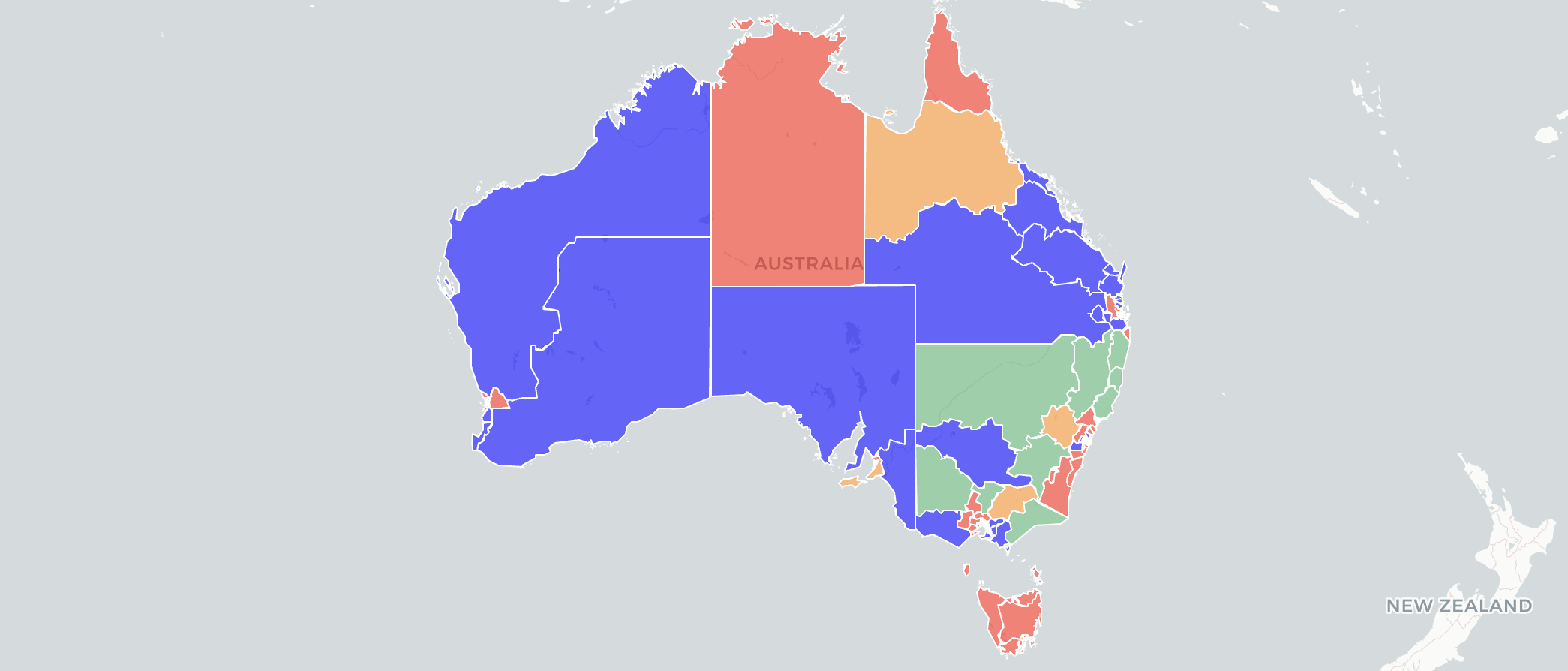
How the swing was distributed, and how the pendulum performed
Now that we have a complete two-party-preferred vote for all of Australia, we can look at the distribution of seat margins and swings across the country. For this post, I have produced a number of …
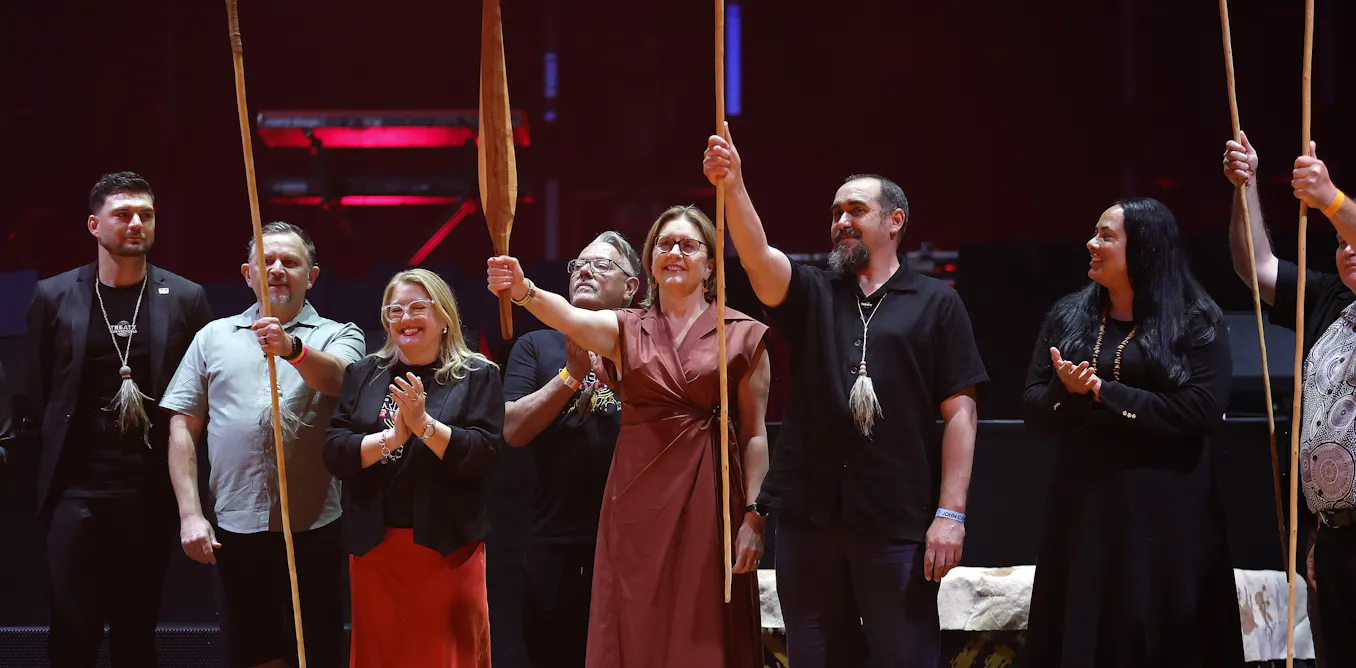
Melina Bath MP - First Nations Victoria – our plan to improve Indigenous lives
The Nationals represent people who live and work in regional Victoria. Two great strengths of the Party are our membership and democratic processes.
“Two‐Eyed Seeing”: An Indigenous framework to transform fisheries research and management
Abstract Increasingly, fisheries researchers and managers seek or are compelled to “bridge” Indigenous knowledge systems with Western scientific approaches to understanding and governing fisheries. Here, we move beyond the all‐too‐common narrative about integrating or incorporating (too often used as euphemisms for assimilating) other knowledge systems into Western science, instead of building an ethic of knowledge coexistence and complementarity in knowledge generation using Two‐Eyed Seeing as a guiding framework. Two‐Eyed Seeing ( Etuaptmumk in Mi’kmaw) embraces “learning to see from one eye with the strengths of Indigenous knowledges and ways of knowing, and from the other eye with the strengths of mainstream knowledges and ways of knowing, and to use both these eyes together, for the benefit of all,” as envisaged by Elder Dr. Albert Marshall. In this paper, we examine the notion of knowledge dichotomies and imperatives for knowledge coexistence and draw parallels between Two‐Eyed Seeing and other analogous Indigenous frameworks from around the world. It is set apart from other Indigenous frameworks in its explicit action imperative—central to Two‐Eyed Seeing is the notion that knowledge transforms the holder and that the holder bears a responsibility to act on that knowledge. We explore its operationalization through three Canadian aquatic and fisheries case‐studies that co‐develop questions, document and mobilize knowledge, and co‐produce insights and decisions. We argue that Two‐Eyed Seeing provides a pathway to a plural coexistence, where time‐tested Indigenous knowledge systems can be paired with, not subsumed by, Western scientific insights for an equitable and sustainable future.

Victorian state election: what’s at stake for treaty and Indigenous self-determination?
Victoria has made significant progress in advancing Indigenous rights. However, those achievements sit precariously as the state heads to an election on November 28.
Download the Full Report — Passing the Message Stick
We pay respect to our Elders and acknowledge the Traditional Owners who’ve cared for country since time immemorial. Sovereignty over this land was never ceded - it always was, and always will be, Aboriginal land.
I Was Wrong About Mastodon
I said that Mastodon moderation wouldn't scale, it does. The cultural differences will likely continue to maintain a friendlier atmosphere regardless of size.

Australian Climate Crisis


"Wandering towards dystopia": CSIRO scientists want open discussion of climate impacts before it's too late
Huge gas-fired power station plan quietly revealed amid renewables fanfare

39 Governance Technical Report