


The extreme heat waves we have seen over the last few years may only serve as a preview of what is to come as a result of climate change. A new study led by researcher Philipp Aglas-Leitner from Freie ...
Majority of US voters link extreme weather to climate crisis, study finds
Top Democrat says findings show public ‘way ahead of the politicians’ as Trump dismisses global heating as ‘hoax’

Beyond Catastrophe: A New Climate Reality Is Coming Into View (Published 2022)
There's plenty of bad news. But thanks to real progress, we're headed toward a less apocalyptic future.

A Blackened Ecology for the End of the Summer
Every summer in the past 16 years Europe and North America—and not only—is affected by global warming evident through the heat waves and wildfires they experience while research from the past decad…

A recent doubling of global warming rate signals a 1.5 °C breach by 2028
Timely and accurate projections of when global warming will exceed the Paris Agreement’s 1.5 °C threshold are essential for effective climate policy. Existing estimates place this exceedance in the early 2030 s but carry substantial uncertainty. Here we analyze the latest observational temperature records through 2025 and identify a statistically significant doubling of the global warming rate during 2011–2025 (0.40 °C per decade) compared to 1971–2025 (0.20 °C per decade). Extrapolating this accelerated rate projects a crossing of the 1.5 °C threshold by 2028, nearly a decade earlier than previous estimates. Regional analyses attribute this acceleration primarily to intensified warming over East Asia–the North Pacific, mid-latitude Eurasia, and the South Atlantic–Antarctic regions. The ensemble mean of 26 climate models fails to capture the observed doubling of the warming rate, simulating a rate of only 0.29 °C per decade. These findings suggest a narrower window remains to limit warming to 1.5 °C, underscoring the urgency for rapid and substantial reductions in greenhouse gas emissions.
Global Warming Is Rapidly Accelerating, New Paper Finds
A new study found the first statistically significant evidence that global warming is ramping up at a horrifying rate.

Heat-related urban mortality attributable to human-induced climate change in Europe in summer 2026
The summer of 2026 was characterised by a series of extreme heatwaves across Western Europe, with both monthly and annual temperature records broken repeatedly across many countries from May onwards. Several government agencies took the unprecedented step of issuing near-real-time estimates of the mortality associated with the most intense heat events, reflecting the severity of the threat to public health. In this study we combine probabilistic climate attribution with city- and age-specific temperature–mortality relationships to estimate heat-related mortality in 854 European cities during the summer months (June-August) and compare with counterfactual climate conditions representing a world without human-caused warming. We estimate 50,391 heat-related excess deaths across the 854 cities during the summer, with around two thirds of these attributable to anthropogenic climate change. These results highlight the threat from human-caused warming and the need for rapid emissions reductions alongside preparation and adaptation measures.
One billion people will live in insufferable heat within 50 years – study
Human cost of climate crisis will hit harder and sooner than previously believed, research reveals
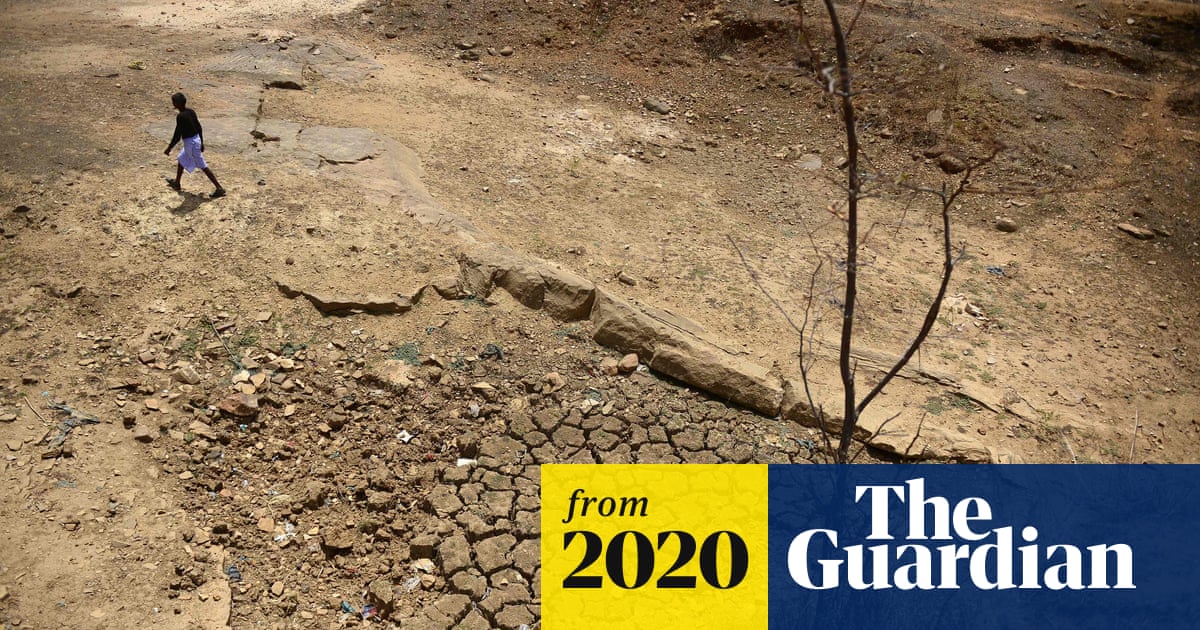
This El Niño is set to be the largest on record by a ‘mind-blowing margin’
Forecasters predict that the monster climate pattern will combine with global warming to push global temperatures in 2027 to new heights.

As Toronto Temperatures Rise, Inequalities Widen | The Local
Climate change causes heat waves, but the city’s politics, policies, and design determine who suffers most.

Political Scenarios for Climate Disaster - Dissent Magazine
In the Global North we often act as if our future will be a warmer version of today: liberal capitalism, plus flood insurance, minus coral reefs. That future is a fantasy.

'Hotter and hotter and hotter' - Europe's new climate in seven charts
Temperature records were smashed in June - and scientists warn this is a sign of things to come.

Oceans Are Warming Faster Than Predicted
Earth’s seas are absorbing excess heat 40 percent faster than previous estimates

Summer’s new normal is a hazard that’s testing Europe’s climate resilience
As people across Europe are having to acclimatise to an unprecedented heatwave, coordinated responses for tackling extreme heat need to come from the top, and there’s no time to lose.
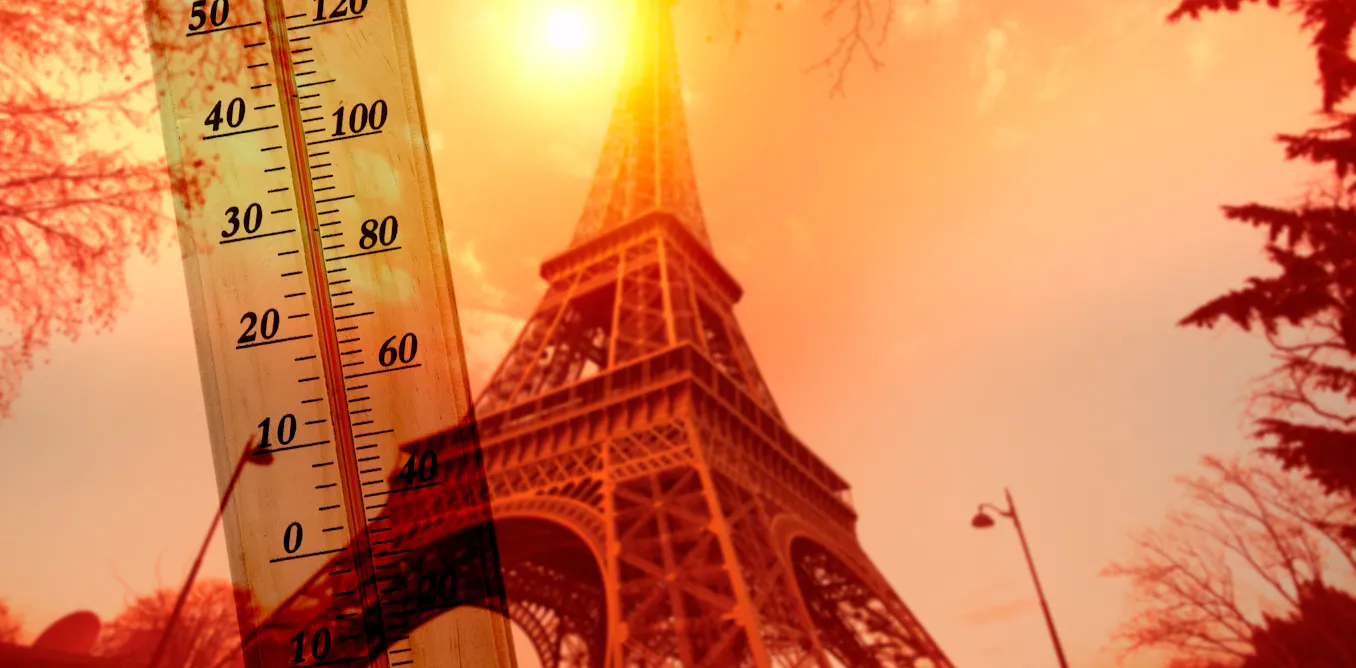
Visualising Climate 2026 — Conference
A global conference on climate data visualization, storytelling, and science. Bologna, Italy • 4–6 November 2026.

🌡️🔥Climate change isn't a distant threat—it's a public health crisis now. Our study shows heat-related deaths in many cities could surpass annual COVID-19 deaths in just 5–10 years at 3°C warming. Urgent action is needed! 👉 rdcu.be/d5rnL @natureportfolio.bsky.social #scientificreports

Rapid climate action is needed: comparing heat vs. COVID-19-related mortality
rdcu.be