

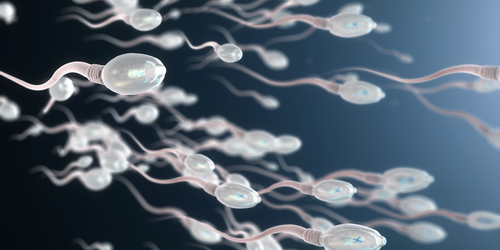
By monitoring fluctuations in the beating of macroscopic sperm tails, researchers retrieve information about the behavior of the nanoscale motors that drive tail beating.
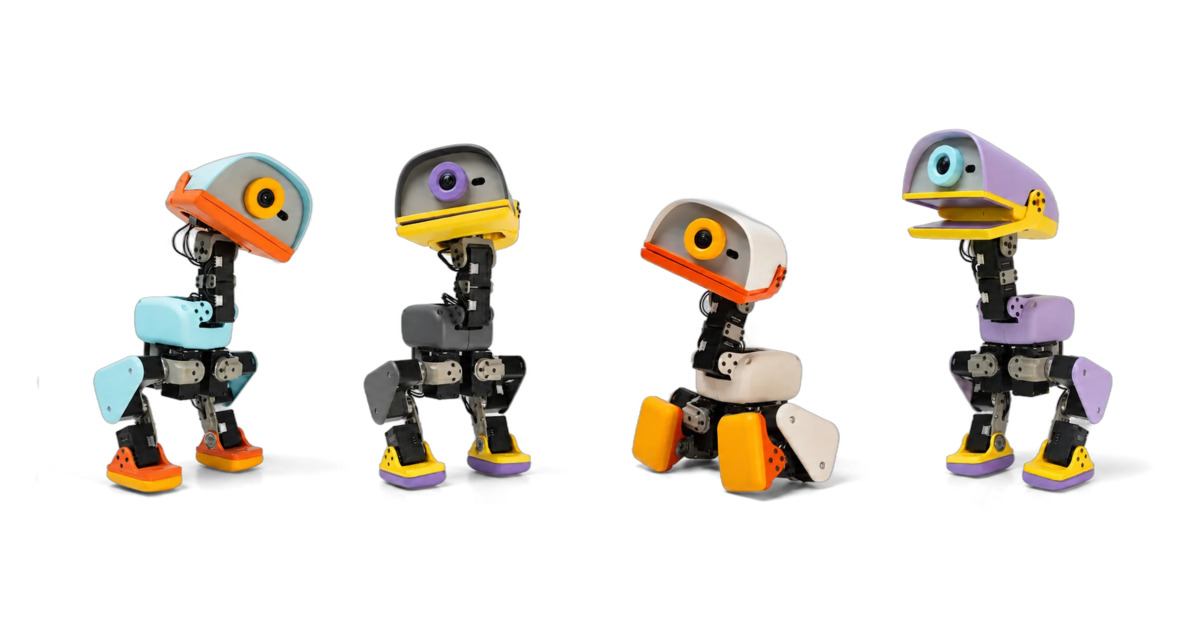
Microduck - A tiny biped robot you can teach new tricks | Pollen Robotics
Microduck is a 25 cm biped robot with 15 motors, a camera, LiDAR and a grasping beak. Playable out of the box, and its open-source stack lets you train new behaviours in simulation and run them on the robot. Pre-order at $399.
tailscale/caddy-tailscale
A highly experimental exploration of integrating Tailscale and Caddy.
Are biological systems poised at criticality?
Many of life's most fascinating phenomena emerge from interactions among many elements--many amino acids determine the structure of a single protein, many genes determine the fate of a cell, many neurons are involved in shaping our thoughts and memories. Physicists have long hoped that these collective behaviors could be described using the ideas and methods of statistical mechanics. In the past few years, new, larger scale experiments have made it possible to construct statistical mechanics models of biological systems directly from real data. We review the surprising successes of this "inverse" approach, using examples form families of proteins, networks of neurons, and flocks of birds. Remarkably, in all these cases the models that emerge from the data are poised at a very special point in their parameter space--a critical point. This suggests there may be some deeper theoretical principle behind the behavior of these diverse systems.

Close to the Metal — Real Life
The value of reintroducing friction into our interactions with computers


Digging into how Tailscale encrypts its state file on Windows, Apple, and Linux
Tailscale's latest version encrypts more data at rest, making it harder for attackers to potentially clone your nodes. Here's how it works.

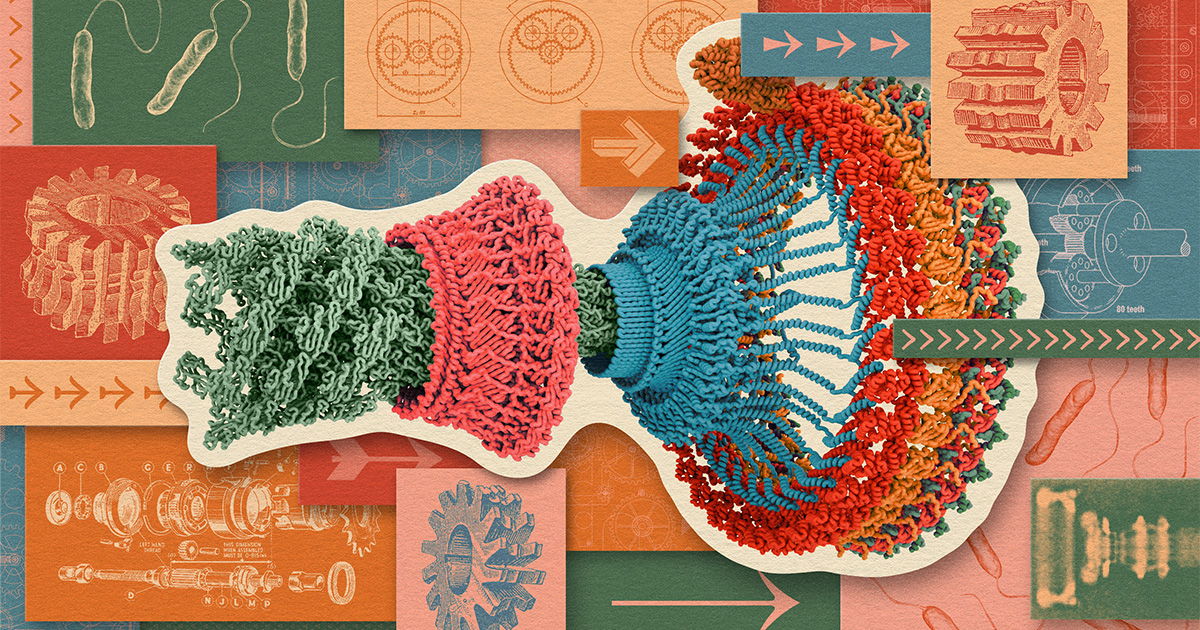
What Physical ‘Life Force’ Turns Biology’s Wheels? | Quanta Magazine
The bacterial flagellar motor is finally understood after 50 years. In its workings, columnist Natalie Wolchover finds the essence of life.

The phonology of sperm whale coda vowels
Abstract. Sperm whales (Physeter macrocephalus) communicate using series of clicks known as codas. In previous research, sperm whale codas have been shown

Bluesky Siphonophore Viewer
Posts now gather into a translucent siphonophore-like colony drifting through dark water. Oldest posts begin at one end of the spine and newer ones accumulate toward the other. Engagement thickens bells, membranes, and feeding clusters. Drag to orbit, mouse wheel to zoom, right-drag to pan, hover for a specimen overlay, click a segment to glide toward it, and double click the background to zoom to the whole organism.
ewanc26/mastodon-markov
a Mastodon bot based on a set of posts digested by the Markov chain.
Design in The Age of Biology: Shifting From a Mechanical-Object Ethos to an Organic-Systems Ethos
In the early twentieth century, our understanding of physics changed rapidly; now, our understanding of biology is undergoing a similar rapid change.
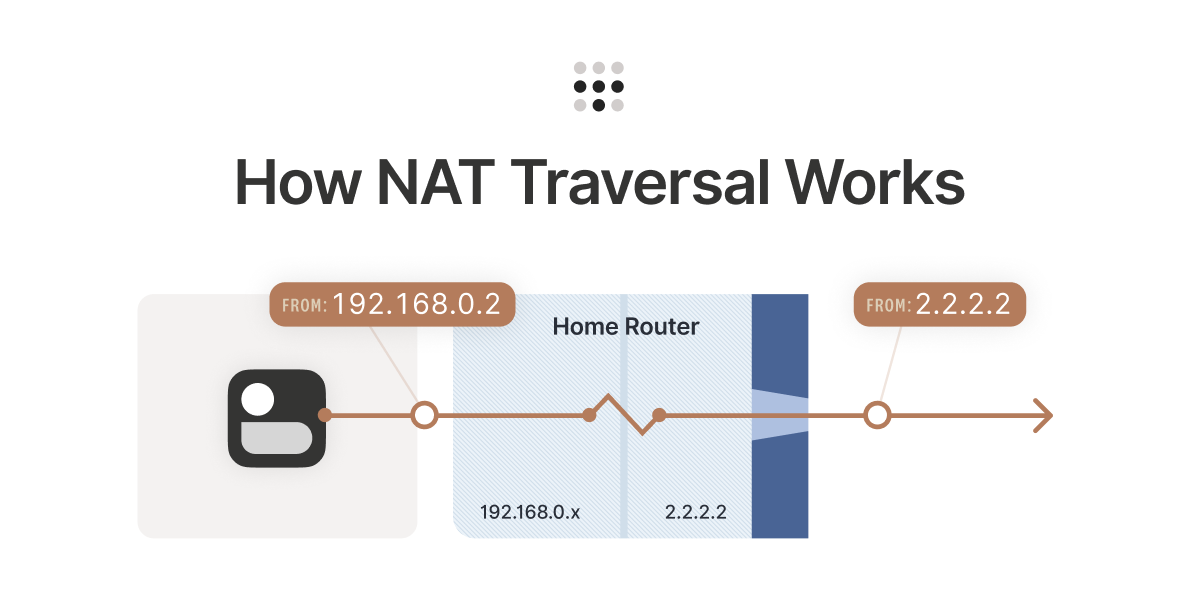
How NAT traversal works
Learn how NAT traversal works, how Tailscale can get through and securely connect your devices directly to each other.
The fetish of the click: a small history of the computer mouse as vulva
This paper examines the fetish of the click through a technofeminist history of the computer mouse as vulva. It argues that this material turn is a necessary corrective to abstractions of the click...
