Paul Feyerabend (b.1924, d.1994), having studied science at theUniversity of Vienna, moved into philosophy for his doctoral thesis,made a name for himself both as an expositor and (later) as a critic ofKarl Popper's “critical rationalism”, and went on to becomeone of the twentieth century's most famous philosophers of science. Animaginative maverick, he became a critic of philosophy of scienceitself, particularly of “rationalist” attempts to lay downor discover rules of scientific method.

John Dewey
John Dewey was an American philosopher, psychologist, and educational reformer. He was one of the most prominent American scholars in the first half of the twentieth century.

Claude-shaped science
Matthew Schwartz describes what happened when he stopped fighting Claude and allowed Claude to find “Claude-shaped” problems. This led him to build BootLoops, a toolkit for exact calculations in quantitative science, which he has been applying across scientific fields alongside experts.
The Philosophical Implications of the Second Scientific Revolution
Notes from my history of philosophy course lecture on Darwin, Maxwell, Einstein, and Bohr
Marxist Astronomy: The Milky Way According to Anton Pannekoek
Can a person’s experiences on earth alter how they perceive the stars? Lauren Collee peers through the telescope of Anton Pannekoek, the Dutch astronomer whose politics informed his human approach to studying the cosmos.

Guest post: If you’re going to critique science, be scientific about it
Loren K. Mell Editor’s note: This post responds to a Feb. 13 article in The Atlantic, “The Scientific Literature Can’t Save Us Now,” written by Retraction Watch cofounders Adam Marcus and Ivan Oran…
Johannes Kepler
Johannes Kepler was a German polymath who was an astronomer, mathematician, astrologer, natural philosopher and music theorist. He is a key figure in the 17th-century Scientific Revolution, best known for his laws of planetary motion, and his books Astronomia nova, Harmonice Mundi, and Epitome Astronomiae Copernicanae. The variety and impact of his work made Kepler one of the founders and fathers of modern astronomy, the scientific method, natural science, and modern science. He has been described as the "father of science fiction" for his novel Somnium.

annotations: Le débat sur la science économique, encore et encore
traduction française du billet de blog "The economics debate, again and again" de Dani Rodrik
Claude Science (beta)
Claude Science is your AI workbench for scientific research. Works through your research like a skilled scientist, running the analysis and tracing every step. Spend less time stitching pipelines together, and more time on the science.
Benoit Mandelbrot
Benoit B. Mandelbrot was a Polish-born French-American mathematician and polymath with broad interests in the practical sciences, especially regarding what he labeled as "the art of roughness" of physical phenomena and "the uncontrolled element in life". He referred to himself as a "fractalist" and is recognized for his contribution to the field of fractal geometry, which included coining the word "fractal", as well as developing a theory of "roughness and self-similarity" in nature.

Ernst Chladni
Ernst Florens Friedrich Chladni was a German physicist and musician. His most important work, for which he is sometimes labeled the father of acoustics, included research on vibrating plates and the calculation of the speed of sound for different gases. He also undertook pioneering work in the study of meteorites and is regarded by some as the father of meteoritics.

In Medias Res: Peter Sloterdijk's Spherological Poetics of Being | JSTOR
In recent years, Peter Sloterdijk has become one of Germany's most influential thinkers. His diverse body of work includes a Heideggerian project to think…
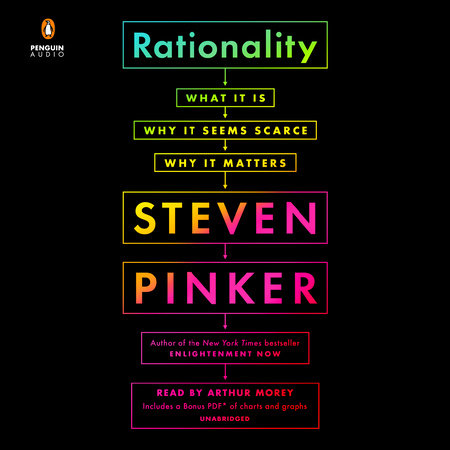
Rationality: What It Is, Why It Seems Scarce, Why It Matters by Steven Pinker
In the twenty-first century, humanity is reaching new heights of scientific understanding—and at ...
Should Philosophy Retire?
Richard Rorty thought philosophy’s days were numbered and spent most of his career explaining why.
Accessibility of the Scala Compiler
In 2001, as a university undergraduate, a friend and I were lucky enough to get the opportunity to meet the physicist Stephen Hawking at a small private reception after he gave a public lecture in Cambridge.

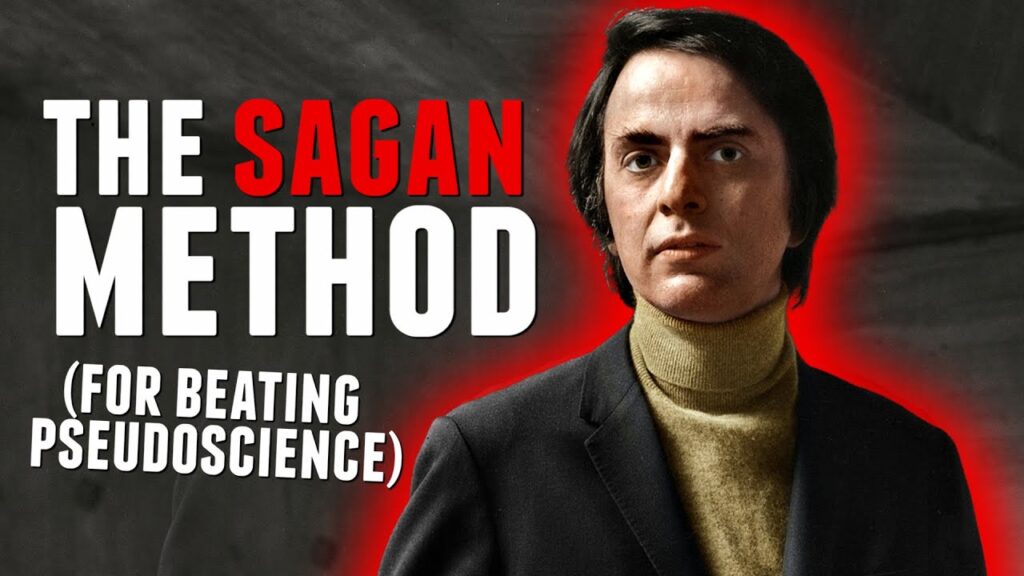
Carl Sagan’s Baloney Detection Kit: Tools for Thinking Critically & Knowing Pseudoscience When You See It
Though he died too young, Carl Sagan left behind an impressively large body of work, including more than 600 scientific papers and more than 20 books.