

Broadly construed, Temporal Logic covers all formalapproaches to representing and reasoning about time and temporalinformation. More narrowly, it usually refers to the modal-logic styleapproach introduced by Arthur Prior in the 1950s under the nameTense Logic and subsequently developed further by manylogicians and computer scientists. Temporal Logic has been widely usedas a formalism for clarifying philosophical issues about time, as aframework for defining the semantics of temporal expressions innatural language, as a language for encoding temporal knowledge inartificial intelligence, and as a tool for specification andverification of computer programs and systems.
Temporal logic with "Until", functional reactive programming with processes, and concrete process categories
As part of the Digital Library's transition to Open Access, new features for researchers are available in the Premium Edition. Click here to learn more.

quint-co/quint
An executable specification language with delightful tooling based on the temporal logic of actions (TLA)
Temporal: The 9-Year Journey to Fix Time in JavaScript
JavaScript's Date object has been a source of bugs for three decades. Temporal, which just reached Stage 4, is a modern replacement with immutable types, first-class time zone and calendar support, and nanosecond precision. This is the story of how Bloomberg, Igalia, and the TC39 community spent nine years turning an idea into a shipping standard.

A modal analysis of staged computation | Journal of the ACM
We show that a type system based on the intuitionistic modal logic S4 provides an expressive framework for specifying and analyzing computation stages in the context of typed λ-calculi and functional languages. We directly demonstrate the sense in which ...

ggtime: A Grammar of Temporal Graphics
Visualizing changes over time is fundamental to learning from the past and anticipating the future. However, temporal semantics can be complicated, and existing visualization tools often struggle to accurately represent these complexities. It is common to use bespoke plot helper functions designed to produce specific graphics, due to the absence of flexible general tools that respect temporal semantics. We address this problem by proposing a grammar of temporal graphics, and an associated software implementation, 'ggtime', that encodes temporal semantics into a declarative grammar for visualizing temporal data. The grammar introduces new composable elements that support visualization across linear, cyclical, quasi-cyclical, and other granularities; standardization of irregular durations; and alignment of time points across different granularities and time zones. It is designed for interoperability with other semantic variables, allowing navigation across the space of visualizations while preserving temporal semantics.

Time-lock puzzle
A time-lock puzzle, or time-released cryptography, encrypts a message that cannot be decrypted until a specified amount of time has passed. The concept was first described by Timothy C. May,[1] and a solution first introduced by Ron Rivest, Adi Shamir, and David A. Wagner in 1996.[2] Time-lock puzzle are useful in cases where confidentiality of information is determined by time, such as a diarist who does not want their views released until 50 years after their death, an auction where bids are sealed until the bidding period is closed, electronic voting, and contract signing.[1][3] They can additionally be used in creating further cryptographic primitives, such as verifiable delay functions and zero knowledge proofs.[3]
Home | Logic(s) Magazine
Logic(s) is a queer Black and Asian magazine devoted to deepening the discourse around technology. We publish twice a year in print and digital formats.
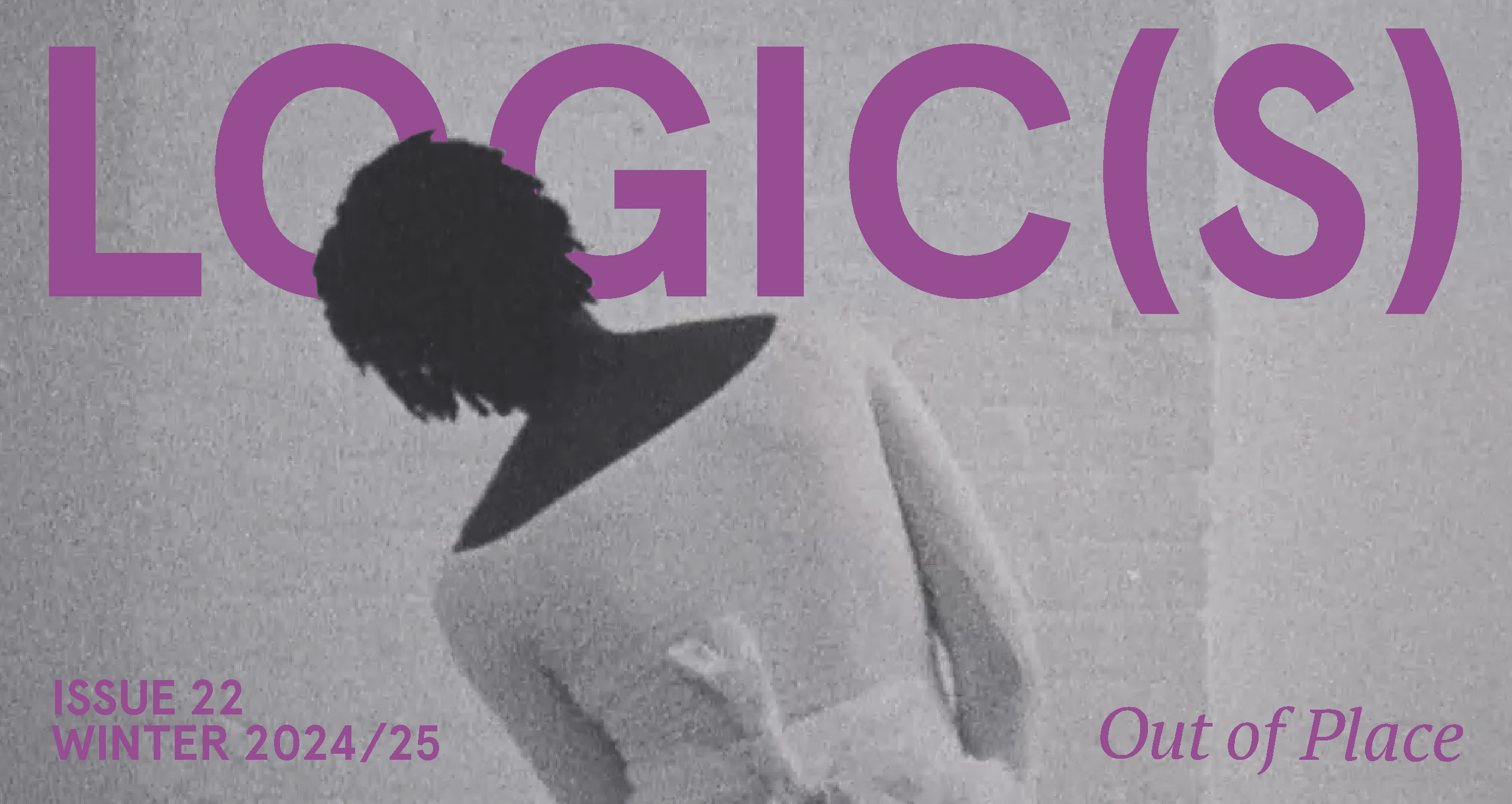
Home | Logic(s) Magazine
Logic(s) is a queer Black and Asian magazine devoted to deepening the discourse around technology. We publish twice a year in print and digital formats.

Probabilistic compositional semantics, purely
We provide a general framework for the integration of formal semantics with probabilistic reasoning. This framework is conservative, in the sense that it relies only on typed λ-calculus and is thus co
The semantics of clear, a specification language
This paper gives a semantics for the Clear language for specifying problems and programs, described by Burstall and Goguen in 1977. A blend of denotational semantics with categorical ideas is used.

A taxonomy for next-generation reasoning models
Where we've been and where we're going with RLVR.

Koans Are No Longer Paradoxical
Illuminating how they instantiate a rigorous form of logic

Efficient Processing of Reachability and Time-Based Path Queries in a Temporal Graph
A temporal graph is a graph in which vertices communicate with each other at specific time, e.g., $A$ calls $B$ at 11 a.m. and talks for 7 minutes, which is modeled by an edge from $A$ to $B$ with starting time "11 a.m." and duration "7 mins". Temporal graphs can be used to model many networks with time-related activities, but efficient algorithms for analyzing temporal graphs are severely inadequate. We study fundamental problems such as answering reachability and time-based path queries in a temporal graph, and propose an efficient indexing technique specifically designed for processing these queries in a temporal graph. Our results show that our method is efficient and scalable in both index construction and query processing.