

Quantum mechanics, with its revolutionary implications, has posedinnumerable problems to philosophers of science. In particular, it hassuggested reconsidering basic concepts such as the existence of aworld that is, at least to some extent, independent of the observer,the possibility of getting reliable and objective knowledge about it,and the possibility of taking (under appropriate circumstances) atleast some properties to be objectively possessed by physical systems.It has also raised many others questions which are well known to thoseinvolved in the debate on the interpretation of this pillar of modernscience. One can argue that most of the problems are not only due tothe intrinsic revolutionary nature of the phenomena which have led tothe development of the theory. They are also related to the fact that,in its standard formulation and interpretation, quantum mechanics is atheory which is excellent (in fact it has an unprecedented success inthe history of science) in telling us everything about what weobserve, but it meets with serious difficulties in telling uswhat there is. We are making here specific reference to thecentral problem of the theory, usually referred to as themeasurement problem, which is accompanying quantum theory sinceits birth. It is just one of the many attempts to overcome thedifficulties posed by this problem that has led to the development ofCollapse Theories, i.e., to the Dynamical ReductionProgram (DRP). As we shall see, this approach consists inaccepting that the dynamical equation of the standard theory should bemodified by the addition of stochastic and nonlinear terms. The nicefact is that the resulting theory is capable, on the basis of a singledynamics which is assumed to govern all natural processes, to accountat the same time for all well-established facts about microscopicsystems as described by the standard theory, as well as for theso-called postulate of wave packet reduction (WPR), which accompaniesthe interaction of a microscopic system with a measuring device. As iswell known, such a postulate is assumed in the standard scheme just inorder to guarantee that measurements have outcomes but, as weshall discuss below, it meets with insurmountable difficulties if onetries to derive it by assuming the measurement itself to be a processgoverned by the linear laws of the theory. Finally, the collapsetheories account in a completely satisfactory way for the classicalbehavior of macroscopic systems.
The Consistent Histories Approach to Quantum Mechanics
The consistent histories, also known as decoherent histories, approachto quantum interpretation is broadly compatible with standard quantummechanics as found in textbooks. However, the concept ofmeasurement by which probabilities are introduced in standardquantum theory no longer plays a fundamental role. Instead,all quantum time dependence is probabilistic (stochastic),with probabilities given by the Born rule or its extensions. Byrequiring that the description of a quantum system be carried outusing a well-defined probabilistic sample space (called a“framework”) this approach resolves many well-knownquantum paradoxes of quantum foundations. In particular, quantummechanics is local and consistent with special relativity. Classicalmechanics emerges as a useful approximation to the more fundamentalquantum mechanics under suitable conditions. The price to be paid forthis is a set of rules for reasoning resembling, but very much simplerthan, those of quantum logic. An important philosophical implicationis the absence of a single universally-true state of affairs at eachinstant of time. However, there is a correspondence limit in which thenew quantum logic becomes standard logic in the macroscopic world ofeveryday experience, and the laws of classical mechanics emerge as agood approximation to an underlying, and in principle more exact,quantum description.
‘Shut up and calculate’ does a disservice to quantum mechanics | Aeon Essays
The cliché has it that the Copenhagen interpretation demands adherence without deep enquiry. That does physics a disservice
The Kochen-Specker Theorem
The Kochen-Specker theorem is an important and subtle topic in the foundations of quantum mechanics (QM). The theorem demonstrates the impossibility of a certain type of interpretation of QM in terms of hidden variables (HV) that naturally suggests itself when one begins to consider the project of interpretating QM.We here present the theorem/argument and the foundational discussion surrounding it at different levels. The reader looking for a quick overview should read the following sections and subsections: 1, 2, 3.1, 3.2, 4, and 6. Those who read the whole entry will find proofs of some non-trivial claims in supplementary documents.
QBism: Quantum Theory as a Hero's Handbook
This paper represents an elaboration of the lectures delivered by one of us (CAF) during "Course 197 -- Foundations of Quantum Physics" at the International School of Physics "Enrico Fermi" in Varenna, Italy, July 2016. Much of the material for it is drawn from arXiv:1003.5209, arXiv:1401.7254, and arXiv:1405.2390. However there are substantial additions of original material in Sections 4, 7, 8 and 9, along with clarifications and expansions of the older content throughout. Topics include the meaning of subjective probability; no-cloning, teleportation, and quantum tomography from the subjectivist Bayesian perspective; the message QBism receives from Bell inequality violations (namely, that nature is creative); the import of symmetric informationally complete (SIC) quantum measurements for the technical side of QBism; quantum cosmology QBist-style; and a potential meaning for the holographic principle within QBism.

Spirits and the incompleteness of physics
Complexity, renormalization, and the spirits beyond the horizon of theory

Out of Nowhere: The Emergence of Spacetime in Quantum Theories of Gravity
Out of Nowhere is the monograph co-authored by Nick Huggett and Christian Wüthrich, which appeared in 2025 from Oxford University Press. Selected chapters are posted here. (Our publication agreemen…

How physics at the roots of reality point to a grand unified theory | Aeon Essays
Physics displays an uncanny alignment at its very deepest levels. Is a grand theory of everything finally within reach?
On the Hardness of Detecting Macroscopic Superpositions
When is decoherence "effectively irreversible"? Here we examine this central question of quantum foundations using the tools of quantum computational complexity. We prove that, if one had a quantum circuit to determine if a system was in an equal superposition of two orthogonal states (for example, the $|$Alive$\rangle$ and $|$Dead$\rangle$ states of Schrödinger's cat), then with only a slightly larger circuit, one could also $\mathit{swap}$ the two states (e.g., bring a dead cat back to life). In other words, observing interference between the $|$Alive$\rangle$and $|$Dead$\rangle$ states is a "necromancy-hard" problem, technologically infeasible in any world where death is permanent. As for the converse statement (i.e., ability to swap implies ability to detect interference), we show that it holds modulo a single exception, involving unitaries that (for example) map $|$Alive$\rangle$ to $|$Dead$\rangle$ but $|$Dead$\rangle$ to -$|$Alive$\rangle$. We also show that these statements are robust---i.e., even a $\mathit{partial}$ ability to observe interference implies partial swapping ability, and vice versa. Finally, without relying on any unproved complexity conjectures, we show that all of these results are quantitatively tight. Our results have possible implications for the state dependence of observables in quantum gravity, the subject that originally motivated this study.
Jacob Barandes - “A Deflationary Account of Quantum Theory & Implications for the Complex Numbers”

Putting Paradoxes to Work: Contextuality in Measurement-Based Quantum Computation
We describe a joint cohomological framework for measurement-based quantum computation (MBQC) and the corresponding contextuality proofs. The central object in this framework is an element $$[\beta _\Psi ]$$[βΨ]in the second cohomology group of the chain complex describing a given MBQC. $$[\beta _\Psi ]$$[βΨ]contains the function computed therein up to gauge equivalence, and at the same time is a contextuality witness. The present cohomological description only applies to temporally flat MBQCs, and we outline an approach for extending it to the temporally ordered case.

Jacob Barandes | Quantum Theory as a New Kind of Stochastic Process
Jacob Barandes | Quantum Theory as a New Kind of Stochastic Process
The science of consciousness does not need another theory, it needs a minimal unifying model
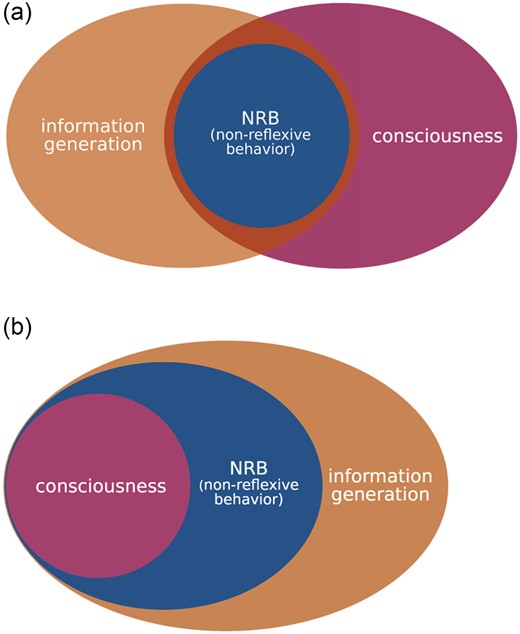
Abstract. This article discusses a hypothesis recently put forward by Kanai et al., according to which information generation constitutes a functional basi
Mysteries of mode collapse — LessWrong
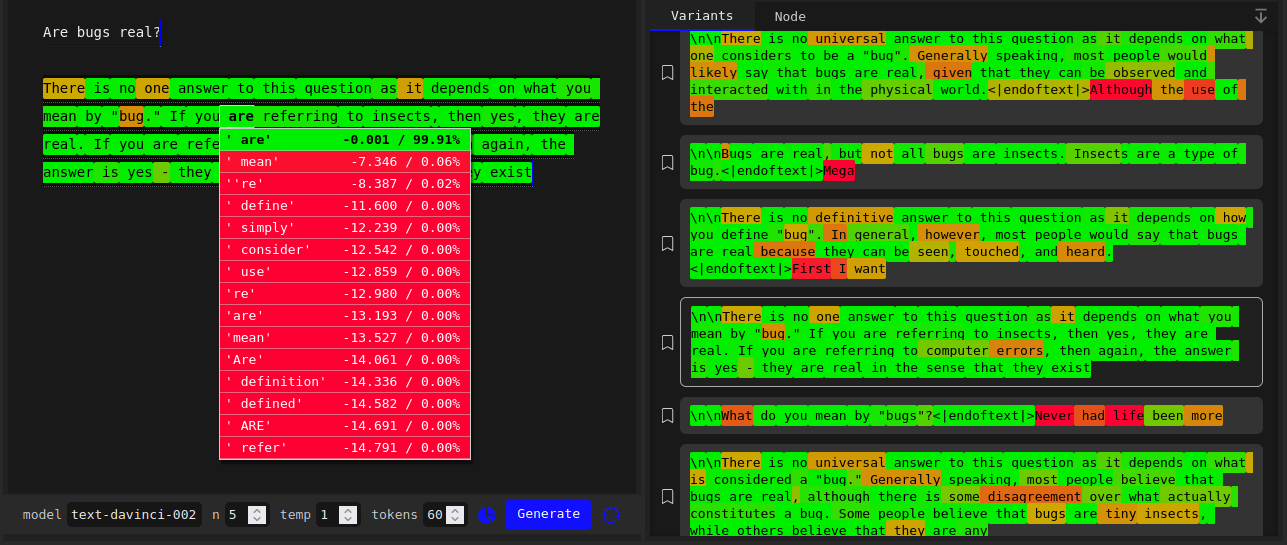
Thanks to Ian McKenzie and Nicholas Dupuis, collaborators on a related project, for contributing to the ideas and experiments discussed in this post…
Categorical quantum mechanics
Categorical quantum mechanics is the study of quantum foundations and quantum information using paradigms from mathematics and computer science, notably monoidal category theory. The primitive objects of study are physical processes, and the different ways these can be composed. It was pioneered in 2004 by Samson Abramsky and Bob Coecke. Categorical quantum mechanics is entry 18M40 in MSC2020.