


Publish your restaurant's menu once, as structured data you own. Plates gives it a beautiful page, and the open network carries it everywhere else.
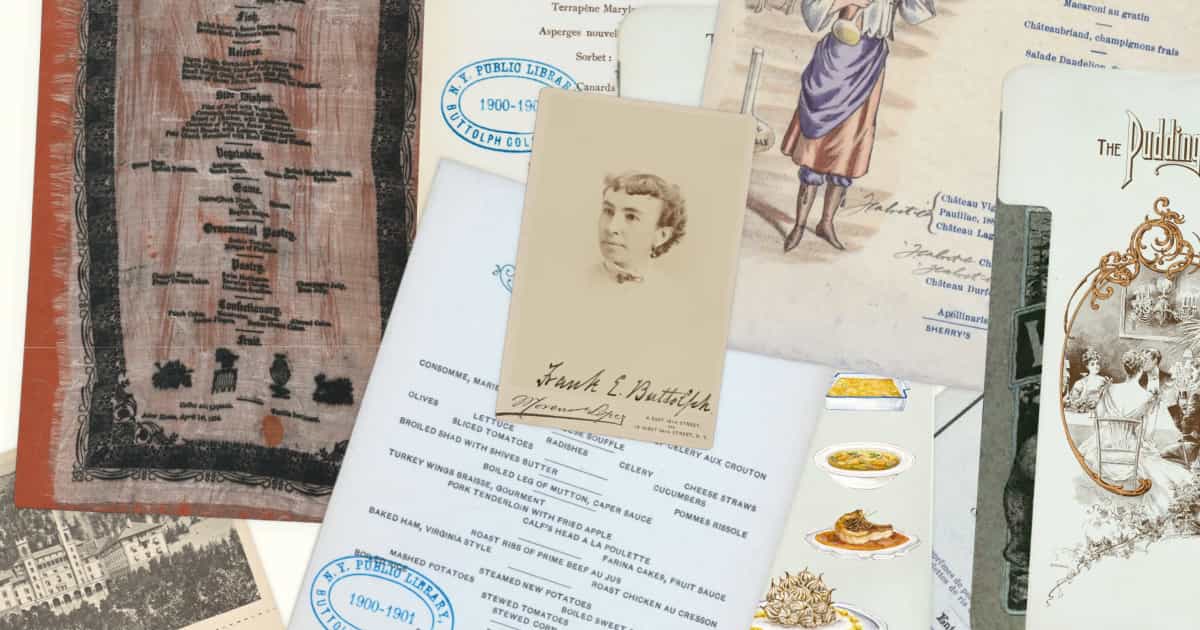
A History of Menus is a Menu of History
What do America’s earliest restaurant menus teach us about America?
kich.io
Your Smart Kitchen Assistant Track your pantry, manage recipes, and streamline grocery shopping—all in one place. Never wonder what you can cook or what you need to buy again. https://kich.io

recipe.exchange - Share Your Recipes
A simple, clutter-free way to discover and share your favorite recipes.

Cheeseburger Database
A community-built record of the world's cheeseburgers. Posted to Bluesky, indexed here. No endless scrolling. No ads.
RecipeRadar - search recipes by ingredients
RecipeRadar - search recipes by ingredients
Icons in Menus Everywhere — Send Help
Writing about the big beautiful mess that is making things for the world wide web.
The Sifter - A Food History Research Tool
The Sifter is a public database, free to all users. It is a tool for finding and comparing historical and contemporary writing on food and food-related topics. It is overseen by an advisory board composed of members from The Oxford Symposium on Food and Cookery as well as other friends of food history. As with Wikipedia, the Sifter will be populated by its users. All entries will have an English translation, enabling users to search languages they cannot read. Soon, we will have over 100 languages represented. Registered users will be able to make corrections and add new information. Future releases will include a data visualization component. We also plan to include more resources linking to digitized photographs, artworks, television and film. With the aid of this tool, it is our hope that what has been invisible will come into focus.
Lexicon Service Docs - at:// pizza thoughts
Riffing on some ways to make network services more legible to humans and machines
Open Exchange Architecture
A specification for representing scientific documents and their components as structured objects.
Today we’re releasing the first version of kich.io 🎉 It’s a household app for pantry tracking, recipe management, and grocery planning. The focus is practical: less waste, less planning overhead, and knowing what you can cook at a glance.
I recently got super into the ATProto spec and how different services use PDS to store the data, I put together a quick client-only website that presents all those records in a single, consolidated feed of all my activity: at.diego.codes
at.diego.codes — Diego Vicente
at.diego.codesSomeone recently announced a “restaurant listings/menus on atproto so they can own their own data”, and as someone who used to do engineering for OpenTable, let me tell you that project is not solving a problem that restaurants actually have. Owning your own data is an anti-value prop for many orgs.

dame
hard pill to swallow for atproto developers/creators: 99% of potential users either do not care about, value, understand, or want to “own their own data” i see so many apps/projects lead with this “value prop”, but it’s not an important or meaningful consideration for most people
There are a lot of architectural bits, but if I had to pick one design feature it's Lexicons. Lexicons allow for new shared data types and structures in a way that are immediately available on network for any other service provider to adopt. Getting shared agreement in ActivityPub is hard.

Pedro Vezza
Why did you decide to bet on atproto over Mastodon or similar?
ATProto CMS for Websites

Easily accessible structured data from all your internet activity. Why not use it as a CMS for your website?

zeu (@zeu.dev)
Offprint as an Astro CMS - Christian van der Loo
atproto-wc · atproto-wc

Rendering AT protocol posts on my /feed

ATmentions

ATmosphere 1.0.0 — Liftoff


