

If we are going to survive the climate emergency, we will have to electrify – that is, transition from burning fossil fuels to collecting, storing, transmitting and using renewable energy generated by e.g. the tides, the wind, and (especially) the Sun.
Pluralistic: Battery rationality (06 Dec 2024) – Pluralistic: Daily links from Cory Doctorow
After 9/11, we were told that "no cost was too high" when it came to fighting terrorism, and indeed, the US did blow trillions on forever wars and regime change projects and black sites and kidnappings and dronings and gulags that were supposed to end terrorism.
Pluralistic: The enshittification of solar (and how to stop it) (23 Sep 2025) – Pluralistic: Daily links from Cory Doctorow
I'm only a few chapters into Bill McKibben's stupendous new book Here Comes the Sun: A Last Chance for the Climate and a Fresh Chance for Civilization and I already know it's going to change my outlook forever:
Backing Regional Communities With Battery Power
“These batteries mean lower bills for community facilities and more reliable power for locals.”

Pluralistic: Are the means of computation even seizable? (14 May 2025) – Pluralistic: Daily links from Cory Doctorow
Something's very different in tech. Once upon a time, every bad choice by tech companies – taking away features, locking out mods or plugins, nerfing the API – was countered, nearly instantaneously, by someone writing a program that overrode that choice.
Circular economy in the building and construction sector: A scientific evolution analysis
The building industry is responsible for considerable environmental impacts due to its consumption of resources and energy, and the production of wastes. Circular Economy (CE), a new paradigm can significantly improve the sustainability of this sector. This paper performs a quantitative scientific evolution analysis of the application of CE in the building sector to detect new trends and highlight the evolvement of this research topic. Around 7000 documents published 2005 to 2020 at Web of Science and Scopus were collected and analyzed. The bibliometric indicators, network citation, and multivariate statistical analysis were obtained using Bibliometrix R-package and VOSviewer. The co-occurrence analysis showed five keyword-clusters, in which the three main ones are: (i) energy and energy efficiency in buildings; (ii) recycling, waste management and alternative construction materials; (iii) sustainable development. The analysis showed that researchers pay close attention to “sustainability”, “energy efficiency”, “life cycle assessment”, “renewable energy”, and “recycling” in the past five years. This paper highlights that (i) the development and use of alternative construction materials; (ii) the development of circular business models; (iii) smart cities, Industry 4.0 and their relations with CE, are the current research hotspots that may be considered as potential future research topics.
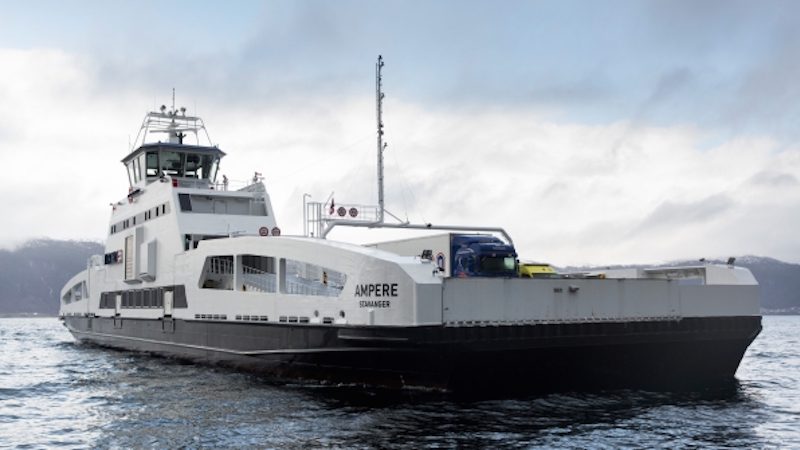
Going Green: Norwegian Shipbuilders Turning to Battery Power
By Mikael Holter and Jeremy Hodges (Bloomberg) — Not far from Norway’s North Sea oil rigs, shipbuilders are assembling some of the first ferry boats ever to be powered entirely...
Electrification | Ember
Electrification can refer to different processes depending on the context. For example, increasing electricity access in emerging economies. At Ember, we focus on a specific type of electrification: replacing fossil fuels with electricity in sectors like transport, heating and industry. This kind of electrification cuts emissions and improves energy efficiency by replacing fossil fuels with clean power.

Pluralistic: Metabolizing the theory of “political capitalism” (06 Dec 2025) – Pluralistic: Daily links from Cory Doctorow
It's a strange fact that the more sophisticated and polished a theory gets, the simpler it tends to be. New theories tend to be inspired by a confluence of many factors, and early attempts to express the theory will seek to enumerate and connect everything that seems related, which is a lot.
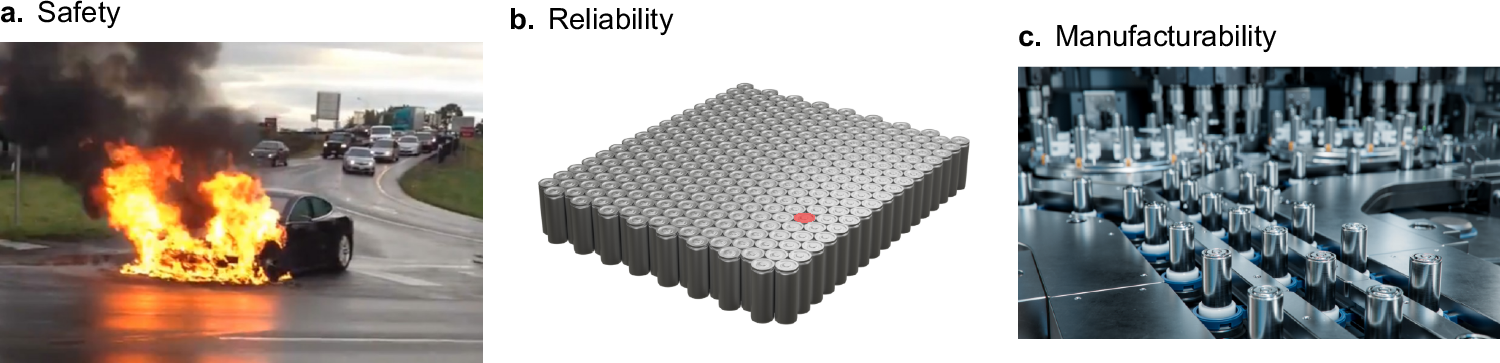
Challenges and opportunities for high-quality battery production at scale
As the world electrifies, global battery production is expected to surge. However, batteries are both difficult to produce at the gigawatt-hour scale and sensitive to minor manufacturing variation. As a result, the battery industry has already experienced both highly-visible safety incidents and under-the-radar reliability issues—a trend that will only worsen if left unaddressed. Here we highlight both the challenges and opportunities to enable battery quality at scale. We first describe the interplay between various battery failure modes and their numerous root causes. We then discuss how to manage and improve battery quality during production. We hope our perspective brings greater visibility to the battery quality challenge to enable safe global electrification.
Pluralistic: Model collapse (12 Aug 2026) – Pluralistic: Daily links from Cory Doctorow
One of my favorite rhetorical and analytical moves is joining things together (showing that two different, seemingly unrelated ideas are aspects of the same phenomenon) and taking them apart (resolving a paradox by demonstrating that what appears to be one, contradictory thing is actually two different things that have been lumped together).
Pluralistic: With Great Power Came No Responsibility (26 Feb 2025) – Pluralistic: Daily links from Cory Doctorow
Last night, I traveled to Toronto to deliver the annual Ursula Franklin Lecture at the University of Toronto's Innis College:
World's First All-Solid-State Battery in Production Vehicles | Donut Battery
skydeval/atproto-plural
An open ATProto lexicon for representing plural systems– multiple identities sharing one account.
Pluralistic: Making sense of Trump’s unscheduled sudden midair disassembly of the American empire (16 May 2026) – Pluralistic: Daily links from Cory Doctorow
For generations, the American empire was the most powerful force on earth, and so we tended to assume that it was the most durable force on earth – surely anything so powerful must also be eternal?
Oil and Gas=Peril and Poverty/ Solar and Wind=Prosperity and Protection
2026 has changed the psychological meaning of energy forever
Static! Designing for energy Awareness
From the boost of the first cup of coffee in the morning to the glow of a nightlight that keeps a child company after dark, much of our contemporary lifestyles is powered by electricity. Today, however, the economic and environmental costs of energy require us to think again. While recognizing the complex social functions and cultural forms of electricity in everyday life, the current challenge for design is to change practices and patterns of (over)consumption. Static! explores design as a basis for increasing awareness of energy. Familiar furnishings and products have been reinterpreted to materialize electricity, to make it more visible and tangible for people. The resulting series of conceptual design examples express the poetics – and politics – of everyday electricity consumption. A design research project at the Interactive Institute funded by the Swedish Energy Agency, Static! has proved to be a pioneer in opening a current and critical research area at the intersection of design, energy and information technology. This book presents the Static! design examples and perspectives on issues in (sustainable) design today. Grounded in passion and humor, as well as rigor and research, the book asks designers and consumers – that is, all of us – to rethink the form, and future, of electricity in the world around us. Editor: Ramia Mazé. Authors: Christina Öhman, Sara Backlund, Johan Redström, Ramia Mazé, Sara Ilstedt Hjelm, Sara Routarinne.