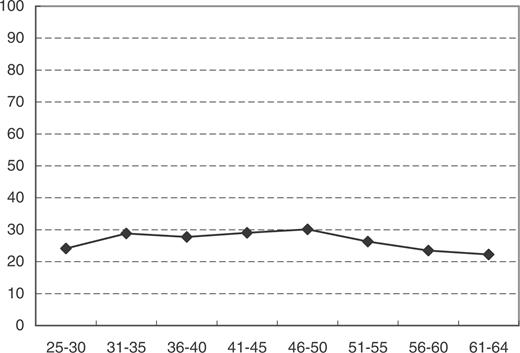
A paradox: in 1970, everyday Americans found it relatively easy to afford a house, and the average American house cost 5.9x the average American income. In 2024, Americans find it nearly impossible to afford a house, and the average American house costs…5.9x the average American income.
The Housing Shortage Is a Major Driver of Poverty
Housing costs are usually the largest item in a household’s budget and can determine a family’s financial stability.
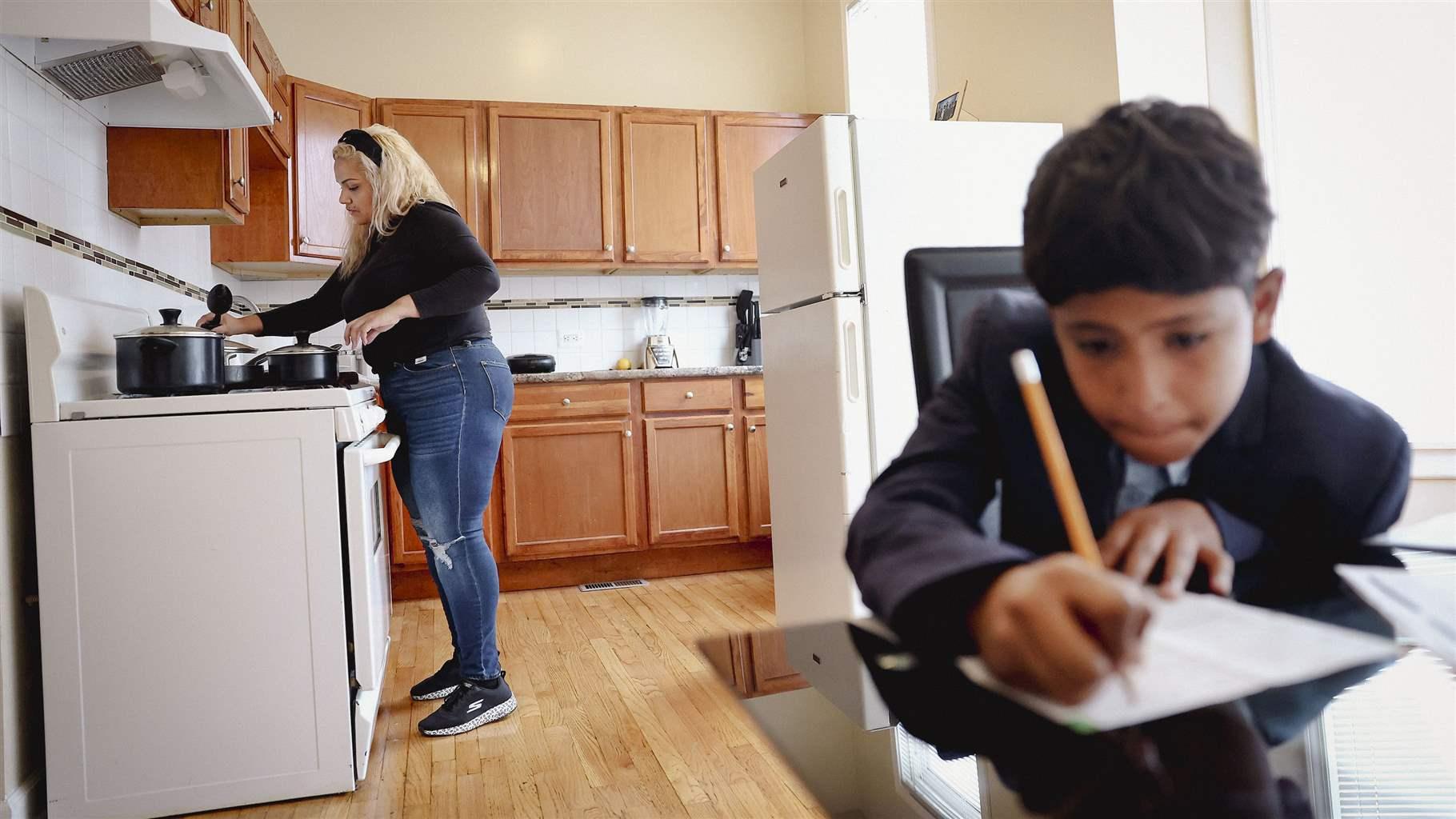
California’s Affordable Housing Crisis: Why Prices Are So High and How to Solve It
The median home price for California is more than $600,000—twice the national level.

The Tipping Point: Most Americans No Longer Are Middle Class
In the post-World War II economy, most Americans lived in middle-income homes. But that has been shifting for decades. Today, middle-income families make up less than 50 percent of all households.

America’s housing was built for a world we no longer live in
The United States is turning 250. Everything we want for the next 50 years starts with fixing housing.

Liquidity versus Wealth in Household Debt Obligations: Evidence from Housing Policy in the Great Recession
We exploit variation in mortgage modifications to disentangle the impact of reducing long-term obligations with no change in short-term payments ("wealth"), and reducing short-term payments with no change in long-term obligations ("liquidity"). Using regression discontinuity and difference-in-differences research designs with administrative data measuring default and consumption, we find that principal reductions that increase wealth without affecting liquidity have no effect, while maturity extensions that increase only liquidity have large effects. This suggests that liquidity drives default and consumption decisions for borrowers in our sample and that distressed debt restructurings can be redesigned with substantial gains to borrowers, lenders, and taxpayers.
Labor’s $1 billion housing plan does nothing to make homes more affordable for first home buyers | The Australian Greens
The Victorian Greens say Labor's latest housing announcement fails to address the biggest barrier facing young Victorians trying to buy their first home - the skyrocketing cost of housing.
The Top 1% of Americans Have Taken $50 Trillion From the Bottom 90%—And That's Made the U.S. Less Secure
A report shows that a $50 trillion redistribution of income to benefit the richest has made America less healthy, resilient, and secure

Demand for emergency savings is higher for low-income households, but so is the cost of shocks
This paper examines how the precautionary motive varies with income. I first develop a theoretical benchmark of how we would expect precaution to vary with income starting from a basic version of the buffer-stock model. Emergency savings provide a way for households to smooth over shocks and so give insight into the precautionary motive. Using data from the Survey of Consumer Finances in the USA, I show that as income declines, the desired emergency savings relative to income increase, suggesting that low-income households are more precautionary. Observable differences, such as income uncertainty, do not explain the rise. Instead, I propose and estimate a model with a minimum subsistence level and unexpected expenses. The model implies that low-income households are increasingly exposed to shocks, explaining the increase in precaution. Supporting the approach, I show that expenses on repairs are a larger fraction of the spending of low-income households.
The housing theory of everything - Works in Progress Magazine
Western housing shortages drive inequality, climate change, low productivity growth, obesity, and even falling fertility rates.

Household Debt: Facts, Puzzles, Theories, and Policies
Borrowing decisions affect most households, with large stakes and implications for research subfields as varied as macroeconomics and industrial organization. I review theoretical and empirical work on household debt: its prevalence, level, growth, and composition, as well as various measures of consumer choice and market (in)efficiency, elasticities, and prices, including new evidence on how borrowing heterogeneity affects the distribution of the opportunity cost of consumption. I also discuss opportunities and challenges in policy evaluation. A key takeaway is that puzzles abound, and I highlight numerous avenues for further research.

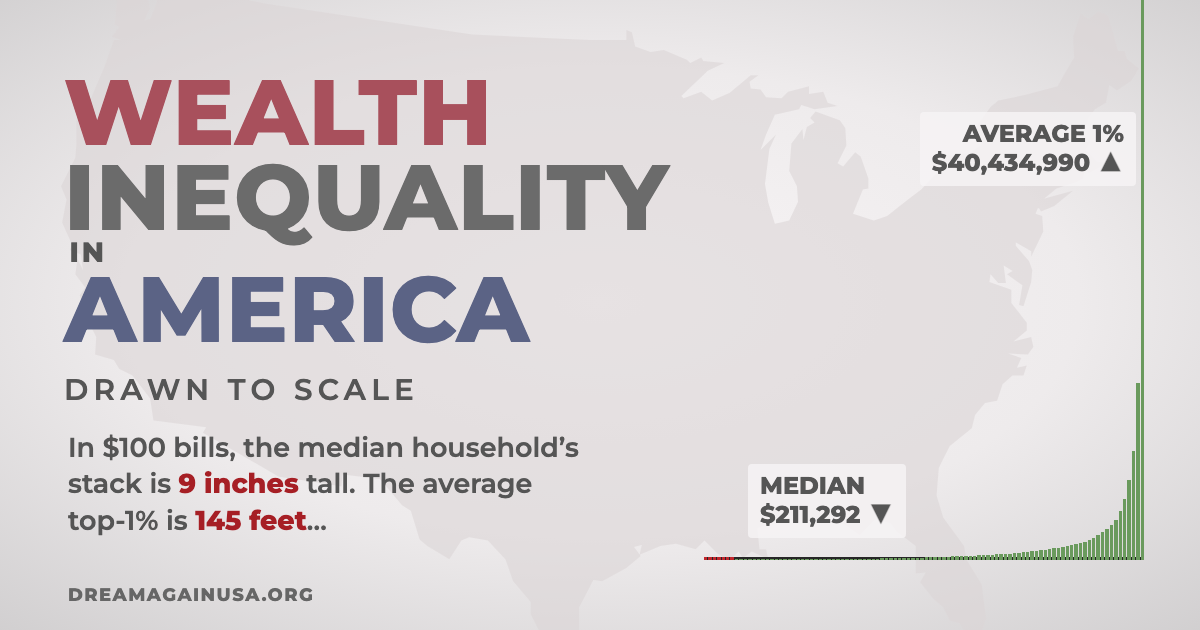
The Climb: Wealth Inequality in America, to scale
Picture U.S. wealth as stacks of $100 bills: the median household’s is about 9 inches tall. The average top-1% household’s is 145 feet, and it keeps getting taller and taller…
The Folk Economics of Housing
Why is housing supply so severely restricted in US cities and suburbs? Urban economists offer two primary hypotheses: homeowner self-interest and political fragmentation. Homeowners, who outnumber and have organizational advantages over renters, are said to lobby against development to protect their property values. The fragmentation hypothesis emphasizes that development's negative externalities are borne locally while most of the benefits accrue regionally or nationally, leading localities to block housing. This paper offers another explanation: ordinary people simply do not believe that adding more housing to the regional stock would reduce housing prices. Across three original surveys of urban and suburban residents, only a minority of respondents say that a large, positive, regional housing supply shock would reduce prices or rents. These beliefs are weakly held and unstable (suggesting people have given the issue little thought), but respondents do have stable views about who is to blame for high housing prices: developers and landlords. Large, bipartisan supermajorities support price controls, demand subsidies, and restrictions on putative bad actors, policies which they believe would be more effective than supply liberalization for widespread affordability. We discuss the implications of these findings for efforts to expand the supply of housing.
Opinion | We’re Measuring the Economy All Wrong (Published 2018)
The official statistics say that the financial crisis is behind us. It's not.

Young Households Are Losing Ground in Income, Despite Education (Published 2014)
The Fed’s 2013 Survey of Consumer Finances indicates that the median family headed by someone under 35 was paid less, in inflation-adjusted dollars, than a similar family in 1989.

Poverty hits 456,000 Western Australians as housing costs deepen hardship | News at Curtin
An estimated 456,000 Western Australians, including almost 99,000 children, are living in poverty in 2026 as rising housing costs and inadequate household i ...
Household Need for Liquidity and the Credit Card Debt Puzzle
Abstract. In the 2001 U.S. Survey of Consumer Finances, 27% of households report simultaneously revolving significant credit card debt and holding sizeable