

Of course you should do everything you can to prevent fires – and also, you should build fire exits, because no matter how hard to you try, stuff burns. That includes social media sites.
Pluralistic: Social media without socializing (19 Jan 2026) – Pluralistic: Daily links from Cory Doctorow
From the earliest days of social media, social media bosses have been at war with sociability. To create a social media service is to demarcate legitimate and illegitimate forms of sociability. It's a monumental act of hubris, really.
Bonfire — build your community a world of its own
A space a community owns together, shaped to how you already gather, and connected to the whole open social web on your own terms.
RIP social media. What comes next is messy.
As social media splinters, how can we keep the new online spaces from devolving into toxic pits of despair?

Shifts in U.S. Social Media Use, 2020–2024: Decline, Fragmentation, and Enduring Polarization
The social media ecosystem appears to be in flux. Twitter’s rebranding to X has come to symbolize a broader reorganization of online publics – political reshuffling, user attrition, and uncertainty over the role of legacy platforms. Simultaneously, the shift from text-based, networked feeds toward algorithmically curated, short-form video has accelerated, with TikTok setting the pace for the wider ecosystem [18, 14, 16]. At the same time, everyday communication increasingly migrates from large, open networks to semi-private spaces such as group chats and messaging apps. Commentators describe a digital public sphere in transition: smaller, more fragmented, less dominated by traditional social networking sites, and rise of more broadcast-oriented forms of media – with some even suggesting that we are seeing the beginning of the end of the social media era.
Pluralistic: Enshittification isn’t caused by venture capital (20 Jan 2025) – Pluralistic: Daily links from Cory Doctorow
Many of us have left the big social media platforms; far more of us wish we could leave them; and even those of us who've escaped from Facebook/Insta and Twitter still spend a lot of time trying to figure out how to get the people we care about off of them, too.
It's obvious why we hate social media
We need better internet platforms. We're already building them.

It’s Not 2006 Anymore; The Useful, Vernacular Institution; What Is Free Our Feeds, Anyway?
This issue explores emerging alternatives to centralized social media platforms and the institutional forms that might support them. The newsletter connects reflections from the ATMosphere Conference…
Traditional Social Media as a Prison · What’s Happening on My Feed?
Social media apps have become a vehicle for community building, world news, and political campaigns. As app owners have enmeshed themselves more with the state, the carceral logics that haunt marginalized communities offline, became a part of their digital realities online.
Scientists no Longer Find Twitter Professionally Useful, and have Switched to Bluesky
Synopsis. Social media has become widely used by the scientific community for a variety of professional uses, including networking and public outreach. For
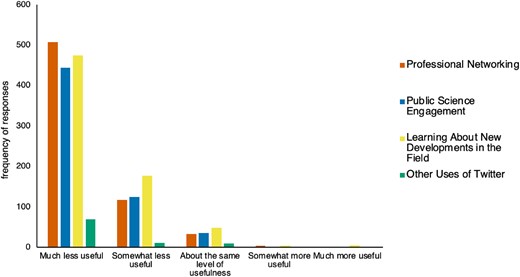
Scientists no Longer Find Twitter Professionally Useful, and have Switched to Bluesky
Synopsis. Social media has become widely used by the scientific community for a variety of professional uses, including networking and public outreach. For
Social media is a gnarly coordination problem we need to decompose - a warm space
Social Media Is Now Parasocial Media
When practitioners used the term “social media” to describe the internet tools that emerged in the mid-aughts, they were giving a name to the kinds of platforms and protocols that allowed people to socialize with friends and communities of interest by using digital technologies. Twenty years later, users of social media are far more likely to scroll than post – and the content that they consume is often strategically produced and algorithmically curated. In this essay, I argue that the very essence of social media has changed. To more effectively interrogate what we are witnessing, we need to stop presuming that these tools are “social media” and begin recognizing that they are now “parasocial media.” Doing so raises new questions about digitally mediated sociality, not to mention the politics and governance of these platforms.

Pluralistic: Firing the refs doesn’t end the game (12 Mar 2025) – Pluralistic: Daily links from Cory Doctorow
Let me tell you how I became a proud science denier, and how it saved my life.
Announcing Bonfire for communities: groups and tools to organise together
Groups and topics, community rules and decision-making, events, organisation profiles, federated comments, custom themes: built with the communities who needed them, ready to use as-is, or to shape into a flavour of your community's own.

If you're building apps for the social web, this survey report by Incogni is really worth a read. People are quietly withdrawing from active participation in social media. blog.incogni.com/digital-fatigue-and-burnout/ Extracts in the thread 🧶 👇

The great digital fatigue: How digital burnout is changing social media use [2026] | Incogni
blog.incogni.comhey builders and devs in the open social web! just curious about what's the state of burnout and bus factors within both the fediverse + atmosphere ecosystems, so feel free to chime in the forums or replies: discourse.atmosphere.community/t/the-state-of-burnout-and-bu…

The state of burnout and bus factors in the open social web
discourse.atmosphere.community
