

Thomas Piketty's 2013 unexpected bestseller (a 750 page economics book translated from French!) Capital in the 21st Century, offers a very convincing explanation of our political decay, and it continues to serve this purpose as the decay undergoes alarming acceleration:
Pluralistic: All laws are local (05 Feb 2026) – Pluralistic: Daily links from Cory Doctorow
About halfway through Thomas Piketty's 2013 barnstorming Capital in the 21st Century, Piketty tosses off a little insight that skewered me on the spot and never let me go: the notion that any societal condition that endures beyond a generation becomes "eternal" in the popular consciousness:
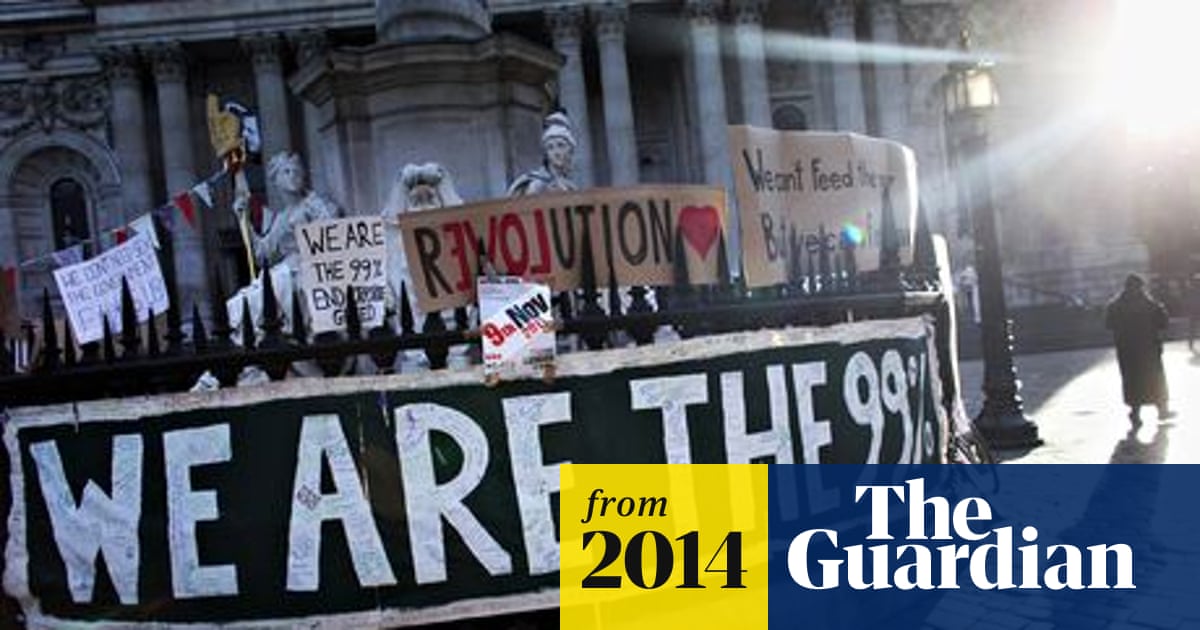
Thomas Piketty's Capital: everything you need to know about the surprise bestseller
The radical economist's book Capital in the Twenty-First century has angered the right with its powerful argument about wealth, democracy and why capitalism will always create inequality, says Paul Mason
Pluralistic: Capital formation (14 Aug 2026) – Pluralistic: Daily links from Cory Doctorow
Funny thing about competition: there's both a pro-market and an anti-market case for a competitive system. https://pluralistic.net/2026/08/13/one-chokable-throat/#too-clever-by-half
Pluralistic: Surveillance vs guillotines (11 Aug 2026) – Pluralistic: Daily links from Cory Doctorow
In the summer of 2013, two esoteric, technical, incredibly important texts were published within weeks of one another: the first is the Snowden leaks, which revealed a system of global, pervasive digital surveillance; the second was Thomas Piketty's Capital in the 21st Century, a book about the economic inevitability (and political instability) of oligarchy:
Preface | The World After Capital
Since publishing the previous version of The World After Capital, I have met with people across the political spectrum to discuss the ideas from the book. When I present these in person, I emphasize that the ideas are neither left nor right but forward (credit to Scott Santens who first used this phrase about Universal Basic Income). My writing, however, at times has alienated readers who identify as being more on the right. In this new edition, I am therefore making an extra effort to emphasize how both my diagnosis of where we are at and my suggestions for how to move forward do not map onto the existing political divides. Instead this is a new way of understanding our challenges and opportunities that can be the basis for movements and parties that are not trapped in Industrial Age ideology.
Capital in the Twenty First Century
What are the grand dynamics that drive the accumulation…

Le nouveau capitalisme (1/3)
Traduction de "New capitalism in America. Richest capitalists and richest workers are increasingly the same people" de Branko Milanovic

The end of capitalism has begun
Without us noticing, we are entering the postcapitalist era. At the heart of further change to come is information technology, new ways of working and the sharing economy. The old ways will take a long while to disappear, but it’s time to be utopian
Pluralistic: Austerity creates fascism (13 Apr 2026) – Pluralistic: Daily links from Cory Doctorow
I'm worried about AI psychosis. Specifically, I'm worried about the psychosis that makes our "capital allocators" spend $1.4T on the money-losingest technology in the history of the human race, in pursuit of a bizarre fantasy that if we teach the word-guessing program enough words, it will take all the jobs. That's some next-level underpants-gnomery:
Pluralistic: Comrade Trump (20 Apr 2026) – Pluralistic: Daily links from Cory Doctorow
There aren't a lot of things I agree with Mark Carney about, but there's one area where he and I are in total accord: the old, US-dominated, "rules-based international order" was total bullshit:
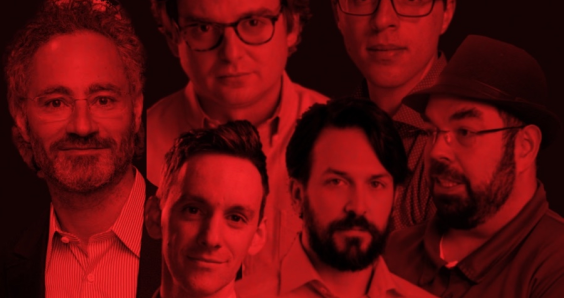
A Thesis on the History of the 21st Century: Technocracy, AI, and the End of the World
Reviewing a trio of books by a sextet of ruling-class ideologues, Mathias Fuelling finds an ambient anxiety hanging over a perceived crisis in American capitalism, with visions of bolstering a Silicon Valley-led technocracy fueled by AI investment reflecting American fears over the dawn of a "Chinese Century."
Capitalist Realism: Is There No Alternative?
It is easier to imagine the end of the world than the end of capitalism. After 1989, capitalism has successfully presented itself as the only realistic political-economic system - a situation that the bank crisis of 2008, far from ending, actually compounded. The book analyses the development and principal features of this capitalist realism as a lived ideological framework. Using examples from politics, film (Children Of Men, Jason Bourne, Supernanny), fiction (Le Guin and Kafka), work and education, it argues that capitalist realism colors all areas of contemporary experience, is anything but realistic and asks how capitalism and its inconsistencies can be challenged. It is a sharp analysis of the post-ideological malaise that suggests that the economics and politics of free market neo-liberalism are givens rather than constructions. New Edition includes:Forward by Zoe Fisher, Mark’s wife, talking about Mark as a personIntroduction by Alex Niven, his friend and colleague, talking about the political significance of the book thirteen years after it was writtenAfterword by Tariq Goddard, the original editor and publisher, describing the writing and editing of the book, its original reception, and Mark’s own view of it"A quick and entertaining read." Socialist Standard "A provocative and necessary read...for anyone wanting to talk seriously about the politics of education today. " Times Higher Educational Supplement
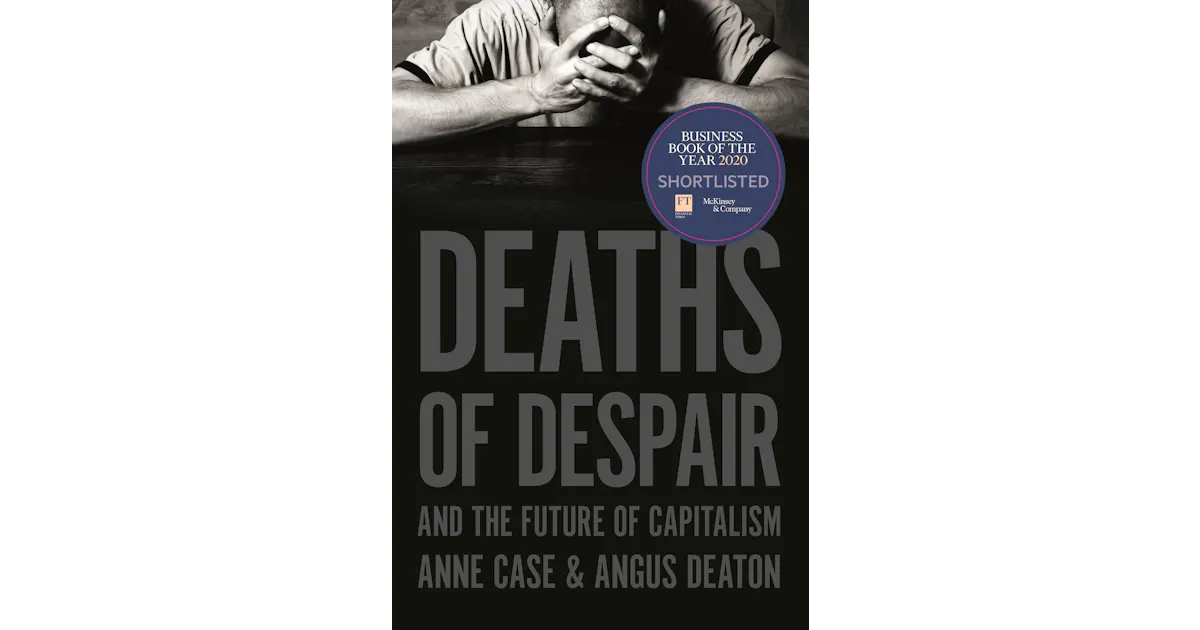
Deaths of Despair and the Future of Capitalism
A New York Times BestsellerA Wall Street Journal BestsellerA New York Times Notable Book of 2020A New York Times Book Review Editors' ChoiceShortlisted for the Financial Times and McKinsey Business Book of the YearA New Statesman Book to ReadFrom economist Anne Case and Nobel Prize winner Angus Deaton, a groundbreaking account of how the flaws in capitalism are fatal for America's working class
Thomas Piketty’s “Capital”, summarised in four paragraphs
A very brief summary of "Capital in the Twenty-First Century"

Pluralistic: Making sense of Trump’s unscheduled sudden midair disassembly of the American empire (16 May 2026) – Pluralistic: Daily links from Cory Doctorow
For generations, the American empire was the most powerful force on earth, and so we tended to assume that it was the most durable force on earth – surely anything so powerful must also be eternal?