Close To the Machine is Ellen Ullman's classic memoir of writing software in Silicon Valley at the start of the dotcom bubble; it was originally published in 1997 and reprinted in 2022 for the 25 anniversary by Farrar, Straus and Giroux's MCD books:
Pluralistic: Reverse engineers bust sleazy gig work platform (23 Nov 2024) – Pluralistic: Daily links from Cory Doctorow
Supposedly, these lines were included in a 1979 internal presentation at IBM; screenshots of them routinely go viral:
Silicon Valley has a science fiction problem | Aeon Essays
Tech titans claim the genre inspired them. But all they’ve done is graft their politics onto stories of a better future

Pluralistic: The Reverse-Centaur’s Guide to Criticizing AI (05 Dec 2025) – Pluralistic: Daily links from Cory Doctorow
Last night, I gave a speech for the University of Washington's "Neuroscience, AI and Society" lecture series, through the university's Computational Neuroscience Center. It was called "The Reverse Centaur’s Guide to Criticizing AI," and it's based on the manuscript for my next book, "The Reverse Centaur’s Guide to Life After AI," which will be out from Farrar, Straus and Giroux next June:
A New Computer
A podcast about the end of personal computers as we know them, and what comes next. Each episode we talk with people who are doing work at the frontier of computing, people who are challenging assumptions about what computers are and what our relationship to them should be.

Humanities in the Machine - Blain Smith
There is something quietly remarkable about the people who built the foundations of modern computing. Not their technical achievements, though those are extraordinary. What is remarkable is where they came from before they ever touched a machine.
Pluralistic: Kickstarting “The Reverse Centaur’s Guide to Life After AI” (14 May 2026) – Pluralistic: Daily links from Cory Doctorow
My next book, The Reverse Centaur's Guide to Life After AI, will be out in about a month – and (once again) Amazon's monopoly audiobook platform refuses to carry it, and so (once again) I'm pre-selling the audio, ebook and print edition in a Kickstarter campaign that proves that DRM-free isn't just the right way to reach an audience, it's also the best way to reach them:
Pluralistic: “Rights for robots” and the AI slavery fantasy (10 Jul 2026) – Pluralistic: Daily links from Cory Doctorow
While the AI bubble is primarily a material phenomenon (driven by the calculation that bosses are easy marks for a sales pitch that sees them replacing workers with software), there is an inescapable ideological component to it: the desire for a world without people in it:
A Thesis on the History of the 21st Century: Technocracy, AI, and the End of the World
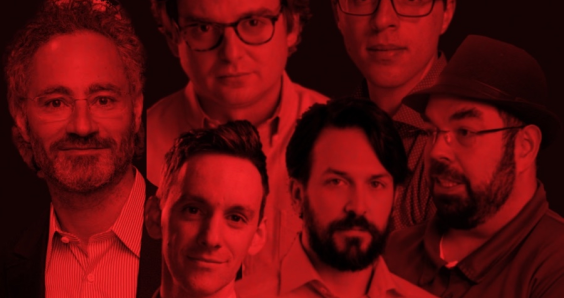
Reviewing a trio of books by a sextet of ruling-class ideologues, Mathias Fuelling finds an ambient anxiety hanging over a perceived crisis in American capitalism, with visions of bolstering a Silicon Valley-led technocracy fueled by AI investment reflecting American fears over the dawn of a "Chinese Century."
Joanna Russ- SF and Technology as Mystification
Talk about technology, long familiar to science-fiction readers and writers, is getting popular in Academia too. Particularly interesting to humanists is the connection between technology and whatever their own particular subject happens to be; I've attended three such formal symposia in the last five years, six including SF conventions, and including informal discussions among students, in writing classes, SF classes, and elsewhere, somewhere between fifty and sixty.
Pluralistic: AI and the fatfinger economy (02 May 2025) – Pluralistic: Daily links from Cory Doctorow
Have you noticed that all the buttons you click most frequently to invoke routine, useful functions in your device have been moved, and their former place is now taken up by a curiously butthole-esque icon that summons an unwanted AI?
Pluralistic: Writing vs AI (07 Jan 2026) – Pluralistic: Daily links from Cory Doctorow
I come from a family of teachers – both parents taught all their lives and now oversee Ed.D candidates, brother owns a school – which has left me painfully aware of the fact that I am not a great teacher.
Pluralistic: How an AI moratorium can save AI bosses (16 Sep 2026) – Pluralistic: Daily links from Cory Doctorow
There's lots of reasons to believe the "hyperscaler" model of AI can never be profitable, and not just because of its gigantic expenditures and negative unit economics (the companies lose money with every new customer and every new use, and they lose more money with each generation of their products):
» Apple, Carmen Sandiego, and the Rise of Edutainment The Digital Antiquarian
If there was any one application that was the favorite amongst early boosters of personal computing, it was education. Indeed, it could sometimes be difficult to find one of those digital utopianists who was willing to prioritize anything else — unsurprisingly, given that so much early PC culture grew out of places like The People’s Computer Company, who made “knowledge is power” their de facto mantra and talked of teaching people about computers and using computers to teach with equal countercultural fervor. Creative Computing, the first monthly magazine dedicated to personal computing, grew out of that idealistic milieu, founded by an educational consultant who filled a big chunk of its pages with plans, schemes, and dreams for computers as tools for democratizing, improving, and just making schooling more fun. A few years later, when Apple started selling the II, they pushed it hard as the learning computer, making deals with the influential likes of the Minnesota Educational Consortium (MECC) of Oregon Trail fame that gave the machine a luster none of its competitors could touch. For much of the adult public, who may have had their first exposure to a PC when they visited a child’s classroom, the Apple II became synonymous with the PC, which was in turn almost synonymous with education in the days before IBM turned it into a business machine. We can still see the effect today: when journalists and advertisers look for an easy story of innovation to which to compare some new gadget, it’s always the Apple II they choose, not the TRS-80 or Commodore PET. And the iconic image of an Apple II in the public’s imagination remains a group of children gathered around it in a classroom.
The Other Asimov | Los Angeles Review of Books
Isaac Asimov’s laws of robotics have influenced AI’s development, but to what end?
:quality(75)/https%3A%2F%2Fassets.lareviewofbooks.org%2Fuploads%2FAsimov%20at%20Rochester%20Inst%20of%20Technology.jpg)
Thousands of AI-written, edited or ‘polished’ books are being sold – an eerie echo of Orwell’s ‘novel-writing machines’
In ‘1984,’ George Orwell envisaged a world in which books were a mass-produced commodity no different from ‘jam and bootlaces.’