

Last year, Google lost an antitrust case to Biden's DoJ. The DoJ lawyers beat Google like a drum, proving beyond a shadow of a doubt that Google had deliberately sought to create and maintain a monopoly over search, and that they'd used that monopoly to make search materially worse, while locking competitors out of the market.
Pluralistic: All (antitrust) politics are local (02 Sep 2025) – Pluralistic: Daily links from Cory Doctorow
The US government has abandoned antitrust. Today, companies facing antitrust jeopardy can just pay key Trumpland figures a million bucks, and they will make a discreet visit to the fifth floor of the DoJ building, have a little shoofty around the Antitrust Division and the whole thing will just…go away:
The DOJ Still Wants Google to Sell Off Chrome
In its final proposed remedy filing in the Google antitrust case, the Department of Justice reiterated that Google should stop paying partners for search placement—and divest its dominant Chrome browser.

Google’s Chrome Antitrust Paradox
This Article examines Google’s dominance of the browser market, highlighting how Google’s Chrome browser plays a critical role in reinforcing Google’s dominance in other markets. While Google portrays Chrome as a neutral platform built on open-source technologies, this Article shows that Chrome is, in fact, instrumental in Google’s strategy to reinforce its dominance in the online advertising, publishing, and browser markets. The examination of Google’s strategic acquisitions, anticompetitive practices, and the implementation of so-called “privacy controls” underlines that Chrome is far from a neutral gateway to the web. Rather, it serves as a key tool for Google to maintain and extend its market power, often to the detriment of competition and innovation in the digital economy.This Article illustrates how Chrome not only bolsters Google’s position in online advertising and publishing through practices such as coercion and self-preferencing, but also leverages its advertising clout to engage in a “pay-to-play” paradigm—the cornerstone of Google’s larger strategy of market control. It also outlines potential regulatory interventions and remedies by drawing on historical antitrust precedents. Lastly, this Article proposes a triad of solutions motivated by an analysis of Google’s abuse of Chrome, including behavioral remedies targeting specific anticompetitive practices, structural remedies involving an internal separation of Google’s divisions, and divestiture of Chrome from Google into an independent organization.Despite Chrome’s dominance and its critical role in Google’s ecosystem, as well as its recent legal troubles with the Department of Justice, it so far has avoided significant antitrust action. A key reason for this inaction lies in the long-standing precedent supporting the hegemony of technology firms and the uncertainty surrounding Chrome’s viability as a standalone entity. This Article attempts to address these issues to enable antitrust actions that are essential in remedying current market imbalances. Such actions are also critical to mitigate future threats to competition from an increasingly monopolistic technology landscape, thereby fostering a competitive digital environment that promotes innovation and protects consumer interests.
Pluralistic: Google’s AI pricing plan (21 Jan 2026) – Pluralistic: Daily links from Cory Doctorow
Google is spending a lot on AI, but what's not clear is how Google will make a lot from AI. Or, you know, even break even. Given, you know, that businesses are seeing zero return from AI:
Pluralistic: Capital formation (14 Aug 2026) – Pluralistic: Daily links from Cory Doctorow
Funny thing about competition: there's both a pro-market and an anti-market case for a competitive system. https://pluralistic.net/2026/08/13/one-chokable-throat/#too-clever-by-half
Google is its own worst enemy
In its bid to push AI, it’s destroying its products and trying to kill the web too
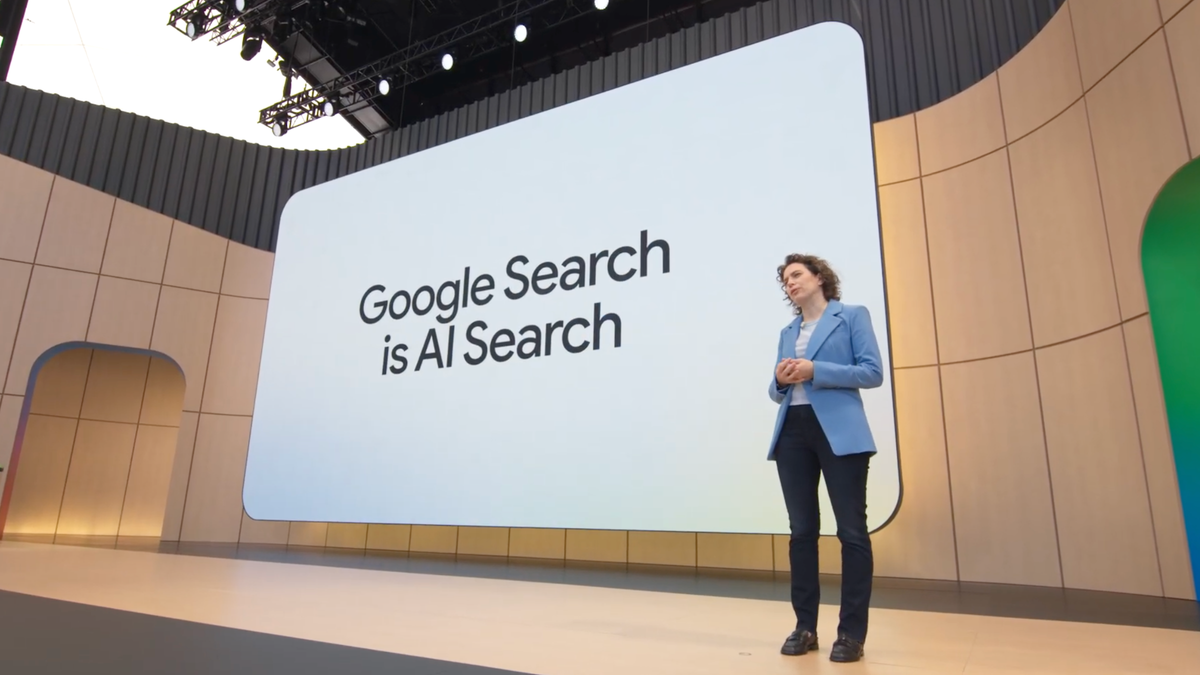
Google Fights Back
At Google I/O, Google was the opposite of defensive: the company set out to make the case that its approach made for better products that makes people’s lives better

Investor money vs. public interest: did Google fail to build a non-evil platform?
Don’t be evil. That was Google’s official motto, until recently.
Google, Facebook, and Amazon benefit from an outdated definition of “monopoly”
A few weeks ago, Italy fined Apple and Samsung €15 million for the “planned obsolescence” of their smartphones. The antitrust regulators allege that both companies pushed users to download software that slowed phone performance, forcing customers to buy replacement phones sooner.

Pluralistic: Trump’s CFPB kills data broker rule (15 May 2025) – Pluralistic: Daily links from Cory Doctorow
Something amazing happened from 2020-2024: even as parts of the Biden administration were encouraging genocide and covering up the president's senescence, a small collection of little-regarded agencies were taking a wrecking ball to corporate power, approaching antitrust and consumer protection with a vigor not seen in generations.
Google is on the Wrong Side of History
Google continues to show us why it chose to abandon its old motto of “Don’t Be Evil,” as it becomes more and more enmeshed with the military-industrial complex. Most recently, Google has removed four

Antitrust Analysis of Search Engine Defaults
<p><span>In a search engine default agreement, a search engine pays to be the default search option on another firm’s browser or other search-related product. T

Google v Microsoft: the battle of AI business models
The search giant’s vertically integrated approach is beginning to pay off

Pluralistic: Defense (of the internet) (from billionaires) in depth (23 Jan 2025) – Pluralistic: Daily links from Cory Doctorow
The only way to truly billionaire-proof the internet is to a) abolish billionaires and b) abolish the system that allows people to become billionaires. Short of that, any levees we build will need constant tending, reinforcement, and re-evaluation.
Imagine things being so bad that your best solution is to cut yourself off from Google Search traffic. I don't think that people realise just how much of a bad actor Google has been, for year. No other company has damaged the web nearly as much. 🧵 adweek.com/media/publishers-opt-out-goog…

Publishers Are Preparing to Opt Out of Google Search
www.adweek.comImagine things being so bad that your best solution is to cut yourself off from Google Search traffic. I don't think that people realise just how much of a bad actor Google has been, for year. No other company has damaged the web nearly as much. 🧵 adweek.com/media/publishers-opt-out-goog…
Publishers Are Preparing to Opt Out of Google Search
www.adweek.com