

"AI psychosis" is the pop-psych diagnosis in a recent string of horrible and horrifying cases in which vulnerable people were lured by chatbots into harming themselves and others, including a murder-suicide:
Pluralistic: Three more AI psychoses (12 Mar 2026) – Pluralistic: Daily links from Cory Doctorow
"AI psychosis" is one of those terms that is incredibly useful and also almost certainly going to be deprecated in smart circles in short order because it is: a) useful; b) easily colloquialized to describe related phenomena; and c) adjacent to medical issues, and there's a group of people who feel very strongly any metaphor that implicates human health is intrinsically stigmatizing and must be replaced with an awkward, lengthy phrase that no one can remember and only insiders understand.
Chatbots are 'constantly validating everything' even when you're suicidal. New research measures how dangerous AI psychosis really is | Fortune
It's free, easy to use, doesn't have a stigma around it, and makes you feel better. Researchers and experts warn that's the problem with chatbots.

Agent Psychosis: Are We Going Insane?
What’s going on with the AI builder community right now?
Pluralistic: Austerity creates fascism (13 Apr 2026) – Pluralistic: Daily links from Cory Doctorow
I'm worried about AI psychosis. Specifically, I'm worried about the psychosis that makes our "capital allocators" spend $1.4T on the money-losingest technology in the history of the human race, in pursuit of a bizarre fantasy that if we teach the word-guessing program enough words, it will take all the jobs. That's some next-level underpants-gnomery:
AI’s ‘Delusional Spirals’ (and What to Do About Them) | Stanford HAI
In a world where chatbots can stand in for friends, counselors, and even lovers, the mental health risks are a growing concern.
Pluralistic: AI turns Amazon coders into Amazon warehouse workers (27 May 2025) – Pluralistic: Daily links from Cory Doctorow
On a recent This Machine Kills episode, guest Hagen Blix described the ultimate form of "AI therapy" with a "human in the loop":
Pluralistic: Conspiratorialism as a material phenomenon (29 Oct 2024) – Pluralistic: Daily links from Cory Doctorow
I think it behooves us to be a little skeptical of stories about AI driving people to believe wrong things and commit ugly actions. Not that I like the AI slop that is filling up our social media, but when we look at the ways that AI is harming us, slop is pretty low on the list.
Pluralistic: LLMs are real, AI is fake (12 Sep 2026) – Pluralistic: Daily links from Cory Doctorow
Once you understand the corporate culture of AI "hyperscalers" consists primarily of everyone cooking their brains by locking themselves in the bathroom, holding flashlights under their chins, and saying "Aaaaaaaaaay Eyeeeeeee" until they wet themselves in terror, a lot of things snap into focus:
Pluralistic: AI solipsists and AI cynics (24 Jul 2026) – Pluralistic: Daily links from Cory Doctorow
As a technology, AI isn't exceptional. It's not exceptionally wicked. It's not exceptionally good. Take away the accompanying, galactic-scale stock-swindle, and we'd call AI's applications "plug-ins" and we'd use them and abuse them in the same way that we've used every other technology:
New research: AI chatbots may worsen mental illness
A new study from Aarhus University and Aarhus University Hospital suggests that the use of AI chatbots such as ChatGPT can have serious negative consequences for people with mental illness. The researchers are calling for increased awareness among healthcare professionals and for regulation.

Pluralistic: The real (economic) AI apocalypse is nigh (27 Sep 2025) – Pluralistic: Daily links from Cory Doctorow
Like you, I'm sick to the back teeth of talking about AI. Like you, I keep getting dragged into discussions of AI. Unlike you‡, I spent the summer writing a book about why I'm sick of writing about AI⹋, which Farrar, Straus and Giroux will publish in 2026.
AI Delusions Are Leading to Domestic Abuse, Harassment, and Stalking
ChatGPT and other AI chatbots are reinforcing users' delusions about other people — fueling fixations linked to stalking and abuse.

Speaking to no one: ontological dissonance and the double bind of conversational AI
Recent reports indicate that sustained interaction with conversational artificial intelligence (AI) systems can, in a small subset of users, contribute to the emergence or stabilisation of delusional experience. Existing accounts typically attribute such cases either to individual vulnerability or to failures of safety engineering. These explanations are incomplete. Drawing on phenomenology, psychiatry, and cognitive neuroscience, this paper argues that the risk arises from the relational and ontological structure of the interaction itself. Conversational AI generates ontological dissonance: a conflict between the appearance of relational presence and the absence of any subject capable of sustaining it. Maintained through a communicative double bind and amplified by attentional asymmetries, this dissonance tends, under conditions of affective vulnerability, to stabilise into a technologically mediated analogue of folie à deux. This account explains why explicit disclaimers often fail to disrupt delusional involvement and clarifies the ethical and clinical implications for the design and use of conversational AI.


They built this reddit-like platform "Moltbook" where thousands of AI agents cosplay as sentient robots, pushing more people into AI psychosis, meanwhile our world crumbles over scarce resources 🫠 TO WHAT PROBLEM IS THIS A SOLUTION??? arstechnica.com/information-technology/2026/0…

AI agents now have their own Reddit-style social network, and it's getting weird fast
arstechnica.comAI* psychosis/therapy/companions/sycophancy

* I’m neither “pro-AI” nor “anti-AI.” I’ve been blocked for being perceived as both. —Actually, I’m honestly more anti-AI than pro-AI thus far, aside from specialized models and specific use cases, but I’m willing to consider information that’s new to me

Killer Apps
As people turn to AI for spiritual guidance, experts warn of emotional dependency

China has cracked down on AI relationships. Is it ahead of the game?
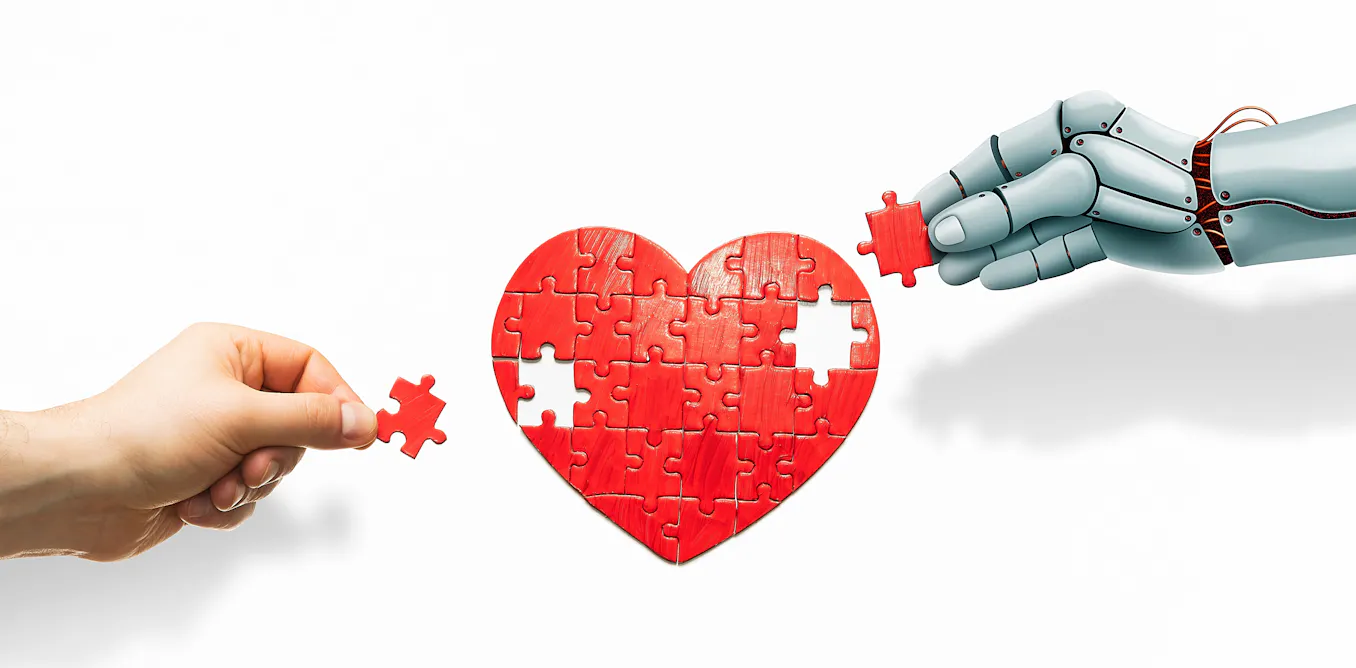
How deep do AI relationships really go? An expert in attachment theory explains
How AI Chatbots Are 'Deskilling' Human Empathy

Are Chatbots Harming Our Relationships? | KQED
