

I'm only a few chapters into Bill McKibben's stupendous new book Here Comes the Sun: A Last Chance for the Climate and a Fresh Chance for Civilization and I already know it's going to change my outlook forever:
Pluralistic: The enshittification multiverse (27 Apr 2026) – Pluralistic: Daily links from Cory Doctorow
It's official: you have my consent and enthusiastic blessing to apply "enshittification" to things that aren't digital platforms! Semantic drift is good, actually:
Pluralistic: An end to the climate emergency is in our grasp (12 Jun 2024) – Pluralistic: Daily links from Cory Doctorow
The problem with good news in the real world is that it's messy. Neat happy endings are for novels, not the real world, and that goes double for the climate emergency. But even though good climate news is complicated and nuanced, that doesn't mean it shouldn't buoy our spirits and fill our hearts with hope.
Pluralistic: More Everything Forever (22 Apr 2025) – Pluralistic: Daily links from Cory Doctorow
Astrophysicist Adam Becker knows a few things about science and technology – enough to show, in a new book called More Everything Forever that the claims that tech bros make about near-future space colonies, brain uploading, and other skiffy subjects are all nonsense dressed up as prediction:
Pluralistic: Enshittification and Reverse Centaurs go global (29 Jul 2026) – Pluralistic: Daily links from Cory Doctorow
It's safe to say that the past couple of years have been good ones for me publishing-wise, thanks to a string of international bestsellers, both novels (Picks and Shovels) and nonfiction (Enshittification, Reverse Centaur), as well as plenty of awards and accolades:
Pluralistic: Marshmallow Longtermism (04 Sep 2024) – Pluralistic: Daily links from Cory Doctorow
My latest column for Locus Magazine is "Marshmallow Longtermism"; it's a reflection on how conservatives self-mythologize as the standards-bearers for deferred gratification and making hard trade-offs, but are utterly lacking in these traits when it comes to climate change and inequality:

Pluralistic: Enshittification isn’t caused by venture capital (20 Jan 2025) – Pluralistic: Daily links from Cory Doctorow
Many of us have left the big social media platforms; far more of us wish we could leave them; and even those of us who've escaped from Facebook/Insta and Twitter still spend a lot of time trying to figure out how to get the people we care about off of them, too.
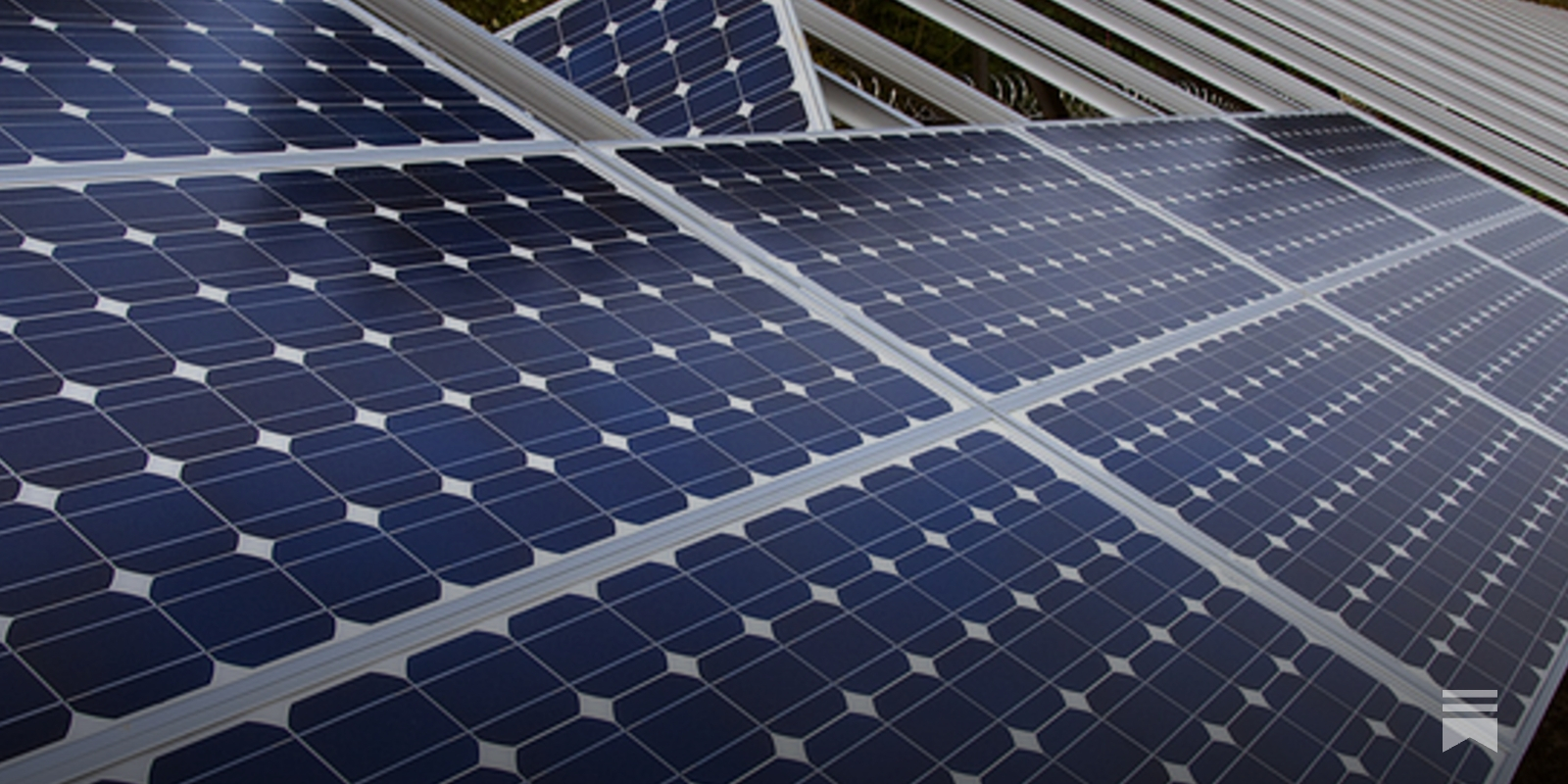
Solar is happening. Nuclear is (mostly) not.
The shape of our energy future is making itself known.
A Solarpunk Manifesto
William Joseph Gillam A Solarpunk Manifesto Turning Imaginary into Reality 10 August 2023
Pluralistic: Circular battery self-sufficiency (06 Aug 2024) – Pluralistic: Daily links from Cory Doctorow
If we are going to survive the climate emergency, we will have to electrify – that is, transition from burning fossil fuels to collecting, storing, transmitting and using renewable energy generated by e.g. the tides, the wind, and (especially) the Sun.
Pluralistic: You can’t fight enshittification (31 Jul 2025) – Pluralistic: Daily links from Cory Doctorow
I need to tell you something unsatisfying: your personal consumption choices will not make a meaningful difference to the amount of enshittification you experience in your life.
Pluralistic: The web is bearable with RSS (07 Mar 2026) – Pluralistic: Daily links from Cory Doctorow
Never let them tell you that enshittification was a mystery. Enshittification isn't downstream of the "iron laws of economics" or an unrealistic demand by "consumers" to get stuff for free.
Pluralistic: Model collapse (12 Aug 2026) – Pluralistic: Daily links from Cory Doctorow
One of my favorite rhetorical and analytical moves is joining things together (showing that two different, seemingly unrelated ideas are aspects of the same phenomenon) and taking them apart (resolving a paradox by demonstrating that what appears to be one, contradictory thing is actually two different things that have been lumped together).
The ‘wicked trinity’ of late capitalism: Governing in an era of stagnation, surplus humanity, and environmental breakdown
Scholars within the fields of political ecology, environmental political theory, and international political economy tend to evaluate the prospects of state-led environmental transitions in general terms – enquiring as to the capitalist state’s inherent properties and their environmental implications. Less attention has been paid to how the state’s green capacities are conditioned by contemporary evolutions in the form and pace of capital accumulation. Capitalism’s directional pattern of historical development poses unique challenges for green state projects. Its drive to raise labour productivity metabolises nature on a growing scale, while generating conditions of overproduction and rendering a progressively larger portion of the population superfluous to the production process.Thus, the question is not simply whether the state can rise to the challenge of climate change, but rather how states are scrambling to govern the intersecting crises of climate catastrophe, economic stagnation, and surplus humanity. This ‘wicked trinity’ compounds the tensions at the heart of the capitalist state, resulting in an increasing inability to perform its role while sustaining its liberal form. This governance trilemma is illustrated by the case of the solar photovoltaic boom, where the spectacular increase in the productivity and scale of solar panel manufacturing have generated oversupply and falling profitability. States have reacted by indefinitely providing subsidies, financing automation technologies thatexacerbate labour superfluity, and relocating solar panel manufacturing to places with authoritarian labour regimes. The case of photovoltaics is a microcosm of the general predicament faced by states as they struggle to govern capitalism’s secular developmental tendencies.
After the Deluge: What Future for Climate Fiction? - Public Books
Even in a world remade, the past defines the present.

Pluralistic: The Claude Delusion (21 Sep 2026) – Pluralistic: Daily links from Cory Doctorow
One of the less remarked-upon aspects of becoming an atheist is how it changes the way you see a sunset. If you believe in an almighty, omnipresent God, then sunsets are one of God's intentional creations, which means that the beautiful colors refracting through the darkling sky were chosen to produce that effect.