I'm only a few chapters into Bill McKibben's stupendous new book Here Comes the Sun: A Last Chance for the Climate and a Fresh Chance for Civilization and I already know it's going to change my outlook forever:
Pluralistic: The enshittification multiverse (27 Apr 2026) – Pluralistic: Daily links from Cory Doctorow
It's official: you have my consent and enthusiastic blessing to apply "enshittification" to things that aren't digital platforms! Semantic drift is good, actually:
Pluralistic: Enshittification and Reverse Centaurs go global (29 Jul 2026) – Pluralistic: Daily links from Cory Doctorow
It's safe to say that the past couple of years have been good ones for me publishing-wise, thanks to a string of international bestsellers, both novels (Picks and Shovels) and nonfiction (Enshittification, Reverse Centaur), as well as plenty of awards and accolades:
Pluralistic: You can’t fight enshittification (31 Jul 2025) – Pluralistic: Daily links from Cory Doctorow
I need to tell you something unsatisfying: your personal consumption choices will not make a meaningful difference to the amount of enshittification you experience in your life.
Pluralistic: The web is bearable with RSS (07 Mar 2026) – Pluralistic: Daily links from Cory Doctorow
Never let them tell you that enshittification was a mystery. Enshittification isn't downstream of the "iron laws of economics" or an unrealistic demand by "consumers" to get stuff for free.
Pluralistic: Model collapse (12 Aug 2026) – Pluralistic: Daily links from Cory Doctorow
One of my favorite rhetorical and analytical moves is joining things together (showing that two different, seemingly unrelated ideas are aspects of the same phenomenon) and taking them apart (resolving a paradox by demonstrating that what appears to be one, contradictory thing is actually two different things that have been lumped together).
The ‘wicked trinity’ of late capitalism: Governing in an era of stagnation, surplus humanity, and environmental breakdown
Scholars within the fields of political ecology, environmental political theory, and international political economy tend to evaluate the prospects of state-led environmental transitions in general terms – enquiring as to the capitalist state’s inherent properties and their environmental implications. Less attention has been paid to how the state’s green capacities are conditioned by contemporary evolutions in the form and pace of capital accumulation. Capitalism’s directional pattern of historical development poses unique challenges for green state projects. Its drive to raise labour productivity metabolises nature on a growing scale, while generating conditions of overproduction and rendering a progressively larger portion of the population superfluous to the production process.Thus, the question is not simply whether the state can rise to the challenge of climate change, but rather how states are scrambling to govern the intersecting crises of climate catastrophe, economic stagnation, and surplus humanity. This ‘wicked trinity’ compounds the tensions at the heart of the capitalist state, resulting in an increasing inability to perform its role while sustaining its liberal form. This governance trilemma is illustrated by the case of the solar photovoltaic boom, where the spectacular increase in the productivity and scale of solar panel manufacturing have generated oversupply and falling profitability. States have reacted by indefinitely providing subsidies, financing automation technologies thatexacerbate labour superfluity, and relocating solar panel manufacturing to places with authoritarian labour regimes. The case of photovoltaics is a microcosm of the general predicament faced by states as they struggle to govern capitalism’s secular developmental tendencies.
After the Deluge: What Future for Climate Fiction? - Public Books
Even in a world remade, the past defines the present.

Oil and Gas=Peril and Poverty/ Solar and Wind=Prosperity and Protection
2026 has changed the psychological meaning of energy forever

Pluralistic: A disenshittification moment from the land of mass storage (10 Oct 2025) – Pluralistic: Daily links from Cory Doctorow
Sometimes, you really can vote with your wallet. I know, I'm generally pretty down on this kind of thing, but sometimes, it works!
Pluralistic: Ad-tech is fascist tech (10 Mar 2026) – Pluralistic: Daily links from Cory Doctorow
A core tenet of the enshittification hypothesis is that all the terrible stuff we're subjected to in our digital lives today is the result of foreseeable (and foreseen) policy choices, which created the enshittogenic policy environment in which the worst people's worst ideas make the most money:
Pluralistic: Ad-tech is fascist tech (10 Mar 2026) – Pluralistic: Daily links from Cory Doctorow
A core tenet of the enshittification hypothesis is that all the terrible stuff we're subjected to in our digital lives today is the result of foreseeable (and foreseen) policy choices, which created the enshittogenic policy environment in which the worst people's worst ideas make the most money:
Pluralistic: Deplatform yourself (23 Feb 2026) – Pluralistic: Daily links from Cory Doctorow
The first time I met William Gibson – to interview him for the Globe and Mail on the release of 1999's All Tomorrow's Parties – there was one question I knew I wanted to ask him: "What happens to the counterculture in the era of instantaneous commodification?"
Jason Hickel on Twitter / X
The climate crisis reveals that our civilization has never really been organized around science, contrary to the usual Enlightenment narrative. It is organized around capital. Science is embraced when it serves the interests of capital, and is often ignored when it does not.— Jason Hickel (@jasonhickel) January 6, 2022
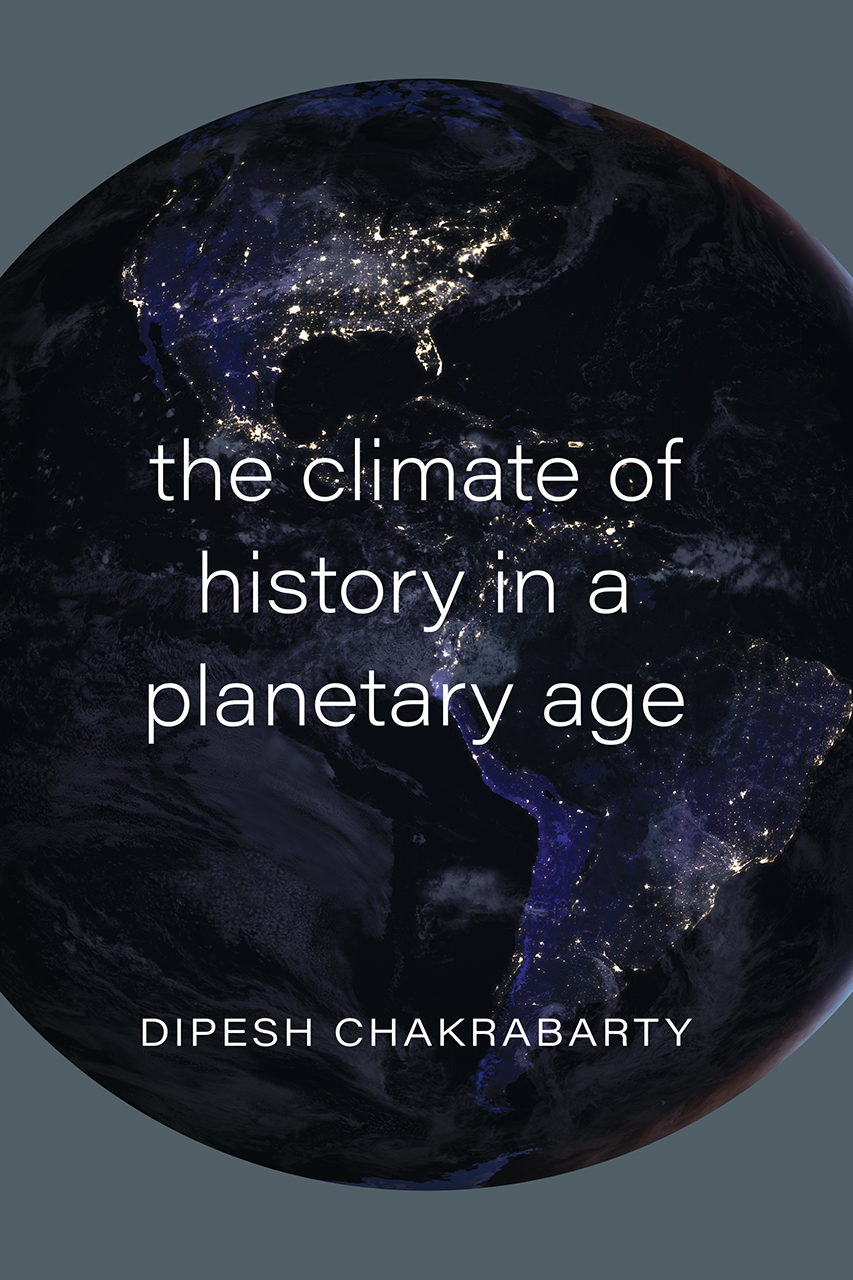
The Climate of History in a Planetary Age
For the past decade, historian Dipesh Chakrabarty has been one of the most influential scholars addressing the meaning of climate change. Climate change, he argues, upends long-standing ideas of history, modernity, and globalization. The burden of The Climate of History in a Planetary Age is to grapple with what this means and to confront humanities scholars with ideas they have been reluctant to reconsider—from the changed nature of human agency to a new acceptance of universals. Chakrabarty argues that we must see ourselves from two perspectives at once: the planetary and the global. This distinction is central to Chakrabarty’s work—the globe is a human-centric construction, while a planetary perspective intentionally decenters the human. Featuring wide-ranging excursions into historical and philosophical literatures, The Climate of History in a Planetary Age boldly considers how to frame the human condition in troubled times. As we open ourselves to the implications of the Anthropocene, few writers are as likely as Chakrabarty to shape our understanding of the best way forward.
Solarpunk Futures
The social ecological storytelling game where you and your friends build a better world.

Beyond technofix: Thinking with Epimetheus in the anthropocene
The Prometheus myth has long now provided inspiration for those who envision solutions to environmental issues. Prometheus is the figure par excellence of human forethought and progress in the anthropocene. In this article, we introduce the concept of ambient Prometheanism to describe the way of thinking that foregrounds foresight and anticipation and advances technological solutions developed by capital and energy-intensive projects. We question this stance, arguing that ambient Prometheanism, with its emphasis on technofix, leads to the economisation and depoliticisation of planetary environmental issues. Following Bernard Stiegler, we recover from the myth the figure of Epimetheus, Prometheus’ brother, as well as his associated faculty, epimetheia to theorise what we call an ‘Epimethean politics’. Thinking the anthropocene from the perspective of ambient Prometheanism and Epimetheanism means to consider the role of technology in climate politics, and in particular to make the case for the importance of afterthought in face of unintended consequences and accumulated errors. To substantiate our argument, we outline the challenge posed by emerging solutions focussed on technological intensification (geoengineering) and socio-economic acceleration (green growth and accelerationism). An Epimethean politics of the climate requires to use reflexivity as a capacity to anticipate, but also to mobilise epimetheia to account for accidents and past mistakes. Such a politics builds from an alternative conception of technology, one that radically differs from ambient Prometheanism. Finally we read as actualisations of Epimethean politics contemporary eco-political struggles and their imperatives for multispecies living and convivial livelihoods.