

There's plenty of reasons to be skeptical of centrists who bemoan "political polarization" and call for a politics that abandons the "tribalism of left and right."
Pluralistic: A fascist paradigm (12 May 2026) – Pluralistic: Daily links from Cory Doctorow
Yesterday, I attended a workshop on systems thinking and political change, which included a presentation on the work of Donella Meadows, whose Thinking in Systems is a canonical work on the subject:
Pluralistic: Conservatism considered as a movement of bitter rubes (22 Jul 2025) – Pluralistic: Daily links from Cory Doctorow
Ever notice how many right wing influencers are on the grift? Like Alex Jones – that guy is basically Gwyneth Paltrow for conservative bros, selling the same "wellness" crap to a male audience (and not for nothing, Paltrow's victims are reliable boosters for RFK Jr's MAHA movement):
It’s Not Polarization; It’s the Radicalization of the Political Right
Polarization has become the master concept for diagnosing contemporary democratic crises. The notion denotes three features: symmetry between parties, politics as an opinion space where positions diverge, and mutual repulsion between opposing camps. Yet none of these capture current realities. Across democracies, the central dynamic is not two poles drifting apart but the transformation of the political right into authoritarianism, norm breaking, and openness to political violence. Social democratic and center-right parties tend to respond in the opposite way from what “polarization” implies: by accommodating rightward. Attempts to salvage the polarization frame with modifiers (“asymmetric,” “affective,” “sectarian,” “pernicious”) concede these realities but risk hollowing out the concept’s definitional core. These limitations reveal a deeper misdiagnosis: when one party turns antidemocratic and illiberal, incivility and conflict are inevitable—but they are symptoms, not the root problem. Misdiagnosing them as the central issue leads to viewing civility and compromise as remedies, thereby risking the legitimation of authoritarian actors. This article proposes an alternative lens: the radicalization of the political right. Developed in the study of extremism, the radicalization framework better captures asymmetric change, identity-driven politics, and the mainstreaming of illiberalism. It foregrounds identity fusion, threat narratives, elite entrepreneurship, and escalation. Concepts are never politically innocent and persisting with “polarization” risks both misdiagnosing and normalizing authoritarian threats.
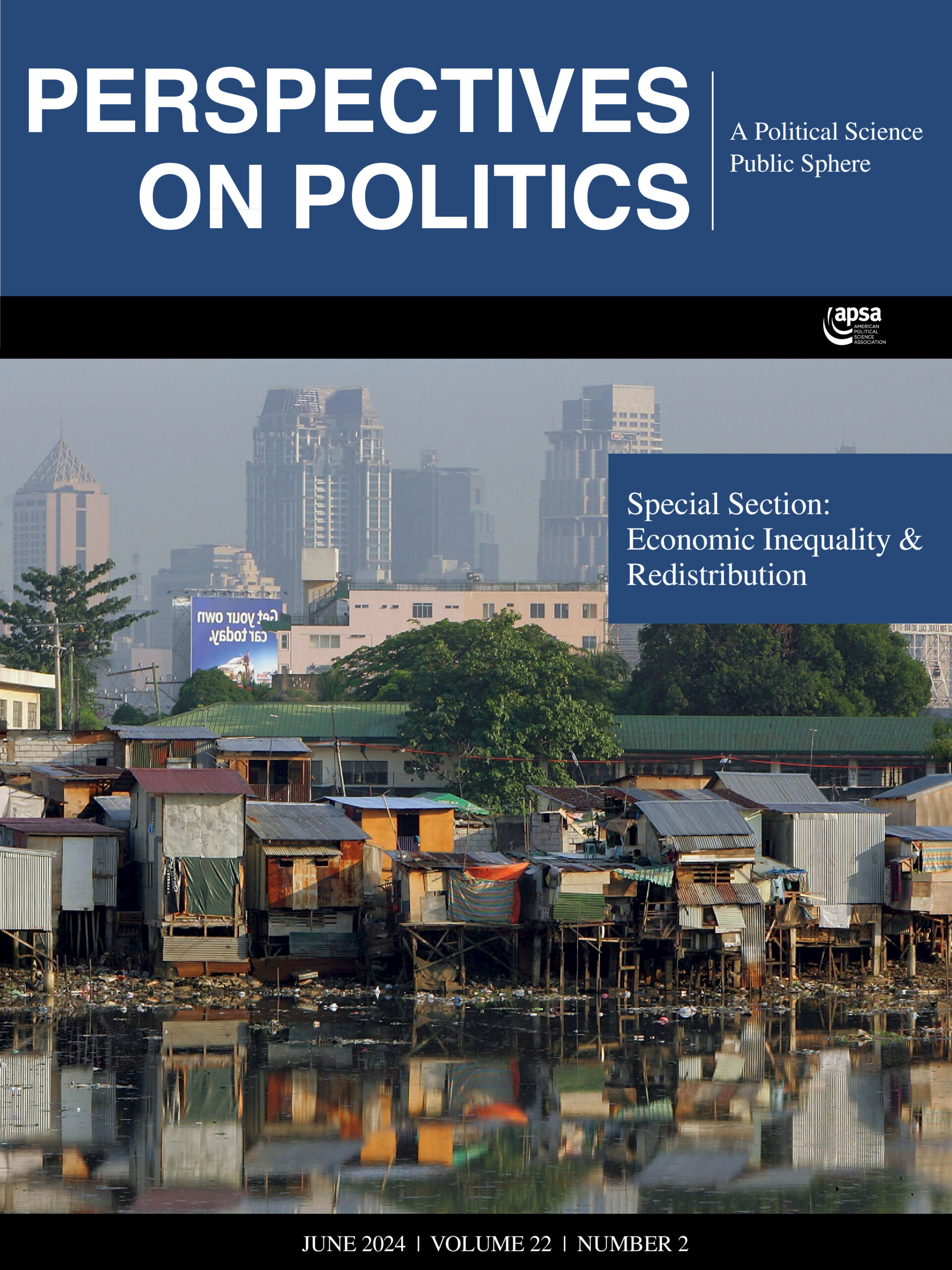
It’s Not Polarization; It’s the Radicalization of the Political Right
Polarization has become the master concept for diagnosing contemporary democratic crises. The notion denotes three features: symmetry between parties, politics as an opinion space where positions diverge, and mutual repulsion between opposing camps. Yet none of these capture current realities. Across democracies, the central dynamic is not two poles drifting apart but the transformation of the political right into authoritarianism, norm breaking, and openness to political violence. Social democratic and center-right parties tend to respond in the opposite way from what “polarization” implies: by accommodating rightward. Attempts to salvage the polarization frame with modifiers (“asymmetric,” “affective,” “sectarian,” “pernicious”) concede these realities but risk hollowing out the concept’s definitional core. These limitations reveal a deeper misdiagnosis: when one party turns antidemocratic and illiberal, incivility and conflict are inevitable—but they are symptoms, not the root problem. Misdiagnosing them as the central issue leads to viewing civility and compromise as remedies, thereby risking the legitimation of authoritarian actors. This article proposes an alternative lens: the radicalization of the political right. Developed in the study of extremism, the radicalization framework better captures asymmetric change, identity-driven politics, and the mainstreaming of illiberalism. It foregrounds identity fusion, threat narratives, elite entrepreneurship, and escalation. Concepts are never politically innocent and persisting with “polarization” risks both misdiagnosing and normalizing authoritarian threats.
Left & Right: The Psychological Significance of a Political Distinction
This book brings together for the first time an updated, revised collection of influential essays and articles that capture some of the most exciting scientific and scholarly contributions to the topic ...

Pluralistic: The Post-American Internet (01 Jan 2026) – Pluralistic: Daily links from Cory Doctorow
On December 28th, I delivered a speech entitled "A post-American, enshittification-resistant internet" for 39C3, the 39th Chaos Communications Congress in Hamburg, Germany. This is the transcript of that speech.
Pluralistic: The online community trilemma (16 Feb 2026) – Pluralistic: Daily links from Cory Doctorow
The digital humanities are one of the true delights of this era. Anthropologists are counting things like sociologists, sociologists are grappling with qualitative data like ethnographers, computational linguists are scraping and making sense of vast corpora of informal speech:
Pluralistic: Comrade Trump (20 Apr 2026) – Pluralistic: Daily links from Cory Doctorow
There aren't a lot of things I agree with Mark Carney about, but there's one area where he and I are in total accord: the old, US-dominated, "rules-based international order" was total bullshit:
PolitiScales - Your results
Welcome to the PolitiScales, the online political test. You will be confronted to a series of affirmations and for each of them you will have to click on the button which corresponds the most to your opinion.
PolitiScales - Your results
Welcome to the PolitiScales, the online political test. You will be confronted to a series of affirmations and for each of them you will have to click on the button which corresponds the most to your opinion.
Pluralistic: Six Years of Pluralistic (19 Feb 2026) – Pluralistic: Daily links from Cory Doctorow
Six years ago today, after 19 years with Boing Boing, during which time I wrote tens of thousands of blog posts, I started a new, solo blog, with the semi-ironic name "Pluralistic." I didn't know what Pluralistic was going to be, but I wasn't writing Boing Boing anymore, and I knew I wanted to keep writing the web in some fashion.
Pluralistic: Post-American compute for a post-American Internet (04 Aug 2026) – Pluralistic: Daily links from Cory Doctorow
Obviously, the non-American world has a digital sovereignty problem – Trump has means, motive and opportunity to order his tech companies to shut down any public official, large corporation, or individual who displeases him:
Pluralistic: Love of corporate bullshit is correlated with bad judgment (19 Mar 2026) – Pluralistic: Daily links from Cory Doctorow
I'm a writer, so of course I care about words! But I'm a writer, so I also think that words are improved by their malleability, duality and nuance.
Pluralistic: The curious, intertwined history of climate and digital rights activism (11 Oct 2025) – Pluralistic: Daily links from Cory Doctorow
I am an environmentalist, but I'm not a climate activist. I used to be – I even used to ring strangers' doorbells on behalf of Greenpeace. But a quarter of a century ago, I fell in with the Electronic Frontier Foundation and became a lifelong digital rights activist, and switched to cheering on environmental activists from the sidelines of their fight:
Pluralistic: Deplatform yourself (23 Feb 2026) – Pluralistic: Daily links from Cory Doctorow
The first time I met William Gibson – to interview him for the Globe and Mail on the release of 1999's All Tomorrow's Parties – there was one question I knew I wanted to ask him: "What happens to the counterculture in the era of instantaneous commodification?"
‘Polarization’ has become the master concept for diagnosing our current democratic crisis. But this is not polarization. It is the radicalization of the political right. By misdiagnosing it, we risk becoming complicit in the crisis. 🧵 Just out in Perspectives on Politics doi.org/10.1017/S1537592726105246
