

Pluralistic: IP can’t save you from AI (18 Aug 2026) – Pluralistic: Daily links from Cory Doctorow
You don't have to believe that AI "art" is any good (I don't), nor do you have to believe that AI "art" can be any good (I don't) to understand that the reason that the capital markets are putting trillions into AI is that they believe they can fire workers of every kind and replace them with AI:
Pluralistic: How an AI moratorium can save AI bosses (16 Sep 2026) – Pluralistic: Daily links from Cory Doctorow
There's lots of reasons to believe the "hyperscaler" model of AI can never be profitable, and not just because of its gigantic expenditures and negative unit economics (the companies lose money with every new customer and every new use, and they lose more money with each generation of their products):
Pluralistic: Google’s AI pricing plan (21 Jan 2026) – Pluralistic: Daily links from Cory Doctorow
Google is spending a lot on AI, but what's not clear is how Google will make a lot from AI. Or, you know, even break even. Given, you know, that businesses are seeing zero return from AI:
Pluralistic: AI and the fatfinger economy (02 May 2025) – Pluralistic: Daily links from Cory Doctorow
Have you noticed that all the buttons you click most frequently to invoke routine, useful functions in your device have been moved, and their former place is now taken up by a curiously butthole-esque icon that summons an unwanted AI?
Pluralistic: AI solipsists and AI cynics (24 Jul 2026) – Pluralistic: Daily links from Cory Doctorow
As a technology, AI isn't exceptional. It's not exceptionally wicked. It's not exceptionally good. Take away the accompanying, galactic-scale stock-swindle, and we'd call AI's applications "plug-ins" and we'd use them and abuse them in the same way that we've used every other technology:
Anthropomorphism in AI: hype and fallacy
This essay focuses on anthropomorphism as both a form of hype and fallacy. As a form of hype, anthropomorphism is shown to exaggerate AI capabilities and performance by attributing human-like traits to systems that do not possess them. As a fallacy, anthropomorphism is shown to distort moral judgments about AI, such as those concerning its moral character and status, as well as judgments of responsibility and trust. By focusing on these two dimensions of anthropomorphism in AI, the essay highlights negative ethical consequences of the phenomenon in this field.

Anthropomorphism in AI: hype and fallacy
This essay focuses on anthropomorphism as both a form of hype and fallacy. As a form of hype, anthropomorphism is shown to exaggerate AI capabilities and performance by attributing human-like traits to systems that do not possess them. As a fallacy, anthropomorphism is shown to distort moral judgments about AI, such as those concerning its moral character and status, as well as judgments of responsibility and trust. By focusing on these two dimensions of anthropomorphism in AI, the essay highlights negative ethical consequences of the phenomenon in this field.
AI Science Fiction Versus Reality
Pluralistic: When AI prophecy fails (29 Oct 2025) – Pluralistic: Daily links from Cory Doctorow
Amazon made $35 billion in profit last year, so they're celebrating by laying off 14,000 workers (a number they say will rise to 30,000). This is the kind of thing that Wall Street loves, and this layoff comes after a string of pronouncements from Amazon CEO Andy Jassy about how AI is going to let them fire tons of workers.
AI, Ethics, and Society — Home
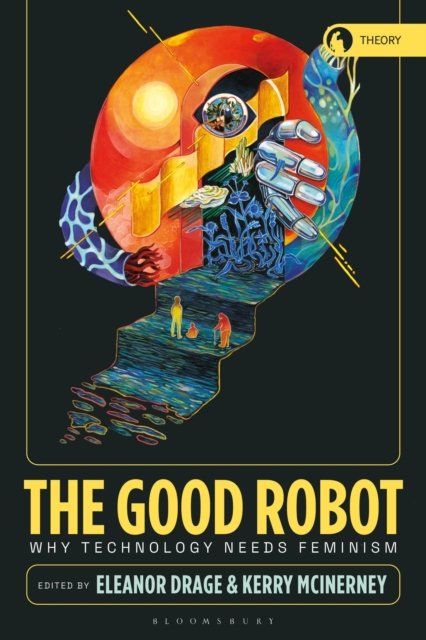
Good Robot
What is good technology? Is ‘good’ technology even possible? And how can feminism help us work towards it? The Good Robot addresses these crucial questions through the voices of leading feminist thinkers, activists and technologists. Each thinker provides a snapshot of key challenges, questions and provocations in the field of feminism and technology. While the question of whether various AI and technological advances can be ethical is not new, the embedded nature of feminist perspectives pulls out whether this perceived ‘goodness’ or ‘wrongness’ might actually impact our lives in the 21st century. This book explores both the radical possibilities of technology to disrupt practices of patriarchy, colonialism, racism and beyond but also provides a significant critique of how we can contain the ethical possibilities of entities we cannot predict. In exploring unjust technological practices and engaging critical voices in the tech industry, the existing moral issues are brought to light as well as the possible ethical quagmires. This book opens a new space of discussion on digital technologies – one that insists that the future of AI is an urgent feminist issue.
Pluralistic: The ordinariness of evil (19 Aug 2026) – Pluralistic: Daily links from Cory Doctorow
Maybe it seems weird that AI bosses won't stop publicly rending their garments about the terrible potential of their products, from the jobspocalypse that will ensue when AI can do our jobs better than us, to the impending moment when the word-guessing programs learn too many words, wake up and turn us all into paperclips.
"AI" is Automated Inequality
Tech bros still dominate the discussions about so-called "AI" with false claims. Even most "AI"-critical researchers spend much of their time meticulously debunking (always only a subset of) claims, leaving vast areas of the economic consequences of "AI" unexplored. (Even the "AI"-evangelist Economi

Don't treat surface-level metaphors about AI as if they describe fundamental reality
Debates about whether AI is a “tool” or whether it’s wrong to “anthropomorphize” it often seem confused about what reality is made of

Pluralistic: Copyright won't solve creators' Generative AI problem (09 Feb 2023)
The media spectacle of generative AI (in which AI companies' breathless claims of their software's sorcerous powers are endlessly repeated) has understandably alarmed many creative workers, a group that's already traumatized by extractive abuse by media and tech companies.
While the AI bubble is primarily a material phenomenon (driven by the calculation that bosses are easy marks for a sales pitch that sees them replacing workers with software), there is an inescapable ideological component to it: the desire for a world without people in it:
> the central promise of “ai” is that nothing is worth doing and that community doesn’t exist. It’s individual entitlement as software. It’s Thatcherism. post.lurk.org/@emenel/117441848350524047
emenel (@emenel@post.lurk.org)
post.lurk.org