

You find the weirdest stuff inside your walls. Our house was built in 1949 and we're its third owner, and I have no idea what those other people were doing, but at one point someone installed a junction box full of live, bare wires that they filled with crumpled newspaper (!); and don't get me started on the decision not to put vapor barriers in the kitchen windows (we were one good shake away from the entire front of the house falling down when we discovered that one, and while it cost us an extra $19,000 to fix, that was still cheaper than rebuilding the whole front of the house).
Why “Load-Bearing” is a good name. - Load-Bearing
Or why sometimes trolling your audience has a benefit.

Release v0.44.0 — "WALL-E" · josephfung/curia
WALL-E (WALL-E, 2008, Andrew Stanton / Pixar) — a Waste Allocation Load Lifter left alone on Earth for seven centuries, still compacting the mess one neat cube at a time and keeping the one thing t...
Pluralistic: Reverse engineers bust sleazy gig work platform (23 Nov 2024) – Pluralistic: Daily links from Cory Doctorow
Supposedly, these lines were included in a 1979 internal presentation at IBM; screenshots of them routinely go viral:
the attention cottage – The Homebound Symphony
In the last few days I have come across, or had sent to me, anguished cries from people who have recently been dragged on social media and cannot fathom the injustice of it, and I find myself thinking: You haven’t figured this out yet? You complain about your words being taken out of context when you post them in an environment whose entire structure — as we have all known for fifteen years now — demands context collapse? How many more times do you plan to smack your head against that unyielding wall?
Loper OS » You have made your bedrock, now lie in it.
As a child, I was quite fond of old-fashioned Lego bricks. One very endearing but rarely discussed property of such bricks is their durability, bordering on the indestructible. Almost any abuse inflicted on a Lego structure will, at worst, leave you with a pile of bricks entirely like the one you started with. Even the most baroque Lego edifice will always break into Legos, and not jagged shards of plastic. In my childhood, this felt like something approaching an elementary physical law. As with many real physical laws, it applies in a restricted (though usefully broad) domain: a Lego castle dropped from the Empire State Building or crushed in a garbage compactor will leave behind many pieces still recognizable as Legos, and almost certainly a few which are not. However, in my childhood I did not have ready access to garbage compactors or the roofs of tall buildings, and so the Lego brick seemed like an impregnable elementary particle: a bedrock abstraction.
What are some of your favourite house classics?
55 votes, 47 comments. I’ve found myself in a bit of a funny position where I’ve always been more interested in the proper underground stuff that I…
How buildings learn : what happens after they're built
Originally published: New York, NY : Viking, 1994; Includes bibliographical references (p. 224-229) and index; Flow -- Shearing layers -- "Nobody cares what you do in there": the low road --- Houseproud: the high road -- Magazine architecture: no road -- Unreal estate -- Preservation: a quiet, populist, conservative, victorious revolution -- The romance of maintenance -- Vernacular: how buildings learn from each other -- Function melts form: satisficing home and office -- The scenario-buffered building -- Built for change -- Appendix: The study of buildings in time

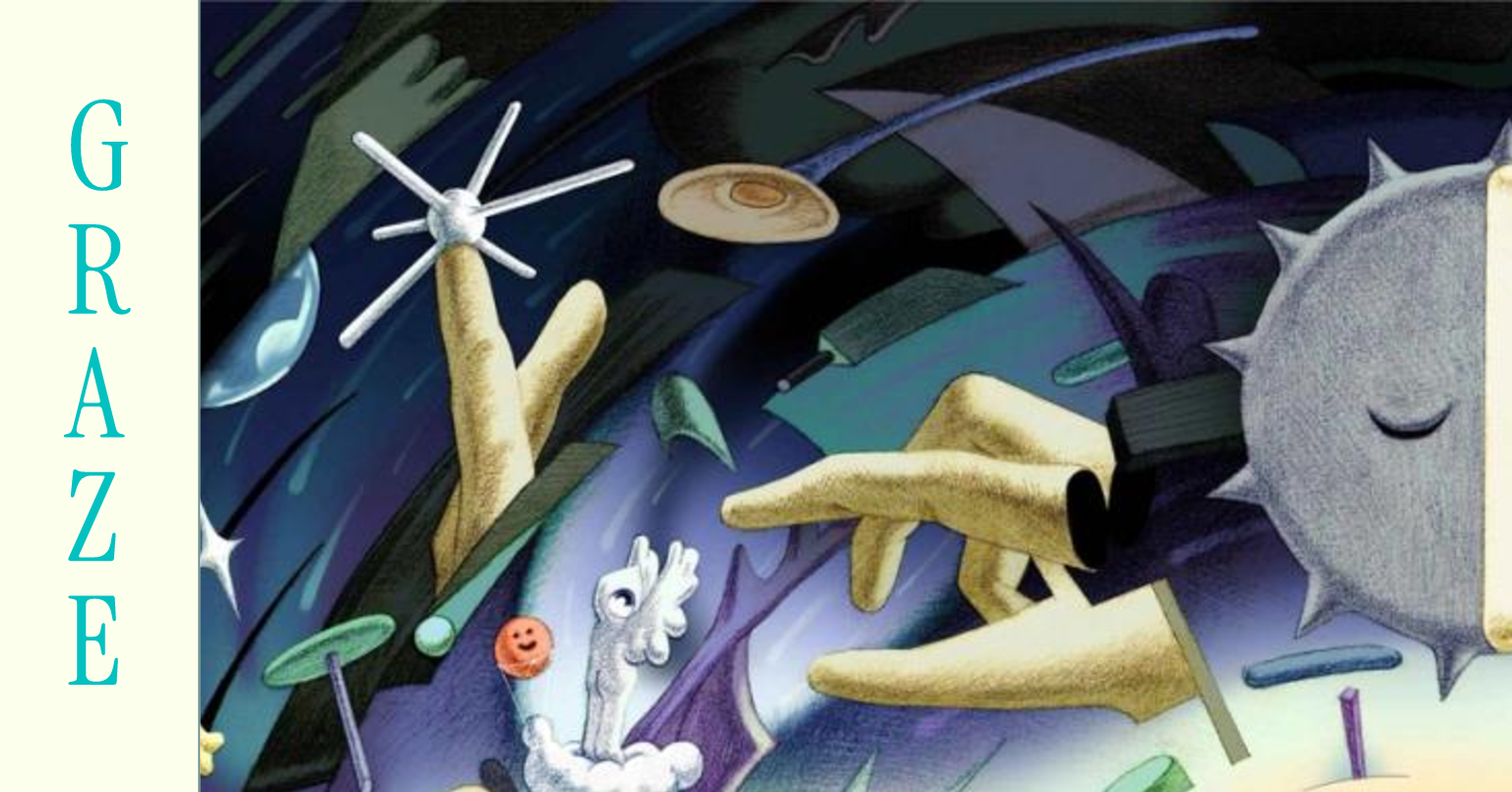
The Story Behind our Brand Illustration
Our brand illustration shows three layers: the foundation being built, the valley we're stuck in, and the world waiting above. Here's what it all means.
The Most Fourth Wall-Breaking Moments in Television History
Television has always been a medium that broke the walls of reality. From its earliest days, television shows "came into your living room." So it's not

Tear Down Walls, and Build Bridges
A libre networking project that's designed to bridge protocol spaces together announced its progress and intentions, and Mastodon users freaked out.

Pluralistic: The moral injury of having your work enshittified (25 Nov 2023) – Pluralistic: Daily links from Cory Doctorow
This week, I wrote about how the Great Enshittening – in which all the digital services we rely on become unusable, extractive piles of shit – did not result from the decay of the morals of tech company leadership, but rather, from the collapse of the forces that discipline corporate wrongdoing:
Pluralistic: Bullies want you to think they’re on your side (13 Mar 2024) – Pluralistic: Daily links from Cory Doctorow
Bruce Schneier coined the term "feudal security" to describe Big Tech's offer: "move into my fortress – lock yourself into my technology – and I will keep you safe from all the marauders roaming the land":
How Infrastructure Works: Transforming our shared systems for a changing world
'Pulsing with wisdom and humanity... a masterpiece' ED YONG'A hopeful, lyrical - even beautiful - hymn to the systems of mutual aid we embed in our material world' CORY DOCTOROW'An extraordinary book' MARK MIODOWNIK'You won't see the world the same after reading this book!' AUSTIN KLEONEvery day, we are granted the power to travel at high speeds, fly, see in the dark, summon water from distant mountains and electricity from the sun. The systems that run our world are invisible to us until they fail.Infrastructure enables lives of astounding ease and freedom that would have been unimaginable just a century ago. These technological systems - the most complex and vast ever created by humans - have allowed us to work collectively for the public good. But these systems are now beginning to fail us.Engineering professor Deb Chachra takes readers on a fascinating tour of these essential utilities, revealing how they work, what it takes to keep them running, and just how much they shape our lives - but also the price they extract, who pays it and in what ways, as well as the threats to our infrastructure in a changing world.From Snowdonia's Electric Mountain to a solar plant in southern India, Chachra shows how we can rebuild our shared infrastructure to be not just functional but also equitable, resilient, and sustainable. We need to learn how to see these systems and to transform them, together, because the cost of not being able to rely on them is unthinkably high.

About — Every Object an Archive
We interview people about their experiences with technological objects that were once everywhere, but are now being replaced or redesigned. We are interested in the physical experience of living with these objects, their handfeel and relationships to our bodies. We are also interested in how they shaped our habits, relationships, and ways of being. Technologies are more than physical objects: whole worlds of infrastructure, process, policy and culture are built around them.

Concrete Built The Modern World. Now It’s Destroying It.
A growing chorus of architects argue we have to build differently with concrete — which contributes to global warming and environmental destruction on a scale that’s hard to fathom — or perhaps abandon it altogether.
