

What is the true nature of social media run by Big Tech? The answer is simple: it's an advertising industry. Posting, interacting with other users—all of it…
Social Media Is Now Parasocial Media
When practitioners used the term “social media” to describe the internet tools that emerged in the mid-aughts, they were giving a name to the kinds of platforms and protocols that allowed people to socialize with friends and communities of interest by using digital technologies. Twenty years later, users of social media are far more likely to scroll than post – and the content that they consume is often strategically produced and algorithmically curated. In this essay, I argue that the very essence of social media has changed. To more effectively interrogate what we are witnessing, we need to stop presuming that these tools are “social media” and begin recognizing that they are now “parasocial media.” Doing so raises new questions about digitally mediated sociality, not to mention the politics and governance of these platforms.

Shifts in U.S. Social Media Use, 2020–2024: Decline, Fragmentation, and Enduring Polarization
The social media ecosystem appears to be in flux. Twitter’s rebranding to X has come to symbolize a broader reorganization of online publics – political reshuffling, user attrition, and uncertainty over the role of legacy platforms. Simultaneously, the shift from text-based, networked feeds toward algorithmically curated, short-form video has accelerated, with TikTok setting the pace for the wider ecosystem [18, 14, 16]. At the same time, everyday communication increasingly migrates from large, open networks to semi-private spaces such as group chats and messaging apps. Commentators describe a digital public sphere in transition: smaller, more fragmented, less dominated by traditional social networking sites, and rise of more broadcast-oriented forms of media – with some even suggesting that we are seeing the beginning of the end of the social media era.
Bluesky & Open Social Media Tech
Recently I’ve been thinking about a couple of... - Adam Wood
Recently I’ve been thinking about a couple of different tech-related things that sort of overlap. One is the (emerging) shape of the new social web; the other is a pull I’m feeling to try and lessen reliance on American companies. I’ve been interested in / concerned by what became of social media for some time.1 Since the sundering of Twitter in 2022, I’ve kept an eye on the various alternatives, with particular interest in Mastodon and Bluesky. Actually, to be more accurate, my interest has been in the protocols behind those platforms: ActivityPub and AT Protocol respectively. Both have their...

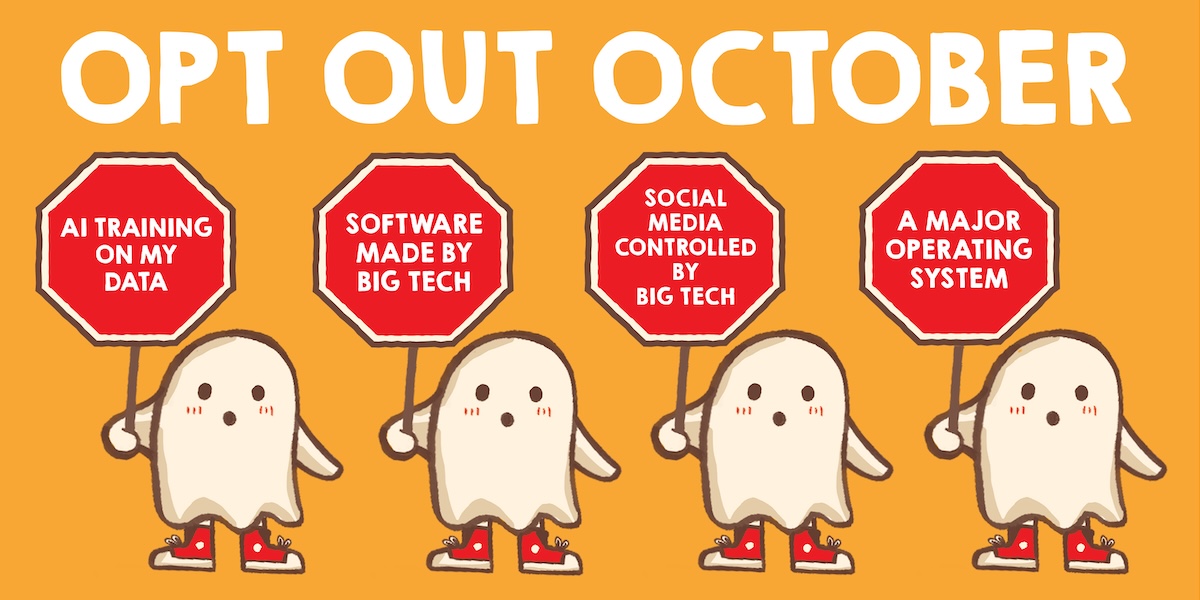
How to Opt Out of Social Media Controlled by Big Tech
It might seem like there are simply no other choices for social media beyond those controlled by big tech companies, but that’s not true at all. In fact, we’re in a golden era of options being built
Studying the "atmosphere" of Bluesky: Proposing a New Research Field Called Network Perception in ATmosphere - Nightflight
Introduction: Is Social Media Just Digital Grooming? How do you use social media in your daily life? Liking your friends' posts, sharing funny videos, twee…
Social media algorithms can be redesigned to bridge divides — here’s how
"It falls to both the tech companies that built these systems and an engaged public to create technologies designed for social cohesion."
Decentralized Social Media for 40 Million+ Users (with Bluesky’s Jay Graber)
Bluesky COO Rose Wang On Building a Better Social Network
How to Fix Facebook—Before It Fixes Us
An early investor explains why the social media platform’s business model is such a threat—and what to do about it.

The 'normal' response to the Social Web
How (mostly) 'normal' people respond to the ideas of the Social Web Marketing the Social Web is a headache. Only heightened by the clashing of heads as everyone offers an opinion. Picture those dinosaurs that have their skull on the outside. That's us. No wonder it's a headache.
People, Not Posts - Real Housewives of San Francisco
Why do we still call it "social media"?
People, Not Posts - Real Housewives of San Francisco
Why do we still call it "social media"?
Today some of the most innovative creators & podcasters are launching social websites that will bring millions of their fans to the social web: verge.surf.social decoder.surf.social versionhistory.surf.social vergecast.surf.social wired.surf.social 404media.surf.social poweruser.surf.social
I'm excited to finally have a preprint of this paper up, a few years in the making. In it we argue that industry-driven manipulation of social media research is well underway and that norms and institutions in the field are ill-prepared to resist tech's influence. arxiv.org/abs/2510.19894
🐝 Social Media (SB Commentary)

things I said about social media

Bee 🐝 (@sweetbee.vip)
Bee 🐝 (@sweetbee.vip)
Bee 🐝 (@sweetbee.vip)

