

Fragmented Identity Researchers' identities are fragmented. Grant IDs, ORCID, institutional email addresses, ResearchGate, Google Scholar, and various socia…
The Digital Identity Event Horizon
A five year investigation into digital identity and its central role in creating brittle societies.
Proposal: OAuth-based account creation · bluesky-social atproto · Discussion #4587
We recently added to the reference PDS (and underlying OAuth Provider) implementation support for Initiating User Registration via OpenID Connect 1.0, however, what I wasn't aware of when I add...
The Mask-Off Moment for Digital Identity
Our 18-month investigation reveals how digital identity systems create brittle societies. This foreword traces eight case studies that demonstrate the catastrophic failures of digital identity across Estonia, the US, Israel, Ukraine, and beyond.
Academia.edu - Find Research Papers, Topics, Researchers
Academia.edu is the platform to share, find, and explore 64 Million research papers. Join us to accelerate your research needs & academic interests.

Academia.edu - Find Research Papers, Topics, Researchers
Academia.edu is the platform to share, find, and explore 65 Million research papers. Join us to accelerate your research needs & academic interests.
Decentralized Identifiers (DIDs) v1.0
Decentralized identifiers (DIDs) are a new type of identifier that enables verifiable, decentralized digital identity. A DID refers to any subject (e.g., a person, organization, thing, data model, abstract entity, etc.) as determined by the controller of the DID. In contrast to typical, federated identifiers, DIDs have been designed so that they may be decoupled from centralized registries, identity providers, and certificate authorities. Specifically, while other parties might be used to help enable the discovery of information related to a DID, the design enables the controller of a DID to prove control over it without requiring permission from any other party. DIDs are URIs that associate a DID subject with a DID document allowing trustable interactions associated with that subject.
A Landscape Survey of Private Digital Credentials
CJ Larkin and Renée DiResta examine digital ID endeavors to understand what drives adoption, what facilitates trust, and how privacy and security trade off.
What is Digital Identity?
Who you are is hardly defined by your drivers license or passport. And yet, this is often how we understand ourselves and others.
The Path to Self-Sovereign Identity
Today I head out to a month-long series of events associated with identity: I’m starting with the 22st (!) Internet Identity Workshop next week; then I’...
Yesterday we launched a new feature and now our existing web users can bring their own DID or we can be a temporary custodian of a new identity. Either way, now every user's PDS is the source of truth for public events and rsvps. openmeet.net/your-identity-your-events #ATprotocol

Your Identity, Your Events: How OpenMeet Gives Every User an AT Protocol Account
openmeet.net“truly own your social identity on bluesky and at protocol” that’s… not how this works — this is just another PDS hosting service, which is great and needed, but it’s not giving people anymore ownership over their identity than having it hosted anywhere else let’s not confuse/mislead people plz

periwinkle.social
Open PDSes

A collection of Bluesky PDSes that are "open" and are excepting new users
Selfhosted.social
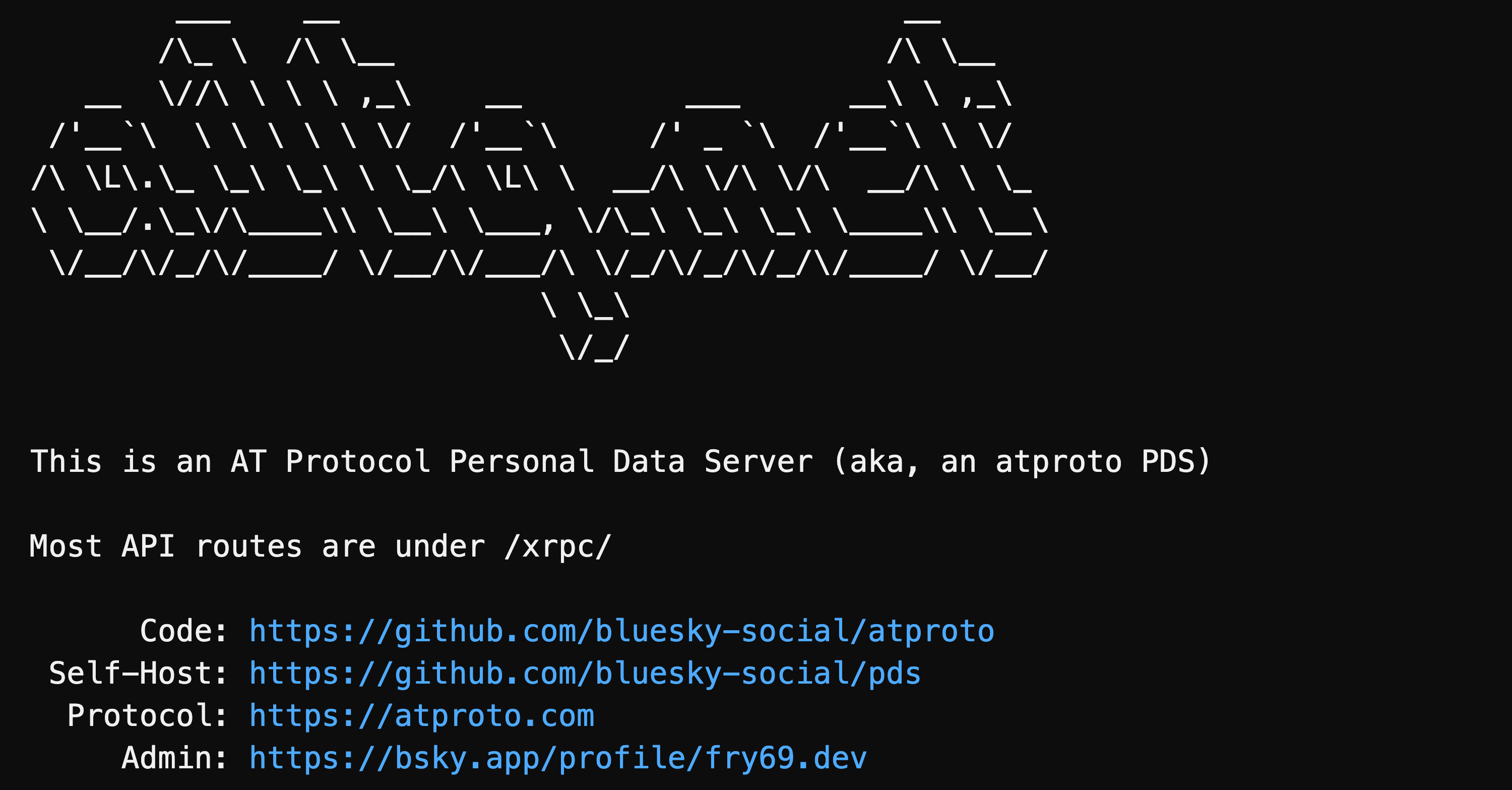
AT Protocol PDS

