To understand the architecture of human language, it is critical to examine diverse languages; yet most cognitive neuroscience research has focused on a handful of primarily Indo-European languages. Here, we report an investigation of the fronto-temporo-parietal language network across 45 languages and establish the robustness to cross-linguistic variation of its topography and key functional properties, including left-lateralization, strong functional integration among its brain regions, and functional selectivity for language processing.
Innate connectivity patterns drive the development of the visual word form area
What determines the functional organization of cortex? One hypothesis is that innate connectivity patterns, either structural or functional connectivity, set up a scaffold upon which functional specialization can later take place. We tested this hypothesis by asking whether the visual word form area (VWFA), an experience-driven region, was already functionally connected to proto language networks in neonates scanned within one week of birth. Using the data from the Human Connectone Project (HCP) and the Developing Human Connectome Project (dHCP), we calculated intrinsic functional connectivity during resting-state functional magnetic resonance imaging (fMRI), and found that neonates showed similar functional connectivity patterns to adults. We observed that (1) language regions connected more strongly with the putative VWFA than other adjacent ventral visual regions that also show foveal bias, and (2) the VWFA connected more strongly with frontotemporal language regions than with regions adjacent to these language regions. These data suggest that the location of the VWFA is earmarked at birth due to its connectivity with the language network, providing evidence that innate connectivity instructs the later refinement of cortex.

Sycophancy Claims about Language Models: The Missing Human-in-the-Loop
Sycophantic response patterns in Large Language Models (LLMs) have been increasingly claimed in the literature. We review methodological challenges in measuring LLM sycophancy and identify five core operationalizations. Despite sycophancy being inherently human-centric, current research does not evaluate human perception. Our analysis highlights the difficulties in distinguishing sycophantic responses from related concepts in AI alignment and offers actionable recommendations for future research.
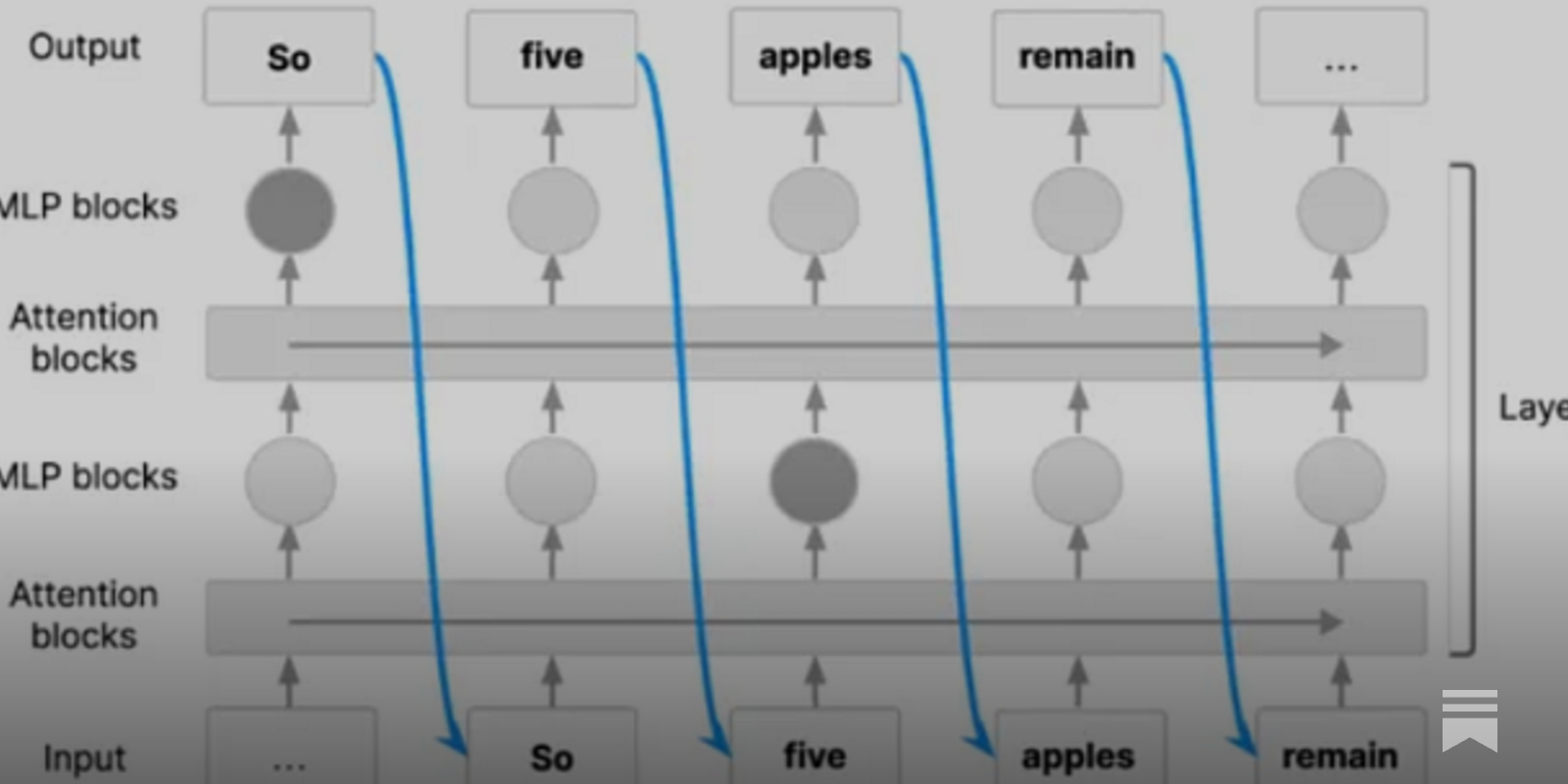
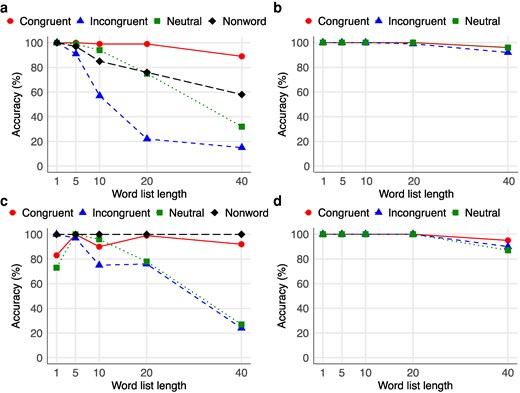
Deficient executive control in transformer attention
Abstract. Although transformers in large language models (LLMs) effectively implement a self-attention mechanism that has revolutionized natural language p
The Philosophy of Language Models
ABSTRACT The success of large language models (LLMs) across many domains of AI research has generated intense debate. Some attribute their impressive performance on complex tasks to human‐like linguistic and cognitive capacities, whereas others ascribe it to shallow pattern matching. These disputes stem from deep‐seated philosophical disagreements about the nature of language and cognition. We provide an opinionated survey of these disagreements across core topics in the philosophy of mind and language, including syntactic competence, compositionality, linguistic meaning, representation, attitudes, reasoning, agency, and consciousness. We contend that progress on these issues requires not only clarity about background philosophical commitments but also, in many cases, close engagement with emerging empirical evidence.


The link between language and cognition is a red herring | Aeon Ideas
Humans alone have language, but many animals clearly have consciousness. Are parallels between the two a red herring?

SymbolicAI: A Neuro-Symbolic Perspective on Large Language Models (LLMs)
A neurosymbolic perspective on LLMs
The Triadic Mind: How Language Reveals the Limits of Human Cognition
Languages are the most complex symbolic systems humans have ever created. Yet children acquire them effortlessly, without formal…

What Makes Language Human?
Words are combined into phrases and sentences in a dazzling array of patterns, collectively referred to as syntax. The complexity of syntax has long confounded researchers. Consider, for example, t…

A foundation model of vision, audition, and language for in-silico neuroscience | Research - AI at Meta
Cognitive neuroscience is fragmented into specialized models, each tailored to specific experimental paradigms, hence preventing a unified model of...
Is Cross-Lingual Transfer in Bilingual Models Human-Like? A Study with Overlapping Word Forms in Dutch and English
Bilingual speakers show cross-lingual activation during reading, especially for words with shared surface form. Cognates (friends) typically lead to facilitation, whereas interlingual homographs (false friends) cause interference or no effect. We examine whether cross-lingual activation in bilingual language models mirrors these patterns. We train Dutch-English causal Transformers under four vocabulary-sharing conditions that manipulate whether (false) friends receive shared or language-specific embeddings. Using psycholinguistic stimuli from bilingual reading studies, we evaluate the models through surprisal and embedding similarity analyses. The models largely maintain language separation, and cross-lingual effects arise primarily when embeddings are shared. In these cases, both friends and false friends show facilitation relative to controls. Regression analyses reveal that these effects are mainly driven by frequency rather than consistency in form-meaning mapping. Only when just friends share embeddings are the qualitative patterns of bilinguals reproduced. Overall, bilingual language models capture some cross-linguistic activation effects. However, their alignment with human processing seems to critically depend on how lexical overlap is encoded, possibly limiting their explanatory adequacy as models of bilingual reading.
You Don’t Need Words to Think
Brain studies show that language is not essential for the cognitive processes that underlie thought