Background Rare diseases affect a small percentage of the population, leading to challenges such as delayed diagnoses and limited treatment options. Mobile health technologies offer solutions to improve patient outcomes, yet their application in rare diseases remains underexplored. The German citizen science project SelEe created a customizable app for the self-management of rare diseases through a co-creation process that involved patients with such conditions. Methods The project consisted of three phases. In Phase 1, 9 to 68 patients or relatives of patients participated in workshops to define research topics and app requirements. Phase 2 involved a core research team of nine patients and researchers who iteratively developed the app, released in March 2023. Phase 3 focused on evaluating the app’s usage and usability through an in-app survey conducted from March 2023 to February 2024. We utilized descriptive statistics to evaluate app usage and employed the mHealth App Usability Questionnaire to assess usability. Results The SelEe app offers the possibility to create and store data in a personalized health diary. Patients can create their own templates or use templates which were defined by the core research team. Users can record findings (e.g. blood test results) and export data using different graphs and formats. Furthermore, the app supports blind users. The app was downloaded 3040 times and 1456 users registered, with 1967 unique diseases entered. 50.7% of the diseases were rare, 30.5% non-rare, and 18.8% were classified as suspected, undefined, or symptoms. A total of 1223 valid user profiles were analyzed for app usage and demographics. Furthermore, 432 users qualified for the in-app survey by making at least one health diary entry, and 117 participated. The app was rated with an overall usability score of 5.19 out of 7. While the app’s health diary function was frequently used, other functionalities like findings and data export were less utilized. Feedback highlighted the need for improved usability and additional features. Conclusions The study highlights active patient engagement in developing a mobile health app for individuals with rare diseases. Although improvements are necessary for broader acceptance, the app is promising for the management of rare diseases. Supplementary information The online version contains supplementary material available at 10.1186/s13023-025-04140-1.
Social Uses of Personal Health Information Within PatientsLikeMe, an Online Patient Community: What Can Happen When Patients Have Access to One Another’s Data
Background: This project investigates the ways in which patients respond to the shared use of what is often considered private information: personal health data. There is a growing demand for patient access to personal health records. The predominant model for this record is a repository of all clinically relevant health information kept securely and viewed privately by patients and their health care providers. While this type of record does seem to have beneficial effects for the patient–physician relationship, the complexity and novelty of these data coupled with the lack of research in this area means the utility of personal health information for the primary stakeholders—the patients—is not well documented or understood. Objective: PatientsLikeMe is an online community built to support information exchange between patients. The site provides customized disease-specific outcome and visualization tools to help patients understand and share information about their condition. We begin this paper by describing the components and design of the online community. We then identify and analyze how users of this platform reference personal health information within patient-to-patient dialogues. Methods: Patients diagnosed with amyotrophic lateral sclerosis (ALS) post data on their current treatments, symptoms, and outcomes. These data are displayed graphically within personal health profiles and are reflected in composite community-level symptom and treatment reports. Users review and discuss these data within the Forum, private messaging, and comments posted on each other’s profiles. We analyzed member communications that referenced individual-level personal health data to determine how patient peers use personal health information within patient-to-patient exchanges. Results: Qualitative analysis of a sample of 123 comments (about 2% of the total) posted within the community revealed a variety of commenting and questioning behaviors by patient members. Members referenced data to locate others with particular experiences to answer specific health-related questions, to proffer personally acquired disease-management knowledge to those most likely to benefit from it, and to foster and solidify relationships based on shared concerns. Conclusions: Few studies examine the use of personal health information by patients themselves. This project suggests how patients who choose to explicitly share health data within a community may benefit from the process, helping them engage in dialogues that may inform disease self-management. We recommend that future designs make each patient’s health information as clear as possible, automate matching of people with similar conditions and using similar treatments, and integrate data into online platforms for health conversations.

What Isn’t There an App For? (Published 2015)
A writer spent three weeks trying to improve his life through apps.

Public use of a generalist LLM chatbot for health queries
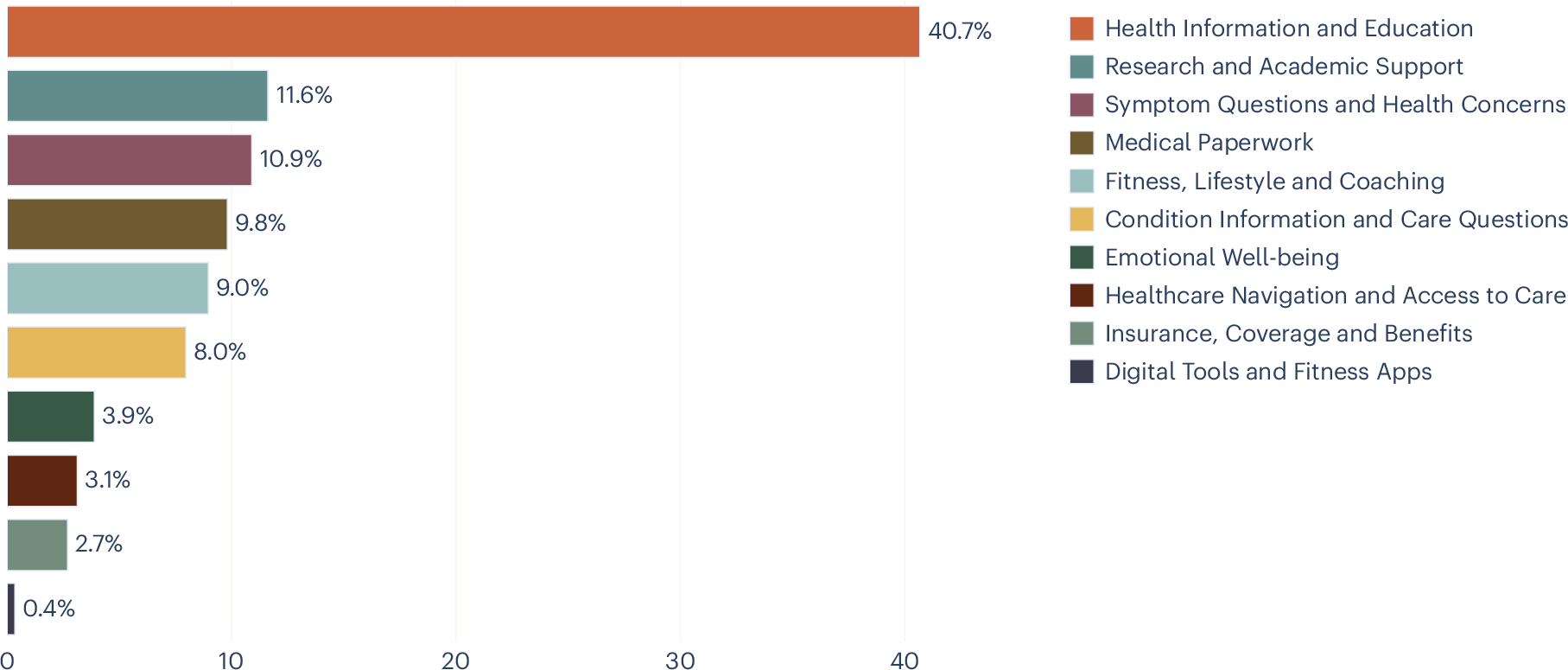
Here we analyse over 500,000 de-identified health-related conversations with Microsoft Copilot from January 2026 to characterize what people ask conversational artificial intelligence (AI) about health. We apply a hierarchical intent taxonomy of 12 primary categories using privacy-preserving large language model-based classification validated against expert human annotation and use topic clustering for prevalent themes within each intent. We then characterize the intents and topics behind health queries, identify who they are about, and analyse how usage varies by device and time of day. Nearly one in five conversations involves personal symptom assessment or condition discussion, and the dominant general information category is also concentrated on specific treatments and conditions, suggesting that this is a lower bound on personal health intent. One in seven of these personal health queries concerns someone other than the user, suggesting that conversational AI can also be a caregiving tool. Personal queries increase markedly in the evening and nighttime hours, when traditional healthcare is most limited. Usage diverges sharply by device: mobile concentrates on personal health concerns, while desktop is dominated by professional and academic work. A substantial share of queries focuses on navigating healthcare systems. These patterns have direct implications for platform-specific design, safety considerations and the responsible development of health AI.
Public use of a generalist LLM chatbot for health queries
Here we analyse over 500,000 de-identified health-related conversations with Microsoft Copilot from January 2026 to characterize what people ask conversational artificial intelligence (AI) about health. We apply a hierarchical intent taxonomy of 12 primary categories using privacy-preserving large language model-based classification validated against expert human annotation and use topic clustering for prevalent themes within each intent. We then characterize the intents and topics behind health queries, identify who they are about, and analyse how usage varies by device and time of day. Nearly one in five conversations involves personal symptom assessment or condition discussion, and the dominant general information category is also concentrated on specific treatments and conditions, suggesting that this is a lower bound on personal health intent. One in seven of these personal health queries concerns someone other than the user, suggesting that conversational AI can also be a caregiving tool. Personal queries increase markedly in the evening and nighttime hours, when traditional healthcare is most limited. Usage diverges sharply by device: mobile concentrates on personal health concerns, while desktop is dominated by professional and academic work. A substantial share of queries focuses on navigating healthcare systems. These patterns have direct implications for platform-specific design, safety considerations and the responsible development of health AI.
Implementation of Digital Monitoring Services During the COVID-19 Pandemic for Patients With Chronic Diseases: Design Science Approach
Background: The COVID-19 pandemic is straining health systems and disrupting the delivery of health care services, in particular, for older adults and people with chronic conditions, who are particularly vulnerable to COVID-19 infection. Objective: The aim of this project was to support primary health care provision with a digital health platform that will allow primary care physicians and nurses to remotely manage the care of patients with chronic diseases or COVID-19 infections. Methods: For the rapid design and implementation of a digital platform to support primary health care services, we followed the Design Science implementation framework: (1) problem identification and motivation, (2) definition of the objectives aligned with goal-oriented care, (3) artefact design and development based on Scrum, (4) solution demonstration, (5) evaluation, and (6) communication. Results: The digital platform was developed for the specific objectives of the project and successfully piloted in 3 primary health care centers in the Lisbon Health Region. Health professionals (n=53) were able to remotely manage their first patients safely and thoroughly, with high degrees of satisfaction. Conclusions: Although still in the first steps of implementation, its positive uptake, by both health care providers and patients, is a promising result. There were several limitations including the low number of participating health care units. Further research is planned to deploy the platform to many more primary health care centers and evaluate the impact on patient’s health related outcomes.

Crowdsourced Health Research Studies: An Important Emerging Complement to Clinical Trials in the Public Health Research Ecosystem
Background: Crowdsourced health research studies are the nexus of three contemporary trends: 1) citizen science (non-professionally trained individuals conducting science-related activities); 2) crowdsourcing (use of web-based technologies to recruit project participants); and 3) medicine 2.0 / health 2.0 (active participation of individuals in their health care particularly using web 2.0 technologies). Crowdsourced health research studies have arisen as a natural extension of the activities of health social networks (online health interest communities), and can be researcher-organized or participant-organized. In the last few years, professional researchers have been crowdsourcing cohorts from health social networks for the conduct of traditional studies. Participants have also begun to organize their own research studies through health social networks and health collaboration communities created especially for the purpose of self-experimentation and the investigation of health-related concerns. Objective: The objective of this analysis is to undertake a comprehensive narrative review of crowdsourced health research studies. This review will assess the status, impact, and prospects of crowdsourced health research studies. Methods: Crowdsourced health research studies were identified through a search of literature published from 2000 to 2011 and informal interviews conducted 2008-2011. Keyword terms related to crowdsourcing were sought in Medline/PubMed. Papers that presented results from human health studies that included crowdsourced populations were selected for inclusion. Crowdsourced health research studies not published in the scientific literature were identified by attending industry conferences and events, interviewing attendees, and reviewing related websites. Results: Participatory health is a growing area with individuals using health social networks, crowdsourced studies, smartphone health applications, and personal health records to achieve positive outcomes for a variety of health conditions. PatientsLikeMe and 23andMe are the leading operators of researcher-organized, crowdsourced health research studies. These operators have published findings in the areas of disease research, drug response, user experience in crowdsourced studies, and genetic association. Quantified Self, Genomera, and DIYgenomics are communities of participant-organized health research studies where individuals conduct self-experimentation and group studies. Crowdsourced health research studies have a diversity of intended outcomes and levels of scientific rigor. Conclusions: Participatory health initiatives are becoming part of the public health ecosystem and their rapid growth is facilitated by Internet and social networking influences. Large-scale parameter-stratified cohorts have potential to facilitate a next-generation understanding of disease and drug response. Not only is the large size of crowdsourced cohorts an asset to medical discovery, too is the near-immediate speed at which medical findings might be tested and applied. Participatory health initiatives are expanding the scope of medicine from a traditional focus on disease cure to a personalized preventive approach. Crowdsourced health research studies are a promising complement and extension to traditional clinical trials as a model for the conduct of health research.
An app can be a home-cooked meal
I made a messaging app for my family and my family only.

Implementing an online pharmaceutical service using design science research
The rising prevalence of chronic diseases is pressing health systems to introduce reforms. Primary healthcare and multidisciplinary models have been suggested as approaches to deal with this challenge, with new roles for nurses and pharmacists being advocated. More recently, implementing healthcare based on information systems and technologies (e.g. eHealth) has been proposed as a way to improve health services. However, implementing online pharmaceutical services, including their adoption by pharmacists and patients, is still an open research question. In this paper we present ePharmacare, a new online pharmaceutical service implemented using Design Science Research.

Meta’s New AI Asked for My Raw Health Data—and Gave Me Terrible Advice
Meta’s Muse Spark model offers to analyze users’ health data, including lab results. Beyond the obvious privacy risks, it’s not a capable stand-in for a real doctor.

Evidence appraisal: a scoping review, conceptual framework, and research agenda
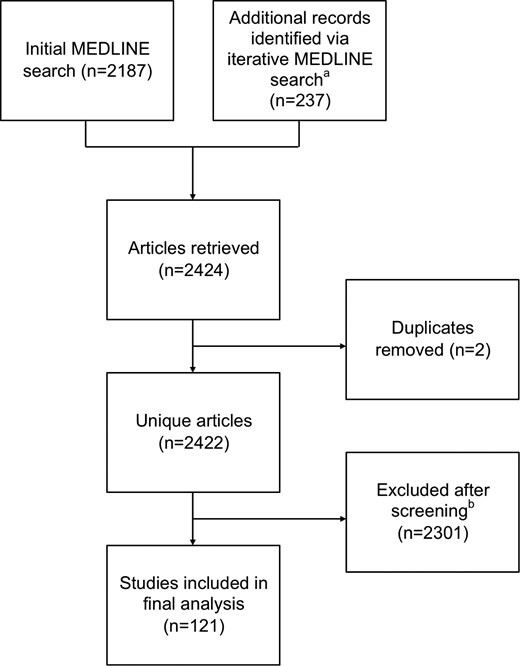
Abstract Objective Critical appraisal of clinical evidence promises to help prevent, detect, and address flaws related to study importance, ethics, validity, applicability, and reporting. These research issues are of growing concern. The purpose of this scoping review is to survey the current literature on evidence appraisal to develop a conceptual framework and an informatics research agenda. Methods We conducted an iterative literature search of Medline for discussion or research on the critical appraisal of clinical evidence. After title and abstract review, 121 articles were included in the analysis. We performed qualitative thematic analysis to describe the evidence appraisal architecture and its issues and opportunities. From this analysis, we derived a conceptual framework and an informatics research agenda. Results We identified 68 themes in 10 categories. This analysis revealed that the practice of evidence appraisal is quite common but is rarely subjected to documentation, organization, validation, integration, or uptake. This is related to underdeveloped tools, scant incentives, and insufficient acquisition of appraisal data and transformation of the data into usable knowledge. Discussion The gaps in acquiring appraisal data, transforming the data into actionable information and knowledge, and ensuring its dissemination and adoption can be addressed with proven informatics approaches. Conclusions Evidence appraisal faces several challenges, but implementing an informatics research agenda would likely help realize the potential of evidence appraisal for improving the rigor and value of clinical evidence.
Apps - Social Media Lab
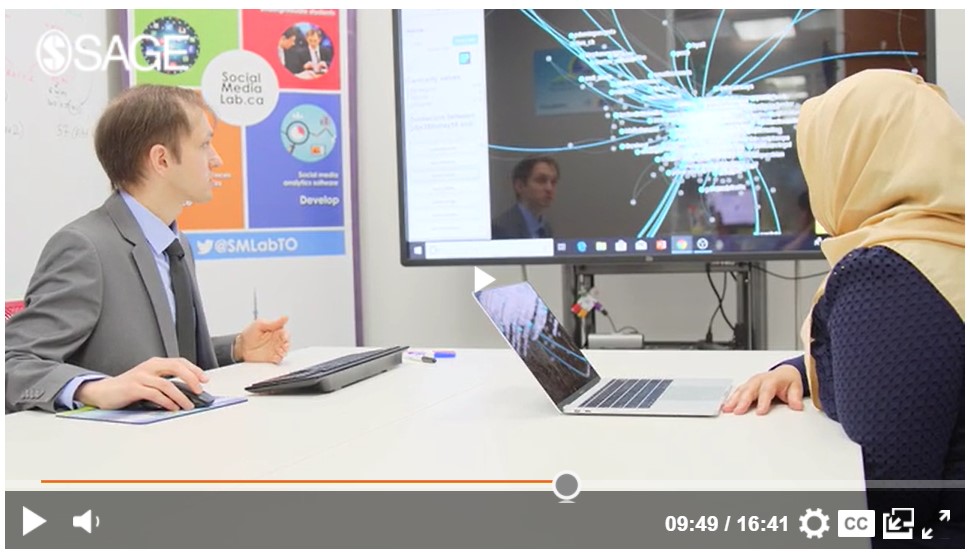
As part of our work, the Lab develops public-facing information-integrity dashboards, along with research apps and tools, to support social science research on online participation and communities. Our apps and tools are used by thousands of students, educators and researchers worldwide each year. If you are interested in developing a custom version of any of […]
Archive: New COVID-19 ‘Citizen Science’ Initiative Lets Any Adult with a Smartphone Help to Fight Coronavirus
The online study would try to help researchers gain insight into how the virus is spreading and identify ways to predict and reduce the number of new infections.

Citizen involvement in research on technological innovations for health, care or well-being: a scoping review
Citizen science can be a powerful approach to foster the successful implementation of technological innovations in health, care or well-being. Involving experience experts as co-researchers or co-designers of technological innovations facilitates mutual learning, community building, and empowerment. By utilizing the expert knowledge of the intended users, innovations have a better chance to get adopted and solve complex health-related problems. As citizen science is still a relatively new practice for health and well-being, little is known about effective methods and guidelines for successful collaboration. This scoping review aims to provide insight in (1) the levels of citizen involvement in current research on technological innovations for health, care or well-being, (2) the used participatory methodologies, and (3) lesson’s learned by the researchers., A scoping review was conducted and reported in accordance with the PRISMA-ScR guidelines. The search was performed in SCOPUS in January 2021 and included peer-reviewed journal and conference papers published between 2016 and 2020. The final selection (N = 83) was limited to empirical studies that had a clear focus on technological innovations for health, care or well-being and involved citizens at the level of collaboration or higher. Our results show a growing interest in citizens science as an inclusive research approach. Citizens are predominantly involved in the design phase of innovations and less in the preparation, data-analyses or reporting phase. Eight records had citizens in the lead in one of the research phases., Researcher use different terms to describe their methodological approach including participatory design, co-design, community based participatory research, co-creation, public and patient involvement, partcipatory action research, user-centred design and citizen science. Our selection of cases shows that succesful citizen science projects develop a structural and longitudinal partnership with their collaborators, use a situated and adaptive research approach, and have researchers that are willing to abandon traditional power dynamics and engage in a mutual learning experience.
The Medium is the Message: How Non-Clinical Information Shapes Clinical Decisions in LLMs | Proceedings of the 2025 ACM Conference on Fairness, Accountability, and Transparency
There has been a growing interest in the HCI community to study Health, with particular focus in understanding healthcare practices and designing technologies to support and to enhance these practices. A majority of current health studies in HCI have ...

ChatGPT Health performance in a structured test of triage recommendations
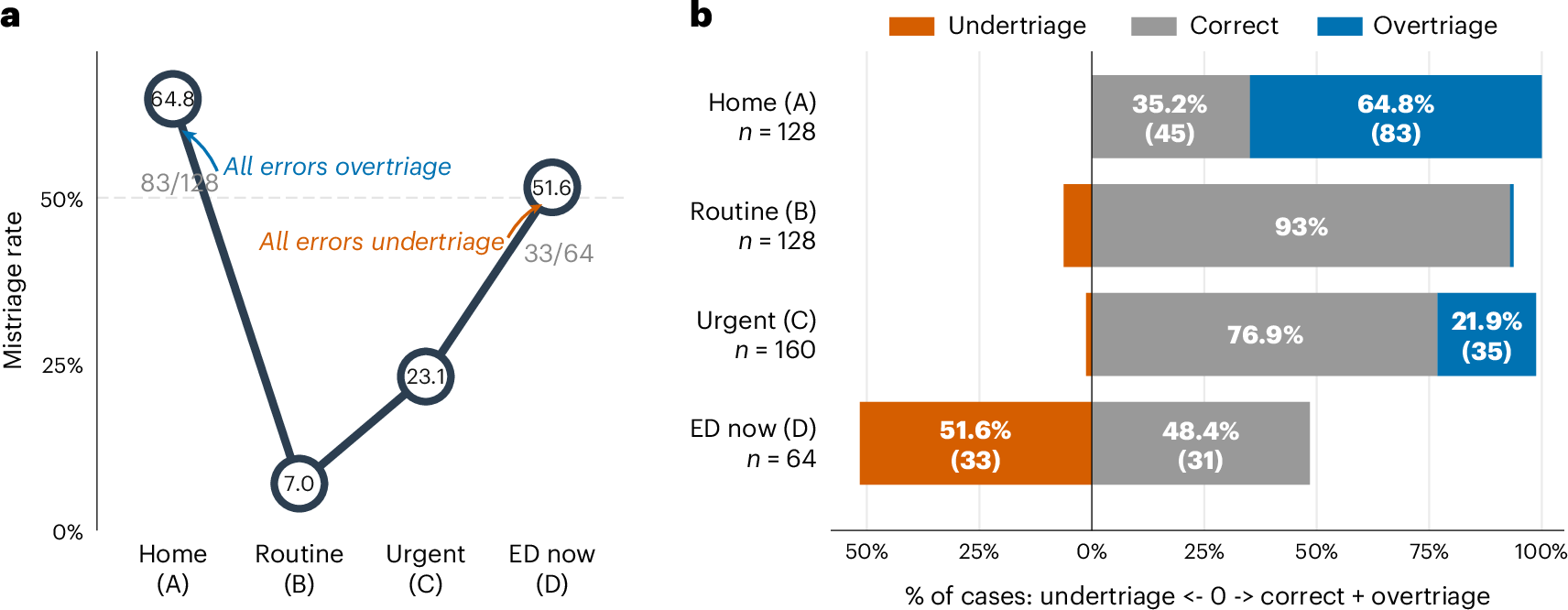
ChatGPT Health was launched in January 2026 as OpenAI’s consumer health tool and has reached millions of users. Here we conducted a structured stress test of triage recommendations using 60 clinician-authored vignettes across 21 clinical domains under 16 factorial conditions, yielding 960 total responses. Performance followed an inverted U-shaped pattern, with the most dangerous failures concentrated at clinical extremes—nonurgent presentations (35%) and emergency conditions (48%). Among gold-standard emergencies, the system undertriaged 52% of cases, directing patients with diabetic ketoacidosis or impending respiratory failure to 24–48 h evaluation rather than the emergency department, while correctly triaging classical emergencies such as stroke and anaphylaxis. When family or friends minimized symptoms, indicating anchoring bias, triage recommendations shifted significantly in edge cases (odds ratio = 11.7, 95% confidence interval = 3.7–36.6), with the majority of shifts toward less urgent care. Crisis-intervention messages activated unpredictably across suicidal ideation presentations, occurring more frequently when patients described no specific method than when they did. Patient race, sex and barriers to care did not show significant effects, although confidence intervals did not exclude clinically meaningful differences. These findings reveal missed high-risk emergencies and inconsistent activation of crisis safeguards, raising safety concerns that warrant prospective validation before consumer-scale deployment of artificial intelligence triage systems.