


Medicinal plants constitute the primary pharmacological source of Chinese medicine and their scientific interpretation is crucial for quality standardization and clinical guidance. Paradoxically, the contemporary evaluation model primarily adopts reductionism, inconsistent with the system-oriented holistic view of Traditional Chinese Medicine (TCM). In this review, the commonality between the organismic electromagnetic radiation field and the “qi” of TCM was deeply dissected from five levels. This reveals the fundamental consistency between the biophoton coherence and the holism of TCM. The scientific connotation of Chinese medicinal properties may be the ability and metric to regulate quantum superposition states of biological electromagnetic fields. Therefore, employing biophoton emission (BE)-based methods to investigate the medicinal properties of medicinal plants may provide scientific support that aligns more closely with holism. BE technology has shown great potential in quantifying medicinal characteristic parameters, including the quantization of Chinese medicinal properties, the identification of various processed products, and quality control. Especially in the real-time quality monitoring during the cultivation process of medicinal plants, BE characteristics can comprehensively reflect the natural and efficacious properties. This interdisciplinary thinking will help to establish a novel theoretical framework and methodological system to advance the modernization and development of medicinal plants.
Biophoton signal transmission and processing in the brain
The transmission and processing of neural information in the nervous system plays a key role in neural functions. It is well accepted that neural communication is mediated by bioelectricity and chemical molecules via the processes called bioelectrical and chemical transmission, respectively. Indeed, the traditional theories seem to give valuable explanations for the basic functions of the nervous system, but difficult to construct general accepted concepts or principles to provide reasonable explanations of higher brain functions and mental activities, such as perception, learning and memory, emotion and consciousness. Therefore, many unanswered questions and debates over the neural encoding and mechanisms of neuronal networks remain. Cell to cell communication by biophotons, also called ultra-weak photon emissions, has been demonstrated in several plants, bacteria and certain animal cells. Recently, both experimental evidence and theoretical speculation have suggested that biophotons may play a potential role in neural signal transmission and processing, contributing to the understanding of the high functions of nervous system. In this paper, we review the relevant experimental findings and discuss the possible underlying mechanisms of biophoton signal transmission and processing in the nervous system.
Beneficial Plant Research Association
Medicinal, useful, and nutritious plants hold the potential to restore both human health and ecological balance.

Taian® Tea | Premium Chinese Tea & Herbal Wellness
Traditional and herbal teas from Taian Tea - discover premium tea varieties, health benefits, and authentic tea culture.
Cytochrome P450 Enzyme Inhibition and Herb-Drug Interaction Potential of Medicinal Plant Extracts Used for Management of Diabetes in Nigeria
The use of herbal medicines is common in Africa, and patients often use a combination of herbs and drugs. Concurrent herbal and pharmaceuticals treatments can cause adverse effects through herb-drug interactions (HDI). This study evaluated the potential risk of HDI for five medicinal plants, Vernonia amygdalina, Ocimum gratissimum, Moringa oleifera, Azadirachta indica, and Picralima nitida, using in vitro assays. Patients with diabetes and some other disease conditions commonly use these medicinal plants in Nigeria, and little is known regarding their potential for drug interaction, despite their enormous use.

ChinaCosIng - Chinese Cosmetic Ingredient Regulatory Database
A theoretical study of bone remodelling under PEMF at cellular level
Pulsed electromagnetic field (PEMF) devices have been used clinically to slow down osteoporosis and accelerate the healing of bone fractures for many years. However, the underlying mechanism by wh...

PlantWave
Listen to plant music with PlantWave! Tune into nature and hear plants make music.

A model qualification method for mechanistic physiological QSP models to support model‐informed drug development
Mechanistic physiological modeling is a scientific method that combines available data with scientific knowledge and engineering approaches to facilitate better understanding of biological systems, improve decision‐making, reduce risk, and increase efficiency in drug discovery and development. It is a type of quantitative systems pharmacology (QSP) approach that places drug‐specific properties in the context of disease biology. This tutorial provides a broadly applicable model qualification method (MQM) to ensure that mechanistic physiological models are fit for their intended purposes.

Cog Neuro Hub OPMEG Workshop
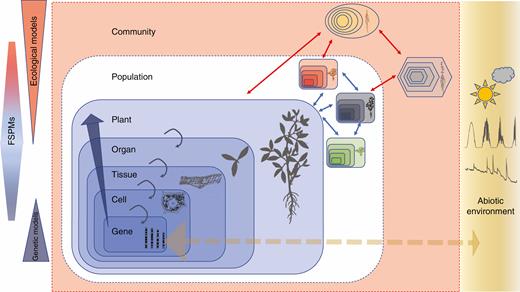
Two decades of functional–structural plant modelling: now addressing fundamental questions in systems biology and predictive ecology
AbstractBackground. Functional–structural plant models (FSPMs) explore and integrate relationships between a plant’s structure and processes that underlie
How to Make and Use Comfrey Tea Fertilizer | Gardener’s Path
Learn to make your own comfrey tea fertilizer, an organic, easy, and free way to feed your plants and recycle nutrients back into the soil. Read more now.

Electric Cloud - Naturally Lifted With CBD & Adaptogens™
0g sugar. no nasties. Discover the most delicious mood-lifting beverage made with CBD and adaptogens designed to lift and level the mind. Made by mixologists it's naturally uplifting, helping you find your focus and feel your best throughout the day. Non-GMO, gluten-free, paleo, vegan, keto-friendly and all-natural.

花王 | 花王製品に含まれる成分についての考え方
花王の「イノベーション」です。研究開発の概要と領域、独自技術、最新トピックス、および、高い安全性と品質を追究するさまざまな取り組みをご紹介します。

ピントが合っているものを花と呼ぶことにする|shikakun
#お花のある暮らしはじめました pic.twitter.com/GVvANrPASB — 鹿 (@shikakun) February 24, 2019 人間がなにを考えているのかもわからないのに花のことがわかるはずない pic.twitter.com/ISfJtlYFm4 — 鹿 (@shikakun) March 7, 2019 現金や信書を送ることはできないが花は送れるゆうパケット #flower_is pic.twitter.com/m4WviHU6VH — 鹿 (@shikakun) March 10, 2019 FLOWERは、花を売っているのではな

Pollen – Get this Extension for 🦊 Firefox (en-CA)
Download Pollen for Firefox. Surface image provenance claims on Bluesky

The Good Scents Company - Cosmetic Ingredients Catalog information
Cosmetic Ingredients Catalog information