


The standard view of neural signaling is that a neuron can influence its target cell by exciting or inhibiting it. An important aspect of the standard view is that learning consists of changing the efficacy of synapses, either strengthening (long-term potentiation) or weakening (long-term depression) them. In studying how cerebellar Purkinje cells change their responsiveness to a stimulus during learning of conditioned responses, we have found that these cells can learn the temporal relationship between two paired stimuli. The cells learn to respond at a particular time that reflects the time between the stimuli. This finding radically changes current views of both neural signaling and learning., The standard view of the mechanisms underlying learning is that they involve strengthening or weakening synaptic connections. Learned response timing is thought to combine such plasticity with temporally patterned inputs to the neuron. We show here that a cerebellar Purkinje cell in a ferret can learn to respond to a specific input with a temporal pattern of activity consisting of temporally specific increases and decreases in firing over hundreds of milliseconds without a temporally patterned input. Training Purkinje cells with direct stimulation of immediate afferents, the parallel fibers, and pharmacological blocking of interneurons shows that the timing mechanism is intrinsic to the cell itself. Purkinje cells can learn to respond not only with increased or decreased firing but also with an adaptively timed activity pattern.
Thalamus Identified As a Hub for Memory and Brain Plasticity - Neuroscience News
A new study reveals that the thalamus, long overshadowed by the cortex and hippocampus, plays a crucial role in shaping and updating brain connections.
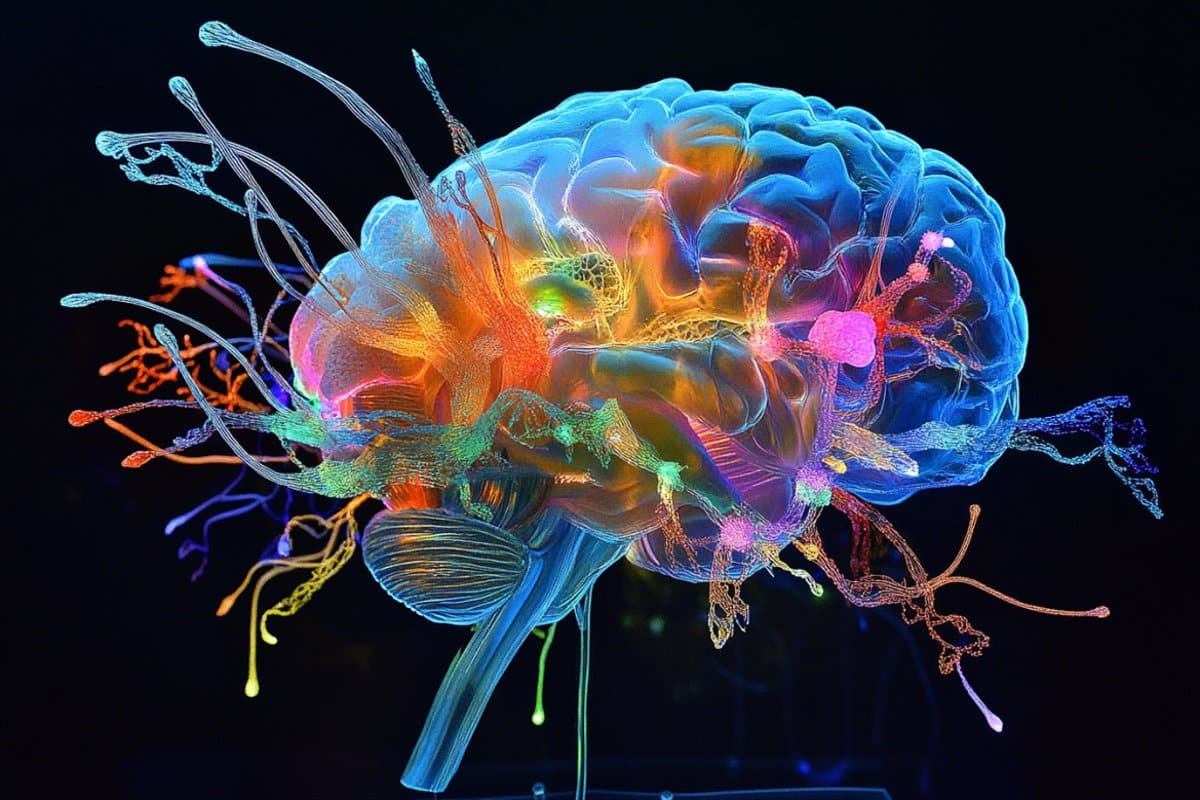
Random noise promotes slow heterogeneous synaptic dynamics important for robust working memory computation
Recurrent neural networks (RNNs) based on model neurons that communicate via continuous signals have been widely used to study how cortical neural circuits perform cognitive tasks. Training such networks to perform tasks that require information maintenance over a brief period (i.e., working memory tasks) remains a challenge. Inspired by the robust information maintenance observed in higher cortical areas such as the prefrontal cortex, despite substantial inherent noise, we investigated the effects of random noise on RNNs across different cognitive functions, including working memory. Our findings reveal that random noise not only speeds up training but also enhances the stability and performance of RNNs on working memory tasks. Importantly, this robust working memory performance induced by random noise during training is attributed to an increase in synaptic decay time constants of inhibitory units, resulting in slower decay of stimulus-specific activity critical for memory maintenance. Our study reveals the critical role of noise in shaping neural dynamics and cognitive functions, suggesting that inherent variability may be a fundamental feature driving the specialization of inhibitory neurons to support stable information processing in higher cortical regions.

The neuron as a direct data-driven controller | PNAS
In the quest to model neuronal function amid gaps in physiological data, a promising strategy is to develop a normative theory that interprets neur...

The Brain ‘Rotates’ Memories to Save Them From New Sensations | Quanta Magazine
Some populations of neurons simultaneously process sensations and memories. New work shows how the brain rotates those representations to prevent interference.
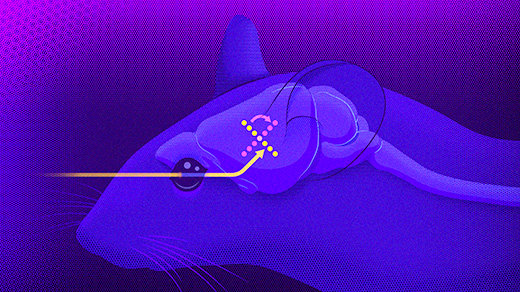
Study illuminates the structural features of memory formation at cellular and subcellular levels
NIH-funded study uses cutting-edge imaging techniques to reconstruct features underlying learning and memory in the mouse brain.

The Brain Can Recall and Reawaken Past Immune Responses | Quanta Magazine
The brain not only helps to regulate immune responses, but also stores and retrieves “memories” of them.

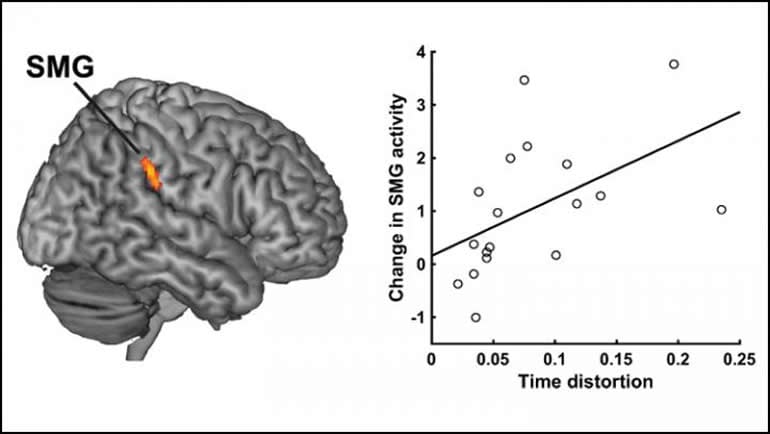
How the Brain Creates the Experience of Time - Neuroscience News
Time-sensitive neuron fatigue in the supramarginal gyrus skew how we perceive time.
Self-control saps memory resources
New research shows that exercising willpower impairs memory function by draining shared brain mechanisms and structures

Scientists found brain’s internal clock that influences how we perceive time
A chocoholic rat named Marco helped scientists find special brain cell network.

Brain 'Noise' Keeps Nerve Connections Young - Neuroscience News
Study reveals how miniature release events help to keep neurons intact and preserve motor neuron function in aging insects.

Switching Off One Crucial Protein Appears to Reverse Brain Aging in Mice - Slashdot
A research team just discovered older mice have more of the protein FTL1 in their hippocampus, reports ScienceAlert. The hippocampus is the region of the brain involved in memory and learning. And the researchers' paper says their new data raises "the exciting possibility that the beneficial effec...
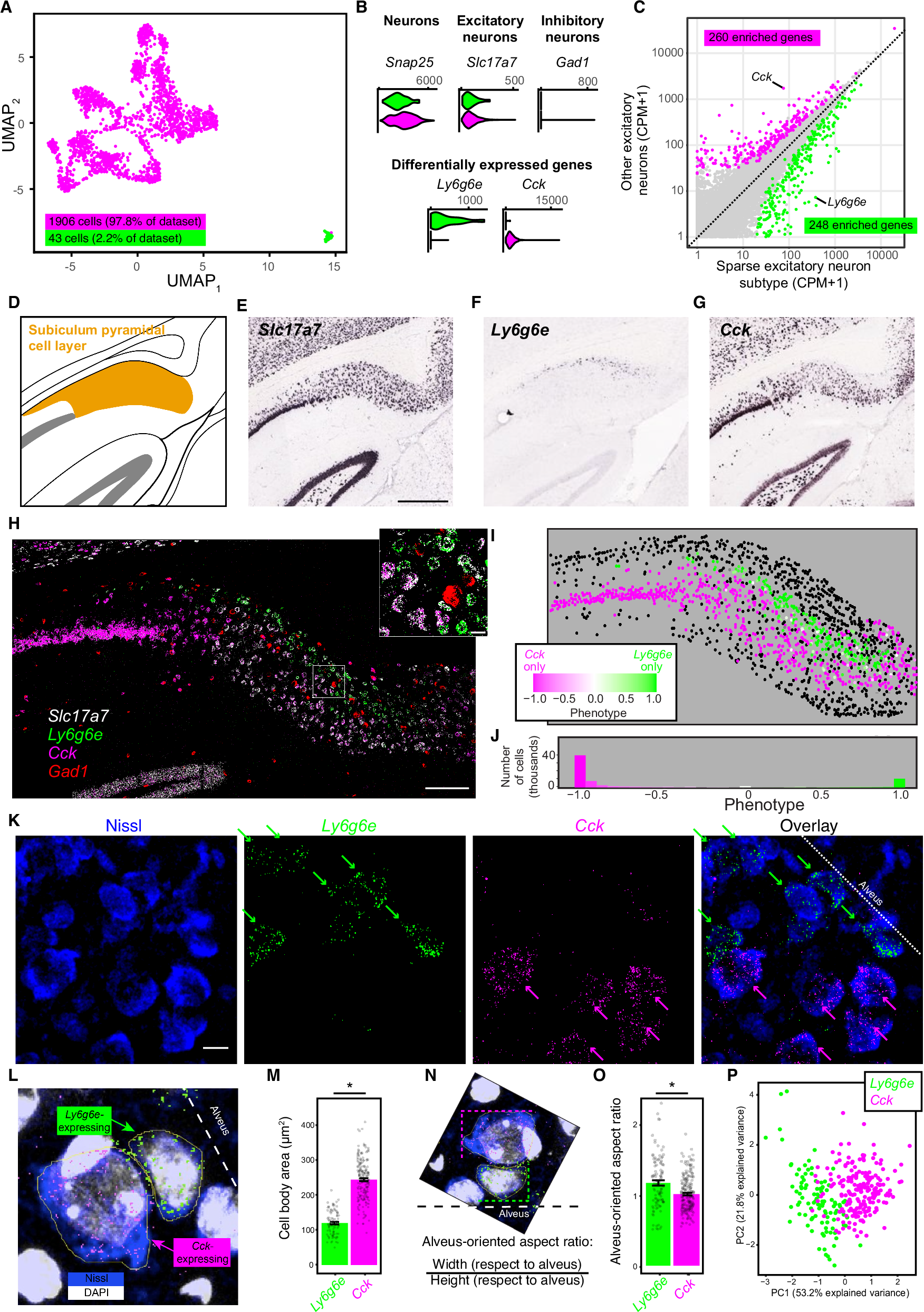
Atypical hippocampal excitatory neurons express and govern object memory
Classically, pyramidal cells of the hippocampus are viewed as flexibly representing spatial and non-spatial information. Recent work has illustrated distinct types of hippocampal excitatory neurons, suggesting that hippocampal representations and functions may be constrained and interpreted by these underlying cell-type identities. In mice, here we reveal a non-pyramidal excitatory neuron type — the “ovoid” neuron — that is spatially adjacent to subiculum pyramidal cells but differs in gene expression, electrophysiology, morphology, and connectivity. Functionally, novel object encounters drive sustained ovoid neuron activity, whereas familiar objects fail to drive activity even months after single-trial learning. Silencing ovoid neurons prevents non-spatial object learning but leaves spatial learning intact, and activating ovoid neurons toggles novel-object seeking to familiar-object seeking. Such function is doubly dissociable from pyramidal neurons, wherein manipulation of pyramidal cells affects spatial assays but not non-spatial learning. Ovoid neurons of the subiculum thus illustrate selective cell-type-specific control of non-spatial memory and behavioral preference.
To Remember, the Brain Must Actively Forget | Quanta Magazine
Researchers find evidence that neural systems actively remove memories, suggesting that forgetting may be the default mode of the brain.
Diversity-enabled sweet spots in layered architectures and speed–accuracy trade-offs in sensorimotor control | PNAS
Nervous systems sense, communicate, compute, and actuate movement using distributed components with severe trade-offs in speed, accuracy, sparsity,...

MIT neuroscientist: The No. 1 skill that sets people with ‘excellent memory’ apart from those who struggle—'it's rare'
Memory skills vary from one person to another. MIT Sloan neuroscientist Dr. Tara Swart Bieber shares how she trains her brain to prevent memory decline as we age.

Harnessing Chaos: How the Brain Turns Randomness into Robust Memory | Columbia Engineering
AI systems reveal how random fluctuations in brain activity may help stabilize memories