


The standard view of neural signaling is that a neuron can influence its target cell by exciting or inhibiting it. An important aspect of the standard view is that learning consists of changing the efficacy of synapses, either strengthening (long-term potentiation) or weakening (long-term depression) them. In studying how cerebellar Purkinje cells change their responsiveness to a stimulus during learning of conditioned responses, we have found that these cells can learn the temporal relationship between two paired stimuli. The cells learn to respond at a particular time that reflects the time between the stimuli. This finding radically changes current views of both neural signaling and learning., The standard view of the mechanisms underlying learning is that they involve strengthening or weakening synaptic connections. Learned response timing is thought to combine such plasticity with temporally patterned inputs to the neuron. We show here that a cerebellar Purkinje cell in a ferret can learn to respond to a specific input with a temporal pattern of activity consisting of temporally specific increases and decreases in firing over hundreds of milliseconds without a temporally patterned input. Training Purkinje cells with direct stimulation of immediate afferents, the parallel fibers, and pharmacological blocking of interneurons shows that the timing mechanism is intrinsic to the cell itself. Purkinje cells can learn to respond not only with increased or decreased firing but also with an adaptively timed activity pattern.
Thalamus Identified As a Hub for Memory and Brain Plasticity - Neuroscience News
A new study reveals that the thalamus, long overshadowed by the cortex and hippocampus, plays a crucial role in shaping and updating brain connections.
In the brain, timing is everything
Study reveals how the brain links memories of events that occur one after the other.

Random noise promotes slow heterogeneous synaptic dynamics important for robust working memory computation
Recurrent neural networks (RNNs) based on model neurons that communicate via continuous signals have been widely used to study how cortical neural circuits perform cognitive tasks. Training such networks to perform tasks that require information maintenance over a brief period (i.e., working memory tasks) remains a challenge. Inspired by the robust information maintenance observed in higher cortical areas such as the prefrontal cortex, despite substantial inherent noise, we investigated the effects of random noise on RNNs across different cognitive functions, including working memory. Our findings reveal that random noise not only speeds up training but also enhances the stability and performance of RNNs on working memory tasks. Importantly, this robust working memory performance induced by random noise during training is attributed to an increase in synaptic decay time constants of inhibitory units, resulting in slower decay of stimulus-specific activity critical for memory maintenance. Our study reveals the critical role of noise in shaping neural dynamics and cognitive functions, suggesting that inherent variability may be a fundamental feature driving the specialization of inhibitory neurons to support stable information processing in higher cortical regions.

Neurons position their parts for rapid communication
Neurons that talk to each other have proteins that mirror each other.
Our Brains Instantly Make 2 Copies of Each Memory | NOVA | PBS
These findings upend more than 50 years of accepted neuroscience

Neuroscientists show how neurons respond to sequences of familiar objects
The world grows increasingly more chaotic year after year, and our brains are constantly bombarded with images. A new study from Center for the Neural Basis of Cognition (CNBC), a joint project between ...

How the brain selectively remembers new places
MIT neuroscientists have discovered how the brain preferentially forms memories of new locations. A small region of the brainstem, known as the locus coeruleus, releases a flood of dopamine in response to novel sensory stimuli, and this dopamine triggers a certain region of the hippocampus to store a memory of the new location.

Biologists Discover Tiny Neural Computers in the Brain
Neuroscientists have learned that dendrites do more than just provide passive wiring in the brain. These nerve cell connectors also process information,

The neuron as a direct data-driven controller | PNAS
In the quest to model neuronal function amid gaps in physiological data, a promising strategy is to develop a normative theory that interprets neur...

On the Neuroscience of Travel Memories
Memory has a habit of expunging linear sequences in favor of moments of strong emotion.

The Brain ‘Rotates’ Memories to Save Them From New Sensations | Quanta Magazine
Some populations of neurons simultaneously process sensations and memories. New work shows how the brain rotates those representations to prevent interference.
Study illuminates the structural features of memory formation at cellular and subcellular levels
NIH-funded study uses cutting-edge imaging techniques to reconstruct features underlying learning and memory in the mouse brain.

The Brain Can Recall and Reawaken Past Immune Responses | Quanta Magazine
The brain not only helps to regulate immune responses, but also stores and retrieves “memories” of them.

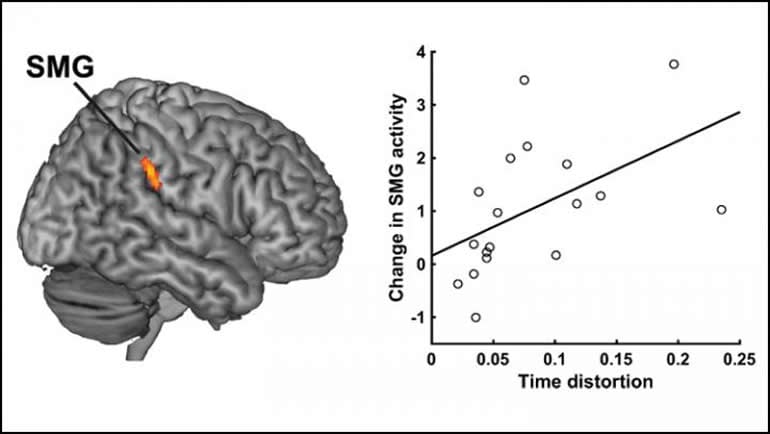
How the Brain Creates the Experience of Time - Neuroscience News
Time-sensitive neuron fatigue in the supramarginal gyrus skew how we perceive time.
Self-control saps memory resources
New research shows that exercising willpower impairs memory function by draining shared brain mechanisms and structures

Scientists found brain’s internal clock that influences how we perceive time
A chocoholic rat named Marco helped scientists find special brain cell network.
