


The topical landscape of psychology is highly compartmentalized, with distinct phenomena explained and investigated with recourse to theories and methods that have little in common. Our aim in this article is to identify a basic set of principles that underlie otherwise diverse aspects of human experience at all levels of psychological reality, from neural processes to group dynamics. The core idea is that neural, behavioral, mental, and social structures emerge through the synchronization of lower-level elements (e.g., neurons, muscle movements, thoughts and feelings, individuals) into a functional unit—a coherent structure that functions to accomplish tasks. The coherence provided by the formation of functional units may be transient, persisting only as long as necessary to perform the task at hand. This creates the potential for the repeated assembly and disassembly of functional units in accordance with changing task demands. This perspective is rooted in principles of complexity science and non-linear dynamical systems and is supported by recent discoveries in neuroscience and recent models in cognitive and social psychology. We offer guidelines for investigating the emergence of functional units in different domains, thereby honoring the topical differentiation of psychology while providing an integrative foundation for the field.
Technological Approach to Mind Everywhere: An Experimentally-Grounded Framework for Understanding Diverse Bodies and Minds
Synthetic biology and bioengineering provide the opportunity to create novel embodied cognitive systems (otherwise known as minds) in a very wide variety of chimeric architectures combining evolved and designed material and software. These advances are disrupting familiar concepts in the philosophy of mind, and require new ways of thinking about and comparing truly diverse intelligences, whose composition and origin are not like any of the available natural model species. In this Perspective, I introduce TAME-Technological Approach to Mind Everywhere-a framework for understanding and manipulating cognition in unconventional substrates. TAME formalizes a non-binary (continuous), empirically-based approach to strongly embodied agency. TAME provides a natural way to think about animal sentience as an instance of collective intelligence of cell groups, arising from dynamics that manifest in similar ways in numerous other substrates. When applied to regenerating/developmental systems, TAME suggests a perspective on morphogenesis as an example of basal cognition. The deep symmetry between problem-solving in anatomical, physiological, transcriptional, and 3D (traditional behavioral) spaces drives specific hypotheses by which cognitive capacities can increase during evolution. An important medium exploited by evolution for joining active subunits into greater agents is developmental bioelectricity, implemented by pre-neural use of ion channels and gap junctions to scale up cell-level feedback loops into anatomical homeostasis. This architecture of multi-scale competency of biological systems has important implications for plasticity of bodies and minds, greatly potentiating evolvability. Considering classical and recent data from the perspectives of computational science, evolutionary biology, and basal cognition, reveals a rich research program with many implications for cognitive science, evolutionary biology, regenerative medicine, and artificial intelligence.
Software in the natural world: A computational approach to hierarchical emergence
Understanding the functional architecture of complex systems is crucial to illuminate their inner workings and enable effective methods for their prediction and control. Recent advances have introduced tools to characterise emergent macroscopic levels; however, while these approaches are successful in identifying when emergence takes place, they are limited in the extent they can determine how it does. Here we address this limitation by developing a computational approach to emergence, which characterises macroscopic processes in terms of their computational capabilities. Concretely, we articulate a view on emergence based on how software works, which is rooted on a mathematical formalism that articulates how macroscopic processes can express self-contained informational, interventional, and computational properties. This framework establishes a hierarchy of nested self-contained processes that determines what computations take place at what level, which in turn delineates the functional architecture of a complex system. This approach is illustrated on paradigmatic models from the statistical physics and computational neuroscience literature, which are shown to exhibit macroscopic processes that are akin to software in human-engineered systems. Overall, this framework enables a deeper understanding of the multi-level structure of complex systems, revealing specific ways in which they can be efficiently simulated, predicted, and controlled.

Thinking through other minds: A variational approach to cognition and culture
The processes underwriting the acquisition of culture remain unclear. How are shared habits, norms, and expectations learned and maintained with precision and reliability across large-scale sociocultural ensembles? Is there a unifying account of the mechanisms involved in the acquisition of culture? Notions such as “shared expectations,” the “selective patterning of attention and behaviour,” “cultural evolution,” “cultural inheritance,” and “implicit learning” are the main candidates to underpin a unifying account of cognition and the acquisition of culture; however, their interactions require greater specification and clarification. In this article, we integrate these candidates using the variational (free-energy) approach to human cognition and culture in theoretical neuroscience. We describe the construction by humans of social niches that afford epistemic resources called cultural affordances. We argue that human agents learn the shared habits, norms, and expectations of their culture through immersive participation in patterned cultural practices that selectively pattern attention and behaviour. We call this process “thinking through other minds” (TTOM) – in effect, the process of inferring other agents’ expectations about the world and how to behave in social context. We argue that for humans, information from and about other people's expectations constitutes the primary domain of statistical regularities that humans leverage to predict and organize behaviour. The integrative model we offer has implications that can advance theories of cognition, enculturation, adaptation, and psychopathology. Crucially, this formal (variational) treatment seeks to resolve key debates in current cognitive science, such as the distinction between internalist and externalist accounts of theory of mind abilities and the more fundamental distinction between dynamical and representational accounts of enactivism.

Self-Organization in Biological Systems
The synchronized flashing of fireflies at night. The spiraling patterns of an aggregating slime mold. The anastomosing network of army-ant trails. The coordinated movements of a school of fish. Researchers are finding in such patterns—phenomena that have fascinated naturalists for centuries—a fertile new approach to understanding biological systems: the study of self-organization. This book, a primer on self-organization in biological systems for students and other enthusiasts, introduces readers to the basic concepts and tools for studying self-organization and then examines numerous examples of self-organization in the natural world. Self-organization refers to diverse pattern formation processes in the physical and biological world, from sand grains assembling into rippled dunes to cells combining to create highly structured tissues to individual insects working to create sophisticated societies. What these diverse systems hold in common is the proximate means by which they acquire order and structure. In self-organizing systems, pattern at the global level emerges solely from interactions among lower-level components. Remarkably, even very complex structures result from the iteration of surprisingly simple behaviors performed by individuals relying on only local information. This striking conclusion suggests important lines of inquiry: To what degree is environmental rather than individual complexity responsible for group complexity? To what extent have widely differing organisms adopted similar, convergent strategies of pattern formation? How, specifically, has natural selection determined the rules governing interactions within biological systems? Broad in scope, thorough yet accessible, this book is a self-contained introduction to self-organization and complexity in biology—a field of study at the forefront of life sciences research.

Dynamical independence: Discovering emergent macroscopic processes in complex dynamical systems
We introduce a notion of emergence for macroscopic variables associated with highly multivariate microscopic dynamical processes. Dynamical independence instantiates the intuition of an emergent macroscopic process as one possessing the characteristics of a dynamical system ``in its own right,'' with its own dynamical laws distinct from those of the underlying microscopic dynamics. We quantify (departure from) dynamical independence by a transformation-invariant Shannon information-based measure of dynamical dependence. We emphasize the data-driven discovery of dynamically independent macroscopic variables, and introduce the idea of a multiscale ``emergence portrait'' for complex systems. We show how dynamical dependence may be computed explicitly for linear systems in both time and frequency domains, facilitating discovery of emergent phenomena across spatiotemporal scales, and outline application of the linear operationalization to inference of emergence portraits for neural systems from neurophysiological time-series data. We discuss dynamical independence for discrete- and continuous-time deterministic dynamics, with potential application to Hamiltonian mechanics and classical complex systems such as flocking and cellular automata.
Shared Reality: Experiencing Commonality with others' Inner States about the World
Humans have a fundamental need to experience a shared reality with others. We present a new conceptualization of shared reality based on four conditions. We posit (a) that shared reality involves a (subjectively perceived) commonality of individuals' inner states (not just observable behaviors); (b) that shared reality is about some target referent; (c) that for a shared reality to occur, the commonality of inner states must be appropriately motivated; and (d) that shared reality involves the experience of a successful connection to other people's inner states. In reviewing relevant evidence, we emphasize research on the saying-is-believing effect, which illustrates the creation of shared reality in interpersonal communication. We discuss why shared reality provides a better explanation of the findings from saying-is-believing studies than do other formulations. Finally, we examine relations between our conceptualization of shared reality and related constructs (including empathy, perspective taking, theory of mind, common ground, embodied synchrony, and socially distributed knowledge) and indicate how our approach may promote a comprehensive and differentiated understanding of social-sharing phenomena.

Cognition all the way down 2.0: neuroscience beyond neurons in the diverse intelligence era
This paper formalizes biological intelligence as search efficiency in multi-scale problem spaces, aiming to resolve epistemic deadlocks in the basal “cognition wars” unfolding in the Diverse Intelligence research program. It extends classical work on symbolic problem-solving to define a novel problem space lexicon and search efficiency metric. Construed as an operationalization of intelligence, this metric is the decimal logarithm of the ratio between the cost of a random walk and that of a biological agent. Thus, the search efficiency measures how many orders of magnitude of dissipative work an agentic policy saves relative to a maximal-entropy search strategy. Empirical models for amoeboid chemotaxis and barium-induced planarian head regeneration show that, under conservative (i.e., intelligence-underestimating) assumptions, even ‘simple’ organisms are from two-hundred- to sextillion-fold more efficient in problem space exploration. In this sense, the deep insights of neuroscience are not about neurons per se, but about the policies and patterns of physics and mathematics that function as a kind of “cognitive glue” binding parts toward higher levels of collective intelligence in wholes of highly diverse composition and origin. Therefore, our synthesis argues that the “mark of the cognitive” is perhaps better sought in the measurable efficiency with which living systems, from single cells to complex organisms, traverse energy and information gradients to tame combinatorial explosions-one problem space at a time.
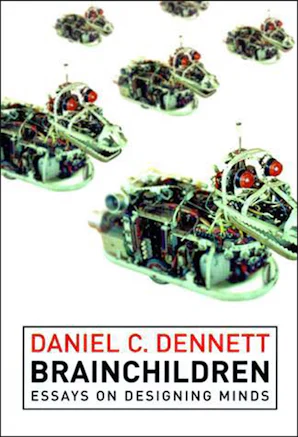
Brainchildren
Minds are complex artifacts, partly biological and partly social; only a unified, multidisciplinary approach will yield a realistic theory of how they came i...
Cognition in a Social Context: A Social-Interactionist Approach to Emergent Phenomena
The formation of collective memories, emotions, and beliefs is a fundamental characteristic of human communities. These emergent outcomes are thought to be the result of a dynamical system of communicative interactions among individuals. But despite recent psychological research on collective phenomena, no programmatic framework to explore the processes involved in their formation exists. Here, we propose a social-interactionist approach that bridges cognitive and social psychology to illuminate how microlevel cognitive phenomena give rise to large-scale social outcomes. It involves first establishing the boundary conditions of cognitive phenomena, then investigating how cognition is influenced by the social context in which it is manifested, and finally studying how dyadic-level influences propagate in social networks. This approach has the potential to (a) illuminate the large-scale consequences of well-established cognitive phenomena, (b) lead to interdisciplinary dialogues between psychology and the other social sciences, and (c) be more relevant for public policy than existing approaches.
Stimming and Emotional Regulation:
The Essential Role of Rhythmic Self-Modulation

Embracing the suboptimal organization of the human brain
Human brain architecture is guiding brain-inspired artificial intelligence (AI) and has been treated as an optimal template, whose deviations could mark different psychiatric and neurological conditions. We argue this premise is wrong: under any single goal (e.g., minimal wiring cost or maximal communication efficiency), the human connectome is suboptimal. Instead, its organization reflects multi-objective trade-offs navigated over evolution and development under biological and environmental constraints. For psychopathology, atypical trajectories are not distances from an ideal brain but reweighted compromises in the same trade-off space. For neuro-AI, directly duplicating the brain’s connectivity risks copying its irrelevant compromises. Treating brains and models as products of multi-objective optimization and co-tuning relevant objectives offers a more powerful framework for interpreting clinical phenotypes and designing next-generation AI.

Mnemonic convergence in social networks: The emergent properties of cognition at a collective level
Significance Human memory is highly malleable. Because of this malleability, jointly remembering the past along with another individual often results in increased similarity between the conversational partners’ memories. We propose an approach that examines the conversation between a pair of participants as part of a larger network of social interactions that has the potential to reveal how human communities form collective memories. Empirical evidence indicating that dyadic-level conversational alignment processes give rise to community-wide shared memories is presented. We find that individual-level memory updating phenomena and social network structure are two fundamental factors that contribute to the emergence of collective memories. , The development of shared memories, beliefs, and norms is a fundamental characteristic of human communities. These emergent outcomes are thought to occur owing to a dynamic system of information sharing and memory updating, which fundamentally depends on communication. Here we report results on the formation of collective memories in laboratory-created communities. We manipulated conversational network structure in a series of real-time, computer-mediated interactions in fourteen 10-member communities. The results show that mnemonic convergence, measured as the degree of overlap among community members’ memories, is influenced by both individual-level information-processing phenomena and by the conversational social network structure created during conversational recall. By studying laboratory-created social networks, we show how large-scale social phenomena (i.e., collective memory) can emerge out of microlevel local dynamics (i.e., mnemonic reinforcement and suppression effects). The social-interactionist approach proposed herein points to optimal strategies for spreading information in social networks and provides a framework for measuring and forging collective memories in communities of individuals.

NeuroAI
Neuroscience, cognitive science, and AI are all questing for principles that help generalization. Learn more through a live, synchronous program designed for focused, hands-on learning.
Are biological systems poised at criticality?
Many of life's most fascinating phenomena emerge from interactions among many elements--many amino acids determine the structure of a single protein, many genes determine the fate of a cell, many neurons are involved in shaping our thoughts and memories. Physicists have long hoped that these collective behaviors could be described using the ideas and methods of statistical mechanics. In the past few years, new, larger scale experiments have made it possible to construct statistical mechanics models of biological systems directly from real data. We review the surprising successes of this "inverse" approach, using examples form families of proteins, networks of neurons, and flocks of birds. Remarkably, in all these cases the models that emerge from the data are poised at a very special point in their parameter space--a critical point. This suggests there may be some deeper theoretical principle behind the behavior of these diverse systems.
The Abstraction Fallacy: Why AI Can Simulate But Not Instantiate Consciousness
Computational functionalism dominates current debates on AI consciousness. This is the hypothesis that subjective experience emerges entirely from abstract causal topology, regardless of the underlying physical substrate. We argue this view fundamentally mischaracterizes how physics relates to information. We call this mistake the Abstraction Fallacy. Tracing the causal origins of abstraction reveals that symbolic computation is not an intrinsic physical process. Instead, it is a mapmaker-dependent description. It requires an active, experiencing cognitive agent to alphabetize continuous physics into a finite set of meaningful states. Consequently, we do not need a complete, finalized theory of consciousness to assess AI sentience—a demand that simply pushes the question beyond near-term resolution and deepens the AI welfare trap. What we actually need is a rigorous ontology of computation. The framework proposed here explicitly separates simulation (behavioral mimicry driven by vehicle causality) from instantiation (intrinsic physical constitution driven by content causality). Establishing this ontological boundary shows why algorithmic symbol manipulation is structurally incapable of instantiating experience. Crucially, this argument does not rely on biological exclusivity. If an artificial system were ever conscious, it would be because of its specific physical constitution, never its syntactic architecture. Ultimately, this framework offers a physically grounded refutation of computational functionalism to resolve the current uncertainty surrounding AI consciousness.

1. New preprint resolving a conundrum in systems neuroscience with an AI scientist, and humans Reilly Tilbury, Dabin Kwon, @haydari.bsky.social, @jacobmratliff.bsky.social, @bio-emergent.bsky.social, @carandinilab.net, @kevinjmiller.bsky.social, @neurokim.bsky.social biorxiv.org/content/10.1101/2025.11.12.68…

Characterizing neuronal population geometry with AI equation discovery
www.biorxiv.org