


Background Computerized smartglasses are being developed as an assistive technology for daily activities in children and adults with autism spectrum disorder (ASD). While smartglasses may be able to help with educational and behavioral needs, their usability and acceptability in children with ASD is largely unknown. There have been reports of negative social perceptions surrounding smartglasses use in mainstream populations, a concern given that assistive technologies may already carry their own stigma. Children with ASD may also have a range of additional behavioral, developmental, and social challenges when asked to use this emerging technology in school and home settings. Objective The usability and acceptability of Glass Enterprise Edition (Glass), the successor to Google Glass smartglasses, were explored in children with ASD and their caregivers. Methods Eight children with ASD and their caregivers were recruited to attend a demonstration session with Glass smartglasses the week they were publicly released. The children had a wide range of ability, including limited speech to speaking, and represented a full range of school ages (6 to 17 years). Children and caregivers were interviewed about their experience of using the smartglasses and whether they would use them at school and home. Results All 8 children succeeded in using Glass and did not feel stressed (8/8, 100%) or experience any overwhelming sensory or emotional issues during the session (8/8, 100%). All 8 children (8/8, 100%) endorsed that they would be willing to wear and use the device in both home and school settings. Caregivers felt the experience was fun for the children (8/8, 100%), and most caregivers felt the experience was better than they had expected (6/8, 75%). Conclusions A wide age and ability range of children with ASD used Glass immediately after it was released and found it to be usable and acceptable. Despite concerns about potential stigma or social acceptability, all of the children were prepared to use the technology in both home and school settings. Encouragingly, most caregivers noted a very positive response. There were no behavioral, developmental, or social- or stigma-related concerns during or after the session. Smartglasses may be a useful future technology for children with ASD and are readily accepted for use by children with ASD and their caregivers.
Social Communication Coaching Smartglasses: Well Tolerated in a Diverse Sample of Children and Adults With Autism
Background Augmented reality (AR) smartglasses are an emerging technology that is under investigation as a social communication aid for children and adults with autism spectrum disorder (ASD) and as a research tool to aid with digital phenotyping. Tolerability of this wearable technology in people with ASD is an important area for research, especially as these individuals may experience sensory, cognitive, and attentional challenges. Objective The aim of this study was to assess the tolerability and usability of a novel smartglasses system that has been designed as a social communication aid for children and adults with autism (the Brain Power Autism System [BPAS]). BPAS runs on Google Glass Explorer Edition and other smartglasses, uses both AR and affective artificial intelligence, and helps users learn key social and emotional skills. Methods A total of 21 children and adults with ASD across a spectrum of severity used BPAS for a coaching session. The user’s tolerability to the smartglasses, user being able to wear the smartglasses for 1 minute (initial tolerability threshold), and user being able to wear the smartglasses for the entire duration of the coaching session (whole session tolerability threshold) were determined through caregiver report. Results Of 21 users, 19 (91%) demonstrated tolerability on all 3 measures. Caregivers reported 21 out of 21 users (100%) as tolerating the experience, while study staff found only 19 out of 21 users managed to demonstrate initial tolerability (91%). Of the 19 users who demonstrated initial tolerability, all 19 (100%) were able to use the smartglasses for the entire session (whole session tolerability threshold). Caregivers reported that 19 out of 21 users (91%) successfully used BPAS, and users surpassed caregiver expectations in 15 of 21 cases (71%). Users who could communicate reported BPAS as being comfortable (94%). Conclusions This preliminary report suggests that BPAS is well tolerated and usable to a diverse age- and severity-range of people with ASD. This is encouraging as these devices are being developed as assistive technologies for people with ASD. Further research should focus on improving smartglasses design and exploring their efficacy in helping with social communication in children and adults with ASD.
Smart glasses for remote assistance: analysing usability and optimal user characteristics among young adults with and without autism
Young adults with autism spectrum disorder (ASD) often face challenges achieving independence and require ongoing support from caregivers. Smart glasses can develop skills and provide remote suppor...

(PDF) Smart glasses for remote assistance: analysing usability and optimal user characteristics among young adults with and without autism
PDF | Purpose: Young adults with autism spectrum disorder (ASD) often face challenges achieving independence and require ongoing support from... | Find, read and cite all the research you need on ResearchGate

Longitudinal Socio-Emotional Learning Intervention for Autism via Smartglasses: Qualitative School Teacher Descriptions of Practicality, Usability, and Efficacy in General and Special Education Classroom Settings
There is considerable demand for special education services for the over half a million students with autism in the United States. While assistive technology may augment educational services, its implementation is often prevented by a number of practical and attitudinal barriers. These barriers are especially pertinent for the newest and thus least familiar digital systems, such as computerized smartglasses loaded with specialized software modules. Computerized smartglasses are a technology that has already been shown to have an ability to deliver educational interventions through augmented reality. With this in mind, we sought to understand how school educators received and assessed the practicality of a smartglasses-based educational intervention in a single-subject study. The intervention was designed to aid with attention and social educational learning in autism. The intervention was delivered twice a day during a two-week study on a 13-year-old student with autism who was attending a mainstream middle school in Massachusetts. Three different school educators delivered the intervention: the student’s general education teacher, special education teacher, and paraprofessional. Educators recorded their attitudes, the practicality of the technology, and its impact on the student and their classroom through the use of a digital log and a series of in-person interviews. Overall, the school educators experienced a positive view of the smartglasses. The smartglasses intervention was found to be logistically practical to implement, easily usable by both the educator and student, and not time-consuming to learn or implement. Educators also identified the experience as being fun for the student, and felt that the student demonstrated improvement in his verbal and non-verbal skills. There were no adverse effects on the other students or the classroom, and the technology did not result in a distraction. These findings suggest that social skills interventions delivered by smartglasses may be practical, useful, and may lead to improvements in social communication skills. Further research on smartglasses may help to clarify the future role for augmenting special education in students with autism.

The use of wearable technology to measure and support abilities, disabilities and functional skills in autistic youth: a scoping review
Background: Wearable technology (WT) to measure and support social and non-social functioning in Autism Spectrum Disorder (ASD) has been a growing interest of researchers over the past decade. There is however limited understanding of the WTs currently available for autistic individuals, and how they measure functioning in this population. Objective: This scoping review explored the use of WTs for measuring and supporting abilities, disabilities and functional skills in autistic youth. Method: Four electronic databases were searched to identify literature investigating the use of WT in autistic youth, resulting in a total of 33 studies being reviewed. Descriptive and content analysis was conducted, with studies subsequently mapped to the ASD International Classification of Functioning, Disability and Health Core-sets and the ICF Child and Youth Version (ICF-CY). Results: Studies were predominately pilot studies for novel devices. WTs measured a range of physiological and behavioural functions to objectively measure stereotypical motor movements, social function, communication, and emotion regulation in autistic youth in the context of a range of environments and activities. Conclusions: While this review raises promising prospects for the use of WTs for autistic youth, the current evidence is limited and requires further investigation.
How useful are smart glasses in improving accessibility in higher education?
Smart glasses have the potential to support learning for disabled students, but this technology also comes with significant privacy concerns. Helen Nicholson-Benn looks at how to balance functional benefits with data security and safeguarding
Smart Glasses for Older Adults With Cognitive Impairment: A Scoping Review
This study aimed to identify and synthesize peer-reviewed literature on smart glasses for older adults with cognitive impairment. The review focused on (1) the technology and equipment used, (2) the specific tasks smart glasses are designed to support, (3) feasibility outcomes, when measured, and (4) the quality of the reviewed articles.

Smart Glasses in Education - Artificial intelligence
Why look at smart glasses now? Smart glasses have been commercially available in some form for over a decade. More recently, they have returned to popular conversation, driven largely by Meta and its growing range of glasses. The lack of widespread adoption has been attributed to the high cost and limited capabilities of earlier models, […]
Artificial intelligence-powered smart vision glasses for the visually impaired
Purpose: In India, 4.80 million people are blind, and 4.69 million have severe visual impairment. Globally, the digital era and the advent of artificial intelligence devices offer solutions for daily challenges faced by the visually impaired, but they are often expensive. This study evaluates the acceptance and usability of a cost-effective AI-powered spectacle-mounted assistive device in a multicentric Indian cohort. Methods: Smart vision glass (SVG) is a lightweight tool, mounted on a spectacle frame with braille-coded keys and a real-time voice interface for guiding the visually impaired, and is connected to a smartphone Android App. The four major functions of the device are as follows: “Things Around You,” “Reading,” “Walking Assistance,” and “Face Recognition.” Ninety participants were recruited from five vision rehabilitation centers across India, and feedback was collected after a month’s usage. Results: The mean age of the participants was 23.5 years (range: 6 to 56 years) with 58.9% male; 51% from rural areas; and 64.4% students. As per the World Health Organization (WHO) classification, 90% of the participants were blind (best corrected visual acuity in better eye less than 3/60). A total of 100% of the participants were able to access all the functions of the SVG. Participants reported a positive experience with “Reading” (72.9%), “Things Around You” (44.7%), “Face Recognition” (36.5%), and “Walking Assistance” (22.4%). About 2/3rd of the participants utilized the device for an hour or more per day. Conclusion: SVG is a promising cost-effective device for the blind and severe visually impaired in aiding their day-to-day challenges and becoming self-reliant.
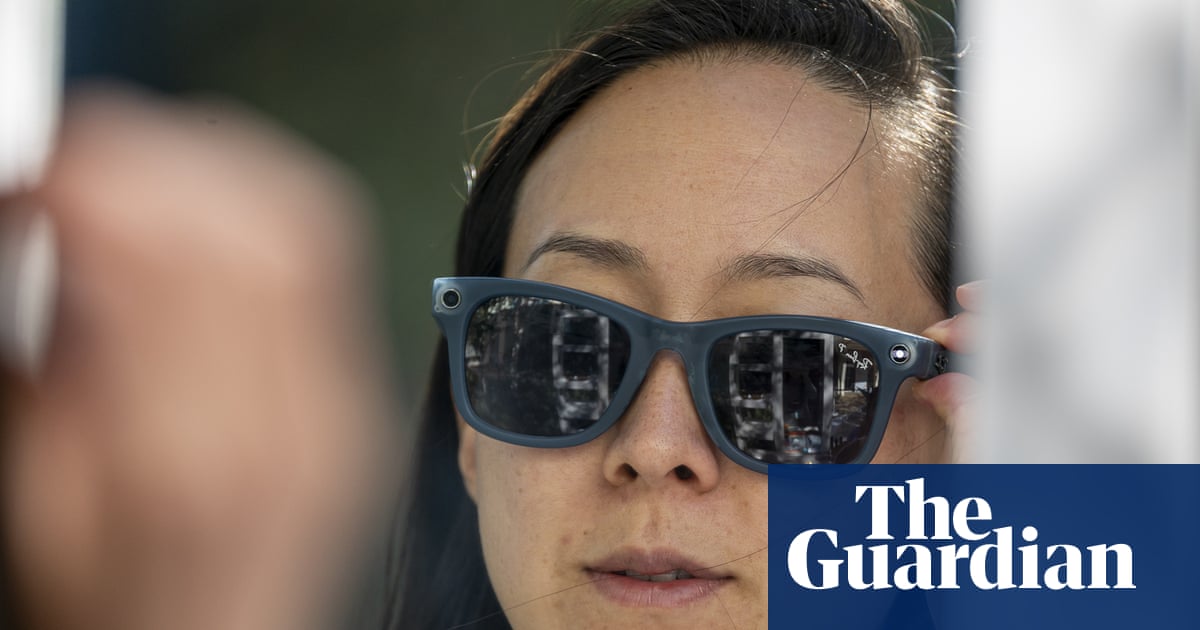
Smart glasses controversy sidelines the benefits for disabled people | Letter
Letters: Guardian readers reflect on the ableism rife in the debate about Ray-Ban Meta eyewear, despite the life-changing difference they can make
Smart glasses controversy sidelines the benefits for disabled people | Letter
Letters: Guardian readers reflect on the ableism rife in the debate about Ray-Ban Meta eyewear, despite the life-changing difference they can make
How AI Glasses Are Empowering People With Disabilities
Our AI glasses are empowering people with disabilities to perform daily tasks with greater independence.

The life-changing magic of wearing smartglasses | Letters
Letters: Readers respond to Elle Hunt’s review of Meta smartglasses, pointing out that the technology has a lot to offer to people with visual impairments or hearing loss
ADAMAAS: Towards Smart Glasses for Mobile and Personalized Action Assistance
As part of the Digital Library's transition to Open Access, new features for researchers are available in the Premium Edition. Click here to learn more.

The influence of artificial intelligence on individuals with disabilities
The rapid advancement of artificial intelligence (AI) is reshaping assistive technologies, offering new possibilities for enhancing the independence, communication and quality of life of individuals with disabilities. This study presents a qualitative scoping review of 47 peer-reviewed articles published between 2018 and 2025, examining how AI has been integrated into assistive tools across domains such as mobility, communication, cognitive support, education and independent living. Specific AI applications include object recognition, gesture-based control, navigation assistance, emotion detection and natural language processing. The review highlights significant progress in personalization and real-time adaptation, while also identifying persistent challenges such as algorithmic bias, cost barriers, data privacy concerns and unequal access, particularly in low-resource settings. Ethical considerations and the need for inclusive, user-centered design approaches are emphasized. The study also underscores future research priorities, including standardization of development protocols, empirical evaluation of long-term effectiveness and policy frameworks to ensure equitable access. By synthesizing recent developments and critical gaps, this review contributes to understanding how AI can responsibly and effectively support assistive technologies, ultimately promoting more inclusive environments for people with disabilities.
Smart Glasses as Disability Assistive Tech

/filters:format(webp)/filters:no_upscale()/prod01/cdn/media/stirling/news/news-centre/2025/aug-25/1200X630Hearingaid.jpg)
Artificial intelligence-powered glasses could be a gamechanger for those with hearing loss | About | University of Stirling
Too risky for the road but safe for schools? Rethinking smart glasses in the science classroom
SpecAssist: Smart Glasses with Real-time speech recognition and transcription for the hearing impaired
The use of wearable technology to measure and support abilities, disabilities and functional skills in autistic youth: a scoping review
ADAMAAS: Towards Smart Glasses for Mobile and Personalized Action Assistance
(PDF) Smart glasses for remote assistance: analysing usability and optimal user characteristics among young adults with and without autism