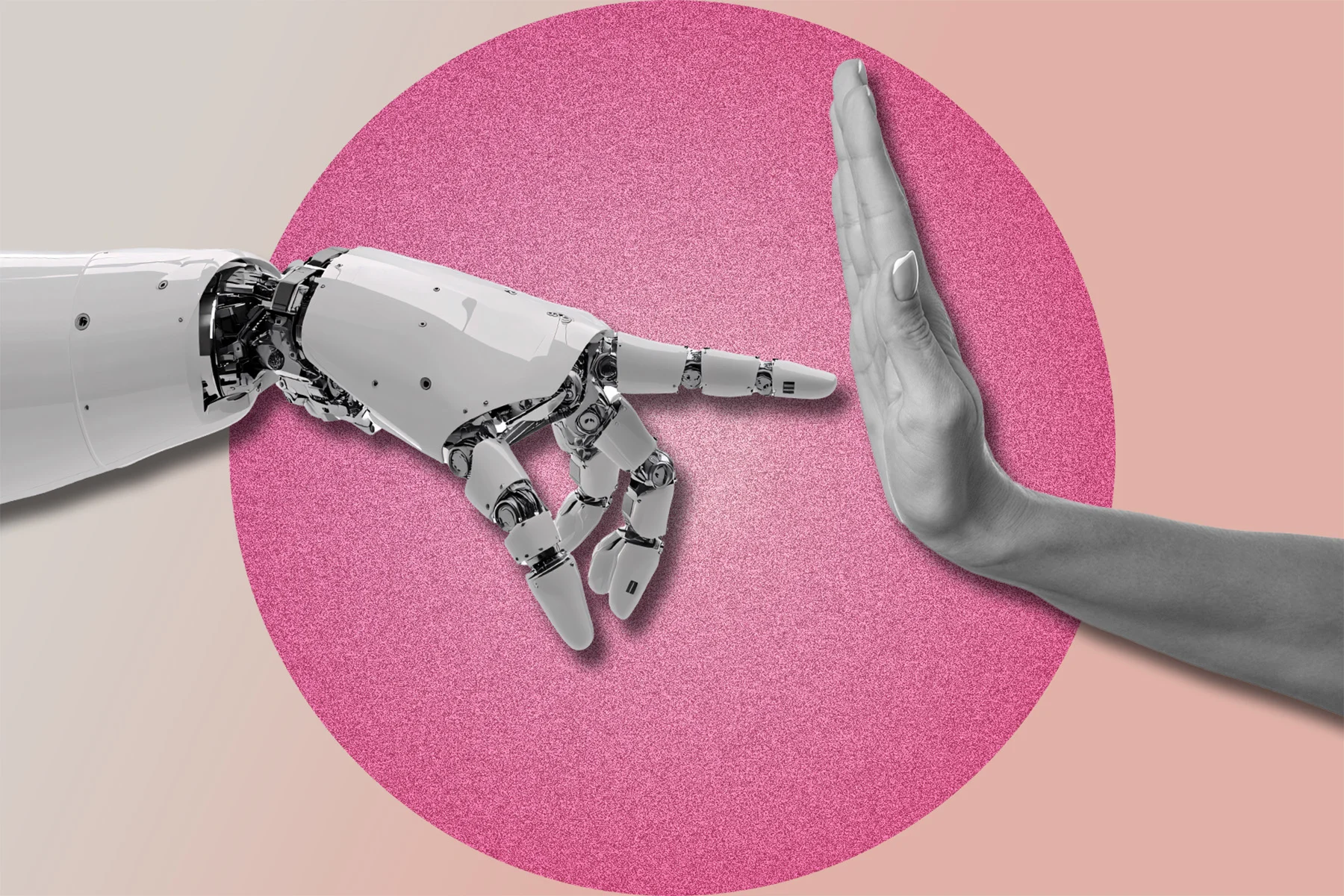
With the rapid development of the fields of data science and artificial intelligence, a dichotomy presents itself: more professionals are needed to fulfill the growing workfoce demand, and women continue to be underrepresented in all computer science-related jobs. Women AI Academy addresses both issues by inspiring, enabling, and targeting the employment of women in data science and artificial intelligence.
Report: Where are the women? Mapping the gender job gap in AI
As AI becomes ubiquitous in everyday life, closing the gender gap in the AI and data science workforce matters.

Brief: Advancing gender equality through partnerships for gender-responsive artificial intelligence
Artificial intelligence (AI) can advance gender equality but may also perpetuate inequalities if not managed properly. This UN Women publication emphasizes the need for inclusive, safe, and equitable AI systems. It highlights the private sector's role in achieving this and calls for partnerships to support women in AI leadership, foster opportunities for women entrepreneurs, bridge the gender digital divide, and ensure AI policies integrate gender dimensions.

If AI is the future, gender equity is essential | NetHope
As the world faces many serious challenges — from climate change and poverty to displacement and social injustice – women and girls are key to tackling those issues and shaping future prosperity for all. Artificial Intelligence (AI), along with other digital tools, has the potential to help us address those challenges and open new opportunities. Seizing that potential requires us to take meaningful action to mitigate the risks AI poses to women and girls, and to use AI to advance gender equity.

Artificial Intelligence and gender equality | UN Women – Headquarters
The world has a gender equality problem, and Artificial Intelligence (AI) mirrors the gender bias in our society. Although globally more women are accessing the internet every year, in low-income countries, only 20 per cent are connected. The gender digital divide creates a data gap that is reflected in the gender bias in AI.

The Beauty of AI and Why AI Needs More Women
While women remain underrepresented in the Artificial Intelligence (AI) and tech workforce, their participation is considered crucial for developing the right AI for tomorrow.

Artificial Intelligence and Its Unique Threat to Women | Capitol Technology University
With the rise of artificial intelligence, the world is undergoing a big transformation. However, technology has been seen to display biases – and for women, this presents a complex set of challenges.

Women in AI: Numbers Behind the Gender Gap in Tech
How is AI changing the game for women in 2026? From job shifts and personal life-hacks to the rise of female AI founders, explore the unique impact of women in tech today.

The Gender Gap in AI: Why We Need More Women in Artificial Intelligence - EIT Campus
Artificial intelligence is shaping our future, but who is shaping AI? In this blog, we explore the insights of Megi Mejdrechová, co-founder of RoboTwin, a…

Paid Program: Why More Women Are Needed in AI
When the world of AI isn’t inclusive, it creates biases in what the data shows and how it’s used.

Anatomy of an Enduring Gender Gap: The Evolution of Women’s Participation in Computer Science
Given growing interest in computing fields, as well as a longstanding gender gap in computer science, this study used nationwide survey data on college students during 4 decades to: (a) document tr...

AI Is the Future—But Where Are the Women?
Just 12 percent of machine learning researchers are women—a worrying statistic for a field supposedly reshaping society.

Can the adoption of AI technology widen the gender gap in science? postdocs' use of AI technology
There is a known gender gap in science. Some studies suggest that this gap is decreasing, others that it is not. Although many studies have been conducted on gender equity in science, none have yet focused on the possibility that generative artificial intelligence (AI), a technology that promises to revolutionize research and academic work can have on widening or narrowing the gender gap in science. Postdoctoral researchers are a particularly important population to study in this context, as they have already demonstrated scientific maturity and independence and are poised to become the next generation in science and academia. Thus, this paper focuses on the gendered use of AI technology by postdocs. By using data from the 2023 Nature Post-Doctoral Survey, this paper investigates how postdocs are adopting AI and whether the usage of AI technology is likely to affect the gender gap in science and academia. The results show that females are less engaged with AI than male postdocs by 34%. This disparity may put female researchers at a disadvantage, potentially causing the gender gap to increase or be maintained. The study also reveals variations in AI adoption within gender groups. Younger female postdocs tend to use AI more than their older counterparts. Compared to female postdocs without promising job opportunities, those with good job prospects tend to use AI more frequently. Additionally, female postdocs working outside their native country are more engaged with AI than those working within their native country. For male postdocs, the results indicate that employment is an important factor in AI adoption. Regardless of age, male postdocs tend to use AI as part of their postdoc: they start using it once they begin their postdocs positions and use it more if they are satisfied with their postdoctoral experience.

Silicon Valley nonprofit encourages young women to lead in AI
A Bay Area gender gap in the tech industry threatens the full participation of women in the future of artificial intelligence.

The AI Gender Trap: Why Women Face Triple the Automation Risk in the Digital Age
As generative AI transforms the workplace, women face a disproportionate risk of automation—revealing deep inequalities in who builds, controls, and benefits from artificial intelligence.
Women and AI: The Gender Gap in AI Adoption and Recognition [Data]
Lean In’s survey shows how women are losing out in the AI age. Learn how women and men compare in AI adoption in the workplace, recognition, and more.
Women Are Avoiding AI. Will Their Careers Suffer? | Working Knowledge
Women are adopting generative AI technology at a significantly lower rate than men, in many cases because women question whether it's ethical to use the tools, according to research by Rembrand Koning and colleagues. If women are shying away from AI, could the gender gap in pay and job opportunities continue to widen?