Background: Wearable technology (WT) to measure and support social and non-social functioning in Autism Spectrum Disorder (ASD) has been a growing interest of researchers over the past decade. There is however limited understanding of the WTs currently available for autistic individuals, and how they measure functioning in this population. Objective: This scoping review explored the use of WTs for measuring and supporting abilities, disabilities and functional skills in autistic youth. Method: Four electronic databases were searched to identify literature investigating the use of WT in autistic youth, resulting in a total of 33 studies being reviewed. Descriptive and content analysis was conducted, with studies subsequently mapped to the ASD International Classification of Functioning, Disability and Health Core-sets and the ICF Child and Youth Version (ICF-CY). Results: Studies were predominately pilot studies for novel devices. WTs measured a range of physiological and behavioural functions to objectively measure stereotypical motor movements, social function, communication, and emotion regulation in autistic youth in the context of a range of environments and activities. Conclusions: While this review raises promising prospects for the use of WTs for autistic youth, the current evidence is limited and requires further investigation.
Social Communication Coaching Smartglasses: Well Tolerated in a Diverse Sample of Children and Adults With Autism
Background Augmented reality (AR) smartglasses are an emerging technology that is under investigation as a social communication aid for children and adults with autism spectrum disorder (ASD) and as a research tool to aid with digital phenotyping. Tolerability of this wearable technology in people with ASD is an important area for research, especially as these individuals may experience sensory, cognitive, and attentional challenges. Objective The aim of this study was to assess the tolerability and usability of a novel smartglasses system that has been designed as a social communication aid for children and adults with autism (the Brain Power Autism System [BPAS]). BPAS runs on Google Glass Explorer Edition and other smartglasses, uses both AR and affective artificial intelligence, and helps users learn key social and emotional skills. Methods A total of 21 children and adults with ASD across a spectrum of severity used BPAS for a coaching session. The user’s tolerability to the smartglasses, user being able to wear the smartglasses for 1 minute (initial tolerability threshold), and user being able to wear the smartglasses for the entire duration of the coaching session (whole session tolerability threshold) were determined through caregiver report. Results Of 21 users, 19 (91%) demonstrated tolerability on all 3 measures. Caregivers reported 21 out of 21 users (100%) as tolerating the experience, while study staff found only 19 out of 21 users managed to demonstrate initial tolerability (91%). Of the 19 users who demonstrated initial tolerability, all 19 (100%) were able to use the smartglasses for the entire session (whole session tolerability threshold). Caregivers reported that 19 out of 21 users (91%) successfully used BPAS, and users surpassed caregiver expectations in 15 of 21 cases (71%). Users who could communicate reported BPAS as being comfortable (94%). Conclusions This preliminary report suggests that BPAS is well tolerated and usable to a diverse age- and severity-range of people with ASD. This is encouraging as these devices are being developed as assistive technologies for people with ASD. Further research should focus on improving smartglasses design and exploring their efficacy in helping with social communication in children and adults with ASD.
Second Version of Google Glass as a Wearable Socio-Affective Aid: Positive School Desirability, High Usability, and Theoretical Framework in a Sample of Children with Autism
Background Computerized smartglasses are being developed as an assistive technology for daily activities in children and adults with autism spectrum disorder (ASD). While smartglasses may be able to help with educational and behavioral needs, their usability and acceptability in children with ASD is largely unknown. There have been reports of negative social perceptions surrounding smartglasses use in mainstream populations, a concern given that assistive technologies may already carry their own stigma. Children with ASD may also have a range of additional behavioral, developmental, and social challenges when asked to use this emerging technology in school and home settings. Objective The usability and acceptability of Glass Enterprise Edition (Glass), the successor to Google Glass smartglasses, were explored in children with ASD and their caregivers. Methods Eight children with ASD and their caregivers were recruited to attend a demonstration session with Glass smartglasses the week they were publicly released. The children had a wide range of ability, including limited speech to speaking, and represented a full range of school ages (6 to 17 years). Children and caregivers were interviewed about their experience of using the smartglasses and whether they would use them at school and home. Results All 8 children succeeded in using Glass and did not feel stressed (8/8, 100%) or experience any overwhelming sensory or emotional issues during the session (8/8, 100%). All 8 children (8/8, 100%) endorsed that they would be willing to wear and use the device in both home and school settings. Caregivers felt the experience was fun for the children (8/8, 100%), and most caregivers felt the experience was better than they had expected (6/8, 75%). Conclusions A wide age and ability range of children with ASD used Glass immediately after it was released and found it to be usable and acceptable. Despite concerns about potential stigma or social acceptability, all of the children were prepared to use the technology in both home and school settings. Encouragingly, most caregivers noted a very positive response. There were no behavioral, developmental, or social- or stigma-related concerns during or after the session. Smartglasses may be a useful future technology for children with ASD and are readily accepted for use by children with ASD and their caregivers.
(PDF) Smart glasses for remote assistance: analysing usability and optimal user characteristics among young adults with and without autism
PDF | Purpose: Young adults with autism spectrum disorder (ASD) often face challenges achieving independence and require ongoing support from... | Find, read and cite all the research you need on ResearchGate

What Is Autistic Burnout? A Thematic Analysis of Posts on Two Online Platforms
Background: Compared with adults in the general population, autistic adults are more likely to experience poor mental health, which can contribute to increased suicidality. While the autistic community has long identified autistic burnout as a significant mental health risk, to date, only one study has been published. Early research has highlighted the harmful impact of autistic burnout among autistic adults and the urgent need to better understand this phenomenon. Methods: To understand the lived experiences of autistic adults, we used data scraping to extract public posts about autistic burnout from 2 online platforms shared between 2005 and 2019, which yielded 1127 posts. Using reflexive thematic analysis and an inductive “bottom-up” approach, we sought to understand the etiology, symptoms, and impact of autistic burnout, as well as prevention and recovery strategies. Two autistic researchers with self-reported experience of autistic burnout reviewed the themes and provided insight and feedback. Results: We identified eight primary themes and three subthemes across the data. (1) Systemic, pervasive lack of autism awareness. (1.1) Discrimination and stigma. (2) A chronic or recurrent condition. (3) Direct impact on health and well-being. (4) A life unlived. (5) A blessing in disguise? (6) Self-awareness and personal control influence risk. (6.1) “You need enough balloons to manage the weight of the rocks.” (7) Masking: Damned if you do, damned if you don't. (8) Ask the experts. (8.1) Stronger together. The overarching theme was that a pervasive lack of awareness and stigma about autism underlie autistic burnout. Conclusions: We identified a set of distinct yet interrelated factors that characterize autistic burnout as a recurring condition that can, directly and indirectly, impact autistic people's functioning, mental health, quality of life, and well-being. The findings suggest that increased awareness and acceptance of autism could be key to burnout prevention and recovery. , Community brief What was the purpose of this study? Although the autistic community has talked about autistic burnout for a long time, there has not been much research about the topic. This study aimed to investigate autistic burnout from the perspective of autistic adults to understand what they think causes it, the symptoms and impact on their lives, and what can be done to assist prevention and recovery. Why is this an important issue? This issue is important because autistic people have said that autistic burnout can severely affect their quality of life and well-being and contribute to poor mental health, including the risk of suicide. What did the researchers do? We used a computer program to collect public posts from two online platforms to look at how autistic adults described autistic burnout. We collected 1127 posts shared over a 12-year period by 683 users. To understand the adults' lived experiences, we analyzed their language at the surface level and looked for common themes across the data. What were the results of the study? The adults in this study said that autistic burnout was often first experienced during adolescence, lasted months or years, and was hard to recover from. They described severe direct and indirect consequences for their physical and mental health, capacity to function, and ability to achieve personal goals. They described a general lack of knowledge about autism, especially among health care professionals, which led to misdiagnosis and inadequate or inappropriate treatment. Masking or “camouflaging” to pass as nonautistic was the most common reason participants gave for autistic burnout. Many used strategies to manage energy levels to avoid burnout. The autistic community was an essential source of information and support for participants. Overall, stigma, discrimination, and low awareness and acceptance of autism were responsible for the cycle of autistic burnout. How do these findings add to what was already known? As one of the first studies about autistic burnout, we learned that it happens because of factors associated with being autistic and poor autism awareness and acceptance within society. We now know that autistic people often first experience autistic burnout when they are young, but it usually recurs, which can stop autistic people leading fulfilling lives. We learned that difficulty identifying emotions may be a risk factor and that online communication may help autistic people during recovery. We found that some positive consequences of autistic burnout include autism diagnosis in adulthood, finding the autistic community, and making empowering lifestyle changes. What are the potential weaknesses in the study? We had limited demographic information, so we do not know how diverse the sample was or how factors such as gender, age, race, or identifying as LGBTQI may have influenced some people's experience of autistic burnout. The adults in this study had access to online platforms and could communicate in writing, and so, people with higher communication support needs may not have been included. How will these recommendations help autistic adults now or in the future? The findings reinforce the personal stories of autistic people and show that autistic burnout is a common, consistent, and harmful experience. The findings show it is vital for health professionals to recognize autistic burnout to provide appropriate care and support because prevention and early detection could help stop the harmful cycle of autistic burnout. The findings underscore the importance of reducing discrimination and stigma against autistic people and increased acceptance.

What Is Autistic Burnout? A Thematic Analysis of Posts on Two Online Platforms
Background: Compared with adults in the general population, autistic adults are more likely to experience poor mental health, which can contribute to increased suicidality. While the autistic community has long identified autistic burnout as a significant mental health risk, to date, only one study has been published. Early research has highlighted the harmful impact of autistic burnout among autistic adults and the urgent need to better understand this phenomenon. Methods: To understand the lived experiences of autistic adults, we used data scraping to extract public posts about autistic burnout from 2 online platforms shared between 2005 and 2019, which yielded 1127 posts. Using reflexive thematic analysis and an inductive “bottom-up” approach, we sought to understand the etiology, symptoms, and impact of autistic burnout, as well as prevention and recovery strategies. Two autistic researchers with self-reported experience of autistic burnout reviewed the themes and provided insight and feedback. Results: We identified eight primary themes and three subthemes across the data. (1) Systemic, pervasive lack of autism awareness. (1.1) Discrimination and stigma. (2) A chronic or recurrent condition. (3) Direct impact on health and well-being. (4) A life unlived. (5) A blessing in disguise? (6) Self-awareness and personal control influence risk. (6.1) “You need enough balloons to manage the weight of the rocks.” (7) Masking: Damned if you do, damned if you don't. (8) Ask the experts. (8.1) Stronger together. The overarching theme was that a pervasive lack of awareness and stigma about autism underlie autistic burnout. Conclusions: We identified a set of distinct yet interrelated factors that characterize autistic burnout as a recurring condition that can, directly and indirectly, impact autistic people's functioning, mental health, quality of life, and well-being. The findings suggest that increased awareness and acceptance of autism could be key to burnout prevention and recovery. , Community brief What was the purpose of this study? Although the autistic community has talked about autistic burnout for a long time, there has not been much research about the topic. This study aimed to investigate autistic burnout from the perspective of autistic adults to understand what they think causes it, the symptoms and impact on their lives, and what can be done to assist prevention and recovery. Why is this an important issue? This issue is important because autistic people have said that autistic burnout can severely affect their quality of life and well-being and contribute to poor mental health, including the risk of suicide. What did the researchers do? We used a computer program to collect public posts from two online platforms to look at how autistic adults described autistic burnout. We collected 1127 posts shared over a 12-year period by 683 users. To understand the adults' lived experiences, we analyzed their language at the surface level and looked for common themes across the data. What were the results of the study? The adults in this study said that autistic burnout was often first experienced during adolescence, lasted months or years, and was hard to recover from. They described severe direct and indirect consequences for their physical and mental health, capacity to function, and ability to achieve personal goals. They described a general lack of knowledge about autism, especially among health care professionals, which led to misdiagnosis and inadequate or inappropriate treatment. Masking or “camouflaging” to pass as nonautistic was the most common reason participants gave for autistic burnout. Many used strategies to manage energy levels to avoid burnout. The autistic community was an essential source of information and support for participants. Overall, stigma, discrimination, and low awareness and acceptance of autism were responsible for the cycle of autistic burnout. How do these findings add to what was already known? As one of the first studies about autistic burnout, we learned that it happens because of factors associated with being autistic and poor autism awareness and acceptance within society. We now know that autistic people often first experience autistic burnout when they are young, but it usually recurs, which can stop autistic people leading fulfilling lives. We learned that difficulty identifying emotions may be a risk factor and that online communication may help autistic people during recovery. We found that some positive consequences of autistic burnout include autism diagnosis in adulthood, finding the autistic community, and making empowering lifestyle changes. What are the potential weaknesses in the study? We had limited demographic information, so we do not know how diverse the sample was or how factors such as gender, age, race, or identifying as LGBTQI may have influenced some people's experience of autistic burnout. The adults in this study had access to online platforms and could communicate in writing, and so, people with higher communication support needs may not have been included. How will these recommendations help autistic adults now or in the future? The findings reinforce the personal stories of autistic people and show that autistic burnout is a common, consistent, and harmful experience. The findings show it is vital for health professionals to recognize autistic burnout to provide appropriate care and support because prevention and early detection could help stop the harmful cycle of autistic burnout. The findings underscore the importance of reducing discrimination and stigma against autistic people and increased acceptance.
Avoiding Ableist Language: Suggestions for Autism Researchers - Kristen Bottema-Beutel, Steven K. Kapp, Jessica Nina Lester, Noah J. Sasson, Brittany N. Hand, 2021
In this commentary, we describe how language used to communicate about autism within much of autism research can reflect and perpetuate ableist ideologies (i.e....
Longitudinal Socio-Emotional Learning Intervention for Autism via Smartglasses: Qualitative School Teacher Descriptions of Practicality, Usability, and Efficacy in General and Special Education Classroom Settings
There is considerable demand for special education services for the over half a million students with autism in the United States. While assistive technology may augment educational services, its implementation is often prevented by a number of practical and attitudinal barriers. These barriers are especially pertinent for the newest and thus least familiar digital systems, such as computerized smartglasses loaded with specialized software modules. Computerized smartglasses are a technology that has already been shown to have an ability to deliver educational interventions through augmented reality. With this in mind, we sought to understand how school educators received and assessed the practicality of a smartglasses-based educational intervention in a single-subject study. The intervention was designed to aid with attention and social educational learning in autism. The intervention was delivered twice a day during a two-week study on a 13-year-old student with autism who was attending a mainstream middle school in Massachusetts. Three different school educators delivered the intervention: the student’s general education teacher, special education teacher, and paraprofessional. Educators recorded their attitudes, the practicality of the technology, and its impact on the student and their classroom through the use of a digital log and a series of in-person interviews. Overall, the school educators experienced a positive view of the smartglasses. The smartglasses intervention was found to be logistically practical to implement, easily usable by both the educator and student, and not time-consuming to learn or implement. Educators also identified the experience as being fun for the student, and felt that the student demonstrated improvement in his verbal and non-verbal skills. There were no adverse effects on the other students or the classroom, and the technology did not result in a distraction. These findings suggest that social skills interventions delivered by smartglasses may be practical, useful, and may lead to improvements in social communication skills. Further research on smartglasses may help to clarify the future role for augmenting special education in students with autism.

“Having All of Your Internal Resources Exhausted Beyond Measure and Being Left with No Clean-Up Crew”: Defining Autistic Burnout
Background: Although autistic adults often discuss experiencing “autistic burnout” and attribute serious negative outcomes to it, the concept is almost completely absent from the academic and clinical literature. Methods: We used a community-based participatory research approach to conduct a thematic analysis of 19 interviews and 19 public Internet sources to understand and characterize autistic burnout. Interview participants were autistic adults who identified as having been professionally diagnosed with an autism spectrum condition. We conducted a thematic analysis, using a hybrid inductive–deductive approach, at semantic and latent levels, through a critical paradigm. We addressed trustworthiness through multiple coders, peer debriefing, and examination of contradictions. Results: Autistic adults described the primary characteristics of autistic burnout as chronic exhaustion, loss of skills, and reduced tolerance to stimulus. They described burnout as happening because of life stressors that added to the cumulative load they experienced, and barriers to support that created an inability to obtain relief from the load. These pressures caused expectations to outweigh abilities resulting in autistic burnout. Autistic adults described negative impacts on their health, capacity for independent living, and quality of life, including suicidal behavior. They also discussed a lack of empathy from neurotypical people and described acceptance and social support, time off/reduced expectations, and doing things in an autistic way/unmasking as associated in their experiences with recovery from autistic burnout. Conclusions: Autistic burnout appears to be a phenomenon distinct from occupational burnout or clinical depression. Better understanding autistic burnout could lead to ways to recognize, relieve, or prevent it, including highlighting the potential dangers of teaching autistic people to mask or camouflage their autistic traits, and including burnout education in suicide prevention programs. These findings highlight the need to reduce discrimination and stigma related to autism and disability. Lay summary Why was this study done? Autistic burnout is talked about a lot by autistic people but has not been formally addressed by researchers. It is an important issue for the autistic community because it is described as leading to distress; loss of work, school, health, and quality of life; and even suicidal behavior. What was the purpose of this study? This study aimed to characterize autistic burnout, understand what it is like, what people think causes it, and what helps people recover from or prevent it. It is a first step in starting to understand autistic burnout well enough to address it. What did the researchers do? Our research group—the Academic Autism Spectrum Partnership in Research and Education—used a community-based participatory research approach with the autistic community in all stages of the study. We analyzed 9 interviews from our study on employment, 10 interviews about autistic burnout, and 19 public Internet sources (five in-depth). We recruited in the United States by publicizing on social media, by word of mouth, and through community connections. When analyzing interviews, we took what people said at face value and in deeper social context, and looked for strong themes across data. What were the results of the study? The primary characteristics of autistic burnout were chronic exhaustion , loss of skills , and reduced tolerance to stimulus . Participants described burnout as happening because of life stressors that added to the cumulative load they experienced, and barriers to support that created an inability to obtain relief from the load. These pressures caused expectations to outweigh abilities resulting in autistic burnout . From this we created a definition: Autistic burnout is a syndrome conceptualized as resulting from chronic life stress and a mismatch of expectations and abilities without adequate supports. It is characterized by pervasive, long-term (typically 3+ months) exhaustion, loss of function, and reduced tolerance to stimulus. Participants described negative impacts on their lives, including health , capacity for independent living , and quality of life , including suicidal behavior. They also discussed a lack of empathy from neurotypical people. People had ideas for recovering from autistic burnout including acceptance and social support , time off/reduced expectations , and doing things in an autistic way/unmasking . How do these findings add to what was already known? We now have data that autistic burnout refers to a clear set of characteristics, and is different from workplace burnout and clinical depression. We have the start of a model for why autistic burnout might happen. We know that people have been able to recover from autistic burnout and have some insights into how. What are the potential weaknesses in the study? This was a small exploratory study with a convenience sample. Although we were able to bring in some diversity by using three data sources, future work would benefit from interviewing a wider range of participants, especially those who are not white, have higher support needs, and have either very high or very low educational attainment. More research is needed to understand how to measure, prevent, and treat autistic burnout. How will these findings help autistic adults now or in the future? These findings validate the experience of autistic adults. Understanding autistic burnout could lead to ways to help relieve it or prevent it. The findings may help therapists and other practitioners recognize autistic burnout, and the potential dangers of teaching autistic people to mask autistic traits. Suicide prevention programs should consider the potential role of burnout. These findings highlight the need to reduce discrimination and stigma around autism and disability.
“Having All of Your Internal Resources Exhausted Beyond Measure and Being Left with No Clean-Up Crew”: Defining Autistic Burnout
Background: Although autistic adults often discuss experiencing “autistic burnout” and attribute serious negative outcomes to it, the concept is almost completely absent from the academic and clinical literature. Methods: We used a community-based participatory research approach to conduct a thematic analysis of 19 interviews and 19 public Internet sources to understand and characterize autistic burnout. Interview participants were autistic adults who identified as having been professionally diagnosed with an autism spectrum condition. We conducted a thematic analysis, using a hybrid inductive–deductive approach, at semantic and latent levels, through a critical paradigm. We addressed trustworthiness through multiple coders, peer debriefing, and examination of contradictions. Results: Autistic adults described the primary characteristics of autistic burnout as chronic exhaustion, loss of skills, and reduced tolerance to stimulus. They described burnout as happening because of life stressors that added to the cumulative load they experienced, and barriers to support that created an inability to obtain relief from the load. These pressures caused expectations to outweigh abilities resulting in autistic burnout. Autistic adults described negative impacts on their health, capacity for independent living, and quality of life, including suicidal behavior. They also discussed a lack of empathy from neurotypical people and described acceptance and social support, time off/reduced expectations, and doing things in an autistic way/unmasking as associated in their experiences with recovery from autistic burnout. Conclusions: Autistic burnout appears to be a phenomenon distinct from occupational burnout or clinical depression. Better understanding autistic burnout could lead to ways to recognize, relieve, or prevent it, including highlighting the potential dangers of teaching autistic people to mask or camouflage their autistic traits, and including burnout education in suicide prevention programs. These findings highlight the need to reduce discrimination and stigma related to autism and disability. Lay summary Why was this study done? Autistic burnout is talked about a lot by autistic people but has not been formally addressed by researchers. It is an important issue for the autistic community because it is described as leading to distress; loss of work, school, health, and quality of life; and even suicidal behavior. What was the purpose of this study? This study aimed to characterize autistic burnout, understand what it is like, what people think causes it, and what helps people recover from or prevent it. It is a first step in starting to understand autistic burnout well enough to address it. What did the researchers do? Our research group—the Academic Autism Spectrum Partnership in Research and Education—used a community-based participatory research approach with the autistic community in all stages of the study. We analyzed 9 interviews from our study on employment, 10 interviews about autistic burnout, and 19 public Internet sources (five in-depth). We recruited in the United States by publicizing on social media, by word of mouth, and through community connections. When analyzing interviews, we took what people said at face value and in deeper social context, and looked for strong themes across data. What were the results of the study? The primary characteristics of autistic burnout were chronic exhaustion , loss of skills , and reduced tolerance to stimulus . Participants described burnout as happening because of life stressors that added to the cumulative load they experienced, and barriers to support that created an inability to obtain relief from the load. These pressures caused expectations to outweigh abilities resulting in autistic burnout . From this we created a definition: Autistic burnout is a syndrome conceptualized as resulting from chronic life stress and a mismatch of expectations and abilities without adequate supports. It is characterized by pervasive, long-term (typically 3+ months) exhaustion, loss of function, and reduced tolerance to stimulus. Participants described negative impacts on their lives, including health , capacity for independent living , and quality of life , including suicidal behavior. They also discussed a lack of empathy from neurotypical people. People had ideas for recovering from autistic burnout including acceptance and social support , time off/reduced expectations , and doing things in an autistic way/unmasking . How do these findings add to what was already known? We now have data that autistic burnout refers to a clear set of characteristics, and is different from workplace burnout and clinical depression. We have the start of a model for why autistic burnout might happen. We know that people have been able to recover from autistic burnout and have some insights into how. What are the potential weaknesses in the study? This was a small exploratory study with a convenience sample. Although we were able to bring in some diversity by using three data sources, future work would benefit from interviewing a wider range of participants, especially those who are not white, have higher support needs, and have either very high or very low educational attainment. More research is needed to understand how to measure, prevent, and treat autistic burnout. How will these findings help autistic adults now or in the future? These findings validate the experience of autistic adults. Understanding autistic burnout could lead to ways to help relieve it or prevent it. The findings may help therapists and other practitioners recognize autistic burnout, and the potential dangers of teaching autistic people to mask autistic traits. Suicide prevention programs should consider the potential role of burnout. These findings highlight the need to reduce discrimination and stigma around autism and disability.
Smart glasses for remote assistance: analysing usability and optimal user characteristics among young adults with and without autism
Young adults with autism spectrum disorder (ASD) often face challenges achieving independence and require ongoing support from caregivers. Smart glasses can develop skills and provide remote suppor...

Defining autistic burnout through experts by lived experience: Grounded Delphi method investigating #AutisticBurnout
Although commonly described on social media by autistic people, there is little recognition of autistic burnout in the academic literature. Anecdotally, autistic burnout is described as a debilitating condition that severely impacts functioning, is linked to suicidal ideation and is driven by the stress of masking and living in an unaccommodating neurotypical world. We sought to define autistic burnout using the Grounded Delphi method. Autistic adults, experts by the lived experience of autistic burnout (n = 23), co-produced and agreed to a definition intended for clinicians and the autistic and autism communities. A thick description and conceptual framework were developed from the open-ended round 1 survey, with a high majority of agreement reached in the round 3 survey. Autistic burnout was defined as a highly debilitating condition characterised by exhaustion, withdrawal, executive function problems and generally reduced functioning, with increased manifestation of autistic traits – and distinct from depression and non-autistic burnout. Further work is needed to differentiate autistic burnout from other conditions and to build clinician understanding of the accompanying complexity to be considered in treatment planning. Lay abstract Autistic burnout has been commonly described in social media by autistic people. There is little mention of autistic burnout in the academic literature. Only one recent study has used interviews and reviews of social media descriptions to try to understand autistic burnout. Anecdotally, autistic burnout is a very debilitating condition that reduced people’s daily living skills and can lead to suicide attempts. It is suggested that autistic burnout is caused by the stress of masking and living in an unaccommodating neurotypical world. We wanted to create a definition of autistic burnout that could be used by clinicians and the autism community. We used the Grounded Delphi method, which allowed autistic voice to lead the study. Autistic adults who had experienced autistic burnout were considered as experts on the topic, in the co-production of this definition. The definition describes autistic burnout as a condition involving exhaustion, withdrawal, problems with thinking, reduced daily living skills and increases in the manifestation of autistic traits. It is important for future research that there is a specific description of the condition. In practice, it is important for clinicians to be aware that autistic burnout is different from depression. Psychological treatments for depression potentially could make autistic burnout worse. Further awareness of autistic burnout is needed, as well as further research to prove this condition is separate from depression, chronic fatigue and non-autistic burnout.
Defining autistic burnout through experts by lived experience: Grounded Delphi method investigating #AutisticBurnout
Although commonly described on social media by autistic people, there is little recognition of autistic burnout in the academic literature. Anecdotally, autistic burnout is described as a debilitating condition that severely impacts functioning, is linked to suicidal ideation and is driven by the stress of masking and living in an unaccommodating neurotypical world. We sought to define autistic burnout using the Grounded Delphi method. Autistic adults, experts by the lived experience of autistic burnout (n = 23), co-produced and agreed to a definition intended for clinicians and the autistic and autism communities. A thick description and conceptual framework were developed from the open-ended round 1 survey, with a high majority of agreement reached in the round 3 survey. Autistic burnout was defined as a highly debilitating condition characterised by exhaustion, withdrawal, executive function problems and generally reduced functioning, with increased manifestation of autistic traits – and distinct from depression and non-autistic burnout. Further work is needed to differentiate autistic burnout from other conditions and to build clinician understanding of the accompanying complexity to be considered in treatment planning. Lay abstract Autistic burnout has been commonly described in social media by autistic people. There is little mention of autistic burnout in the academic literature. Only one recent study has used interviews and reviews of social media descriptions to try to understand autistic burnout. Anecdotally, autistic burnout is a very debilitating condition that reduced people’s daily living skills and can lead to suicide attempts. It is suggested that autistic burnout is caused by the stress of masking and living in an unaccommodating neurotypical world. We wanted to create a definition of autistic burnout that could be used by clinicians and the autism community. We used the Grounded Delphi method, which allowed autistic voice to lead the study. Autistic adults who had experienced autistic burnout were considered as experts on the topic, in the co-production of this definition. The definition describes autistic burnout as a condition involving exhaustion, withdrawal, problems with thinking, reduced daily living skills and increases in the manifestation of autistic traits. It is important for future research that there is a specific description of the condition. In practice, it is important for clinicians to be aware that autistic burnout is different from depression. Psychological treatments for depression potentially could make autistic burnout worse. Further awareness of autistic burnout is needed, as well as further research to prove this condition is separate from depression, chronic fatigue and non-autistic burnout.
RETRACTED ARTICLE: Efficacy of oral folinicacid supplementation in children with autism spectrum disorder: a randomizeddouble-blind, placebo-controlled trial
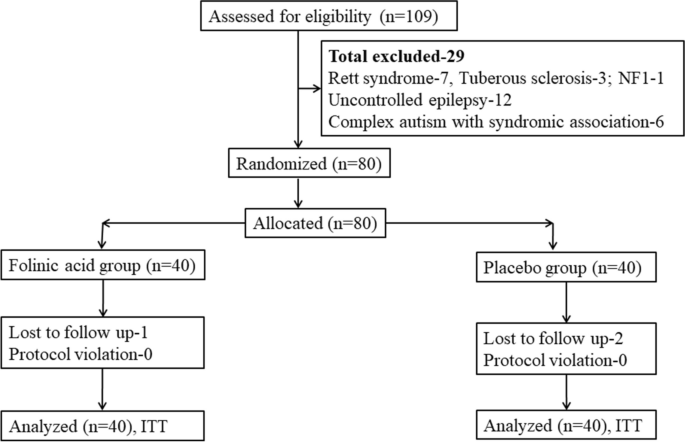
Oral folinic acid has shown potential to improve symptoms in childrenwith autism spectrum disorder (ASD). However, randomized controlled trials (RCTs)are limited. This double-blind, placebo-controlled RCT aimed to compare changes inChildhood Autism Rating Scale (CARS) scores in children with ASD aged 2–10 years,among folinic acid (2 mg/kg/day, maximum of 50 mg/day) and placebo groups at24 weeks, in comparison with baseline. Both the groups received standard care (ABAand sensory integration therapy). Secondary objectives included changes inbehavioral problems measured by the Child Behavior Checklist (CBCL) and serum levelsof anti-folate receptor autoantibodies and folic acid, correlated with changes inautism symptom severity. Out of the 40 participants recruited in each group, 39 and38 participants completed the 24-week follow-up in the folinic acid and placebogroups, respectively. The change in CARS score was higher in the folinic acid group(3.6 ± 0.8) compared to the placebo group (2.4 ± 0.7, p < 0.001). Changes in CBCL total score and CBCL internalizingscore were also better in the folinic acid group (19.7 ± 9.5 vs. 12.6 ± 8.4 and15.4 ± 7.8 vs. 8.5 ± 5.7, p < 0.001 for both).High-titer anti-folate receptor autoantibodies were positive in 32/40 and 33/40cases in the folinic acid and placebo groups, respectively (p = 0.78). In the placebo group, improvement in CARS score wascomparable regardless of autoantibody status (p = 0.11), but in the folinic acid group, improvement was morepronounced in the high-titer autoantibody group (p = 0.03). No adverse reactions were reported in either group.
Seeming to belong: Camouflaging and pragmatic self-perception in twice-exceptional adults across neurodivergent profiles
Background and objective Social camouflaging and pragmatic self-perception are key aspects of communication in neurodivergent populations. However, little is known about how these processes manifest in adults with autism, high intellectual ability (HIA), or twice-exceptionality (2e: HIA+autism). This study aimed to examine group-based differences in communicative adaptation and perceived pragmatic competence across these profiles. Materials and methods A total of 109 Spanish-speaking adults participated. Social camouflaging was assessed using the Camouflaging Autistic Traits Questionnaire (CAT-Q), and pragmatic self-perception was measured with the Communicative Competence Profile (CCP). Statistical analyses explored differences across groups and by gender. Results Significant differences emerged in all CAT-Q dimensions. Autistic participants reported the highest levels of camouflaging, followed by the 2e group, while only the compensation subscale distinguished autism from 2e. Regarding pragmatic self-perception, the HIA group scored highest, suggesting stronger communicative confidence, whereas autistic adults scored lowest. The 2e profile consistently occupied an intermediate position, though closer to autism, especially in subtle pragmatic aspects. Gender effects were limited overall but more noticeable within the Autism group. Conclusions Findings reveal distinct patterns of social camouflaging and pragmatic self-perception across neurodivergent profiles. Twice-exceptional adults show intermediate but autism-leaning traits, underscoring the complexity of their communicative adaptation. Results emphasize the need for inclusive frameworks that account for diverse communication styles within neurodivergence. Resumen Antecedentes y objetivo El camuflaje social y la autopercepción pragmática son aspectos clave de la comunicación en poblaciones neurodivergentes. Sin embargo, se sabe poco sobre cómo se manifiestan estos procesos en adultos con autismo, alta capacidad intelectual (HCI) o doble excepcionalidad (2e: HCI+autismo). Este estudio tuvo como objetivo examinar las diferencias entre grupos en la adaptación comunicativa y la competencia pragmática percibida en estos perfiles. Material y métodos Un total de 109 adultos hispanohablantes participaron en el estudio. El camuflaje social se evaluó mediante el Camouflaging Autistic Traits Questionnaire (CAT-Q), y la autopercepción pragmática se midió con el Communicative Competence Profile (CCP). Los análisis estadísticos exploraron diferencias entre grupos y por género. Resultados Se encontraron diferencias significativas en todas las dimensiones del CAT-Q. Los participantes autistas reportaron los niveles más altos de camuflaje, seguidos por el grupo 2e, mientras que solo la subescala de compensación distinguió al autismo del 2e. En cuanto a la autopercepción pragmática, el grupo HCI obtuvo las puntuaciones más altas, lo que sugiere mayor confianza comunicativa, mientras que los adultos autistas puntuaron más bajo. El perfil 2e se situó de manera consistente en una posición intermedia, aunque más cercana al autismo, especialmente en aspectos pragmáticos sutiles. Los efectos de género fueron en general limitados, pero más notables dentro del grupo con autismo. Conclusiones Los hallazgos revelan patrones diferenciados de camuflaje social y autopercepción pragmática en los distintos perfiles neurodivergentes. Los adultos con doble excepcionalidad muestran características intermedias pero con tendencia hacia el autismo, lo que subraya la complejidad de su adaptación comunicativa. Los resultados enfatizan la necesidad de marcos inclusivos que contemplen estilos de comunicación diversos dentro de la neurodivergencia.
Cognitive and Affective Empathy in Autism Spectrum Disorders: A Meta-analysis
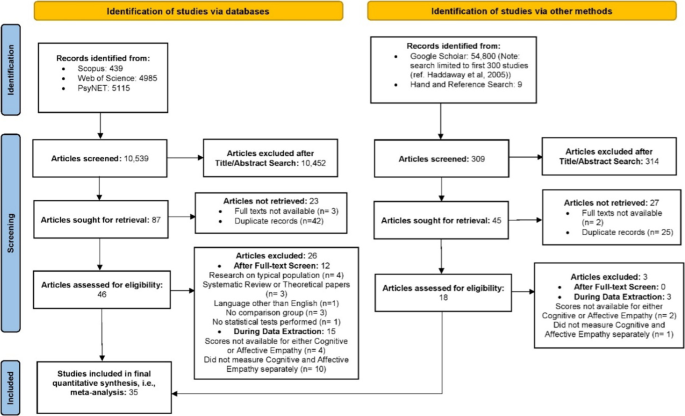
Research has consistently shown that individuals with Autism Spectrum Disorder (ASD) exhibit Empathy deficits. The aim of this study was to systematically review and meta-analyze the research conducted in the domain of cognitive and affective Empathy in Autism. The author also attempted to see the influence of moderators, such as age, culture, and measure-used, on the effect sizes. To fulfill the objective, the meta-analysis was performed on 35 studies that fulfilled the inclusion criteria with the help of the Meta-essentials, which is a free excel meta-analysis tool that facilitates the integration of effect sizes from various studies. The results indicated that the ASD group differs significantly from typically developing (TD) group in both cognitive and affective empathy. The effect size for cognitive empathy was very large (1.26), whereas, for affective empathy, the effect size was medium (0.58). Further, there was a significant moderating effect of the type of measure used on cognitive empathy. However, there are a few limitations of the present meta-analysis. Firstly, it does not shed light on how symptom severity in Autism influences empathy. Secondly, all the possible moderating variables influencing empathy could not be considered. Lastly, the generalizability of the findings may be limited owing to the limitations present in the included studies themselves. The present meta-analysis has implications for conceptualizing cognitive and affective empathy appropriately, and developing appropriate measures to assess empathy in the Autism population.
Research Evidence Supporting the FCLA-SGFA Modes Framework
Comprehensive Literature Review: Mapping Autistic Cognitive States to the Six Modes