


Background: Myalgic encephalomyelitis/chronic fatigue syndrome (ME/CFS) is a poorly understood, complex, multisystem disorder, with severe fatigue not alleviated by rest, and other symptoms, which lead to substantial reductions in functional activity and quality of life. Due to the unclear aetiology, treatment of patients is complicated, but one of the initial problems is the insufficient diagnostic process. The increase in the number of undiagnosed ME/CFS patients became specifically relevant in the light of the COVID-19 pandemic. The aim of this research was to investigate the issues of undiagnosed potential ME/CFS patients, with a hypothetical forecast of the expansion of post-viral CFS as a consequence of COVID-19 and its burden on society. Methods: The theoretical research was founded on the estimation of classic factors presumably affecting the diagnostic scope of ME/CFS and their ascription to Latvian circumstances, as well as a literature review to assess the potential interaction between ME/CFS and COVID-19 as a new contributing agent. The empirical study design consisted of two parts: The first part was dedicated to a comparison of the self-reported data of ME/CFS patients with those of persons experiencing symptoms similar to ME/CFS, but without a diagnosis. This part envisaged the creation of an assumption of the ME/CFS shadow burden “status quo”, not addressing the impact of COVID-19. The second part aimed to investigate data from former COVID-19 patients’ surveys on the presence of ME/CFS symptoms, 6 months after being affected by COVID-19. Descriptive and analytical statistical methods were used to analyse the obtained data. Results: The received data assumed that the previously obtained data on the ME/CFS prevalence of 0.8% in the Latvian population are appropriate, and the literature review reports a prevalence of 0.2–1.0% in developed countries. Regarding the reciprocity of ME/CFS and COVID-19, the literature review showed a lack of research in this field. The empirical results show quite similar self-esteem among ME/CFS patients and undiagnosed patients with longstanding disease experience, while former COVID-19 patients show a significantly lower severity of these problems. Notably, “psychological distress (anxiety)” and “episodic fatigue” are significantly predominant symptoms reported by former COVID-19 patients in comparison with ME/CFS patients and undiagnosed patients prior to the COVID-19 pandemic. The results of our analysis predict that the total amount of direct medical costs for undiagnosed patients (out-of-pocket payments) is more than EUR 15 million p.a. (in Latvia), and this may increase by at least 15% due to the consequences of COVID-19. Conclusions: ME/CFS creates a significant shadow burden on society, even considering only the direct medical costs of undiagnosed patients—the number of whom in Latvia is probably at least five times higher than the number of discerned patients. Simultaneously, COVID-19 can induce long-lasting complications and chronic conditions, such as post-viral CFS, and increase this burden. The Latvian research data assume that ME/CFS patients are not a high-risk group for COVID-19; however, COVID-19 causes ME/CFS-relevant symptoms in patients. This increases the need for monitoring of patients for even longer after recovering from COVID-19′s symptoms, in order to prevent complications and the progression of chronic diseases. In the context of further epidemiological uncertainty, and the possibility of severe post-viral consequences, preventive measures are becoming significantly more important; an integrated diagnostic approach and appropriate treatment could reduce this burden in the future.
Shadow Burden of Undiagnosed Myalgic Encephalomyelitis/Chronic Fatigue Syndrome (ME/CFS) on Society: Retrospective and Prospective—In Light of COVID-19
Background: Myalgic encephalomyelitis/chronic fatigue syndrome (ME/CFS) is a poorly understood, complex, multisystem disorder, with severe fatigue not alleviated by rest, and other symptoms, which lead to substantial reductions in functional activity and quality of life. Due to the unclear aetiology, treatment of patients is complicated, but one of the initial problems is the insufficient diagnostic process. The increase in the number of undiagnosed ME/CFS patients became specifically relevant in the light of the COVID-19 pandemic. The aim of this research was to investigate the issues of undiagnosed potential ME/CFS patients, with a hypothetical forecast of the expansion of post-viral CFS as a consequence of COVID-19 and its burden on society. Methods: The theoretical research was founded on the estimation of classic factors presumably affecting the diagnostic scope of ME/CFS and their ascription to Latvian circumstances, as well as a literature review to assess the potential interaction between ME/CFS and COVID-19 as a new contributing agent. The empirical study design consisted of two parts: The first part was dedicated to a comparison of the self-reported data of ME/CFS patients with those of persons experiencing symptoms similar to ME/CFS, but without a diagnosis. This part envisaged the creation of an assumption of the ME/CFS shadow burden “status quo”, not addressing the impact of COVID-19. The second part aimed to investigate data from former COVID-19 patients’ surveys on the presence of ME/CFS symptoms, 6 months after being affected by COVID-19. Descriptive and analytical statistical methods were used to analyse the obtained data. Results: The received data assumed that the previously obtained data on the ME/CFS prevalence of 0.8% in the Latvian population are appropriate, and the literature review reports a prevalence of 0.2–1.0% in developed countries. Regarding the reciprocity of ME/CFS and COVID-19, the literature review showed a lack of research in this field. The empirical results show quite similar self-esteem among ME/CFS patients and undiagnosed patients with longstanding disease experience, while former COVID-19 patients show a significantly lower severity of these problems. Notably, “psychological distress (anxiety)” and “episodic fatigue” are significantly predominant symptoms reported by former COVID-19 patients in comparison with ME/CFS patients and undiagnosed patients prior to the COVID-19 pandemic. The results of our analysis predict that the total amount of direct medical costs for undiagnosed patients (out-of-pocket payments) is more than EUR 15 million p.a. (in Latvia), and this may increase by at least 15% due to the consequences of COVID-19. Conclusions: ME/CFS creates a significant shadow burden on society, even considering only the direct medical costs of undiagnosed patients—the number of whom in Latvia is probably at least five times higher than the number of discerned patients. Simultaneously, COVID-19 can induce long-lasting complications and chronic conditions, such as post-viral CFS, and increase this burden. The Latvian research data assume that ME/CFS patients are not a high-risk group for COVID-19; however, COVID-19 causes ME/CFS-relevant symptoms in patients. This increases the need for monitoring of patients for even longer after recovering from COVID-19′s symptoms, in order to prevent complications and the progression of chronic diseases. In the context of further epidemiological uncertainty, and the possibility of severe post-viral consequences, preventive measures are becoming significantly more important; an integrated diagnostic approach and appropriate treatment could reduce this burden in the future.
Myalgic Encephalomyelitis/Chronic Fatigue Syndrome: Essentials of Diagnosis and Management
Despite myalgic encephalomyelitis/chronic fatigue syndrome (ME/CFS) affecting millions of people worldwide, many clinicians lack the knowledge to appropriately diagnose or manage ME/CFS. Unfortunately, clinical guidance has been scarce, obsolete, or potentially harmful. Consequently, up to 91% of patients in the United States remain undiagnosed, and those diagnosed often receive inappropriate treatment. These problems are of increasing importance because after acute COVID-19, a significant percentage of people remain ill for many months with an illness similar to ME/CFS.

Patient-reported treatment outcomes in ME/CFS and long COVID
Myalgic encephalomyelitis/chronic fatigue syndrome (ME/CFS) and long COVID are persistent multisystem illnesses affecting many patients. With no known effective FDA-approved treatments for either condition, patient-reported outcomes of treatments may prove helpful in identifying management strategies that can improve patient care and generate new avenues for research. Here, we present the results of an ME/CFS and long COVID treatment survey with responses from 3,925 patients. We assess the experiences of these patients with more than 150 treatments in conjunction with their demographics, symptoms, and comorbidities. Treatments with the greatest perceived benefits are identified. Patients with each condition who participated in the study shared similar symptom profiles, including all the core symptoms of ME/CFS, e.g., 89.7% of ME/CFS and 79.4% of long COVID reported postexertional malaise (PEM). Furthermore, treatment responses between these two patient groups were significantly correlated (R 2 = 0.68). Patient subgroups, characterized by distinct symptom profiles and comorbidities, exhibited increased responses to specific treatments, e.g., a POTS-dominant cluster benefiting from autonomic modulators and a cognitive-dysfunction cluster from CNS stimulants. This study underscores the symptomatic and therapeutic similarities between ME/CFS and long COVID and highlights the commonalities and nuanced complexities of infection-associated chronic diseases and related conditions. While this study does not provide recommendations for specific therapies, in the absence of approved treatments, insights from patient-reported experiences provide urgently needed real-world evidence for developing targeted patient care therapies and future clinical trials.

Medical Care Situation of People with Myalgic Encephalomyelitis/Chronic Fatigue Syndrome in Germany
Background and Objective: Myalgic Encephalomyelitis/Chronic Fatigue Syndrome (ME/CFS) is a severe illness with the hallmark symptom of Post-Exertional Malaise (PEM). Currently, no biomarkers or established diagnostic tests for ME/CFS exist. In Germany, it is estimated that over 300,000 people are affected by ME/CFS. Research from the United States and the UK shows that patients with ME/CFS are medically underserved, as they face barriers to medical care access and are dissatisfied with medical care. The first aim of the current research was to investigate whether patients with ME/CFS are medically underserved in Germany in terms of access to and satisfaction with medical care. Second, we aimed at providing a German-language version of the DePaul Symptom Questionnaire Short Form (DSQ-SF) as a tool for ME/CFS diagnostics and research in German-speaking countries. Materials and Methods: The current research conducted an online questionnaire study in Germany investigating the medical care situation of patients with ME/CFS. The questionnaire was completed by 499 participants who fulfilled the Canadian Consensus Criteria and reported PEM of 14 h or longer. Results: Participants frequently reported geographic and financial reasons for not using the available medical services. Furthermore, they reported low satisfaction with medical care by the physician they most frequently visited due to ME/CFS. The German version of the DSQ-SF showed good reliability, a one-factorial structure and construct validity, demonstrated by correlations with the SF-36 as a measure of functional status. Conclusions: Findings provide evidence that patients with ME/CFS in Germany are medically underserved. The German-language translation of the DSQ-SF provides a brief, reliable and valid instrument to assess ME/CFS symptoms to be used for research and clinical practice in German-speaking countries. Pathways to improve the medical care of patients with ME/CFS are discussed.
Research update: The relation between ME/CFS disease burden and research funding in the USA
BACKGROUND: Myalgic Encephalomyelitis/Chronic Fatigue Syndrome (ME/CFS) is a debilitating, chronic, multisystem disease that affects an estimated 1 to 2.5 milli...

The negative impact of the psychiatric model of chronic fatigue syndrome on doctors’ understanding and management of the illness
Background: Myalgic Encephalomyelitis/Chronic Fatigue Syndrome (ME/CFS) is a disabling condition that greatly impacts the lives of sufferers. Many sufferers report problems getting a confirmatory d...

Researchers identify link in pathology between long COVID and chronic fatigue syndrome
Researchers knew there were similarities in the symptoms. Now they've found an overlap in the pathology of the two illnesses.
Current status and future perspectives on the mechanistic and pathophysiological understanding of long COVID
Viral and infectious illnesses can exert profound and enduring effects on population health and well-being. In the aftermath of SARS-CoV-2 infection, post-acute sequelae, collectively referred to as Long COVID, have emerged as a major global health challenge, affecting more than 400 million people and contributing to estimated annual economic costs exceeding $1 trillion. Long COVID encompasses a wide and heterogeneous spectrum of debilitating symptoms, including cognitive dysfunction, sleep disturbances, severe fatigue, and post-exertional malaise. Despite its substantial burden, fundamental uncertainties remain regarding its underlying pathophysiology, the development of robust diagnostic criteria, and the identification of effective therapeutic options. This review synthesises current evidence on the biological mechanisms thought to contribute to Long COVID, spanning immune dysregulation, viral persistence, autonomic dysfunction, microvascular pathology, and other emerging hypotheses. We examine advances and limitations in contemporary diagnostic approaches and critically appraise existing treatment strategies, highlighting inconsistencies and gaps that hinder clinical consensus. By integrating interdisciplinary insights, this review underscores the urgent need for mechanistic clarity, validated diagnostic frameworks, and rigorously evaluated treatment pathways. Addressing these gaps will be essential to developing effective, evidence-based management strategies and mitigating the long-term impact of Long COVID on global health.
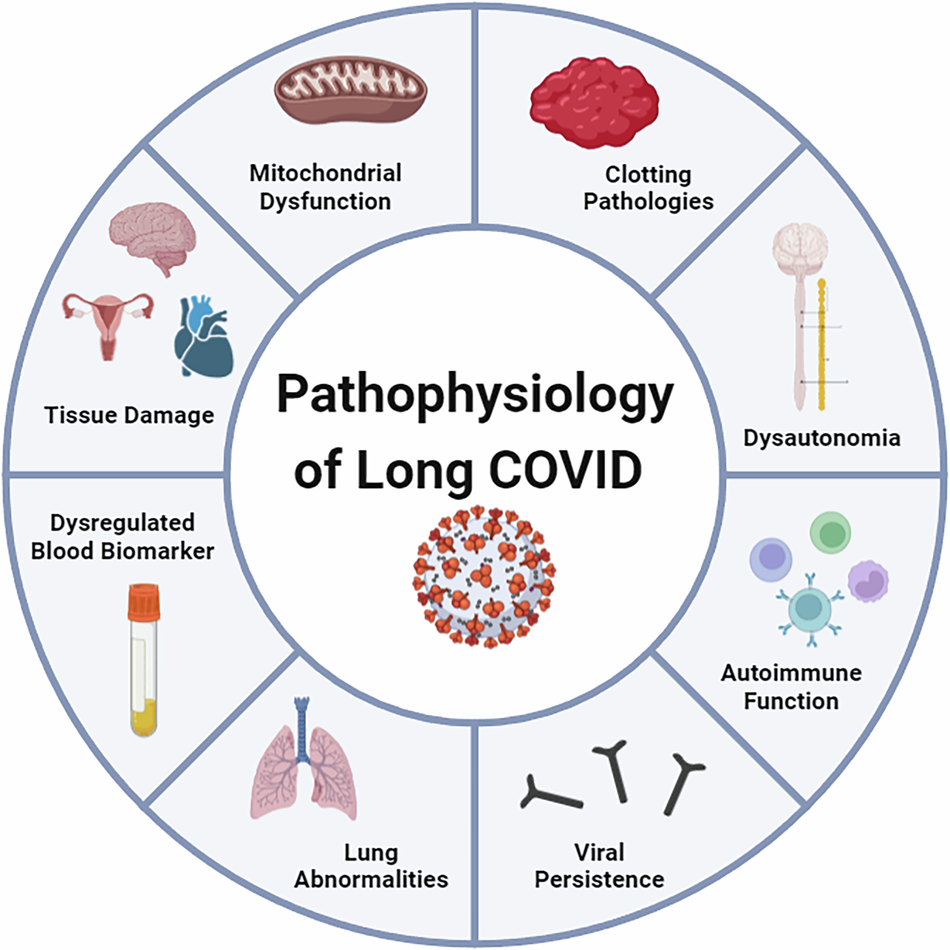
Current status and future perspectives on the mechanistic and pathophysiological understanding of long COVID
Viral and infectious illnesses can exert profound and enduring effects on population health and well-being. In the aftermath of SARS-CoV-2 infection, post-acute sequelae, collectively referred to as Long COVID, have emerged as a major global health challenge, affecting more than 400 million people and contributing to estimated annual economic costs exceeding $1 trillion. Long COVID encompasses a wide and heterogeneous spectrum of debilitating symptoms, including cognitive dysfunction, sleep disturbances, severe fatigue, and post-exertional malaise. Despite its substantial burden, fundamental uncertainties remain regarding its underlying pathophysiology, the development of robust diagnostic criteria, and the identification of effective therapeutic options. This review synthesises current evidence on the biological mechanisms thought to contribute to Long COVID, spanning immune dysregulation, viral persistence, autonomic dysfunction, microvascular pathology, and other emerging hypotheses. We examine advances and limitations in contemporary diagnostic approaches and critically appraise existing treatment strategies, highlighting inconsistencies and gaps that hinder clinical consensus. By integrating interdisciplinary insights, this review underscores the urgent need for mechanistic clarity, validated diagnostic frameworks, and rigorously evaluated treatment pathways. Addressing these gaps will be essential to developing effective, evidence-based management strategies and mitigating the long-term impact of Long COVID on global health.
Health system support among patients with ME/CFS in Switzerland
Objectives Myalgic encephalomyelitis/chronic fatigue syndrome (ME/CFS) is a complex chronic and debilitating multifactorial disease. Adequate patient care is challenged by poor knowledge among health care professionals and the historical misconception that the disease is psychological in nature. This study assessed the health-related challenges faced by patients with ME/CFS in Switzerland and examined whether they receive adequate health care. Methods Quantitative and qualitative data were collected through a self-administered questionnaire between June and September of 2021, among 169 patients with ME/CFS in Switzerland. Results The mean age at diagnosis was 38.8 years. Only one-third of ME/CFS affected children and youth were correctly diagnosed before their 18th birthday. The mean time from disease onset to diagnosis was 6.7 years, and patients had an average of 11.1 different appointments and 2.6 misdiagnoses. A poor diagnosis rate and insufficient disease knowledge among health professionals in Switzerland led 13.5% of the patients to travel abroad to seek a diagnosis. Most patients (90.5%) were told at least once that their symptoms were psychosomatic. Swiss patients expressed high dissatisfaction with the health system and indicated that physicians lacked knowledge regarding ME/CFS. Therapies prescribed by physicians or tried by patients, as well as their perceived efficacy, were described. Graded Exercise Therapy (GET) was perceived as harmful by patients, whereas pacing, complementary/alternative medicine, and dietary supplements and medications to alleviate symptoms were reported to be helpful to varying degrees. Conclusion This study highlights that poor disease knowledge among health care providers in Switzerland has led to high patient dissatisfaction, and delays in ME/CFS diagnoses and prescription of inappropriate therapies, thus adding to patient distress and disease burden.
Nervous system consequences of COVID-19
Neurological symptoms highlight the need to understand pathophysiologic mechanisms , Although severe acute respiratory syndrome coronavirus 2 (SARS-CoV-2) is considered a respiratory pathogen, myriad neurologic complications—including confusion, stroke, and neuromuscular disorders—manifest during acute COVID-19. Furthermore, maladies such as impaired concentration, headache, sensory disturbances, depression, and even psychosis may persist for months after infection, as part of a constellation of symptoms now called Long Covid. Even young people with mild initial disease can develop acute COVID-19 and Long Covid neuropsychiatric syndromes. The pathophysiological mechanisms are not well understood, although evidence primarily implicates immune dysfunction, including nonspecific neuroinflammation and antineural autoimmune dysregulation. It is uncertain whether unforeseen neurological consequences may develop years after initial infection. With millions of individuals affected, nervous system complications pose public health challenges for rehabilitation and recovery and for disruptions in the workforce due to loss of functional capacity. There is an urgent need to understand the pathophysiology of these disorders and develop disease-modifying therapies.

Does the microbiome hold the key to chronic fatigue syndrome?
Often dismissed by the medical establishment, people with complex illnesses such as ME and long Covid are taking the hunt for treatments into their own hands
What Are COVID-19’s Long-Term Medical Effects?
Fascinating email from TPM Reader JO, whose personal bio is tailor-made for...

Exhausting search for solutions to UK’s sharp rise in tiredness
Cost of living crisis, mental health issues and long Covid all thought to be factors, but we still know too little about fatigue

Researchers link Long COVID to another virus | NHK WORLD-JAPAN News
Researchers in Japan have released findings showing that COVID-19 after effects, including fatigue, occur when a coronavirus infection activates another virus already inside the body.

Timing of Long COVID Improvement in Prospectively Followed RECOVER-Adult Participants
Background: Long COVID (LC) is widespread; however, limited information has been reported on the likelihood that symptoms remit over time. Objective: To evaluate the likelihood of improvement among persons with likely LC. Design: Prospective, multisite cohort study (RECOVER-Adult [Researching COVID to Enhance Recovery]). Setting: 83 U.S.-based sites across 33 states; Washington, DC; and Puerto Rico. Participants: 1019 persons in RECOVER-Adult with likely LC (LC Research Index [LCRI] ≥11) 12 months after first SARS-CoV-2 infection. Measurements: The primary outcome was time until 2 consecutive study visits with LCRI less than 11. Secondary outcomes were time until LCRI measure reduced 50% or more and quality of life was good or better, and LCRI decreased to 0. Unadjusted estimates of cumulative incidence and adjusted marginal cumulative incidence by age, sex, SARS-CoV-2 wave, and LC subtype were reported across all follow-up time points. Results: An estimated 36.2% (95% CI, 33.0% to 39.5%) met the primary outcome by 24 months after infection, and 50.1% (CI, 46.1% to 54.0%) met the primary outcome by 36 months. An estimated 56.4% (CI, 52.2% to 60.4%) and 26.9% (CI, 23.3% to 30.5%), respectively, met the 2 secondary outcomes by 36 months. Among persons who still reported likely LC at 18 months and 24 months after first infection, relative timing of subsequent symptom improvement was similar. Limitation: Findings in this observational cohort are interpretable in a population with prevalent likely LC and do not address causal relationships between individual characteristics and symptom improvement. Conclusion: Among persons with likely LC 12 months after initial SARS-CoV-2 infection, one half experience meaningful reductions in symptoms by 36 months, whereas a quarter experience complete remission of symptoms. These findings underscore both the potential for natural recovery and the urgent need for placebo-controlled therapeutic intervention trials. Primary Funding Source: National Institutes of Health.
