The study of storytelling and brand love is justified by the need to understand the potential of storytelling as a tool that marketers have available to positively influence the love felt by the consumers toward a particular brand. In this case, we address the jewelry brand PANDORA as a case study. In our empirical research, we intend to understand the role of storytelling in the creation of brand love when it is used as a brand communication technique. In addition, we chose the brand PANDORA because its products are also associated with stories; thus, we also intend to investigate whether this use of storytelling contributes to the creation of brand love. The results demonstrate a positive impact of storytelling in the love felt by the consumers regarding the brand PANDORA. In addition, we conclude that the stories consumers associate with their own PANDORA jewelry make them like the jewelry and the brand itself even more, which shows that product narrative is an important concept to add value to the product and the brand.
Love Is a Many-Splendored Thing: Brand Love in a Consumer Culture
In a consumer culture, people make sense of their everyday existence based on meanings generated during the consumption process. These meanings feature in establishing human identities and communicating them to others. Brands fulfill a pivotal role in conveying the...

The Brand Story Canvas — Strategic Tool for Storytelling
Craft powerful brand stories with our Brand Story Canvas. Trusted by HEC Paris, EPFL & ESSEC, it guides you through 7 steps to an engaging, authentic narrative.

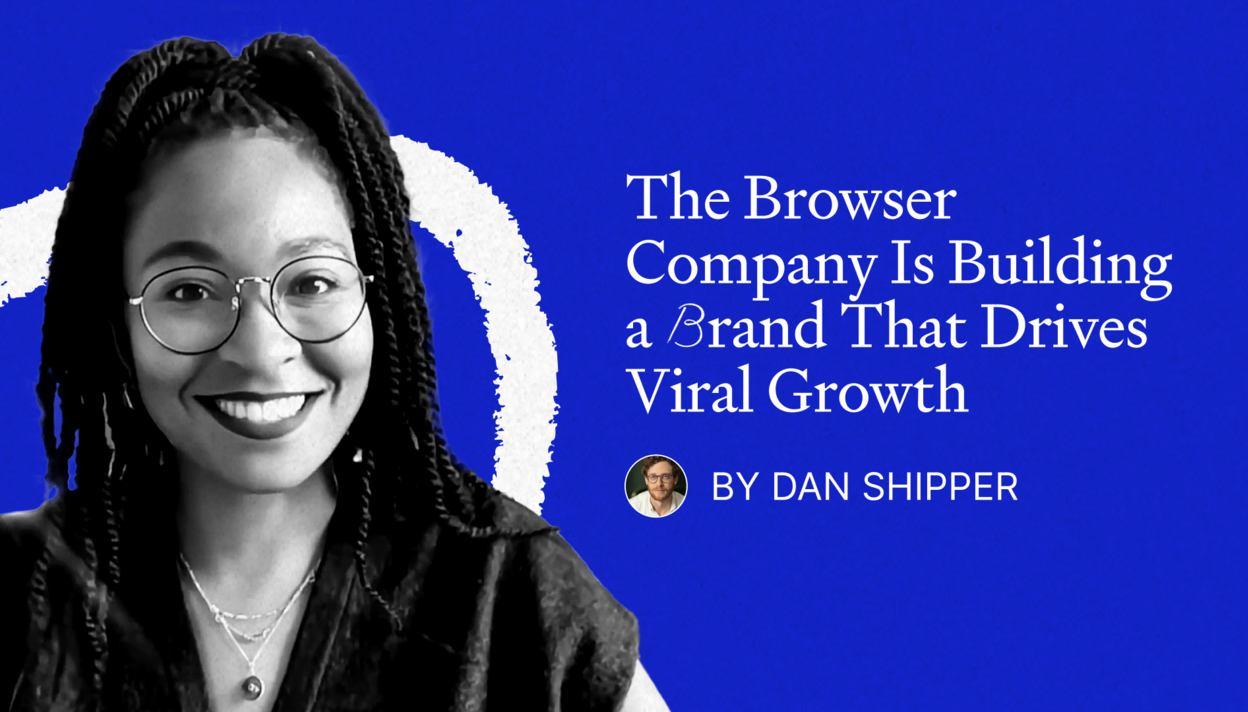
🎧 The Browser Company Is Building a Brand That Drives Viral Growth
Head of storytelling Nashilu Mouen-Makoua on how to tell memorable stories
The Art of Writing One-Sentence Product Descriptions
A look back at early interviews with Facebook and Uber CEOs illustrates an ingenious way to communicate hard-to-describe products.

Why Storytelling Matters When Changing Company Culture
A conversation with the University of Utah’s Jay Barney about how leaders who successfully drive cultural change communicate through authentic, compelling stories.

User Story: a Placeholder for a Conversation
User stories are meant to be a placeholder for a conversation. This article dives into the differences between user stories and tickets, where stories came from and how recent trends are moving us away from conversations. It shows the impact this is having on product development and easy ways to improve collaboration through conversation and writing better stories.

Evolution of Consumption: A Psychological Ownership Framework
Technological innovations are creating new products, services, and markets that satisfy enduring consumer needs. These technological innovations create value for consumers and firms in many ways, but they also disrupt psychological ownership––the feeling that a thing is “MINE.” The authors describe two key dimensions of this technology-driven evolution of consumption pertaining to psychological ownership: (1) replacing legal ownership of private goods with legal access rights to goods and services owned and used by others and (2) replacing “solid” material goods with “liquid” experiential goods. They propose that these consumption changes can have three effects on psychological ownership: they can threaten it, cause it to transfer to other targets, and create new opportunities to preserve it. These changes and their effects are organized in a framework and examined across three macro trends in marketing: (1) growth of the sharing economy, (2) digitization of goods and services, and (3) expansion of personal data. This psychological ownership framework generates future research opportunities and actionable marketing strategies for firms aiming to preserve the positive consequences of psychological ownership and navigate cases for which it is a liability.

Uniting the Tribes: Using Text for Marketing Insight
Words are part of almost every marketplace interaction. Online reviews, customer service calls, press releases, marketing communications, and other interactions create a wealth of textual data. But how can marketers best use such data? This article provides an overview of automated textual analysis and details how it can be used to generate marketing insights. The authors discuss how text reflects qualities of the text producer (and the context in which the text was produced) and impacts the audience or text recipient. Next, they discuss how text can be a powerful tool both for prediction and for understanding (i.e., insights). Then, the authors overview methodologies and metrics used in text analysis, providing a set of guidelines and procedures. Finally, they further highlight some common metrics and challenges and discuss how researchers can address issues of internal and external validity. They conclude with a discussion of potential areas for future work. Along the way, the authors note how textual analysis can unite the tribes of marketing. While most marketing problems are interdisciplinary, the field is often fragmented. By involving skills and ideas from each of the subareas of marketing, text analysis has the potential to help unite the field with a common set of tools and approaches.
AIDA model | Marketing | Research Starters | EBSCO Research
<p>The AIDA model is a marketing framework that outlines the stages consumers typically go through when making a purchasing decision: Attention, Interest, Desire, and Action. Developed in the late 19th century by American marketer Elias St. Elmo Lewis and later refined by Edward Strong in the 1920s, this model aims to guide marketers in capturing potential buyers' attention and leading them toward a purchase. </p> <p>In the Attention stage, marketers employ engaging strategies to attract consumers, often using eye-catching visuals or intriguing information. Next, the Interest stage focuses on maintaining that attention through memorable content or relatable messaging. The Desire stage demonstrates how a product or service fulfills the consumer's needs, often using persuasive techniques like testimonials or demonstrations. Finally, the Action stage prompts the consumer to make a purchase, providing clear instructions on how to proceed.</p> <p>While the AIDA model remains relevant, marketers today may adapt it to incorporate new elements, such as Retention or Satisfaction, reflecting the evolving digital landscape and consumer behavior. Overall, the AIDA model serves as a foundational tool for understanding consumer engagement and facilitating effective marketing strategies.</p>

Ideation with Generative AI—in Consumer Research and Beyond
Abstract The use of generative AI (genAI) in consumer research is rapidly evolving, with applications including synthetic data generation, data analysis, and more. However, their role in creative ideation—a cornerstone of consumer research—remains underexplored. Drawing on the human creativity literature, we propose that ideation with genAI is facilitated by its productivity and semantic breadth, which are psychologically analogous to the dual pathways of persistence and flexibility in human ideation. Further, we distinguish between the utility of genAI as a key ideator versus humans as key ideator, conceptualized through the genAI ideation roles of Designer and Writer and of Interviewer and Actor. While genAI excels in generating incremental improvements, its potential for groundbreaking innovation could be unlocked by leveraging its ability to prompt human creativity. This article advances the theoretical and practical understanding of genAI in ideation for consumer research, offering numerous practical guidelines for integrating generative AI into research while emphasizing human–AI collaboration to achieve radical insights.
Field Experimentation in Marketing Research
Despite increasing efforts to encourage the adoption of field experiments in marketing research (e.g., Campbell 1969 ; Cialdini 1980 ; Li et al. 2015 ), the majority of scholars continue to rely primarily on laboratory studies ( Cialdini 2009 ). For example, of the 50 articles published in Journal of Marketing Research in 2013, only three (6%) were based on field experiments. The goal of this article is to motivate a methodological shift in marketing research and increase the proportion of empirical findings obtained using field experiments. The author begins by making a case for field experiments and offers a description of their defining features. She then demonstrates the unique value that field experiments can offer and concludes with a discussion of key considerations that researchers should be mindful of when designing, planning, and running field experiments.
Leading the Herd Astray: An Experimental Study of Self-fulfilling Prophecies in an Artificial Cultural Market
Individuals influence each others' decisions about cultural products such as songs, books, and movies; but to what extent can the perception of success become a “self-fulfilling prophecy”? We have explored this question experimentally by artificially inverting the true popularity of songs in an online “music market,” in which 12,207 participants listened to and downloaded songs by unknown bands. We found that most songs experienced self-ful- filling prophecies, in which perceived—but initially false—popularity became real over time. We also found, however, that the inversion was not self-fulfilling for the market as a whole, in part because the very best songs recovered their popularity in the long run. Moreover, the distortion of market information reduced the correlation between appeal and popularity, and led to fewer overall downloads. These results, although partial and speculative, suggest a new approach to the study of cultural markets, and indicate the potential of web-based experiments to explore the social psychological origin of other macrosocio- logical phenomena.
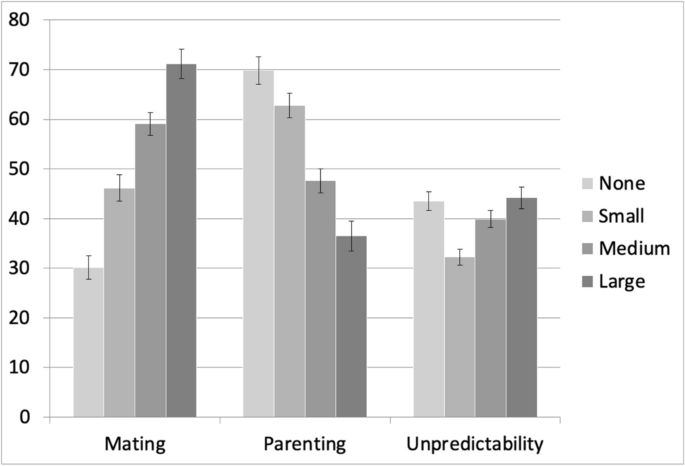
Advancing the Understanding of Phenotypic Mimicry in Men’s Conspicuous Consumption
Two studies advance the understanding of phenotypic mimicry in consumer products. Product features mimicking more prominent male secondary sexual characteristics are associated with men’s behavioral strategies which are higher in mating effort and lower in paternal investment in offspring, in parallel with reproductive strategies across species and within the human population. The first study demonstrated a continuous relationship between the sizes of luxury brand logos and perceptions of the owners’ life histories. Two partial replications reproduced Study 1 results. Study 2 demonstrated that a manipulation of coloration, another fundamental dimension of variation in secondary sex characteristics, generates a similar pattern of results. In both studies, men owning shirts with more prominent sensory characteristics were believed to use authority and intimidation as strategies for advancing social status, whereas men owning shirts with less showy characteristics were believed to demonstrate useful abilities and foster cooperative alliances. Participants also recognized the strategic use of luxury display properties across social contexts.
Thinking in Triplicate — Mule Design
To align design and business, visualize the shared narratives

How storytelling can help articulate emotions that evolve as the climate changes
Creative works can represent emotions emerging so fast that our brains can’t quite catch up with them.