


Synthetic biology and bioengineering provide the opportunity to create novel embodied cognitive systems (otherwise known as minds) in a very wide variety of chimeric architectures combining evolved and designed material and software. These advances are disrupting familiar concepts in the philosophy of mind, and require new ways of thinking about and comparing truly diverse intelligences, whose composition and origin are not like any of the available natural model species. In this Perspective, I introduce TAME—Technological Approach to Mind Everywhere—a framework for understanding and manipulating cognition in unconventional substrates. TAME formalizes a non-binary (continuous), empirically-based approach to strongly embodied agency. TAME provides a natural way to think about animal sentience as an instance of collective intelligence of cell groups, arising from dynamics that manifest in similar ways in numerous other substrates. When applied to regenerating/developmental systems, TAME suggests a perspective on morphogenesis as an example of basal cognition. The deep symmetry between problem-solving in anatomical, physiological, transcriptional, and 3D (traditional behavioral) spaces drives specific hypotheses by which cognitive capacities can increase during evolution. An important medium exploited by evolution for joining active subunits into greater agents is developmental bioelectricity, implemented by pre-neural use of ion channels and gap junctions to scale up cell-level feedback loops into anatomical homeostasis. This architecture of multi-scale competency of biological systems has important implications for plasticity of bodies and minds, greatly potentiating evolvability. Considering classical and recent data from the perspectives of computational science, evolutionary biology, and basal cognition, reveals a rich research program with many implications for cognitive science, evolutionary biology, regenerative medicine, and artificial intelligence.
Grounded world models in biological organisms and future embodied AI
Recent advances in generative and embodied AI have been driven by large-scale predictive learning over multimodal data. However, the resulting systems remain largely based on passive training regimes where linguistic regularities create the scaffold onto which information from other modalities is attached. Conversely, neuroscience and cognitive science suggest that biological intelligence is organized in the opposite way, where grounded world models acquired through interaction with the environment provide the semantic scaffold to which language is attached. Here, we illustrate five examples of neural circuits supporting grounded world modelling, which underlie navigation in physical and conceptual spaces, affordance-based perception and interaction with objects, active perception and exploratory learning, allostatic control and emotion, and the distinction between self- and world-generated outcomes. These examples highlight several features largely missing from current embodied AI, including the role of intrinsic dynamics as a foundation for learning, the centrality of action in aligning these dynamics with the external world, the prominence of autonomous experience and open-ended learning over passive assimilation of externally provided data, and the fact that early predictive and control mechanisms scaffold higher cognitive abilities such as reasoning, conceptual navigation, planning, imagination, understanding others' minds, and communication. Finally, we discuss whether and how principles derived from biological systems may inform future embodied AI, including training regimes based on social interaction to construct world models that are not only grounded but also socially shared and aligned with human norms and values.

The sentient cell: the cellular foundations of consciousness
"All species, extant and extinct, from the simplest unicellular prokaryotes to humans, have an existential consciousness. Without sentience, the first cells that emerged some 4 billion years ago would have been evolutionary dead-ends, unable to survive in the chaotic, dangerous environment in which life first appeared and evolved. In this book, Arthur Reber's theory, the Cellular Basis of Consciousness (CBC), is outlined and distinguished from those models that argue that minds could be instantiated on artificial entities and those that maintain consciousness requires a nervous system. The CBC framework takes a novel approach to classic topics such as the origin-of-life, philosophy of mind, the role of genes, the impact of cognition, and how biological information is processed by all species. It also calls for a rethinking of a variety of issues including the moral implications of the sentient capacities of all species, how welfare concerns need to be expanded beyond where they currently are, and critically, how all life is intertwined in a coordinated cognitive ecology. The Sentient Cell explores this revolutionary model, which updates the standard neo-Darwinian framework within which current approaches operate and examines the underlying biomolecular features that are the likely candidates for the "invention" of consciousness and outline their role in cellular life." --

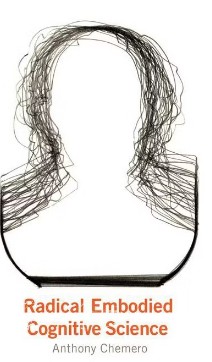
562 – Ecological Cognition III: Radical Embodied Cognitive Science (part 1)
562 Continuing the journey in understanding the Ecological approach to cognition by looking at Tony Chemero’s book: Radical Embodied Cognitive Science. Conceptualizing cognition in terms of agent-environment dynamics instead of computation and representation. What is RECS, and where did these ideas come from?Download link
Sense-making reconsidered: large language models and the blind spot of embodied cognition
Large Language Models (LLMs) demonstrate a kind of linguistic competence that theories of embodied and enactive cognition have long deemed impossible for systems lacking the meaningful perspective of a living being, i.e., the capacity for sense-making. Facing up to this unexpected technological development requires confronting what I propose to call the “AI dilemma”: either frontier LLMs are capable of sense-making despite lacking biological embodiment, or the kind of linguistic competence they exhibit does not necessarily require sense-making. In their chapter on cognition, Frank, Thompson, and Gleiser (2024) maintain that no AI system comes close to realizing relevance, a position that derives much of its motivation from past practical failures. However, frontier LLMs have effectively overcome Dreyfus’ commonsense knowledge problem, such that their dismissal as categorically mindless risks undermining Frank et al.’s central claim that human cognition is deeply intertwined with lived experience. I therefore argue in favor of the alternative side of the AI dilemma: human-level linguistic competence of LLMs should be recognized as a novel non‑biological form of sense‑making, based on a technologically‑mediated embodiment whose enabling properties are in need of further theoretical analysis. This reorientation invites enactive theory to clarify which aspects of sense-making may be universal and which aspects are specifically contingent on organic life, thereby advancing its conceptual framework in dialogue with contemporary AI.
Thinking through other minds: A variational approach to cognition and culture
The processes underwriting the acquisition of culture remain unclear. How are shared habits, norms, and expectations learned and maintained with precision and reliability across large-scale sociocultural ensembles? Is there a unifying account of the mechanisms involved in the acquisition of culture? Notions such as “shared expectations,” the “selective patterning of attention and behaviour,” “cultural evolution,” “cultural inheritance,” and “implicit learning” are the main candidates to underpin a unifying account of cognition and the acquisition of culture; however, their interactions require greater specification and clarification. In this article, we integrate these candidates using the variational (free-energy) approach to human cognition and culture in theoretical neuroscience. We describe the construction by humans of social niches that afford epistemic resources called cultural affordances. We argue that human agents learn the shared habits, norms, and expectations of their culture through immersive participation in patterned cultural practices that selectively pattern attention and behaviour. We call this process “thinking through other minds” (TTOM) – in effect, the process of inferring other agents’ expectations about the world and how to behave in social context. We argue that for humans, information from and about other people's expectations constitutes the primary domain of statistical regularities that humans leverage to predict and organize behaviour. The integrative model we offer has implications that can advance theories of cognition, enculturation, adaptation, and psychopathology. Crucially, this formal (variational) treatment seeks to resolve key debates in current cognitive science, such as the distinction between internalist and externalist accounts of theory of mind abilities and the more fundamental distinction between dynamical and representational accounts of enactivism.
The Abstraction Fallacy: Why AI Can Simulate But Not Instantiate Consciousness
Computational functionalism dominates current debates on AI consciousness. This is the hypothesis that subjective experience emerges entirely from abstract causal topology, regardless of the underlying physical substrate. We argue this view fundamentally mischaracterizes how physics relates to information. We call this mistake the Abstraction Fallacy. Tracing the causal origins of abstraction reveals that symbolic computation is not an intrinsic physical process. Instead, it is a mapmaker-dependent description. It requires an active, experiencing cognitive agent to alphabetize continuous physics into a finite set of meaningful states. Consequently, we do not need a complete, finalized theory of consciousness to assess AI sentience—a demand that simply pushes the question beyond near-term resolution and deepens the AI welfare trap. What we actually need is a rigorous ontology of computation. The framework proposed here explicitly separates simulation (behavioral mimicry driven by vehicle causality) from instantiation (intrinsic physical constitution driven by content causality). Establishing this ontological boundary shows why algorithmic symbol manipulation is structurally incapable of instantiating experience. Crucially, this argument does not rely on biological exclusivity. If an artificial system were ever conscious, it would be because of its specific physical constitution, never its syntactic architecture. Ultimately, this framework offers a physically grounded refutation of computational functionalism to resolve the current uncertainty surrounding AI consciousness.

The biogenic approach to cognition
After half a century of cognitive revolution we remain far from agreement about what cognition is and what cognition does. It was once thought that these questions could wait until the data were in. Today there is a mountain of data, but no way of making sense of it. The time for tackling the fundamental issues has arrived. The biogenic approach to cognition is introduced not as a solution but as a means of approaching the issues. The traditional, and still predominant, methodological stance in cognitive inquiry is what I call the anthropogenic approach: assume human cognition as the paradigm and work ‘down’ to a more general explanatory concept. The biogenic approach, on the other hand, starts with the facts of biology as the basis for theorizing and works ‘up’ to the human case by asking psychological questions as if they were biological questions. Biogenic explanations of cognition are currently clustered around two main frameworks for understanding biology: self-organizing complex systems and autopoiesis. The paper describes the frameworks and infers from them ten empirical principles—the biogenic ‘family traits’—that constitute constraints on biogenic theorizing. Because the anthropogenic approach to cognition is not constrained empirically to the same degree, I argue that the biogenic approach is superior for approaching a general theory of cognition as a natural phenomenon.
Learning Outside the Brain: Integrating Cognitive Science and Systems Biology
Learning is commonplace in organisms such as ourselves and even in organisms as far distant as the bee and the octopus. Such learning is implemented by brains, or neuronal networks, and has been extensively studied within ethology, psychology, cognitive science, and neuroscience. Whether learning also takes place in nonneuronal settings has remained a matter of sustained controversy, too often dominated by ideological views. In this survey, I will explain how learning can be rigorously interpreted as a form of information processing and then explore the evidence for whether learning also takes place in organismal contexts outside the brain, such as physiology, development, and individual cells. I will try to explain why it is important to build bridges in this way between cognitive science and systems biology, why concepts and methods from various branches of engineering may be helpful in this task, and what the eventual impact may be on how we think about the organism.
Principles of Minimal Cognition: Casting Cognition as Sensorimotor Coordination
Within the cognitive sciences, cognition tends to be interpreted from an anthropocentric perspective, involving a stringent set of human capabilities. Instead, we suggest that cognition is better explicated as a much more general biological phenomenon, allowing the lower bound of cognition to extend much further down the phylogenetic scale. We argue that elementary forms of cognition can already be witnessed in prokaryotes possessing a functional sensorimotor analogue of the nervous system. Building on a case-study of the Escherichia coli bacterium and its sensorimotor system, the TCST-system, we home in on the characteristics of minimal cognition, and distinguish it from more basic forms of ontogenetic adaptation. In our view, minimal cognition requires an embodiment consisting of a sensorimotor coupling mechanism that subsumes an autopoietic organization; this forms the basis of the growing consensus that the core of cognition revolves around sensorimotor coupling. We discuss the relevance of our interpretation of minimal cognition for the study of cognition in general

Cognition all the way down 2.0: neuroscience beyond neurons in the diverse intelligence era
This paper formalizes biological intelligence as search efficiency in multi-scale problem spaces, aiming to resolve epistemic deadlocks in the basal “cognition wars” unfolding in the Diverse Intelligence research program. It extends classical work on symbolic problem-solving to define a novel problem space lexicon and search efficiency metric. Construed as an operationalization of intelligence, this metric is the decimal logarithm of the ratio between the cost of a random walk and that of a biological agent. Thus, the search efficiency measures how many orders of magnitude of dissipative work an agentic policy saves relative to a maximal-entropy search strategy. Empirical models for amoeboid chemotaxis and barium-induced planarian head regeneration show that, under conservative (i.e., intelligence-underestimating) assumptions, even ‘simple’ organisms are from two-hundred- to sextillion-fold more efficient in problem space exploration. In this sense, the deep insights of neuroscience are not about neurons per se, but about the policies and patterns of physics and mathematics that function as a kind of “cognitive glue” binding parts toward higher levels of collective intelligence in wholes of highly diverse composition and origin. Therefore, our synthesis argues that the “mark of the cognitive” is perhaps better sought in the measurable efficiency with which living systems, from single cells to complex organisms, traverse energy and information gradients to tame combinatorial explosions-one problem space at a time.
Functional Information: Towards Synthesis of Biosemiotics and Cybernetics
Biosemiotics and cybernetics are closely related, yet they are separated by the boundary between life and non-life: biosemiotics is focused on living organisms, whereas cybernetics is applied mostly to non-living artificial devices. However, both classes of systems are agents that perform functions necessary for reaching their goals. I propose to shift the focus of biosemiotics from living organisms to agents in general, which all belong to a pragmasphere or functional universe. Agents should be considered in the context of their hierarchy and origin because their semiosis can be inherited or induced by higher-level agents. To preserve and disseminate their functions, agents use functional information - a set of signs that encode and control their functions. It includes stable memory signs, transient messengers, and natural signs. The origin and evolution of functional information is discussed in terms of transitions between vegetative, animal, and social levels of semiosis, defined by Kull. Vegetative semiosis differs substantially from higher levels of semiosis, because signs are recognized and interpreted via direct code-based matching and are not associated with ideal representations of objects. Thus, I consider a separate classification of signs at the vegetative level that includes proto-icons, proto-indexes, and proto-symbols. Animal and social semiosis are based on classification, and modeling of objects, which represent the knowledge of agents about their body (Innenwelt) and environment (Umwelt).

Introducing TRIBE v2: A Predictive Foundation Model Trained to Understand How the Human Brain Processes Complex Stimuli | Keith Doelling
This is some very cool work by some awesome colleagues Jean-Rémi King, and Teon Brooks! Seriously not enough good things can be said about how cool it is. You should enjoy it and play with it. And kudos to Meta for open sourcing it. At the same time, I'm already seeing posts about how the model will replace fMRI experiments as researchers will simulate how the brain "really works" instead of running costly experiments. I think this goes WELL beyond what its creators intend. We are already seeing that use of AI in science allows you to explore charted ideas more thoroughly and much more rapidly but slows us down in finding novel ideas (https://lnkd.in/eMR2akqt). At the same time, there is growing concern that LLM performance will collapse as they are increasingly trained on their own output (https://lnkd.in/eavgfyuY). Leaving neuroscience to AI simulations risks following the same fate, where we generate seemingly new findings without gaining new meaning. A mechanistic understanding of how the brain works (if that is still your goal) will be found at the margins, in errors and idiosyncrasies of neural function. What TRIBE provides is a super useful and cool instantiation of our current understanding on how and where neural activity is instantiated in the brain. But it won't help us make groundbreaking new findings of how neural circuits lead to cognition and behavior. Experiments on real human brains, may be costly, but they will always be necessary!
Introducing TRIBE v2: A Predictive Foundation Model Trained to Understand How the Human Brain Processes Complex Stimuli | Keith Doelling
This is some very cool work by some awesome colleagues Jean-Rémi King, and Teon Brooks! Seriously not enough good things can be said about how cool it is. You should enjoy it and play with it. And kudos to Meta for open sourcing it. At the same time, I'm already seeing posts about how the model will replace fMRI experiments as researchers will simulate how the brain "really works" instead of running costly experiments. I think this goes WELL beyond what its creators intend. We are already seeing that use of AI in science allows you to explore charted ideas more thoroughly and much more rapidly but slows us down in finding novel ideas (https://lnkd.in/eMR2akqt). At the same time, there is growing concern that LLM performance will collapse as they are increasingly trained on their own output (https://lnkd.in/eavgfyuY). Leaving neuroscience to AI simulations risks following the same fate, where we generate seemingly new findings without gaining new meaning. A mechanistic understanding of how the brain works (if that is still your goal) will be found at the margins, in errors and idiosyncrasies of neural function. What TRIBE provides is a super useful and cool instantiation of our current understanding on how and where neural activity is instantiated in the brain. But it won't help us make groundbreaking new findings of how neural circuits lead to cognition and behavior. Experiments on real human brains, may be costly, but they will always be necessary!
Systems of Global Governance in the Era of Human-Machine Convergence
Technology is increasingly shaping our social structures and is becoming a driving force in altering human biology. Besides, human activities already proved to have a significant impact on the Earth system which in turn generates complex feedback loops between social and ecological systems. Furthermore, since our species evolved relatively fast from small groups of hunter-gatherers to large and technology-intensive urban agglomerations, it is not a surprise that the major institutions of human society are no longer fit to cope with the present complexity. In this note we draw foundational parallelisms between neurophysiological systems and ICT-enabled social systems, discussing how frameworks rooted in biology and physics could provide heuristic value in the design of evolutionary systems relevant to politics and economics. In this regard we highlight how the governance of emerging technology (i.e. nanotechnology, biotechnology, information technology, and cognitive science), and the one of climate change both presently confront us with a number of connected challenges. In particular: historically high level of inequality; the co-existence of growing multipolar cultural systems in an unprecedentedly connected world; the unlikely reaching of the institutional agreements required to deviate abnormal trajectories of development. We argue that wise general solutions to such interrelated issues should embed the deep understanding of how to elicit mutual incentives in the socio-economic subsystems of Earth system in order to jointly concur to a global utility function (e.g. avoiding the reach of planetary boundaries and widespread social unrest). We leave some open questions on how techno-social systems can effectively learn and adapt with respect to our understanding of geopolitical complexity.
Can only meat machines be conscious?
Computational functionalism claims that executing certain computations is sufficient for consciousness, regardless of the physical mechanisms implementing those computations. This view neglects a compelling alternative: that subcomputational biological mechanisms, which realize computational processes, are necessary for consciousness. By contrasting computational roles with their subcomputational biological realizers, I show that there is a systematic tension in our criteria for consciousness: prioritizing computational roles favors consciousness in AI, while prioritizing subcomputational biological realizers favors consciousness in simpler animals. Current theories of consciousness are 'meat-neutral', but if specific physical substrates are necessary, AI may never achieve consciousness. Understanding whether consciousness depends on computational roles, biological realizers, or both, is crucial for assessing the prospects of consciousness in AI and less complex animals.

AI That Evolves in the Wild | Edge.org
I’m interested not in domesticated AI—the stuff that people are trying to sell. I'm interested in wild AI—AI that evolves in the wild. I’m a naturalist, so that’s the interesting thing to me. Thirty-four years ago there was a meeting just like this in which Stanislaw Ulam said to everybody in the room—they’re all mathematicians—"What makes you so sure that mathematical logic corresponds to the way we think?" It’s a higher-level symptom. It’s not how the brain works. All those guys knew fully well that the brain was not fundamentally logical.