

A framework to move your subculture from the Anxiety Zone to the Learning Zone
Psychological Safety Is A Leadership Choice
A strategic imperative for building a subculture of innovation
The Safety Culture at the Labs is Broken
We need the frontier labs to have a deep and robust safety culture.
Differences Between Tight and Loose Cultures: A 33-Nation Study
The differences across cultures in the enforcement of conformity may reflect their specific histories. , With data from 33 nations, we illustrate the differences between cultures that are tight (have many strong norms and a low tolerance of deviant behavior) versus loose (have weak social norms and a high tolerance of deviant behavior). Tightness-looseness is part of a complex, loosely integrated multilevel system that comprises distal ecological and historical threats (e.g., high population density, resource scarcity, a history of territorial conflict, and disease and environmental threats), broad versus narrow socialization in societal institutions (e.g., autocracy, media regulations), the strength of everyday recurring situations, and micro-level psychological affordances (e.g., prevention self-guides, high regulatory strength, need for structure). This research advances knowledge that can foster cross-cultural understanding in a world of increasing global interdependence and has implications for modeling cultural change.
Safety isn’t safety without a social model (or: dispelling the myth of per se technical safety) — AI Alignment Forum
As an AI researcher who wants to do technical work that helps humanity, there is a strong drive to find a research area that is definitely helpful so…

Trust & Safety Curriculum - Trust & Safety Professional Association
The Trust & Safety Curriculum defines core concepts, terms, & standard practices of body of knowledge we call “trust and safety.”

Trust & Safety Curriculum - Trust & Safety Professional Association
The Trust & Safety Curriculum defines core concepts, terms, & standard practices of body of knowledge we call “trust and safety.”
Curriculum | AI Safety — ARENA
Explore the ARENA curriculum for AI safety education, covering fundamentals, transformers, reinforcement learning, and evaluations, with resources for educators and learners.
Geeks, MOPs, and sociopaths in subculture evolution | Meaningness
How muggles and sociopaths invade and undermine creative subcultures; and how to stop them.

Learning how to behave: cognitive learning processes account for asymmetries in adaptation to social norms
Changes to social settings caused by migration, cultural change or pandemics force us to adapt to new social norms. Social norms provide groups of individuals with behavioural prescriptions and therefore can be inferred by observing their behaviour. This work aims to examine how cognitive learning processes affect adaptation and learning of new social norms. Using a multiplayer game, I found that participants initially complied with various social norms exhibited by the behaviour of bot-players. After gaining experience with one norm, adaptation to a new norm was observed in all cases but one, where an active-harm norm was resistant to adaptation. Using computational learning models, I found that active behaviours were learned faster than omissions, and harmful behaviours were more readily attributed to all group members than beneficial behaviours. These results provide a cognitive foundation for learning and adaptation to descriptive norms and can inform future investigations of group-level learning and cross-cultural adaptation.
The Engineering Manager’s Guide to Emotional Tolerance
Five ways to lead with emotion without losing yourself in the process.

It's Safer in the Front
Faced with intensifying repression and state violence, there is an understandable inclination to seek safety by avoiding confrontation. But this is not always the most effective strategy.

The Slow Death of Online Safety
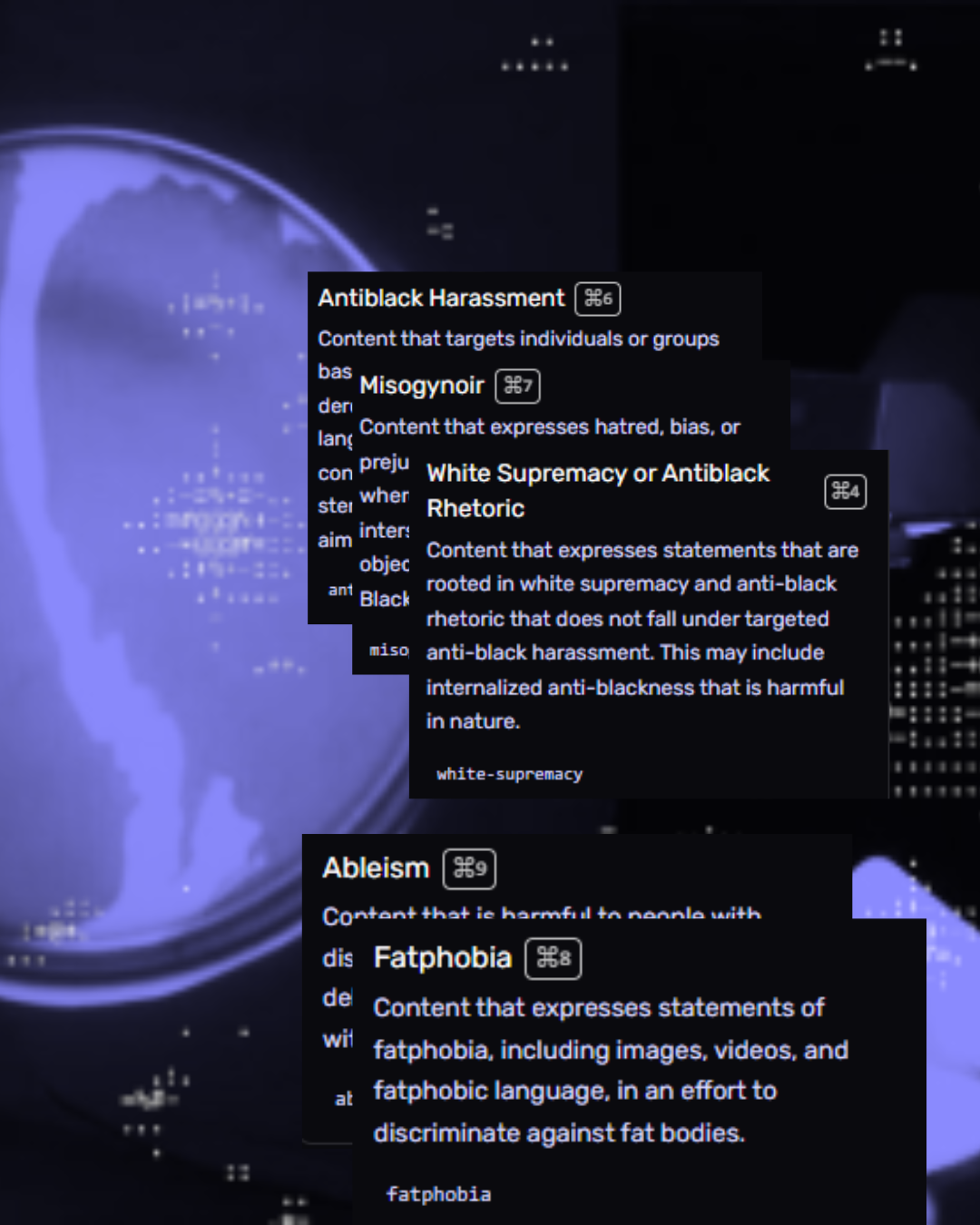
Building a Culture of (Digital) Safety
Black culture is in a lot of ways synonymous with how internet culture exists writ large. From what is now described as “Gen-Z slang” (or as Black people have always known it, AAVE) to our methods of organizing (Black feminists starting hashtag activism and creating movements like #MeToo, #BlackLivesMatter, and #SayHerName) and even how we […]
Paranoia: A Beginner's Guide — LessWrong
People sometimes make mistakes. (Citation Needed) …
New heat from our Head of Trust and Safety @jdot.blacksky.team on why it is important to build a culture of digital safety! blackskyweb.xyz/building-a-culture-of-digital…

Building a Culture of (Digital) Safety
blackskyweb.xyz