

Whey‽ (@whey.party)
red dwarf now supports full text search using @mackuba.eu 's lycan https://tangled.org/@mackuba.eu/lycan

Red Sky
Red Sky is a decentralized universe where every verified user can own a unique planet. Explore the galaxy, claim a planet and broadcast your thoughts.
A public void catalog from the SDSS DR7 Galaxy Redshift Surveys...
We produce the most comprehensive public void catalog to date using the Sloan Digital Sky Survey Data Release 7 main sample out to redshift z=0.2 and the luminous red galaxy sample out to z=0.44....

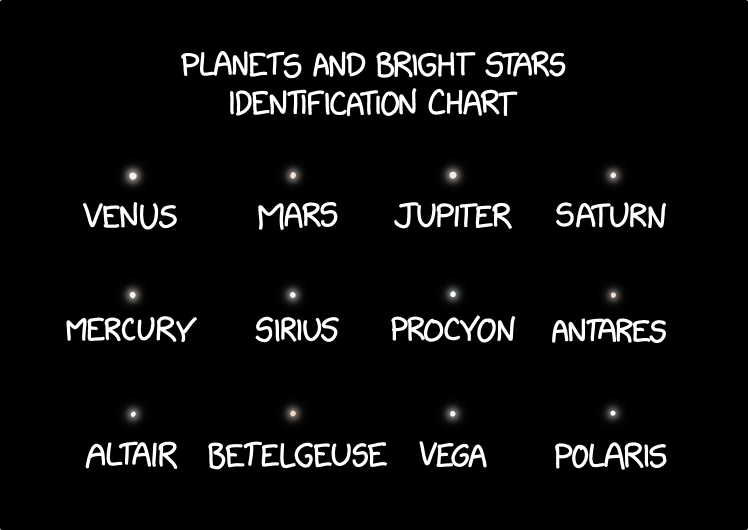
Planets and Bright Stars
This work is licensed under a Creative Commons Attribution-NonCommercial 2.5 License.
whey.party/red-dwarf
an independent Bluesky client using Constellation, PDS Queries, and other services
Star
A star is a luminous spheroid of plasma held together by self-gravity. The nearest star to Earth is the Sun. Many other stars are visible to the naked eye at night; their immense distances from Earth make them appear as fixed points of light. The most prominent stars have been categorised into constellations and asterisms, and many of the brightest stars have proper names. Astronomers have assembled star catalogues that identify the known stars and provide standardized stellar designations. The observable universe contains an estimated 1022 to 1024 stars. Only about 4,000 of these stars are visible to the naked eye—all within the Milky Way galaxy.

onlytopbro's Porn Gifs | RedGIFs
Find out more about onlytopbro and explore their 391 porn GIFs and images. Browse the millions of other porn GIFs and images free on RedGIFs
Cosmological constraints from the BOSS DR12 void size function
We present the first cosmological constraints derived from the analysis of the void size function. This work relies on the final BOSS DR12 data set, a large spectroscopic galaxy catalog, ideal for...
Observational Evidence from Supernovae for an Accelerating Universe and a Cosmological Constant
We present observations of 10 type Ia supernovae (SNe Ia) between 0.16 < z < 0.62. With previous data from our High-Z Supernova Search Team, this expanded set of 16 high-redshift supernovae and 34 nearby supernovae are used to place constraints on the Hubble constant (H_0), the mass density (Omega_M), the cosmological constant (Omega_Lambda), the deceleration parameter (q_0), and the dynamical age of the Universe (t_0). The distances of the high-redshift SNe Ia are, on average, 10% to 15% farther than expected in a low mass density (Omega_M=0.2) Universe without a cosmological constant. Different light curve fitting methods, SN Ia subsamples, and prior constraints unanimously favor eternally expanding models with positive cosmological constant (i.e., Omega_Lambda > 0) and a current acceleration of the expansion (i.e., q_0 < 0). With no prior constraint on mass density other than Omega_M > 0, the spectroscopically confirmed SNe Ia are consistent with q_0 0 at the 3.0 sigma and 4.0 sigma confidence levels, for two fitting methods respectively. Fixing a ``minimal'' mass density, Omega_M=0.2, results in the weakest detection, Omega_Lambda>0 at the 3.0 sigma confidence level. For a flat-Universe prior (Omega_M+Omega_Lambda=1), the spectroscopically confirmed SNe Ia require Omega_Lambda >0 at 7 sigma and 9 sigma level for the two fitting methods. A Universe closed by ordinary matter (i.e., Omega_M=1) is ruled out at the 7 sigma to 8 sigma level. We estimate the size of systematic errors, including evolution, extinction, sample selection bias, local flows, gravitational lensing, and sample contamination. Presently, none of these effects reconciles the data with Omega_Lambda=0 and q_0 > 0.
The Gist: The Abuse Factory
X, the child abuse imagery app, revealed our state has no red lines. This is the Gist.


Star (Art)
Der Star, auch als Gemeiner Star bezeichnet, ist der in Eurasien am weitesten verbreitete und häufigste Vertreter der Familie der Stare (Sturnidae). Durch zahlreiche Einbürgerungen auf anderen Kontinenten ist der Star heute einer der häufigsten Vögel der Welt. Im Niederdeutschen werden Stare Spreen genannt.
