

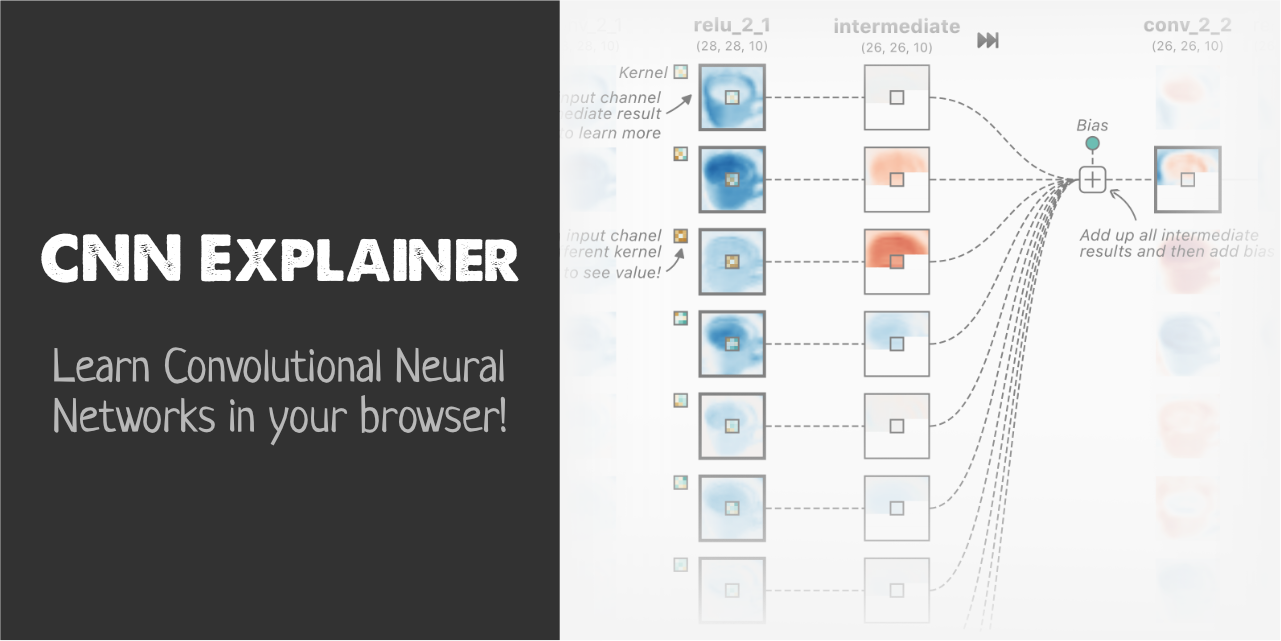
An interactive visualization system designed to help non-experts learn about Convolutional Neural Networks (CNNs).
Representer Point Selection for Explaining Deep Neural Networks
We propose to explain the predictions of a deep neural network, by pointing to the set of what we call representer points in the training set, for a given test point prediction. Specifically, we show that we can decompose the pre-activation prediction of a neural network into a linear combination of activations of training points, with the weights corresponding to what we call representer values, which thus capture the importance of that training point on the learned parameters of the network. But it provides a deeper understanding of the network than simply training point influence: with positive representer values corresponding to excitatory training points, and negative values corresponding to inhibitory points, which as we show provides considerably more insight. Our method is also much more scalable, allowing for real-time feedback in a manner not feasible with influence functions.
Convolutional Neural Networks (CNN) - Deep Learning Wizard
We try to make learning deep learning, deep bayesian learning, and deep reinforcement learning math and code easier. Open-source and used by thousands globally.
A Visual Guide to Gemma 4 12B
An in-depth explainer to Gemma 4 12B; a unified, encoder-free multimodal model!
MLDemos - A visualization tool for machine learning
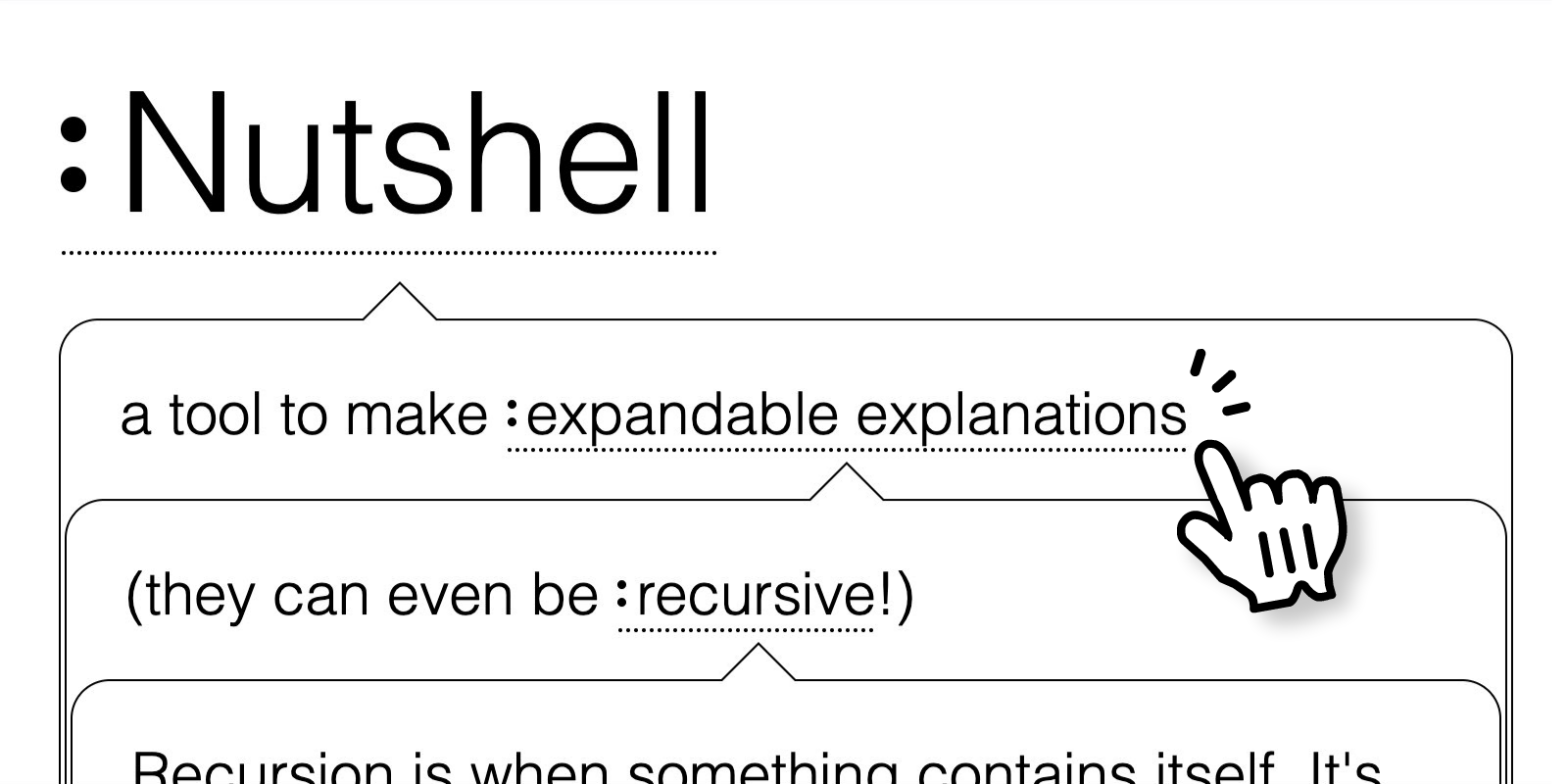
Nutshell: make expandable, embeddable explanations
a tool to let your readers dive into details
Flint: A Visualization Language for the AI Era
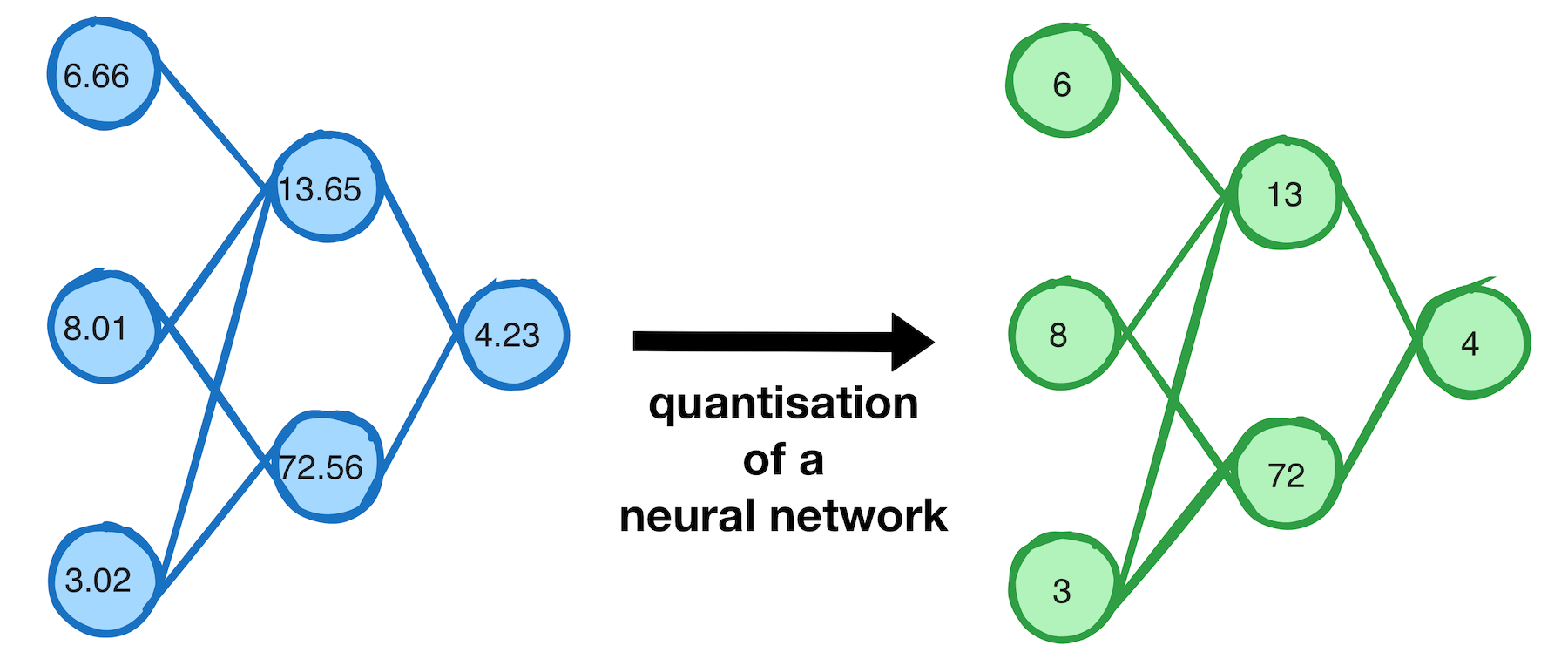
Understanding AI/LLM Quantisation Through Interactive Visualisations
AI/LLM Quantisation Visualised
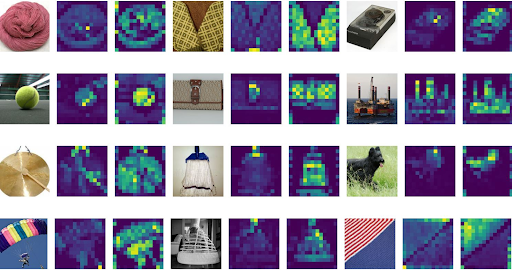
Vision Transformers (ViT) Explained: Are They Better Than CNNs?
Understanding how a groundbreaking architecture for computer vision tasks works
The Welch Labs Illustrated Guide to AI [Digital Download] — Welch Labs
The Welch Labs Illustrated Guide to AI offers unique perspectives on artificial intelligence through hands-on exploration and richly detailed graphics that give readers a visceral understanding of how AI actually works. From the fundamental perceptron to cutting-edge AI video generation, each chapte

Distilling the Knowledge in a Neural Network
Our teams advance the state of the art through research, systems engineering, and collaboration across Google.
Shaping the future of AI interaction by reimagining the mouse pointer
Google DeepMind is transforming the mouse pointer into a context-aware AI partner. Move beyond the friction of traditional prompting with intuitive AI collaboration in Chrome and beyond.

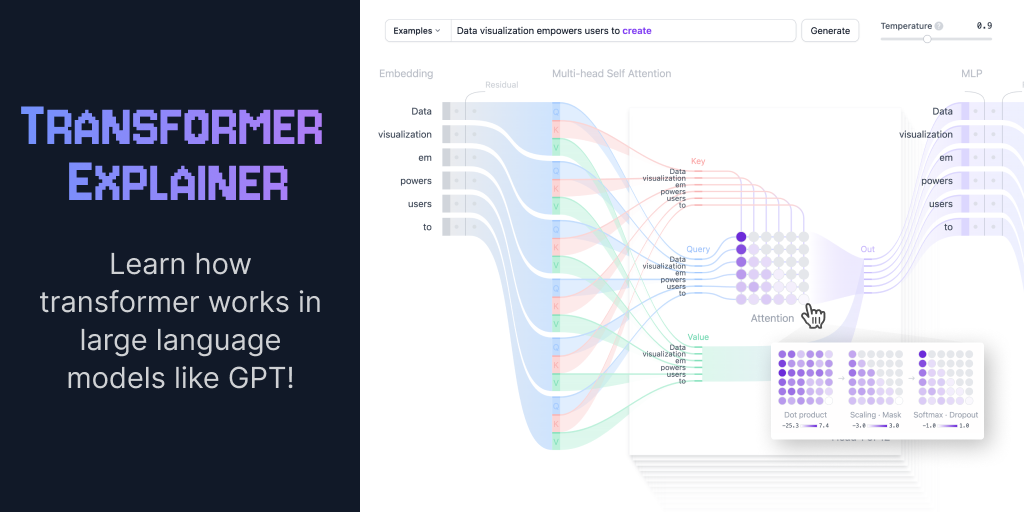
Transformer Explainer: LLM Transformer Model Visually Explained
An interactive visualization tool showing you how transformer models work in large language models (LLM) like GPT.
Understanding the inner workings of neural networks
New research on that gives us a deeper understanding of why networks make the decisions they do

Natural Language Autoencoders Produce Unsupervised Explanations of LLM Activations
We introduce Natural Language Autoencoders (NLAs), an unsupervised method for generating natural language explanations of LLM activations. An NLA consists of two LLM modules: an activation verbalizer (AV) that maps an activation to a text description and an activation reconstructor (AR) that maps the description back to an activation. We jointly train the AV and AR with reinforcement learning to reconstruct residual stream activations. Although we optimize for activation reconstruction, the resulting NLA explanations read as plausible interpretations of model internals that, according to our quantitative evaluations, grow more informative over training.
Machine understanding
What do artificial intelligence (AI) systems “understand”? This question arises not only in assessing a system’s intelligence but also in evaluation practices to ensure the safe and responsible deployment of AI. Drawing on scholarship from philosophy and cognitive science, and informed by current practices in AI, we develop a framework for asking more precise questions and making more precise claims about machine understanding. We conceptualize understanding as a relation between a system (S) and a target of understanding (T), and we discuss how to specify the relation, the system, and the target, offering a landscape of options in each case. Our goal is not to defend a particular account of understanding, but to provide conceptual tools for those working to assess or advance machine understanding.
