

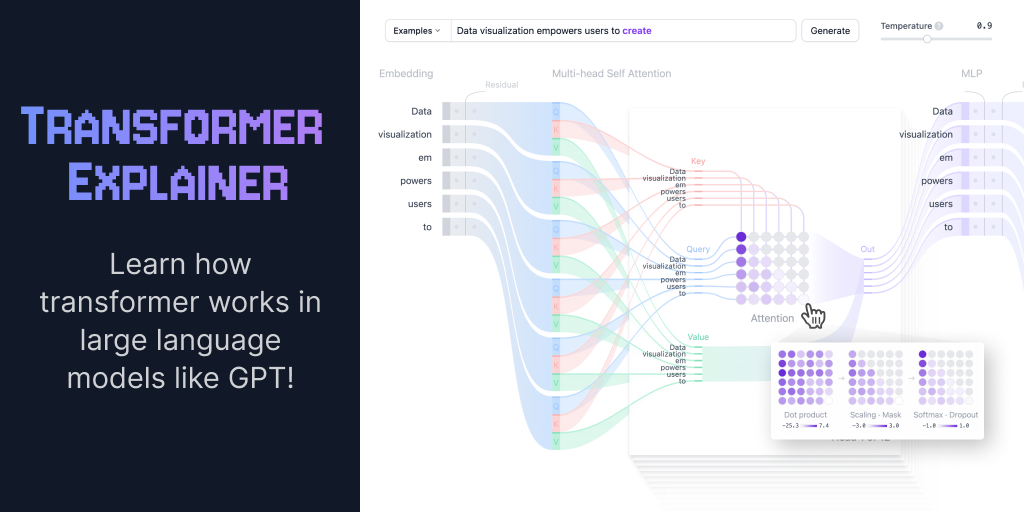
An interactive visualization tool showing you how transformer models work in large language models (LLM) like GPT.
transformers/src/transformers/models/auto/tokenization_auto.py at 1d5296f2de31ecee4fdd789dc2b2fe068b320284 · huggingface/transformers
🤗 Transformers: the model-definition framework for state-of-the-art machine learning models in text, vision, audio, and multimodal models, for both inference and training. - huggingface/transformers
Andrej Karpathy on Twitter / X
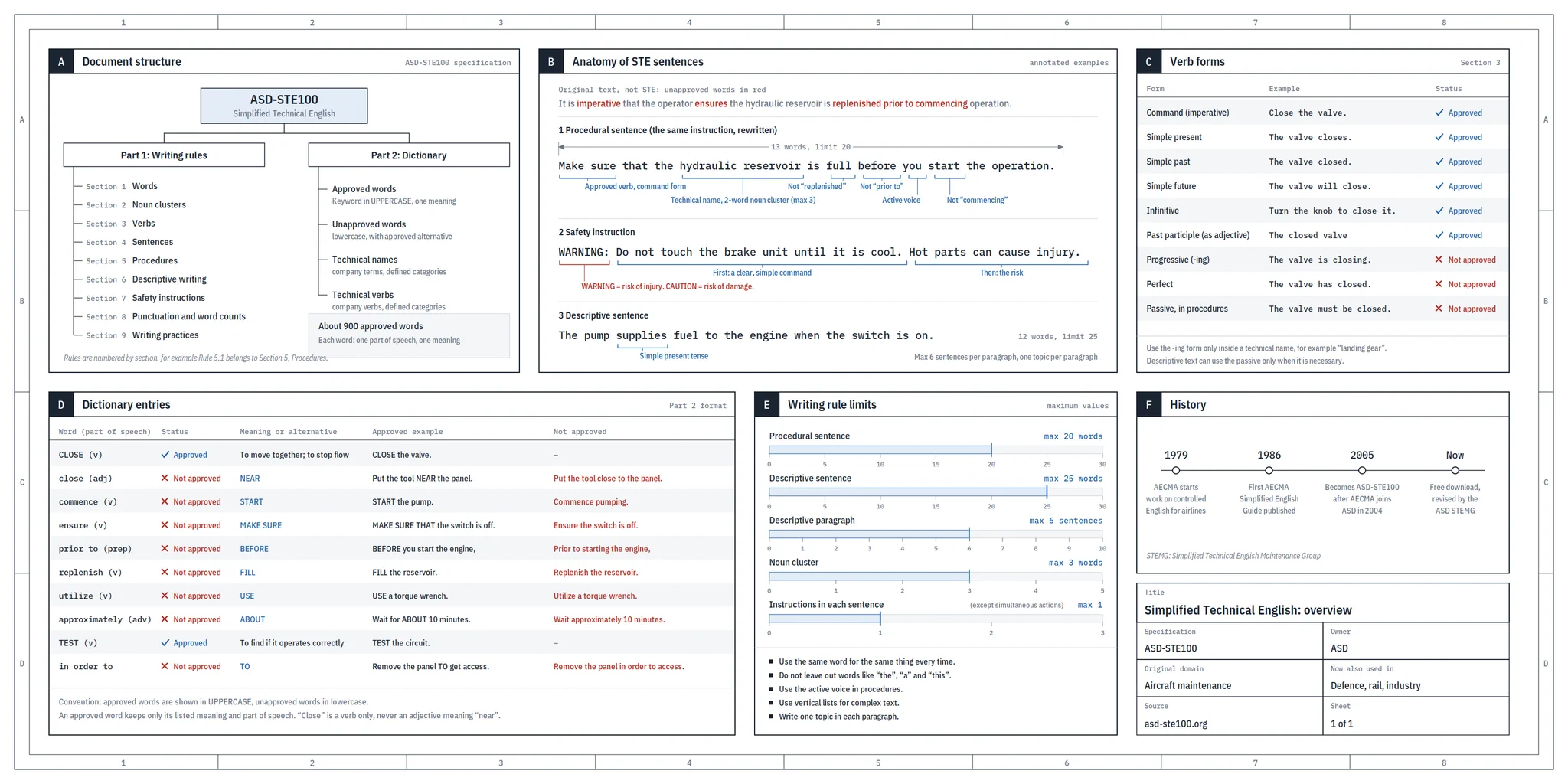
We'll be spending a lot more time trying to understand the outputs of language models. A few thoughts, tips & tricks:Writing. Something I've had success with: Ask your LLM to explain something in ASD-STE100, it's a controlled language specification originally developed for… pic.twitter.com/uMFWTcBCsl— Andrej Karpathy (@karpathy) October 2, 2026
I Built an LLM From Scratch
The Illustrated Transformer
Discussions: Hacker News (65 points, 4 comments), Reddit r/MachineLearning (29 points, 3 comments) Translations: Arabic, Chinese (Simplified) 1, Chinese (Simplified) 2, French 1, French 2, Italian, Japanese, Korean, Persian, Russian, Spanish 1, Spanish 2, Vietnamese Watch: MIT’s Deep Learning State of the Art lecture referencing this post Featured in courses at Stanford, Harvard, MIT, Princeton, CMU and others Update: This post has now become a book! Check out LLM-book.com which contains (Chapter 3) an updated and expanded version of this post speaking about the latest Transformer models and how they've evolved in the seven years since the original Transformer (like Multi-Query Attention and RoPE Positional embeddings). In the previous post, we looked at Attention – a ubiquitous method in modern deep learning models. Attention is a concept that helped improve the performance of neural machine translation applications. In this post, we will look at The Transformer – a model that uses attention to boost the speed with which these models can be trained. The Transformer outperforms the Google Neural Machine Translation model in specific tasks. The biggest benefit, however, comes from how The Transformer lends itself to parallelization. It is in fact Google Cloud’s recommendation to use The Transformer as a reference model to use their Cloud TPU offering. So let’s try to break the model apart and look at how it functions. The Transformer was proposed in the paper Attention is All You Need. A TensorFlow implementation of it is available as a part of the Tensor2Tensor package. Harvard’s NLP group created a guide annotating the paper with PyTorch implementation. In this post, we will attempt to oversimplify things a bit and introduce the concepts one by one to hopefully make it easier to understand to people without in-depth knowledge of the subject matter. 2025 Update: We’ve built a free short course that brings the contents of this post up-to-date with animations: A High-Level Look Let’s begin by looking at the model as a single black box. In a machine translation application, it would take a sentence in one language, and output its translation in another.
ToolSandbox: A Stateful, Conversational, Interactive Evaluation Benchmark for LLM Tool Use Capabilities
Recent large language models (LLMs) advancements sparked a growing research interest in tool assisted LLMs solving real-world challenges…
Build A Large Language Model (From Scratch), Published by Manning, ISBN 978-1633437166
Implement a ChatGPT-like LLM in PyTorch from scratch, step by step
An Introduction to Transformers
The transformer is a neural network component that can be used to learn useful representations of sequences or sets of data-points. The transformer has driven recent advances in natural language processing, computer vision, and spatio-temporal modelling. There are many introductions to transformers, but most do not contain precise mathematical descriptions of the architecture and the intuitions behind the design choices are often also missing. Moreover, as research takes a winding path, the explanations for the components of the transformer can be idiosyncratic. In this note we aim for a mathematically precise, intuitive, and clean description of the transformer architecture. We will not discuss training as this is rather standard. We assume that the reader is familiar with fundamental topics in machine learning including multi-layer perceptrons, linear transformations, softmax functions and basic probability.

Large language model
A large language model (LLM) is a neural network trained on a vast amount of text for natural language processing tasks, especially language generation. LLMs can typically generate, summarize, translate, and analyze text in many contexts, and are a foundational technology behind modern chatbots.[1] Biased or inaccurate training data can make an LLM's output less reliable.[2]
Beyond Standard LLMs
Linear Attention Hybrids, Text Diffusion, Code World Models, and Small Recursive Transformers
LLMs and World Models, Part 1
How do Large Language Models Make Sense of Their “Worlds”?

Constructing an LLM-Computer | Percepta
How we analytically compiled a WebAssembly VM into a transformer using a code-to-weights compiler we built.
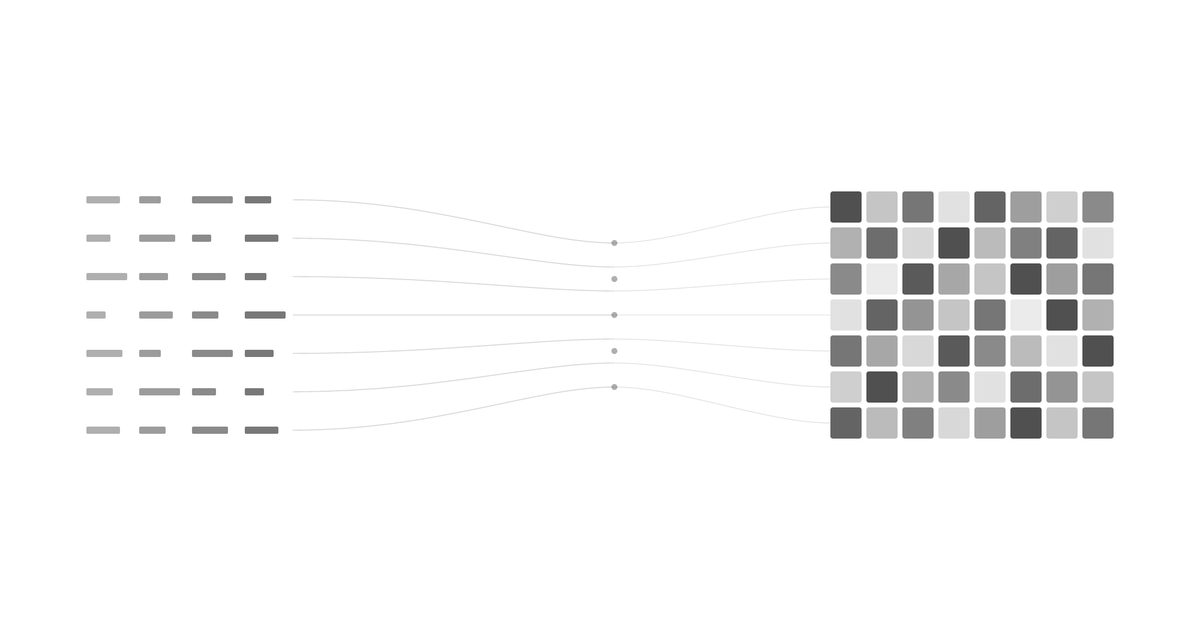
An Observation on Generalization
Designing a Language by Asking the Language Models — using an LLM panel as a syntax usability lab (from the kaish project)
Designing a Language by Asking the Language Models — using an LLM panel as a syntax usability lab (from the kaish project) · GitHub
How LLMs Actually Work
A from-the-ground-up walkthrough of how modern LLMs work, from tokens to transformer blocks to the next-token loop
1/4 Do LLMs understand? "They understand in a way that’s very different from how humans understand," Dileep George, @dileeplearning.bsky.social, of Google DeepMind at the Simons Institute workshop on The Future of Language Models and Transformers. Video: simons.berkeley.edu/talks/dileep-george-google-de…
