

As I discussed in an earlier post, losing someone close to you can make you feel like you’re losing your mind.
The Online Identity Crisis - Published Drafts
Thoughts on trying to keep one's identity compartmentalized
Death to Bullshit
If you think about it, our attention is the only thing we truly own in our lives. Our possessions can go away. Our bodies can be compromised. Our relationships can fall apart. Even our memories and intellectual capacity fade away.

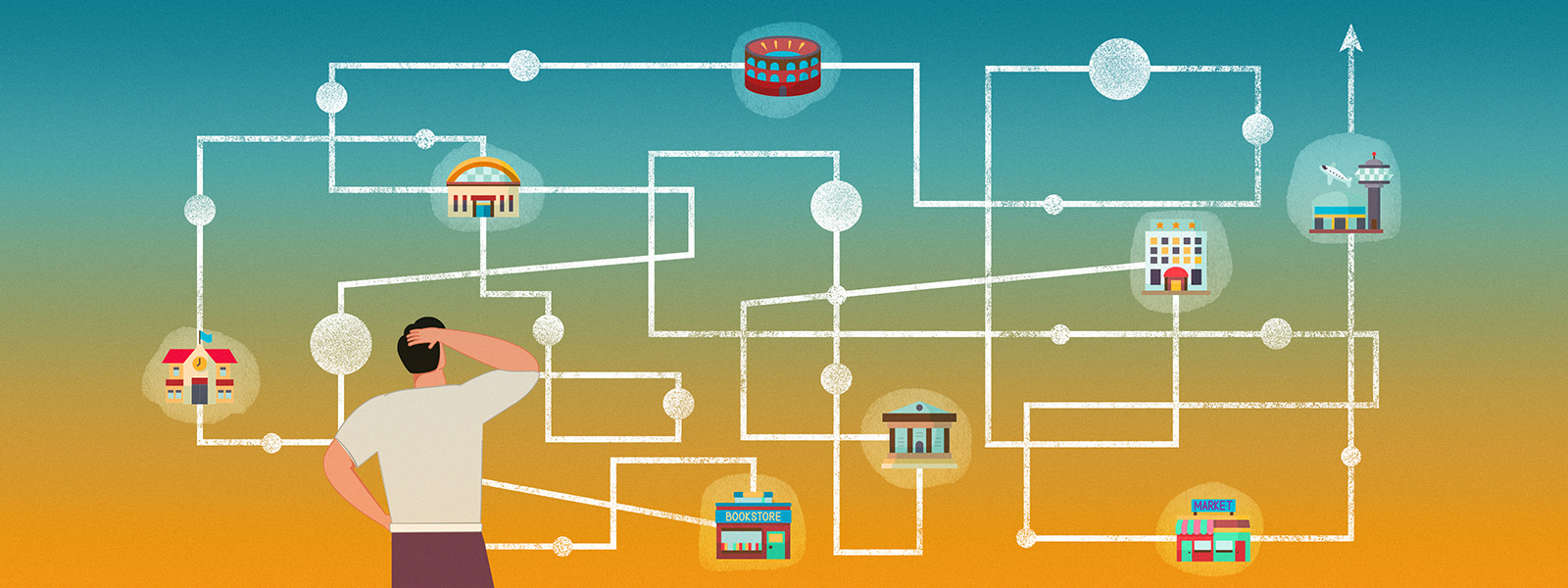
Why do some people always get lost?
Research suggests that experience may matter more than innate ability when it comes to a sense of direction
ok, so you just went through a big breakup. you’ve unfollowed on the big social sites - insta, fb, snap, twitter (maybe even blocked, no one’s judging here) where ELSE do you need to disconnect from your ex? here’s a few potentially unexpected places to check:
ok, so you just went through a big breakup. you’ve unfollowed on the big social sites - insta, fb, snap, twitter (maybe even blocked, no one’s judging here)where ELSE do you need to disconnect from your ex? here’s a few potentially unexpected places to check:— Privacy Party (@privacypartyapp) August 17, 2023
We've Lost the Spaces That Foster Friendship
We keep offering individual fixes for loneliness while ignoring the disappearance of the spaces where adults once built real relationships.

Heartbroken People Share Their Romantic "Red Flag" Moments
Every relationship has a tipping point. Sometimes, it's when you know you want to be with them forever—or it's when you need to run for your life.

The asymmetry of internet identity
Identity on the internet is messy. The result is some things that should be easy are hard.
This Common Communication Mistake Makes It Impossible for Others to Understand Your Ideas
Personal systems are OK, but they need to be clear.
Empathy, Thick and Thin
When we empathize with someone going through something, we often draw on our past experiences with the someone and the something. These kinds of experiences gro

Identity Systems Don’t Make Decisions
Same user. Same device. Same request. Different outcome. Add AI on top and that inconsistency compounds. If decision logic is split across identity, risk, policy, and apps, where is control? My observations in the latest blog post; I'd love your take on it!

How Loneliness Reshapes the Brain | Quanta Magazine
Feelings of loneliness prompt changes in the brain that further isolate people from social contact.

Misarticulation: Why We Sometimes Feel Our Words Don’t Match Our Thoughts
People do not always say what they mean. In everyday conversations, people regularly sense that they have not fully communicated what they had in mind—a subject
The next revolution will be reclaiming your digital identity | TechCrunch
An identity is a difficult thing to lose. I found this out the hard way when my passport was stolen while backpacking through Asia and Africa earlier this year. The bureaucratic process to get a new passport gave me a glimpse at how broken our system of identity management is today. Fortunately, technology is on the cusp of a major paradigm shift in the field of identity.
Sycophantic AI makes human interaction feel more effortful and less satisfying over time
Millions of people now turn to artificial intelligence (AI) systems for personal advice, guidance, and support. Such systems can be sycophantic, frequently affirming users' views and beliefs. Across five preregistered studies (N = 3,075 participants, 12,766 human-AI conversations), including a three-week study with a census-representative U.S. sample, we provide longitudinal experimental evidence that sycophantic AI shifts how users approach their closest relationships. We show that sycophantic AI immediately delivers the emotional and esteem support users typically associate with close friends and family. Over three weeks of such interactions, users became nearly as likely to seek personal advice from sycophantic AI as from close friends and family, and reported lower satisfaction with their real-world social interactions. When given a choice among AI response styles, a majority preferred sycophantic AI -- not for the quality of its advice, but because it made them feel most understood. Together, these findings offer a relational account of AI sycophancy and its impacts.