

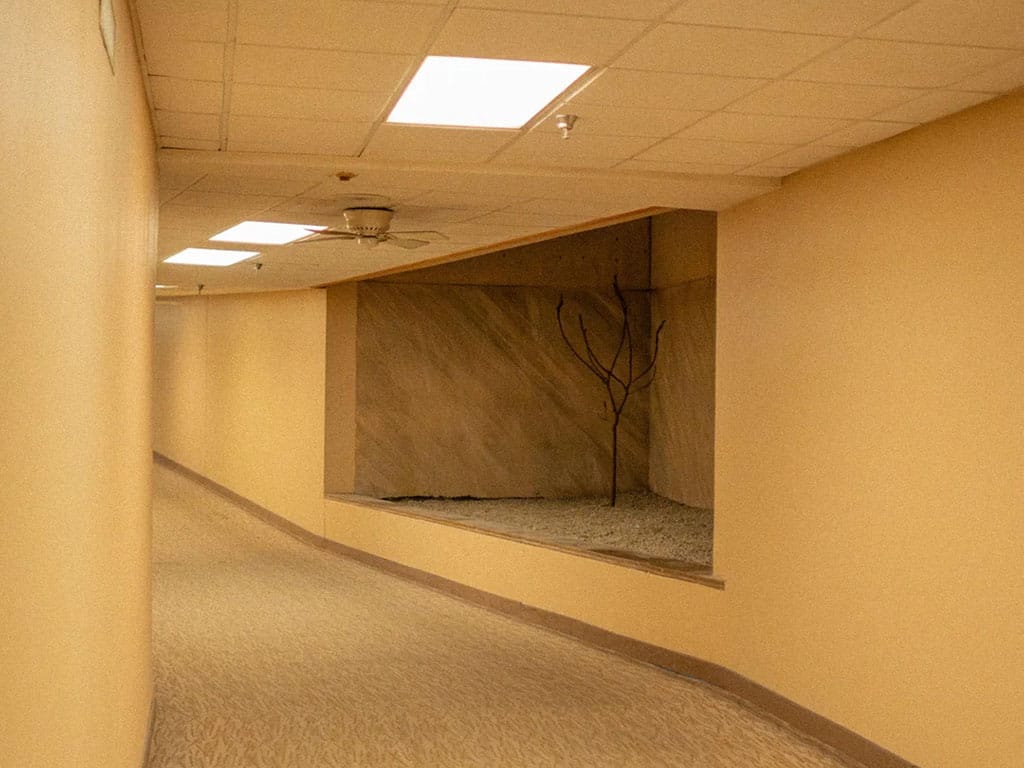
Liminal spaces have become an internet aesthetic whereby photographs of places which are meant to be traversed (implying a temporary stay) are framed and presented as a final image. These spaces imply where people should be, but are not. The aesthetic also spreads to depictions of empty nostalgic spaces and the internet has branched into themed subgenres of liminal space (such as the backrooms, the poolrooms, the sublevels etc).
How Liminalism Became the Defining Aesthetic of Our Time
This crowd-curated digital movement is one of the most pertinent and explicit reactions to our particular slice of dystopian late capitalism.
Rethink: Web - Open Space
When we struggle to explain the inherent qualities of a medium, we tend to defer to analogies and metaphors. This is especially true of the internet. Clouds, highways, streams, and real estate are just a few examples of the concepts employed to represent this intangible invention. Staring into a screen, it’s easy to imagine an […]

Architecture and the Internet: Designing places in cyberspace
Cyberspace, as the information space is called, has become accessible in the past decade through the World Wide Web. And although it can only be experienced through the mediation of computers, it is quickly becoming an alternative stage for everyday economic, cultural, and other human activities. As such, there is a potential and a need to design it according to place–like principles. Making places for human inhabitation is, of course, what architects, landscape architects, and town planners have been doing in physical space for thousands of years. It is curious, therefore, that Cyberspace designers have not capitalized on the theories, experiences, and practices that have been guiding physical place–making. While most 3D environments closely mimic physical spaces, they are, by and large, devoid of the essential characteristics that differentiate a ‘place’ from mere ‘space.’ And only rarely are they sensitive to, and take advantage of, the peculiarities of Cyberspace. We believe that this state of affairs is temporary, characteristic of early adoption stages of new technologies. As the Web matures, and as it assumes more fully its role as a destination rather than as means of communication, there will be a growing need to design it according to place–making principles. By looking at physical architecture as a case study and metaphor for organizing space into meaningful places, this paper explores the possibility of organizing Cyberspace into spatial settings that not only afford social interaction, but, like physical places, also embody and express cultural values. At the same time, because Cyberspace lacks materiality, is free from physical constraints, and because it can only be ‘inhabited’ by proxy, these ‘places’ may not necessarily resemble their physical counterparts.
Federating friendly spaces - Roomy
hearkening back to the cozy vibes of old-web neighborhoods

toward a new aesthetic
Lately I’ve been thinking about what being online looks like. The actual look of it. The aesthetic. As I continue to think and write and talk about escaping...

toward a new aesthetic
Lately I’ve been thinking about what being online looks like. The actual look of it. The aesthetic. As I continue to think and write and talk about escaping...
Screen As Room: An Architectural Perspective on User Interfaces — Christoph Locher · Interaction Designer
With the use of video games as social spaces being observed for several years and the increased focus put on virtual social spaces due to the scarceness of physical social spaces in the last months, the concept of “spatial interfaces” is once again at the center of discussions. I want to add an alternative perspective to this, looking at the properties of physical spaces as metaphors, rather than models, for interfaces and exploring seven of them in more detail.
Screen As Room: An Architectural Perspective on User Interfaces — Christoph Locher · Interaction Designer
With the use of video games as social spaces being observed for several years and the increased focus put on virtual social spaces due to the scarceness of physical social spaces in the last months, the concept of “spatial interfaces” is once again at the center of discussions. I want to add an alternative perspective to this, looking at the properties of physical spaces as metaphors, rather than models, for interfaces and exploring seven of them in more detail.
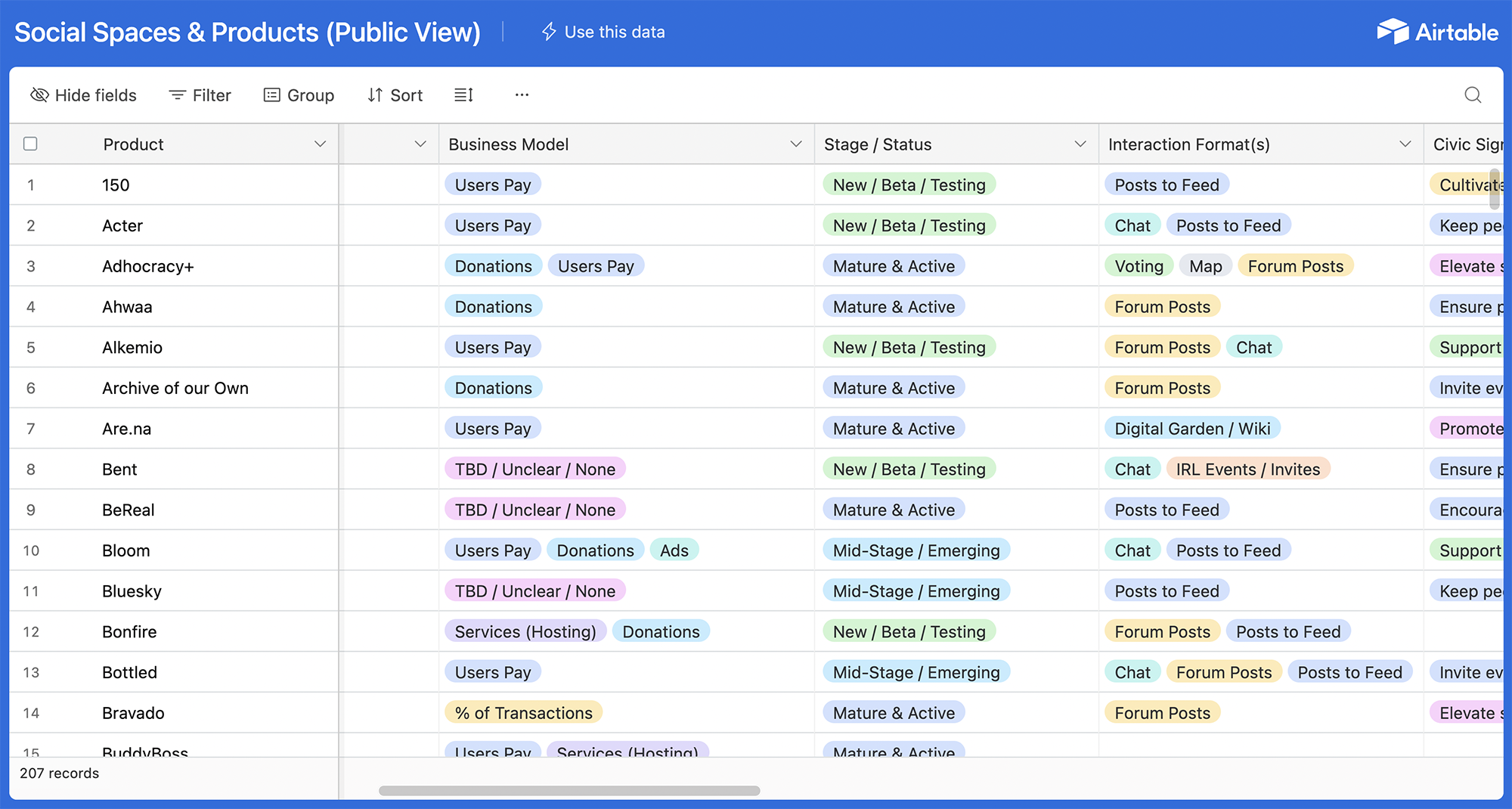
Digital Spaces Directory | New_ Public
As the social media landscape changes and a new wave of digital spaces emerges, this Directory is meant to be a resource for our field — a jumping-off-point for further exploration and research for anyone who’s interested in studying, building, stewarding, or simply using digital social platforms. We hope this will inspire creative exploration, spark new collaborations, and highlight important progress.
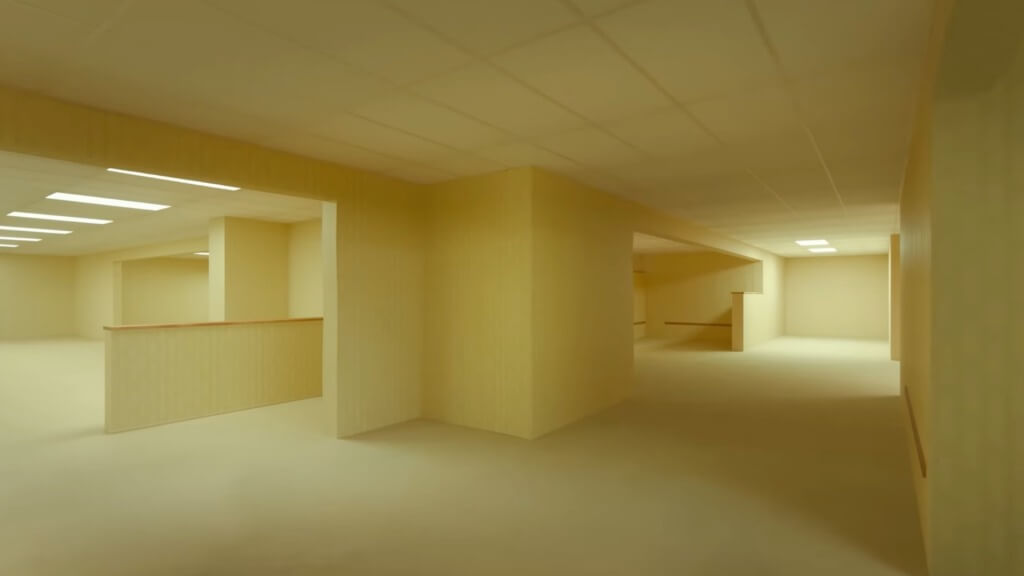
The internet's favorite horror subgenre is breaking into the big time
Backrooms brings liminal horror to the masses, and with it, a generation looking for a past that might not exist.
A space to converse and connect.
An X/Twitter Spaces alternative for Bluesky and the open web. Creating good vibes in the friendly skies.
The Death of DeviantArt and the art-site shaped hole haunting the Internet - Multi-hyphenate
Why every new "Art Community" fails. Equal parts eulogy, condemnation, and mourning.
Art or tool?
The Internet spaces I tend to inhabit have more polarisation than at many other recent times, and little explication of the worldviews that lead to different premises for discussion, that in turn...

Thrilled to be sharing my latest work at #CogSci2026! Many of the spaces we move through, from kitchens to airports, were designed with specific uses in mind. How do people create such environments, and how do users figure out what they were designed for? 📃 osf.io/preprints/psyarxiv/hd6px_v1

