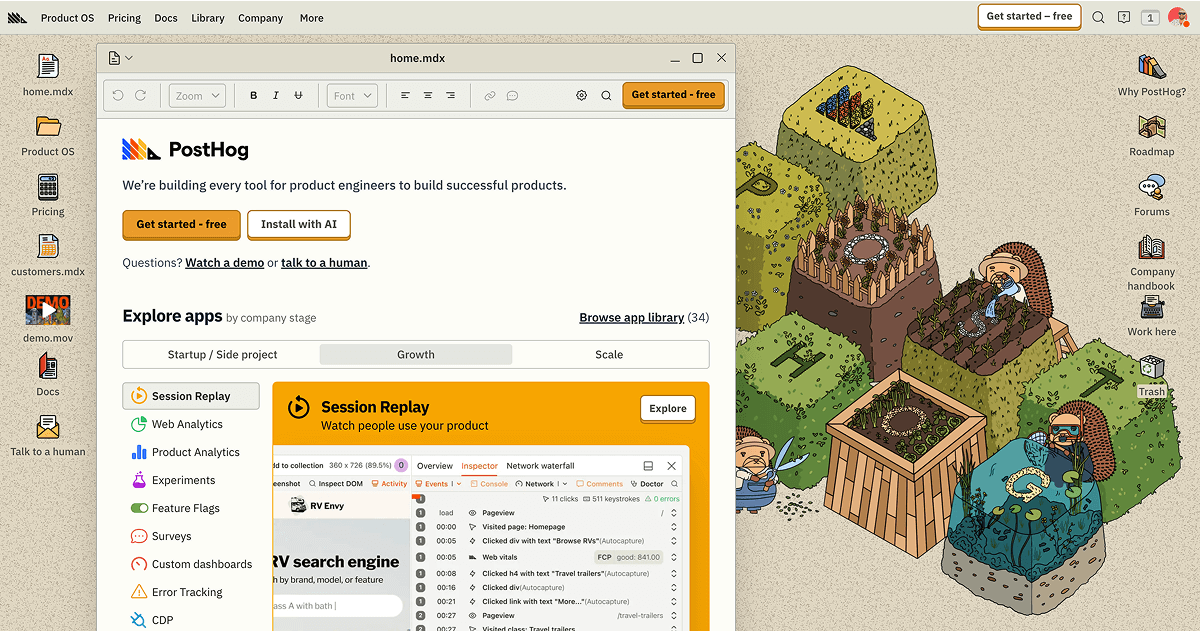
PostHog Code uses signals from production data to diagnose issues and generate pull requests – before you even know there's a problem.
PostHog – We make your product self-driving
PostHog automatically diagnoses problems, fixes bugs, and generates pull requests – all without you having to prompt it.
PostHog Code and the self-driving product - PostHog
Today, PostHog Code enters beta. It's a desktop app that runs coding agents on top of your product data. The obvious stuff ships itself. The tricky…

What I Found Interesting in Claude Code's Source
A breakdown of the most interesting engineering patterns in Claude Code's leaked source code: composable system prompts, runtime instruction injection, context compression, forking, prompt caching architecture, and more.
Karpathy's Autoresearch found a 3-year-old bug in our query engine (and improved performance by 11%) - PostHog
A few weeks ago at a team offsite in Lisbon, we pointed an AI agent at our query engine, fed it slow queries from production, and let it run overnight…

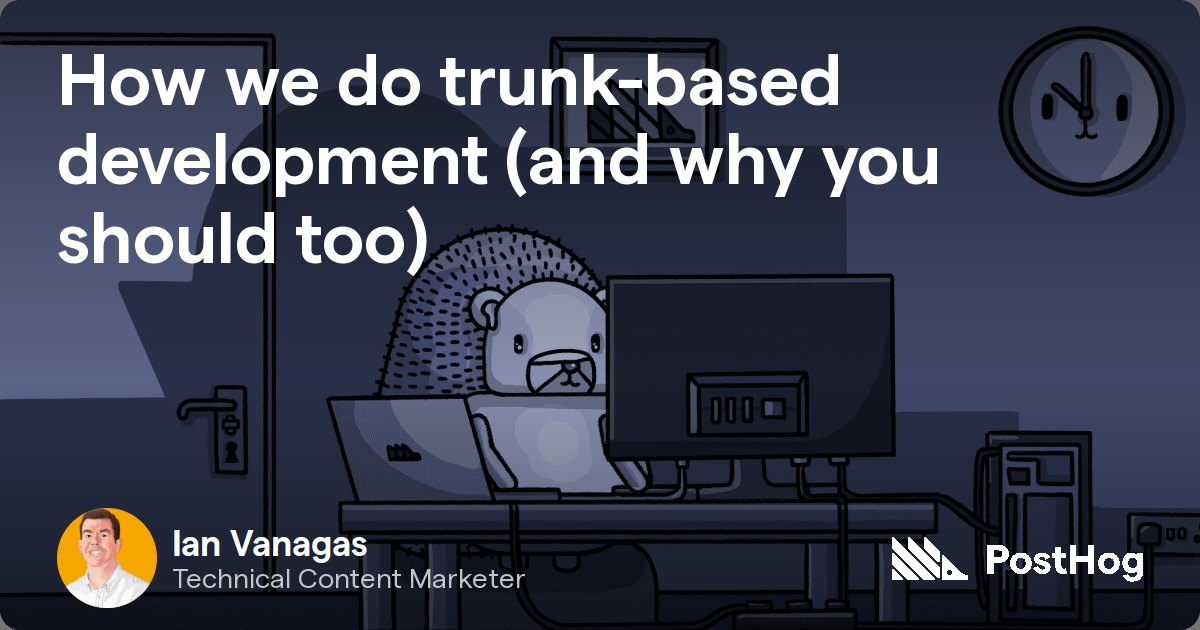
How we do trunk-based development (and why you should too) - PostHog
What do trees, elephants, and successful software all have in common? They rely on their trunks to help them grow big and strong. In the case of…
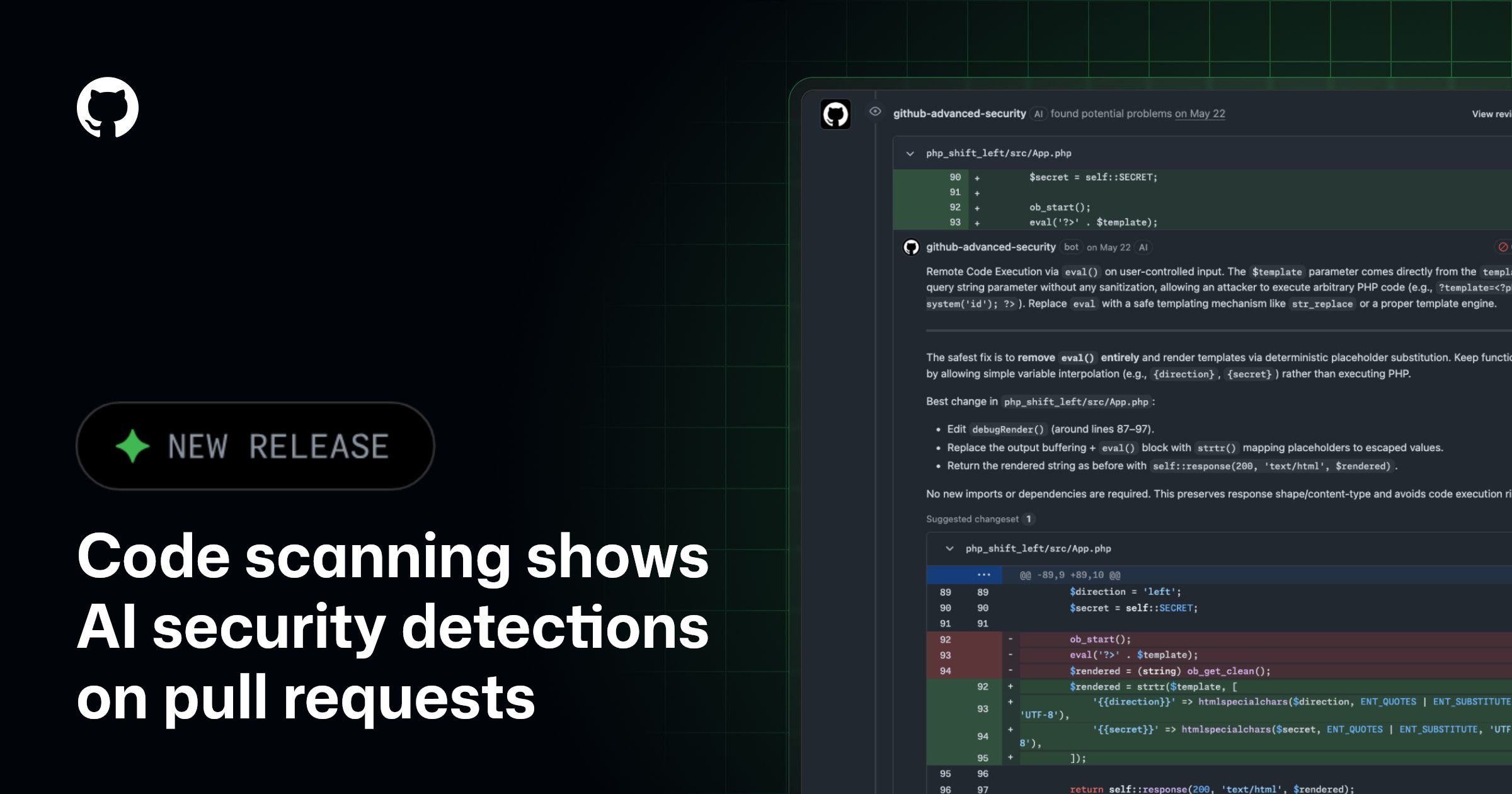
Code scanning shows AI security detections on pull requests - GitHub Changelog
GitHub code scanning now surfaces AI-powered security detections directly on pull requests, expanding vulnerability coverage to languages and frameworks not currently supported by CodeQL. These detections help teams identify and…
Better tools made Copilot code review worse. Here's how we actually improved it.
How migrating Copilot code review to shared Unix-style code exploration tools reduced review cost by reshaping agent workflows around pull request evidence.

Evaluations Are the Real Codebase - The Phoenix Architecture
Why behavior outlives implementations
The Most Prevalent Code Flaws in API Development and How Hackers Exploit Them, Thu, Jul 25, 2024, 9:00 AM | Meetup
**[Register here](https://konghq.com/events/webinars/the-most-prevalent-code-flaws-in-api-development-and-how-hackers-exploit-them?utm_source=kong-email&utm_medium=email&ut

Reports of code's death are greatly exaggerated
A sufficiently detailed spec is code begins with this lovely comic:
Prompt Caching In Agents | EARENDIL
How prompt caching shapes the cost, latency, tools, and architecture of coding agents, and what Pi does to keep cache behavior visible.

How I Ship Code Without Reading It — Daniele Salatti
Yesterday I shipped 1,300 lines of infrastructure code and I didn't read most of it. Docker images, a 9-phase build script, an egress proxy with per-phase network isolation, Nomad job templates, the whole thing. And no, it's not because I don't care. It's because I found something that (mostly) works better than reading.
crawshaw - 2026-05-07
The industry-established code review process, review-then-commit, was a straightforward mechanism that allowed a relatively low-trust group of engineers to collaborate. It appears to have been initially developed for the Apache server OSS project in the 90s, corporatized by Google in the early 2000s, and popularized throughout the industry by several means, most notable of which was the GitHub PR.
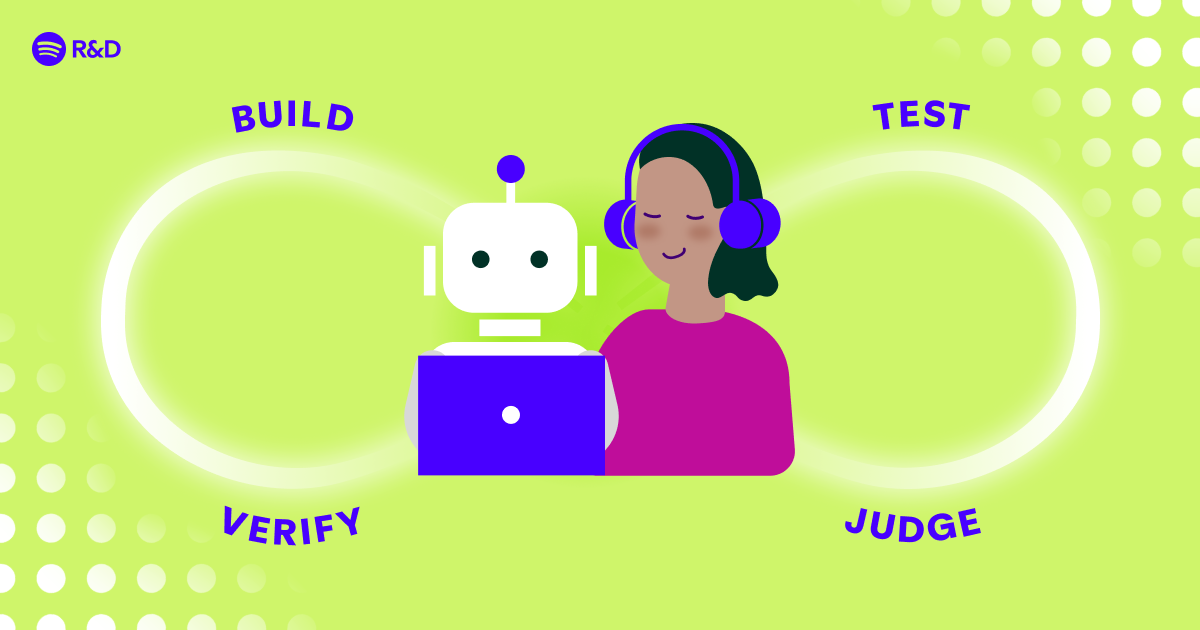
Background Coding Agents: Predictable Results Through Strong Feedback Loops (Part 3) | Spotify Engineering
This is part 3 in our series about Spotify's journey with background coding agents and the future of large-scale software maintenance. See also and .