


The climate crisis presents an unprecedented challenge that requires collective behavioural change on a large scale. Drawing on the social identity approach to crisis leadership, this paper examines how identity leadership principles can mobilise sustainable behaviours. Through integration of recent empirical findings from acute crises and theoretical insights from the identity leadership literature, I propose a framework highlighting that climate leadership involves three key processes: (1) creating shared group identity that makes climate action identity-relevant, (2) building collective efficacy beliefs that transform individual helplessness into group agency, and (3) embedding sustainable practices as group norms. However, climate leadership faces unique challenges distinct from acute crises. The paper also addresses tensions between local identity mobilisation and global coordination, alongside social justice considerations that emerge when climate impacts and action capacities vary across groups. I conclude with policy recommendations for fostering identity leadership at multiple levels, including community-level training programmes, organisational interventions, and international coalition-building strategies, while protecting against manipulation. I argue that the path to sustainability requires navigating collective identity processes within contested influence dynamics. JEL Classification: Q54; D91; Z13
Climate change and conflict: The vicious cycles undermining climate action, and what can be done to break them
Abstract In this review, we synthesize evidence to argue that climate change and conflict are mutually reinforcing. We first examine conflict as a barrier to mitigation, focusing on four faultlines that slow climate action: (a) ideological polarization, (b) “elite versus ordinary people” narratives, (c) intranational, place‐based conflicts, and (d) international disputes. The consequence of these conflicts is worsening climate change, which in turn increases the prevalence of factors known to be conflict amplifiers: heat stress, economic stress, widening inequality, and forced displacement. Our analysis points to the potential for recursive “climate–conflict loops”, fuelled in part by erosion of institutional trust, shrinking moral circles, political polarization, and de‐prioritization of long‐term climate goals. In a spirit of optimism, however, we identify three buffers capable of breaking these vicious cycles: maintenance of procedural and distributive justice, enhancing information integrity, and scaffolding institutional cooperation. We conclude by proposing a research agenda that integrates psychological mechanisms into dynamic, multi‐level accounts of how climate impacts and political conflict coevolve.

Leveraging agency for climate change mitigation
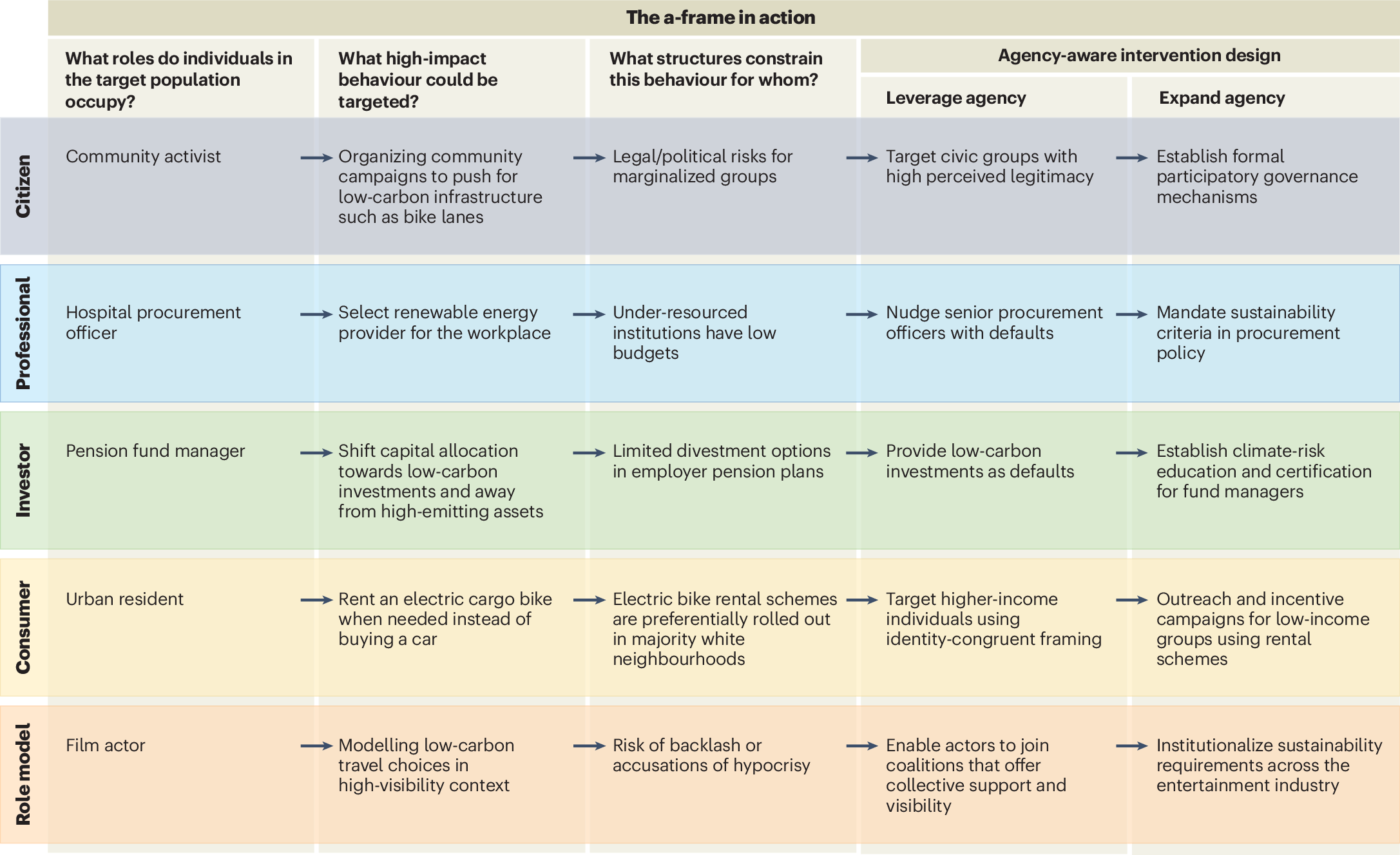
Climate debates often frame individual behaviour and systems change as distinct pathways to action. We suggest that social change arises from individuals’ agency within their roles in societal systems, and that this agency should be actively leveraged to achieve meaningful climate change mitigation.
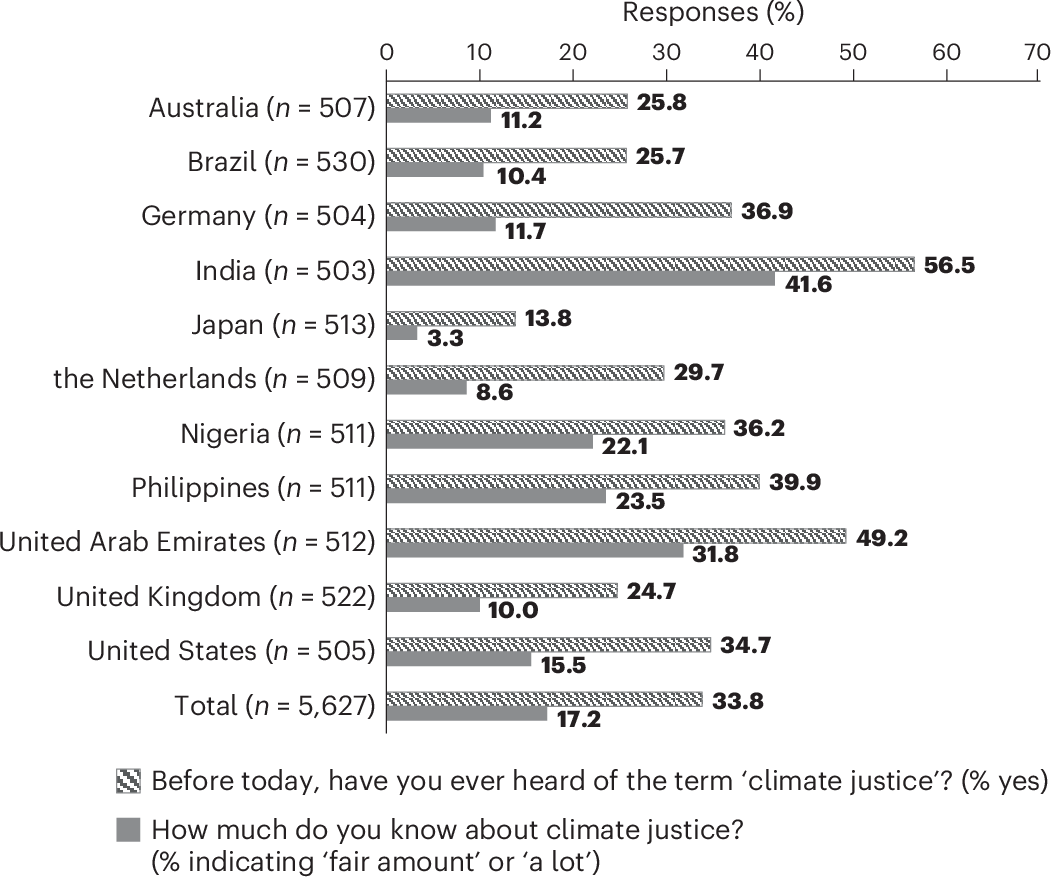
Climate justice beliefs related to climate action and policy support around the world
Climate justice is increasingly prominent in climate change communication and advocacy but little is known about public understanding of the concept or how widely it resonates with different groups. In our global survey of 5,627 adults in 11 countries spanning the global north and south, most participants (66.2%) had never heard of climate justice. Nonetheless, endorsement of climate justice beliefs was widespread (for example, acknowledging the disproportionate impact of climate change on poor people and the underpinning roles of capitalism and colonialism in the climate crisis). Climate justice beliefs were also associated with various indices of climate action and policy support. These associations tended to be stronger in countries with high GHG emissions and where social inequality is also more politically salient. The results highlight the value of climate justice as a motive for climate action across diverse geographical contexts.
Toward a New Global Security Paradigm. Task Force 06: Strengthening Multilateralism and Global Governance
Amidst increasing global connectivity and accelerating global change, the global security framework has become insufficient, contributing to a crippling dysfunctionality in international cooperation. The current security framework, focused almost exclusively on a narrow notion of military security, is insufficient to address escalating ‘threats without enemy,’ such as climate change, biodiversity loss, and pollution, which increasingly endanger the lives and dignity of all populations. This policy brief recommends a global social-ecological security framework, rooted in the science informed understanding of social and biophysical realities, to address the evolving needs and challenges of the 21st century. Our recommendations to operationalise this paradigm include: a reinvigorated commitment to multilateralism and peace as a pre-requisite; public participation in shaping the new inclusive international governance framework; development aid and green finance as key levers; a focus on building resilience (especially food security); and, strengthening anticipation of and response to interconnected global shocks. We propose a G20-initiated formation of a high-level working group to catalyse the creation of this new framework. Such a process must involve relevant stakeholders, leveraging new possibilities afforded by technological tools (such as AI). Implementing this ambitious agenda will be challenging, but continuing on a business as- usual trajectory is a ‘lose-lose’ spiral likely to trigger social and ecological crises. Bold leadership from the G20 is needed more than ever to reinvent multilateralism and thus ensure sustainable well-being for all.
Stewardship of global collective behavior
Collective behavior provides a framework for understanding how the actions and properties of groups emerge from the way individuals generate and share information. In humans, information flows were initially shaped by natural selection yet are increasingly structured by emerging communication technologies. Our larger, more complex social networks now transfer high-fidelity information over vast distances at low cost. The digital age and the rise of social media have accelerated changes to our social systems, with poorly understood functional consequences. This gap in our knowledge represents a principal challenge to scientific progress, democracy, and actions to address global crises. We argue that the study of collective behavior must rise to a “crisis discipline” just as medicine, conservation, and climate science have, with a focus on providing actionable insight to policymakers and regulators for the stewardship of social systems.

The climate crisis: a war on the world
The climate crisis is a self-destructive war, with aggressors and victims

Critical Mess to Critical Mass: democratic innovation for collective climate action
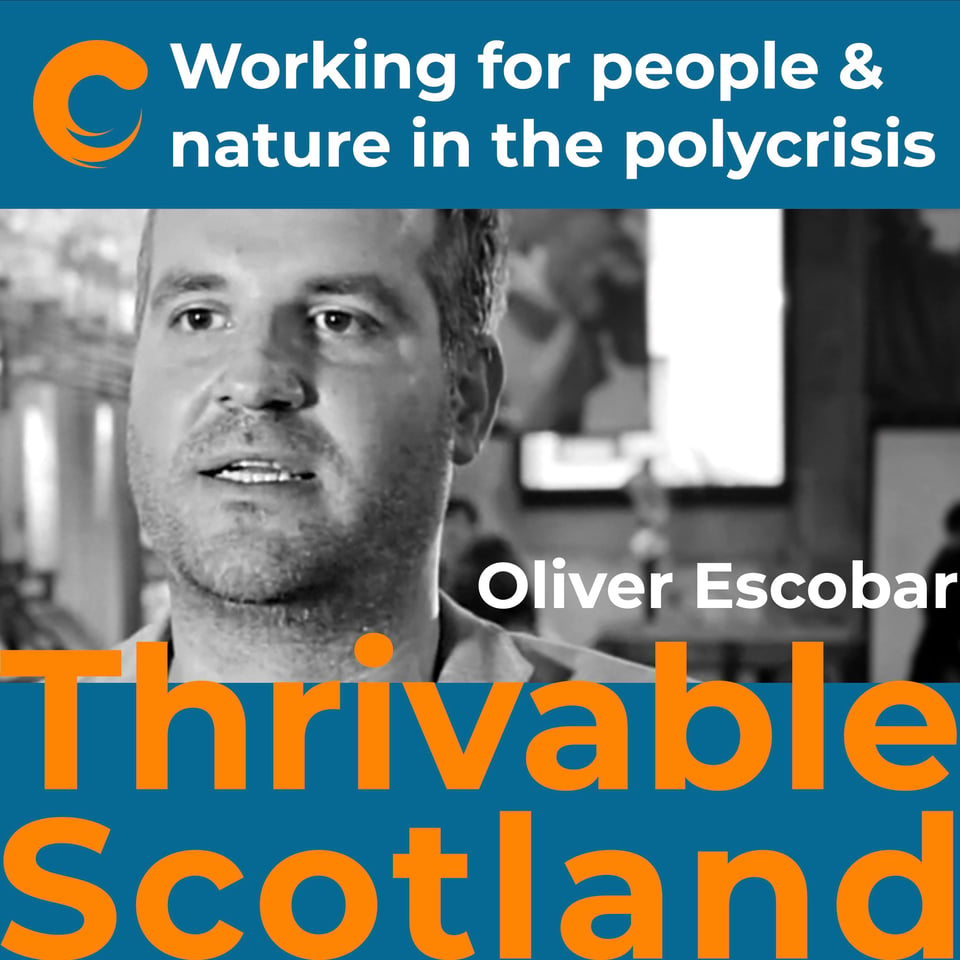
How democratic innovation can build trust to unlock and mobilise collective intelligence for meaningful collective action. With Prof Oliver Escobar.
Their Side Is Organized; We Need to Be Organized, Too
Trump and his far-right acolytes wield their power to disinvest from public services, terrorize our neighborhoods with ICE agents, and ensure that opposition to genocide becomes a fireable, and deportable, offense. In the face of these grim and terrifying developments, it could scarcely be more urgent that we learn lessons from movements and organizing traditions that confronted repression, surveillance, and powerful opposition in the (recent and distant) past. We’ve put together a reading list of key books to help inform ongoing efforts to build and sustain durable organizations, and forge effective strategies, for both short term survival and long term social transformation. What fuels and sustains activism and organizing when it feels like our worlds are collapsing? Let This Radicalize You is a practical and imaginative resource for activists and organizers building power in an era of destabilization and catastrophe. “Anyone trying to rebuild an effective U.S. labor movement needs to read Class Struggle Unionism by Joe Burns. He lays out the fundamental principles that UE has tried to uphold for the last 85 years. For a union to be worthwhile to the working class, it needs to know which side it is on and it has to recognize that the fight itself is what allows workers to gain the knowledge and power they need.”—Carl Rosen From two co-founders of the largest tenants union in the country, this deeply reported account of the resurgent tenant movement centers poor and working-class people who are fighting back, staying put, and remaking the city in the process. A collection of essays from the Stop Cop City movement on the fight for police abolition and for a liveable planet for all, with gripping reporting from activists on the ground and rousing articles from renowned radical academics. In this remarkable collaborative work, leading scholar-activists Angela Y. Davis, Gina Dent, Erica R. Meiners, and Beth E. Richie surface the often unrecognized genealogies of queer, anti-capitalist, internationalist, grassroots, and women-of-color-led feminist movements, struggles, and organizations that have helped to define abolition and feminism in the twenty-first century. This guide, based on the collective experience of organizers and workers in non-unionized workplaces, is a critical tool to help you and your coworkers organize for justice at work. Drawing from over twenty years of activism on local and national levels, this striking book offers an organizer’s perspective on the intersections of immigrant rights, racial justice, and prison abolition. At a political moment when Liberatory Harm Reduction and mutual aid are more important than ever, this book serves as an inspiration and a catalyst for radical transformation of our world. Even the River Starts Small is a collection from the movement to stop construction of the Line 3 pipeline through northern Minnesota, featuring anonymous writing, art, and photos spanning nearly a decade, and including reflections on many of the diverse experiences that made up this grassroots resistance. “Tracing revolutionary uprisings from 1989 to 2019, this book is a map of resistance and resilience in the face of tremendous odds. The case studies, as well as the introductory essay, lead us through situations where the victory of capitalism over humanity was anything but assured. And yet the book is not a wistful history about what could have been. Rather, it is a strategic assessment of near-victories to prepare us for the fire next time.” —Tithi Bhattacharya As isolated individuals, debtors have little influence. But as a bloc, we can leverage our debts and devise new tactics to challenge the corporate creditor class and help win reparative, universal public goods. Individually, our debts overwhelm us. But together, our debts can make us powerful. What does the politics of solidarity look like in practice, and how can left-wing organizations grow—in numbers and power—while remaining accountable to the broader movements of which they are a part? An oral history and critical genealogy of “accountability,” the complex abolitionist concept that pushes us to ask: just what do we mean by “community?” Environmentalism from Below takes readers inside the popular struggles for environmental liberation in the Global South. These communities—among the most vulnerable to but also least responsible for the climate crisis—have long been at the forefront of the fight to protect imperiled worlds. This volume—the Socialist Register’s first-ever reader—grapples with the question of whether political organization is a necessary part of the struggle by the working-class to overthrow capitalism. In pieces published over the course of publication’s entire history contributors, from Ralph Miliband to Jean-Paul Satre, examine various aspects of this theme. The Socialist Challenge Today presents an essential historical, theoretical, and critical perspective for understanding the potential as well as the limits of three important recent phenomena: the Sanders electoral insurgency in the United States; the Syriza experience in Greece; and Corbyn's leadership of the Labour Party in the United Kingdom. This book surveys revolutionary socialist ideas and engages a gallery of contentious political thinkers, offering an indispensable assessment of the place of revolutionary collectives in this radical tradition. A trenchant history of community organizing and a must-read for the next generation of organizers seeking to learn from the successes, failures, and contradictions of the past. In an era of stark racial injustice, Aaron Dixon dedicated his life to revolution, founding the Seattle chapter of the Black Panther Party in 1968 at age nineteen. In My People Are Rising, he traces the course of his own radicalization, and that of a generation. SNCC: The New Abolitionists influenced a generation of activists struggling for civil rights and seeking to learn from the successes and failures of those who built the fantastically influential Student Nonviolent Coordinating Committee. Detroit: I Do Mind Dying tracks the extraordinary development of the Dodge Revolutionary Union Movement and the League of Revolutionary Black Workers as they became two of the landmark political organizations of the 1960s and 1970s. It is widely heralded as one the most important books on the Black liberation movement. A landmark account of a key radical feminist organization, offering lessons for today’s women’s liberation movement. Boston Female Liberation member Nancy Rosenstock expertly weaves together the reflections of her fellow-activists, describing how they became feminists, recounting the breadth of their organizing work, and linking their achievements and experience to contemporary struggles against sexism. In this rousing and insightful participant's account, Hal Draper recounts the now iconic events of the Berkeley Free Speech Movement. From the impromptu speak out atop a police car after the administration decided to clamp down on students “distributing communist literature,” to the inspiring Student Strike that shut down the entire campus, Draper's narrative captures the energy and dynamism of each twist and turn in the struggle, and offers invaluable analysis along the way. From the dawning of the industrial epoch, wage earners have organized themselves into unions, fought bitter strikes, and gone so far as to challenge the very premises of the system by creating institutions of democratic self-management aimed at controlling production without bosses. During the first two decades of the twentieth century the ideas of revolutionary syndicalism developed into a major influence within the trade union movement. Committed to destroying capitalism through direct industrial action and revolutionary trade union struggle, the movement raised fundamental questions for activists across the world. In this thorough, concise, and accessible introduction to Lenin’s theory and practice of revolutionary politics, Paul Le Blanc gives a vibrant sense of the historical context of the socialist movement (in Russia and abroad) from which Lenin’s ideas about revolutionary organization spring. What emerges from Le Blanc’s partisan yet measured account is an image of a collaborative, ever adaptive, and dynamically engaged network of revolutionary activists who formed the core of the Bolshevik party.

Climate Change: Global Crisis To Local Action By Kevin Anderson
UN experts scrutinise Australia’s climate leadership days before COP31
Australia’s global climate leadership has come under heavy scrutiny just days before COP31, with United Nations human rights experts calling for the country to match its international climate ambitions with stronger action at home.
Social Influence and Action — Jen Christiansen
I’m wary of climate solutions that are hyper focused on the action of individuals as opposed to systems and corporations. Do you experience carbon footprint guilt every time you board a plane to visit family too? Well, that whole schema was a product of the PR firm Ogilvy & Mather for British Petroleum. It was an effort to shift focus away from oil companies and onto individual responsibility to lower greenhouse gas emissions. For more, read “The carbon footprint sham” by Mark Kaufman for Mashable in 2021, and “Big oil coined ‘carbon footprints’ to blame us for their greed. Keep them on the hook” by Rebecca Solnit for The Guardian.

Positech@CSCW2026
People care about climate change, injustice, and humanitarian crises. The challenge is not apathy but capacity: sustained engagement with large-scale problems is psychologically costly, and social media architecture often amplifies awareness while providing few pathways to meaningful action.
Manage derailment risks to avoid Hothouse Earth
The risk of a ‘Hothouse Earth’ trajectory has become increasingly prominent in debates about Earth system stability and climate overshoot. Existing analyses primarily focus on biophysical feedbacks that may amplify warming beyond direct anthropogenic forcing. We argue the concept has not previously incorporated how social destabilisation lowers the effective threshold at which biophysical tipping dynamics become self-sustaining, independently of further anthropogenic forcing and so undermines the capacity for planetary stewardship. We define ‘derailment risk’ as the possibility that escalating Earth system disruption weakens the social, political, and economic conditions required to sustain mitigation, adaptation, and ecological restoration. Such risks emerge when climate impacts contribute to a wide range of challenges, including debt crises, institutional erosion, political fragmentation, supply-chain instability, and declining public support for environmental action. These reinforcing feedbacks may reduce humanity’s capacity to respond even before biophysical tipping thresholds are crossed. We therefore extend the Hothouse Earth framework by incorporating social dynamics into the Earth system stability landscape. We propose a three-stage framework for assessing and managing derailment risks: conceptual mapping of socio-biophysical feedbacks; anticipatory resilience-building interventions; responsive governance strategies for periods of escalating instability. We conclude that planetary stewardship should prioritise maintaining and expanding collective agency under worsening Earth system stress.
Volunteer for us - Climate Council
Volunteers are critical to the Climate Council’s impact.

Join the Action Network
COMMUNITYConnect with a statewide community taking action for climate justice. Meet people near you, build relationships, and be part of a network working together for real change.

Ecocivilization: making a world that works for all
""One of the greatest thinkers of our age" (The Guardian) presents a new way of living-one modeled on nature's design instead of capitalism's-for fans of Guns, Germs, and Steel and Doughnut Economics It has often been said that it is easier to imagine the end of the world than it is to imagine the end of capitalism-and yet that is what the historical moment urgently calls for. Climate change has reached an emergency state, inequality continues to grow, and, for many, the future has never seemed more bleak. Incremental policy improvements are no longer enough-we need a deep transformation of our current civilization to continue to survive. In Ecocivilization, leading thinker Jeremy Lent reimagines the basis of our civilization, and argues for a new global system of living, one based on life-affirming principles modeled after nature's own design. What enfolds is a robust framework incorporating Lent's own expertise, and the lived experiences of those on the ground already putting ecological civilization's core tenants into practice-justice, mutuality, diversity, and symbiosis. From the global economy to universal housing and income, from infrastructure to agriculture, every major aspect of our society could be redesigned to work together as a coherent whole, setting the conditions for all people to flourish. Ecocivilization shows how this future on a regenerated Earth is not only desirable, but entirely feasible"--
