

This is an introduction to Building a Second Brain, the proven method to organize your digital life and unlock your creative potential
The Second Brain That Grows Smarter and Lives on your Computer
How a spark from Andrej Karpathy, app called Obsidian, and “The Curator”, the app I built are changing the way I think.
Joshua Park on Twitter / X
It’s hard to categorize or evaluate second-brain systems because there’s no single right answer.But I found one useful lens every second brain should be evaluated through: the lifecycle of your data.Collect -> Organize -> Evolve -> Use -> GovernSo I made a curated… pic.twitter.com/GrmBFLwvEW— Joshua Park (@JoshuaIPark) May 31, 2026

Tolaria
A second brain for the AI era. Free forever, local-first, Markdown-based, Git-ready, and AI-friendly.
#158: Build your AI Brain
How I built a second brain that gets smarter every day
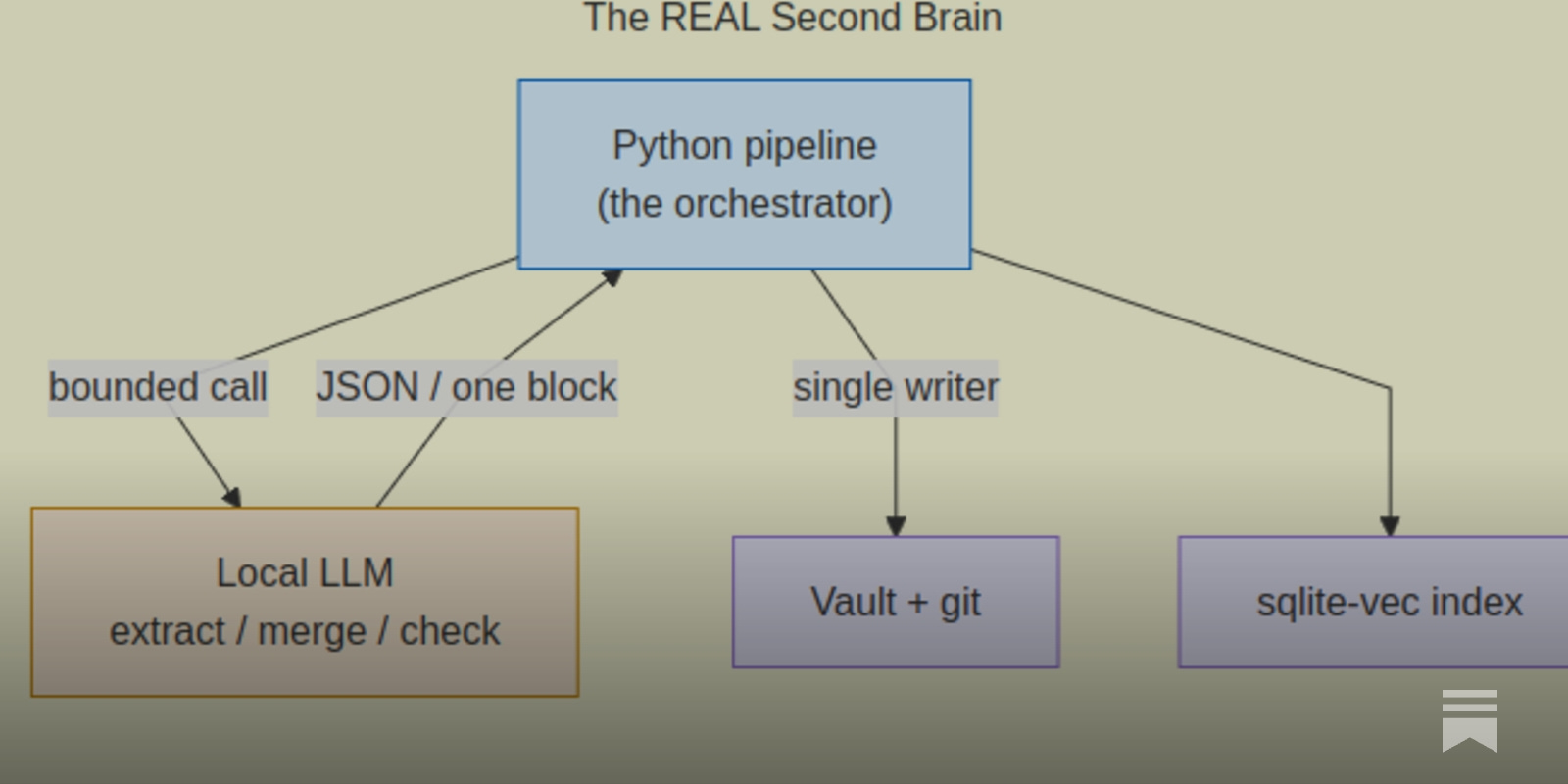
The REAL Second Brain: an autonomous, self-hosted knowledge wiki that runs on cheap local models
How I turned Karpathy's "LLM wiki" sketch into a system that actually maintains itself — no frontier API, no human in the loop, nothing leaving my LAN.
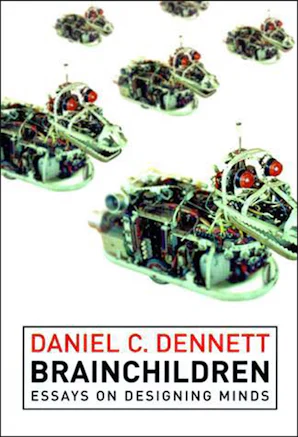
Brainchildren
Minds are complex artifacts, partly biological and partly social; only a unified, multidisciplinary approach will yield a realistic theory of how they came i...
Jeff Hawkins Is Finally Ready to Explain His Brain Research (Published 2018)
He created the mobile computing companies Palm and Handspring. But for decades his passion has been studying how the human brain works.

Yneuro | The startup behind Neuro ID®
Imagine a world where technology and human experience blend seamlessly. At Yneuro, we’re building that world. As pioneers in neurotechnology, we craft AI-driven software solutions that transcend global barriers. Celebrated in startup ecosystems and competitions, Yneuro is redefining digital interaction, making advanced technologies intuitive and accessible for everyone. Join us as we merge technology and human cognition, creating unprecedented possibilities.

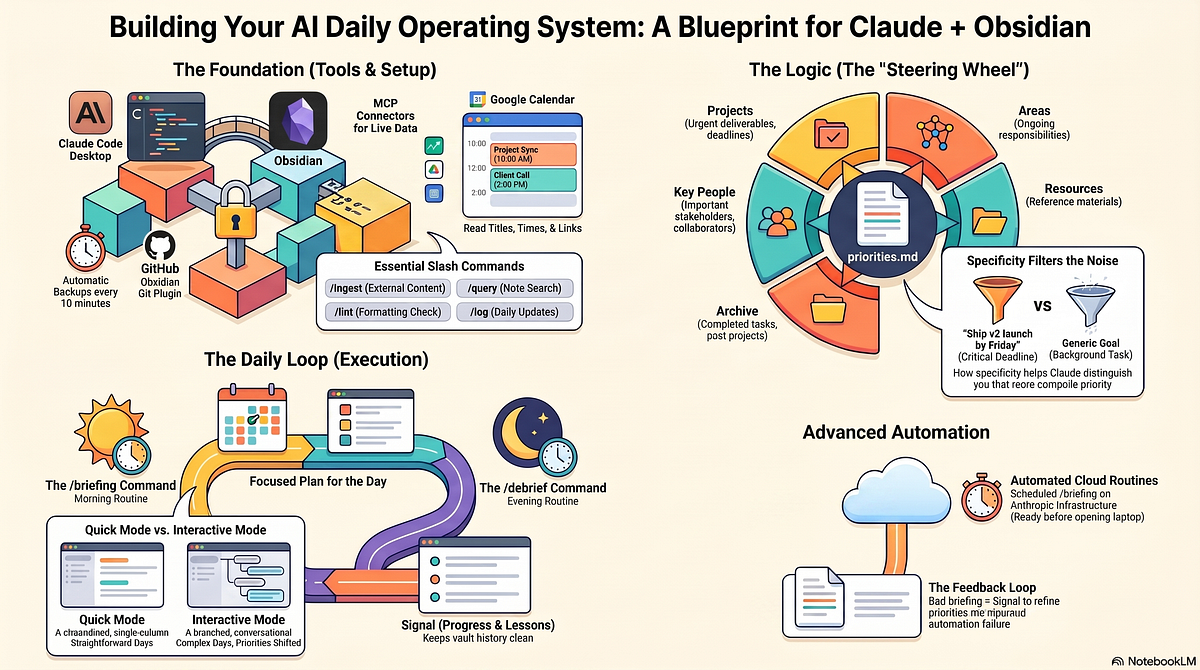
Automate AI Second Brain(LLM Wiki Pattern) With Claude Code and Obsidian
TLDR:Build an AI second brain with Claude Code & Obsidian. Automate daily briefings, backups & calendar sync.
The Brain Wave Collective | Meetup
The **Brain Wave Collective** is a member-owned community focused on learning, growth, and shared successes. We are pioneers who build with the latest AI & ML technologies, but you don't need to be a technologist to participate. All skills and backgrounds are necessary.Join us to level up and build

Obsidian AI Second Brain: The Free Self-Organizing Plugin | Agrici Daniel
claude-obsidian turns Obsidian into a self-organizing AI second brain. 15 skills, v1.9 Compound Vault, plain Markdown you own. MIT licensed, zero manual filing.
Introducing TRIBE v2: A Predictive Foundation Model Trained to Understand How the Human Brain Processes Complex Stimuli | Keith Doelling
This is some very cool work by some awesome colleagues Jean-Rémi King, and Teon Brooks! Seriously not enough good things can be said about how cool it is. You should enjoy it and play with it. And kudos to Meta for open sourcing it. At the same time, I'm already seeing posts about how the model will replace fMRI experiments as researchers will simulate how the brain "really works" instead of running costly experiments. I think this goes WELL beyond what its creators intend. We are already seeing that use of AI in science allows you to explore charted ideas more thoroughly and much more rapidly but slows us down in finding novel ideas (https://lnkd.in/eMR2akqt). At the same time, there is growing concern that LLM performance will collapse as they are increasingly trained on their own output (https://lnkd.in/eavgfyuY). Leaving neuroscience to AI simulations risks following the same fate, where we generate seemingly new findings without gaining new meaning. A mechanistic understanding of how the brain works (if that is still your goal) will be found at the margins, in errors and idiosyncrasies of neural function. What TRIBE provides is a super useful and cool instantiation of our current understanding on how and where neural activity is instantiated in the brain. But it won't help us make groundbreaking new findings of how neural circuits lead to cognition and behavior. Experiments on real human brains, may be costly, but they will always be necessary!
Introducing TRIBE v2: A Predictive Foundation Model Trained to Understand How the Human Brain Processes Complex Stimuli | Keith Doelling
This is some very cool work by some awesome colleagues Jean-Rémi King, and Teon Brooks! Seriously not enough good things can be said about how cool it is. You should enjoy it and play with it. And kudos to Meta for open sourcing it. At the same time, I'm already seeing posts about how the model will replace fMRI experiments as researchers will simulate how the brain "really works" instead of running costly experiments. I think this goes WELL beyond what its creators intend. We are already seeing that use of AI in science allows you to explore charted ideas more thoroughly and much more rapidly but slows us down in finding novel ideas (https://lnkd.in/eMR2akqt). At the same time, there is growing concern that LLM performance will collapse as they are increasingly trained on their own output (https://lnkd.in/eavgfyuY). Leaving neuroscience to AI simulations risks following the same fate, where we generate seemingly new findings without gaining new meaning. A mechanistic understanding of how the brain works (if that is still your goal) will be found at the margins, in errors and idiosyncrasies of neural function. What TRIBE provides is a super useful and cool instantiation of our current understanding on how and where neural activity is instantiated in the brain. But it won't help us make groundbreaking new findings of how neural circuits lead to cognition and behavior. Experiments on real human brains, may be costly, but they will always be necessary!
Memorize details from AI research papers
The second brain of AI researchers for machine learning, computer vision and natural language processing paper reviews.
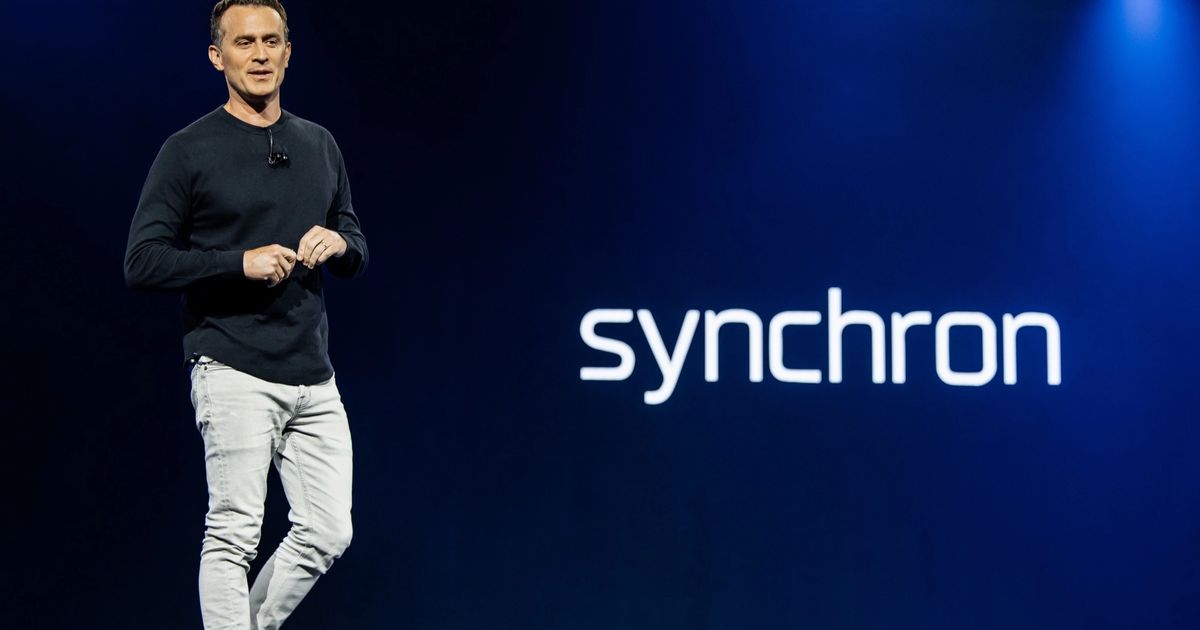
Synchron — Still you.
We build implantable Brain-Computer Interfaces to protect what makes you human.
This Is Your Brain on Podcasts (Published 2016)
Different people’s brains absorb a compelling story in the roughly the same complicated pattern, using many parts of the brain, researchers found.
