


Making sense of preprints by adding context – The Publish Your Reviews initiative - LSE Impact
Improving scientific publishing is often framed as an issue of openness and speed and less often as one of context. In this post, Ludo Waltman and Jessica Polka make the case for a more contextualised approach to open access publishing and preprinting, and introduce the Publish Your Reviews initiative. Launched today by ASAPbio, the initiative

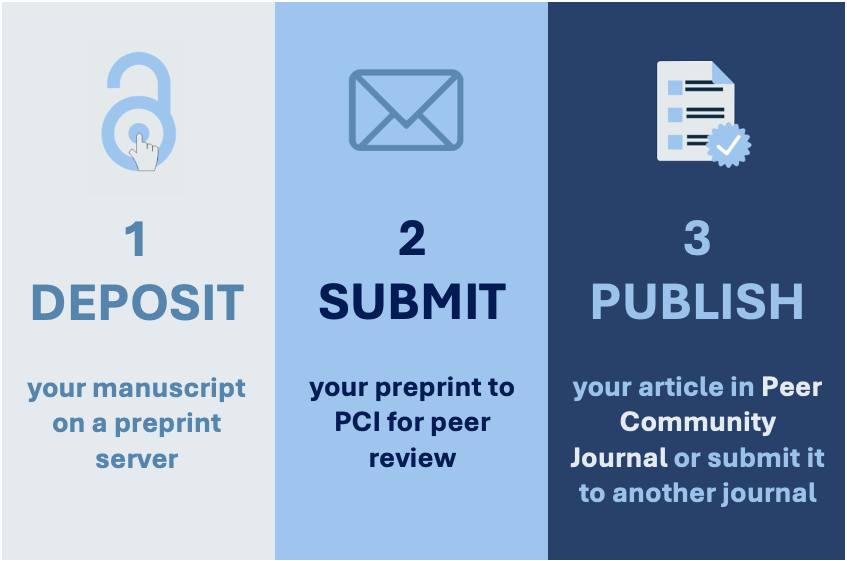
Peer Community In - free peer review & validation of preprints of articles
PCI is a non-profit open science organization of scientists to evaluate, recommend and publish research preprints in free open access
The Next Decade of Preprints Needs Experiments, Not Opinions
Lately, I have spent a considerable amount of time writing about my concerns regarding the direction of the preprint ecosystem and the behaviour of some of the actors within it. Increasingly, I wor…

The Utility of AI Tools in Auditing Adherence to Pre-Analysis Plans
Pre-analysis plans (PAPs) can improve research reproducibility by reducing researchers’ degrees of freedom, but their value depends on adherence. We argue that large language models (LLMs) can provide an efficient, scalable, and systematic way for authors and reviewers to assess adherence to PAPs. In an application to our own research, an LLM systematically identifies precommitted design choices, evaluates deviations, and diagnoses gaps in pre-specification, substantially reducing the human labor required for these tasks. However, variability in audit output across LLMs underscores the continued importance of human judgment. We discuss implications for best practices in AI-assisted PAP auditing.

A Claude skill for pre-submission peer review
Open-source skill to use Claude + Consensus for pre-submission mock peer review backed by citations to published, peer-reviewed literature.

Reviewing post-publication peer review
Post-publication peer review (PPPR) is transforming how the life sciences community evaluates published manuscripts and data. Unsurprisingly, however, PPPR is experiencing growing pains, and some elements of the process distinct from standard pre-publication review remain controversial. I discuss the rapid evolution of PPPR, its impact, and the challenges associated with it.

Introducing Hypothesis commenting on bioRxiv and medRxiv: an updated way to engage with preprints - openRxiv
An important part of our mission at openRxiv is to collaborate with other organizations to improve science communication and promote interoperability. Preprints are just one part of the research workflow, and we want to ensure they are effectively integrated with the tools and communities that drive scientific progress. Today, we’re excited to share about another…
What about the preprints?
Preprints are central to math research and immediately feed back into LLMs. Could the mainstream preprint workflow be adjusted in a way that gives individuals more choices to impact the balance bet…

Authorea: multi-disciplinary research preprints
Authorea is the leading collaborative platform to read, write, and publish research.
Promises and Perils of Pre-analysis Plans
The purpose of this paper is to help think through the advantages and costs of rigorous pre-specification of statistical analysis plans in economics. A pre-analysis plan pre-specifies in a precise way the analysis to be run before examining the data. A researcher can specify variables, data cleaning procedures, regression specifications, and so on. If the regressions are pre-specified in advance and researchers are required to report all the results they pre-specify, data-mining problems are greatly reduced. I begin by laying out the basics of what a statistical analysis plan actually contains so those researchers unfamiliar with it can better understand how it is done. In so doing, I have drawn both on standards used in clinical trials, which are clearly specified by the Food and Drug Administration, as well as my own practical experience from writing these plans in economics contexts. I then lay out some of the advantages of pre-specified analysis plans, both for the scientific community as a whole and also for the researcher. I also explore some of the limitations and costs of such plans. I then review a few pieces of evidence that suggest that, in many contexts, the benefits of using pre-specified analysis plans may not be as high as one might have expected initially. For the most part, I will focus on the relatively narrow issue of pre-analysis for randomized controlled trials.
In Praise of Moderation: Suggestions for the Scope and Use of Pre-Analysis Plans for RCTs in Economics
Pre-Analysis Plans (PAPs) for randomized evaluations are becoming increasingly common in Economics, but their definition remains unclear and their practical applications therefore vary widely. Based on our collective experiences as researchers and editors, we articulate a set of principles for the ex-ante scope and ex-post use of PAPs. We argue that the key benefits of a PAP can usually be realized by completing the registration fields in the AEA RCT Registry. Specific cases where more detail may be warranted include when subgroup analysis is expected to be particularly important, or a party to the study has a vested interest. However, a strong norm for more detailed pre-specification can be detrimental to knowledge creation when implementing field experiments in the real world. An ex-post requirement of strict adherence to pre-specified plans, or the discounting of non-pre-specified work, may mean that some experiments do not take place, or that interesting observations and new theories are not explored and reported. Rather, we recommend that the final research paper be written and judged as a distinct object from the “results of the PAP”; to emphasize this distinction, researchers could consider producing a short, publicly available report (the “populated PAP”) that populates the PAP to the extent possible and briefly discusses any barriers to doing so.
A new automated feedback option for authors - openRxiv
Authors who post preprints on openRxiv servers can get formal and informal feedback on their manuscripts in a number of ways. Our bioRxiv to journal (B2J) and medRxiv to journal (M2J) pipelines are linked to traditional peer review venues, enabling authors to save time by submitting directly from bioRxiv or medRxiv to any one of…
We’d love any feedback on our new preprint ⬇️

Dan Quintana
I think it's time to retire the idea that oxytocin is exclusively a 'social' hormone. In our latest preprint, led by @kjerstimw.bsky.social, we argue that oxytocin should be reframed as a behavioral flexibility hormone osf.io/preprints/osf/ygcr3_v1