


“In an age in which the inexhaustible power of scientific technology makes all things possible, it remains to be seen where we will draw the line, where we will be able to say, here are possibilities that wisdom suggest we avoid.” First published to great acclaim in 1988, Langdon Winner’s groundbreaking exploration of the political, social, and philosophical implications of technology is timelier than ever. He demonstrates that choices about the kinds of technical systems we build and use are actually choices about who we want to be and what kind of world we want to create—technical decisions are political decisions, and they involve profound choices about power, liberty, order, and justice. A seminal text in the history and philosophy of science, this new edition includes a new chapter, preface, and postscript by the author.
Technology is Not Values Neutral: Ending the Reign of Nihilistic Design
We fail to take tech seriously when we do not grasp its full impact on humans

The End of Science? Agnosis and American Fascism
The Society for Social Studies of Science (4S) annually awards the John Desmond Bernal Prize to one or more individuals who have made distinguished contributions to the field of Science and Technology Studies. Past winners have included founders of the field, along with outstanding scholars who have devoted their careers to understanding the social dimensions of science and technology. This article is the revised text of the 2025 Bernal Lecture by Paul Edwards.

Technocracy References
References and Revisions “Should Scientists and Engineers Run Society?” References [1] Wikipedia: “Technocracy.” [2] Academic Paper: Gunnell, John G. "The technocratic image and the theory of technocracy." Technology and culture 23.3 (1982): 392-416. [3] Academic Paper: Oh, Kyunghwan. "A non-co...

The Nature of Technology: What It Is and How It Evolves
Leading scientific theorist W. Brian Arthur puts forth …

How to be a wise optimist about science and technology?
I believe the central problem of the 21st century is how civilization co-evolves with science and technology. As our understanding of the world deepens, it enables technologies that confer ever more power to both improve and damage the world. There's currently much public discussion of this in the context of artificial superintelligence (ASI). However, it's a fundamental recurring challenge, affecting areas including climate change, genetic engineering, nanotechnology, geoengineering, brain-computer interfaces, and many more. How can we best benefit from science and technology, while supplying safety sufficient to ensure a healthy, flourishing civilization?
Governing by dismantling: tech oligarchy and the stifling of public data infrastructure
Published in Science as Culture (Ahead of Print, 2026)

B. Scot Rousse: "Language, Technology, & Care"
A Real Political Economy of Technology - The Ideas Letter
Two technological futures are competing for political and material priority: generative AI and the green transition. Benanav argues that while AI is marketed as a world-reordering breakthrough, its productivity gains…
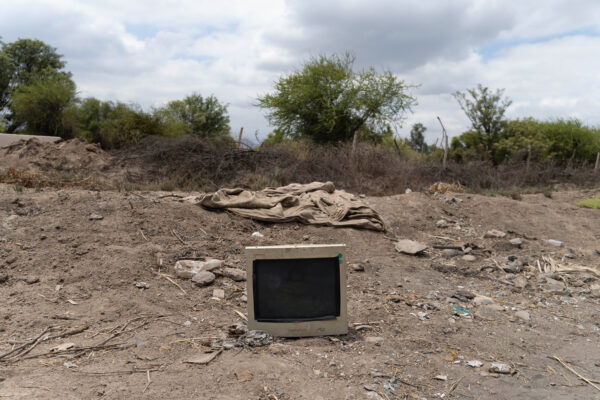
Push-button science
Technological advances change not only what we can learn as scientists, but also how science is conducted. Here we explore how automation and outsourcing are affecting the act of doing science.
Taking on the Technosphere: A Kitchen Debate
In his original writings on the technosphere from the early 2010s, Peter Haff identified its existence as a grand metabolizing system. Back in early 2016, spurred on by the preparation for HKW’s Anthropocene Campus: The Technosphere Issue, a vehement debate sprang up in the home of science and technology scholars Gabrielle Hecht and Paul N. Edwards: How valid is Haff’s approach? What is its overall reality? And what is its heuristic purpose? In this republication of their dispute, you, the reader, can engage alongside Hecht and Edwards in the ongoing question of whether the concept of the technosphere is indeed “a useful tool,” “silverware,” or “a barren gadget” in understanding the current and future condition of planet Earth.

Speculations on the Future of the Scientific Method
The following essay was published 20 years ago (January, 2006) on my blog The Technium. I edited the intro here, but the speculations are basically unchanged.

How Infrastructure Works: Transforming our shared systems for a changing world
'Pulsing with wisdom and humanity... a masterpiece' ED YONG'A hopeful, lyrical - even beautiful - hymn to the systems of mutual aid we embed in our material world' CORY DOCTOROW'An extraordinary book' MARK MIODOWNIK'You won't see the world the same after reading this book!' AUSTIN KLEONEvery day, we are granted the power to travel at high speeds, fly, see in the dark, summon water from distant mountains and electricity from the sun. The systems that run our world are invisible to us until they fail.Infrastructure enables lives of astounding ease and freedom that would have been unimaginable just a century ago. These technological systems - the most complex and vast ever created by humans - have allowed us to work collectively for the public good. But these systems are now beginning to fail us.Engineering professor Deb Chachra takes readers on a fascinating tour of these essential utilities, revealing how they work, what it takes to keep them running, and just how much they shape our lives - but also the price they extract, who pays it and in what ways, as well as the threats to our infrastructure in a changing world.From Snowdonia's Electric Mountain to a solar plant in southern India, Chachra shows how we can rebuild our shared infrastructure to be not just functional but also equitable, resilient, and sustainable. We need to learn how to see these systems and to transform them, together, because the cost of not being able to rely on them is unthinkably high.
Technopoly: The Surrender of Culture to Technology
A witty, often terrifying that chronicles our transform…

Thirty Years On, the Californian Ideology is Alive and Well
In the seminal essay, Barbrook and Cameron insisted that there are other ways to build technology, and to do it democratically, writes Nathan Schneider.
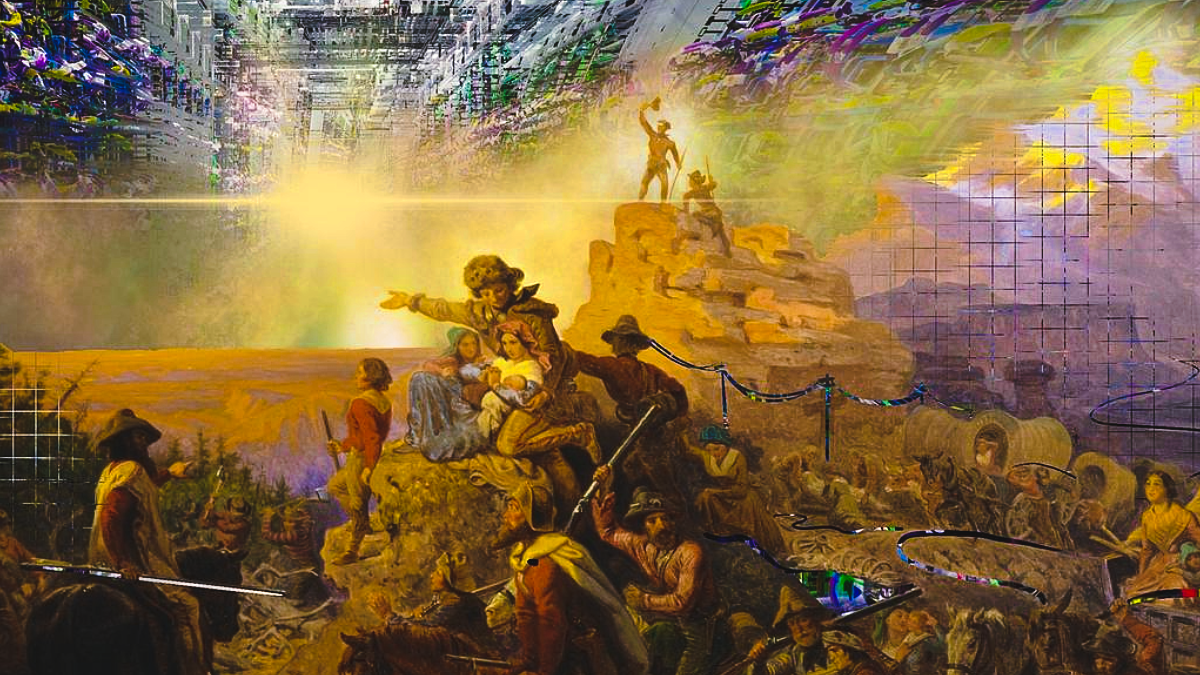
Technological parables and iconic illustrations: American technocracy and the rhetoric of the technological fix
This paper traces the role of American technocrats in popularizing the notion later dubbed the ‘technological fix’. Channeled by their long-term ‘chief’, Howard Scott, their claim was that technolo...

Lambda Land | Book Review: Technopoly
In Technopoly: The Surrender of Culture to Technology, Neil Postman argues that our infatuation with technology has insidiously eroded our culture. We gain much through technology, but it comes at a price; all too often we are blind to that price. This book seeks to call attention to the costs of a technology-focused society. I felt this poignantly because I, as a technology worker, know what that infatuation feels like.