

Opt out of global data surveillance programs like PRISM, XKeyscore and Tempora. Help make mass surveillance of entire populations uneconomical! We all have a right to privacy, which you can exercise today by encrypting your communications and ending your reliance on proprietary services.
Is PRISM still in any way effective now that it is public?
476 votes, 210 comments. Won't the people conducting illicit activity now know to keep their activities off of the observed networks and methods of…
We Need A Massive Surveillance Program (Idle Words)
I am a privacy activist who has been riding a variety of high horses about the dangers of permanent, ubiquitous data collection since 2012.
Tibo on Twitter / X
Today we’re previewing Private Safety Processing, designed to let us keep offering Zero Data Retention while improving our safeguards. Even when benefiting from frontier intelligence, customers shouldn’t have to give up control of sensitive data.For ZDR deployments, content… https://t.co/W6Ls8W7x2l— Tibo (@thsottiaux) August 19, 2026
A closer look at US warrantless surveillance programs | Proton
Any privacy-focused company in the US faces numerous legal challenges, including multiple programs that allow for warrantless wiretaps.

Apple, in refusing backdoor access to data, may face fines
Analysis: Yahoo faced growing fines in 2007 when it refused to participate in the PRISM program, which sets a precedent for non-compliance with government demands.

Reinvention Blueprint No. 3: To Unmake the Surveillance State, Rethink the Privacy Act
In an age of limitless access to data, the Privacy Act of 1974 urgently needs expanded coverage and independent oversight.

A Surveillance Net Blankets China’s Cities, Giving Police Vast Powers (Published 2019)
The authorities can scan your phones, track your face and find out when you leave your home. One of the world’s biggest spying networks is aimed at regular people, and nobody can stop it.

Stop Bill C-22!
🚨 Bill C-22 forces every Canadian internet provider, messaging app & cloud service to build surveillance backdoors and store a year of your data. Foreign state hackers exploited similar legislation in the US. Shut the backdoor: https://openmedia.org/StopC22 #BillC22

Anthropic Data Fears Prompt Nvidia, Palantir and Booz Allen to Restrict Model Use
As paranoia rises over whether Anthropic or OpenAI could learn from their customers’ intellectual property, large firms involved in sensitive corporate work, such as Palantir Technologies, Nvidia and Booz Allen Hamilton, have started demanding new guarantees or reducing or eliminating use of the ...

The UK government’s war on encryption is a global threat | Proton
Apple turned off its end-to-end encryption in the UK in response to a government notice. We look at what this means and how people in the UK can protect their data.

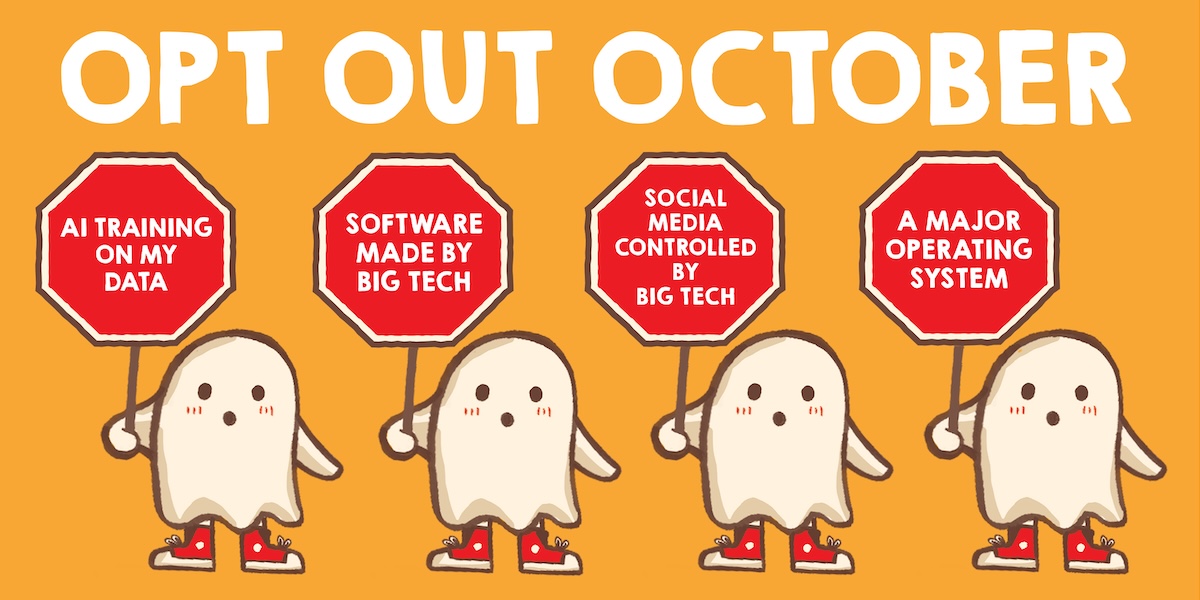
Welcome to Opt Out October. Let’s Take Control of Our Data and Our
Big tech companies are hell-bent on taking away our agency and forcing us to use their surveillance-based services, apps, and devices. It’s hard to fight against, and it often feels much easier to
Your privacy is under attack from several terrifying new laws
“If privacy is outlawed, only outlaws will have privacy.” — Philip Zimmermann, creator of PGP Last week the United Kingdom passed a new bill that allows for “extreme surveillance.” This Investigatory Powers Bill — better known as the “snooper’s char...

Big Tech talks up privacy while trying to kill privacy laws
Study claims Amazon, Apple, Google, Meta, Microsoft work to derail data rules

German watchdog orders biometric ID project World to delete data
The iris-scanning identity technology World has already been banned in some European countries over privacy concerns.

Lockdown Systems
A worker-owned collective building freedom and privacy tech, empowering people to take control of their own data and protect themselves from unwanted surveillance
‘Invasive’ AI-led mass surveillance in Africa violating freedoms, warn experts
Countries across the continent have spent more than $2bn on Chinese tracking technology that is not ‘necessary or proportionate’, new report finds
