Recent studies demonstrate that machine learning algorithms can discriminate based on classes like race and gender. In this work, we present an approach to evaluate bias present in automated facial analysis algorithms and datasets with respect to phenotypic subgroups. Using the dermatologist approved Fitzpatrick Skin Type classification system, we characterize the gender and skin type distribution of two facial analysis benchmarks, IJB-A and Adience. We find that these datasets are overwhelmingly composed of lighter-skinned subjects (79.6% for IJB-A and 86.2% for Adience) and introduce a new facial analysis dataset which is balanced by gender and skin type. We evaluate 3 commercial gender classification systems using our dataset and show that darker-skinned females are the most misclassified group (with error rates of up to 34.7%). The maximum error rate for lighter-skinned males is 0.8%. The substantial disparities in the accuracy of classifying darker females, lighter females, darker males, and lighter males in gender classification systems require urgent attention if commercial companies are to build genuinely fair, transparent and accountable facial analysis algorithms.
Data preprocessing techniques for classification without discrimination
Recently, the following Discrimination-Aware Classification Problem was introduced: Suppose we are given training data that exhibit unlawful discrimination; e.g., toward sensitive attributes such as gender or ethnicity. The task is to learn a classifier that optimizes accuracy, but does not have this discrimination in its predictions on test data. This problem is relevant in many settings, such as when the data are generated by a biased decision process or when the sensitive attribute serves as a proxy for unobserved features. In this paper, we concentrate on the case with only one binary sensitive attribute and a two-class classification problem. We first study the theoretically optimal trade-off between accuracy and non-discrimination for pure classifiers. Then, we look at algorithmic solutions that preprocess the data to remove discrimination before a classifier is learned. We survey and extend our existing data preprocessing techniques, being suppression of the sensitive attribute, massaging the dataset by changing class labels, and reweighing or resampling the data to remove discrimination without relabeling instances. These preprocessing techniques have been implemented in a modified version of Weka and we present the results of experiments on real-life data.

Facial recognition database used by FBI is out of control, House committee hears
Database contains photos of half of US adults without consent, and algorithm is wrong nearly 15% of time and is more likely to misidentify black people

Certifying and Removing Disparate Impact
What does it mean for an algorithm to be biased? In U.S. law, unintentional bias is encoded via disparate impact, which occurs when a selection process has widely different outcomes for different groups, even as it appears to be neutral. This legal determination hinges on a definition of a protected class (ethnicity, gender) and an explicit description of the process.When computers are involved, determining disparate impact (and hence bias) is harder. It might not be possible to disclose the process. In addition, even if the process is open, it might be hard to elucidate in a legal setting how the algorithm makes its decisions. Instead of requiring access to the process, we propose making inferences based on the data it uses.We present four contributions. First, we link disparate impact to a measure of classification accuracy that while known, has received relatively little attention. Second, we propose a test for disparate impact based on how well the protected class can be predicted from the other attributes. Third, we describe methods by which data might be made unbiased. Finally, we present empirical evidence supporting the effectiveness of our test for disparate impact and our approach for both masking bias and preserving relevant information in the data. Interestingly, our approach resembles some actual selection practices that have recently received legal scrutiny.

Trial Data Reveals Racial Bias in Age Verification Software
New trial data reveals racial bias in age verification software used for social media restrictions. Discover how unreliable these systems really are now.

Exposing.ai: MegaFace
MegaFace is a dataset of over 4 million faces used benchmarking and developing face recognition technologies

Facial recognition: It’s time for action - Microsoft On the Issues
In July, we shared our views about the need for government regulation and responsible industry measures to address advancing facial recognition technology. As we discussed, this technology brings important and even exciting societal benefits but also the potential for abuse. We noted the need for broader study and discussion of these issues. In the ensuing...

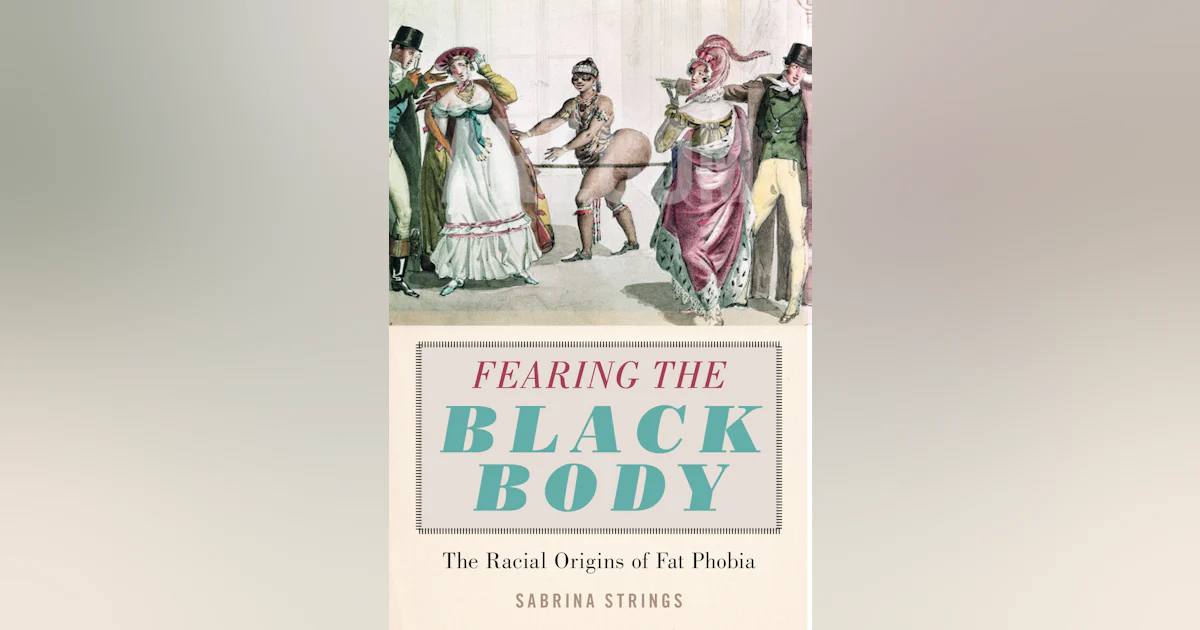
Fearing the Black Body
Winner, 2020 Body and Embodiment Best Publication Award, given by the American Sociological AssociationHonorable Mention, 2020 Sociology of Sex and Gender Di...
Exploring Frequency Adversarial Attacks for Face Forgery Detection
Various facial manipulation techniques have drawn seri-ous public concerns in morality, security, and privacy. Al- though existing face forgery classifiers achieve promising performance on detecting fake images, these methods are vulnerable to adversarial examples with injected impercep- tible perturbations on the pixels. Meanwhile, many face forgery detectors always utilize the frequency diversity be-tween real and fake faces as a crucial clue. In this paper, in- stead of injecting adversarial perturbations into the spatial domain, we propose a frequency adversarial attack method against face forgery detectors. Concretely, we apply dis-crete cosine transform (DCT) on the input images and in-troduce a fusion module to capture the salient region of ad-versary in the frequency domain. Compared with existing adversarial attacks (e.g. FGSM, PGD) in the spatial do-main, our method is more imperceptible to human observers and does not degrade the visual quality of the original images. Moreover, inspired by the idea of meta-learning, we also propose a hybrid adversarial attack that performs at-tacks in both the spatial and frequency domains. Exten-sive experiments indicate that the proposed method fools not only the spatial-based detectors but also the state-of- the-art frequency-based detectors effectively. In addition, the proposed frequency attack enhances the transferability across face forgery detectors as black-box attacks.
Facial recognition service becomes a weapon against Russian porn actresses
FindFace" was created to find friends, but some are using it to harass women.
Not My Type | Stanford University Press
In the world of online dating, race-based discrimination is not only tolerated, but encouraged as part of a pervasive belief that it is simply a neutral, personal choice about one's romantic partner. Indeed, it is so much a part of our inherited wisdom about dating and romance that it actually directs the algorithmic infrastructures of most major online dating platforms, such that they openly reproduce racist and sexist hierarchies.

Algorithmic Bias in Lending: Evidence from a Fintech Audit
Algorithmic lending has transformed the consumer credit landscape, with machine learning models commonly facilitating underwriting decisions. To comply with fair lending laws, these algorithms exclude legally protected characteristics, such as race and gender. Yet algorithmic underwriting can still inadvertently favor certain groups, prompting concerns about whether lending algorithms exhibit discriminatory behavior. Using proprietary loan-level data from a major U.S. fintech platform, we audit lending decisions across approximately 80,000 personal loans. We find that loans made to men and Black borrowers yielded lower profits than loans to other groups, suggesting that men and Black borrowers benefited from relatively favorable pricing. We trace these disparities to miscalibration in the platform's underwriting model, which overestimates risk for women and underestimates risk for Black borrowers. We then show that one could correct this miscalibration -- and the corresponding disparities -- by including race and gender in underwriting models, illustrating a tension between competing notions of fairness.

New Research: Scaling Generative AI Datasets Disproportionately Scales Racist Outputs, Especially Against Black Men
The larger the multimodal training dataset, the more likely the model will classify people of color as ‘criminals,’ research reveals

The Face Recognition Algorithm That Finally Outperforms Humans
Computer scientists have developed the first algorithm that recognises people’s faces better than you do

Police use facial recognition to scan one million faces in WA trial leading to 122 arrests
Deployments of surveillance vans over five months resulted in nine false alerts and led officers to engage with 146 registered sex offenders